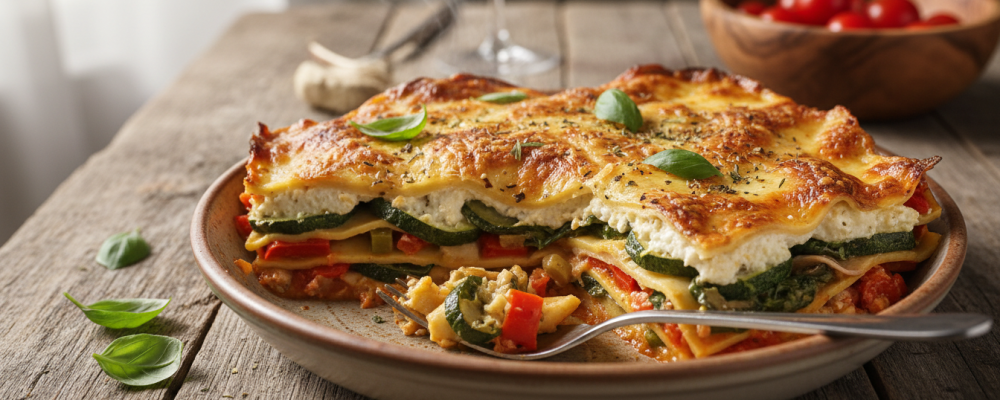

There’s something deeply satisfying about a well-made lasagna, and this vegetable-packed version proves that you don’t need meat to create layers of rich, comforting flavor. This Veggie Lasagna has become one of my most-requested recipes because it manages to feel both virtuous and indulgent—loaded with colorful vegetables that provide nutrition and texture, but also featuring all the cheese and sauce that make lasagna such a beloved comfort food. It’s the kind of dish that wins over skeptical carnivores while delighting vegetarians who are tired of boring meatless options.
I developed this recipe after years of making traditional meat lasagna and wanting to create a vegetable version that felt equally substantial and satisfying. The key was ensuring the vegetables didn’t release too much moisture (which would make the lasagna watery) while still maintaining their texture and flavor. Sautéing them first removes excess water and concentrates their flavors, while the combination of three cheeses provides richness that keeps each bite interesting and satisfying.
What makes this lasagna particularly special is how the vegetables are treated—they’re not just thrown in as an afterthought, but rather properly seasoned and cooked so they contribute real flavor. The zucchini adds subtle sweetness, mushrooms provide meaty umami, bell peppers bring brightness, and spinach wilts into tender green ribbons. Together with the creamy ricotta, melty mozzarella, and sharp Parmesan, you get a lasagna that’s complex, colorful, and completely crave-worthy.
─────────
The Inspiration Behind This Recipe
This dish emerged from my belief that vegetarian cooking should be celebrated for what it is rather than positioned as a compromise. Too often, vegetable lasagnas are watery, bland, or lack the structural integrity that makes lasagna such a satisfying experience. I wanted to create a version that stood proudly on its own merits—one that omnivores would choose even when meat options were available.
The vegetable selection was intentional: zucchini and mushrooms provide substance and absorb flavors beautifully, bell peppers add sweetness and color, and spinach brings both nutrition and visual appeal. Each vegetable plays a specific role in the overall composition, contributing texture, flavor, or moisture balance. The three-cheese combination ensures richness in every layer—ricotta for creaminess, mozzarella for meltability, and Parmesan for sharp, salty depth.
Over countless test batches, I refined the technique to ensure the vegetables were properly prepared and the lasagna assembled in a way that creates those perfect, distinct layers you want to see when you cut into it.
─────────
A Brief History of Lasagna
Lasagna is one of the oldest pasta dishes, with origins tracing back to ancient Rome, though the modern layered format we recognize today developed in Naples during the Middle Ages. The dish evolved regionally throughout Italy, with each area developing its own variations—Bolognese with meat sauce, Napoletana with mozzarella and ricotta, and countless others.
When Italian immigrants brought lasagna to America, it underwent further evolution, with generous portions and adaptations to suit American tastes and available ingredients. Vegetable lasagna emerged as dietary preferences shifted and more people sought meatless options that didn’t sacrifice satisfaction or flavor.
This Veggie Lasagna honors those Italian roots while embracing the American tradition of abundance and the contemporary emphasis on incorporating more vegetables into our diets.
─────────
Why This Cooking Method Works
Baking at 375°F provides moderate heat that warms everything through while allowing the cheeses to melt properly without becoming oily or separated. The covered baking for the first 25 minutes creates a steamy environment that helps the noodles finish softening and allows the flavors to meld. Removing the foil for the final 10 minutes allows surface moisture to evaporate and the Parmesan to develop a golden crust.
Sautéing the vegetables before layering is crucial—this removes excess moisture that would otherwise weep into the lasagna during baking, creating a soupy mess. It also concentrates flavors and allows you to season the vegetables properly before they go into the dish. Properly cooked vegetables maintain some texture rather than turning to mush.
The resting period after baking is essential—it allows the structure to set, making clean slicing possible. Hot lasagna will fall apart; properly rested lasagna cuts beautifully and holds together on the plate.
─────────
Flavor Profile: What to Expect
This lasagna delivers complex, satisfying flavors in every layer:
- Rich, tangy marinara that ties everything together
- Creamy, mild ricotta providing luxurious texture
- Melty, stretchy mozzarella creating those cheese pulls
- Sharp, salty Parmesan adding depth and umami
- Sweet notes from bell peppers and zucchini
- Earthy richness from mushrooms
- Fresh, green flavor from spinach
- Aromatic complexity from garlic and oregano
The result is a dish that’s comforting and familiar while being lighter and more interesting than you might expect from vegetable lasagna.
─────────
Tips for Making the Best Veggie Lasagna
Attention to detail elevates this lasagna from good to exceptional:
- Don’t skip pre-cooking vegetables: This step is non-negotiable for proper moisture control.
- Slice vegetables uniformly: Even sizes ensure consistent cooking and better layering.
- Use no-boil noodles cautiously: They require more liquid to soften properly—if using them, add extra sauce.
- Spread layers evenly: Consistent distribution ensures every serving has balanced flavors.
- Don’t skimp on cheese: The three-cheese combination creates the richness that makes this satisfying.
- Let it rest: A full 10-15 minutes allows clean slicing and better texture.
For extra richness, you can mix a beaten egg into the ricotta before layering—this helps it set and creates an even creamier texture. Adding fresh herbs like basil to the ricotta layer also adds brightness.
─────────
Serving Suggestions and Side Pairings
This substantial lasagna pairs beautifully with simple accompaniments:
- Garlic bread or warm Italian bread for soaking up sauce
- Simple Caesar or mixed green salad with vinaigrette
- Roasted or grilled vegetables for extra produce
- Antipasto platter as an appetizer
- Light soup like minestrone as a starter
The lasagna is rich enough that light, fresh sides work best to balance the meal and provide contrasting textures.
─────────
Storage, Reheating, and Make-Ahead Tips
This lasagna is exceptionally practical for meal planning:
- Refrigerate leftovers covered for up to 4 days
- Freeze assembled unbaked lasagna for up to 3 months—thaw overnight and add 15 minutes to baking time
- Reheat individual portions in the microwave or the entire dish covered in a 350°F oven until warmed through
- Make ahead by assembling completely up to 24 hours before baking—refrigerate and add 10 minutes to baking time
The sautéed vegetables can be prepared 1-2 days in advance and refrigerated, making final assembly much quicker. The flavors actually deepen after a day in the refrigerator, making leftover lasagna particularly delicious.
─────────
Why This Recipe Deserves a Spot in Your Rotation
This Veggie Lasagna proves that meatless meals can be just as satisfying and crave-worthy as their meat-based counterparts. It delivers layers of flavor and texture while sneaking in a substantial amount of vegetables, making it feel both indulgent and responsible. The make-ahead friendliness and crowd-pleasing nature make it perfect for entertaining, potlucks, or meal prep sessions where one dish needs to feed many people.
Once you’ve experienced how delicious a properly made vegetable lasagna can be, you’ll find yourself making it regularly and perhaps even preferring it to traditional meat versions.
─────────
Recommended Drink Pairing
The rich, cheesy flavors of this lasagna pair wonderfully with medium-bodied red wines that have enough acidity to cut through the richness. A Chianti, Sangiovese, or Montepulciano d’Abruzzo all work beautifully, offering fruit and earthiness that complement the vegetables and tomato sauce.
For those who prefer white, a fuller-bodied option like Pinot Grigio or unoaked Chardonnay provides enough weight to stand up to the cheese. Non-alcoholic options like sparkling water with lemon, Italian soda, or iced tea with lemon all offer refreshing contrast to the rich lasagna.
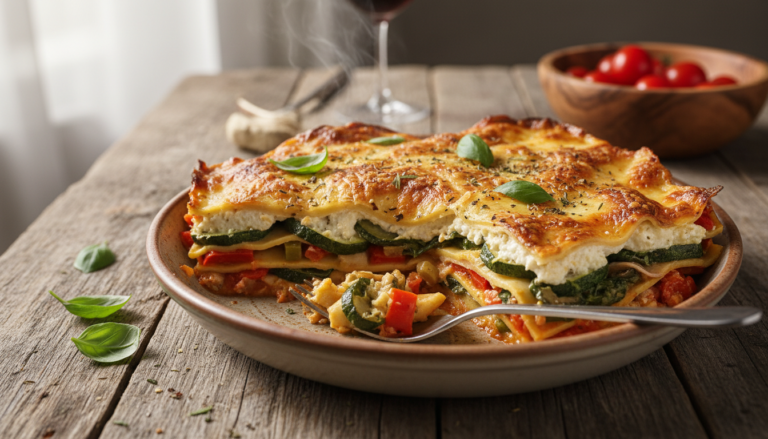
Veggie Lasagna
Veggie Lasagna layers tender pasta with sautéed zucchini, mushrooms, peppers, spinach, and three cheeses in rich marinara for satisfying meatless comfort.
8
servings30
minutes45
minutes350
kcal1
hour15
minutesIngredients
9 sheets lasagna noodles
2 cups ricotta cheese
2 cups shredded mozzarella cheese
1 cup grated Parmesan cheese
2 cups marinara sauce
1 cup zucchini, sliced
1 cup baby spinach
0.5 cup diced bell peppers
1 cup mushrooms, sliced
2 tablespoons olive oil
2 cloves garlic, minced
0.5 teaspoon salt
0.25 teaspoon black pepper
1 teaspoon dried oregano
Directions
- Preheat the oven to 375°F (190°C). Boil the lasagna noodles according to package directions and drain them carefully.
- In a large skillet, heat the olive oil over medium heat. Add the minced garlic and sauté for about one minute until fragrant.
- Add sliced zucchini, mushrooms, and diced bell peppers to the skillet. Cook for five to seven minutes until the vegetables are softened.
- Stir in the baby spinach, salt, black pepper, and dried oregano. Cook until the spinach is just wilted, then remove from heat.
- Spread a thin layer of marinara sauce on the bottom of a 9×13 inch baking dish to prevent sticking during baking.
- Arrange three lasagna noodles over the sauce, followed by half of the ricotta cheese, sautéed vegetables, and mozzarella cheese.
- Repeat the layers with another three noodles, ricotta cheese, remaining vegetables, and mozzarella cheese, topping with marinara sauce.
- Place the last three noodles on top. Spread the rest of the marinara sauce and sprinkle the grated Parmesan cheese evenly over the top.
- Cover the baking dish with foil, and bake in the preheated oven for 25 minutes, then remove the foil and bake for another 10 minutes.
- Allow the lasagna to rest for at least 10 minutes before slicing and serving, allowing flavors to meld and extracts to settle.
Nutrition Facts
- Total number of serves: 4
- Calories: 350kcal
- Cholesterol: 0mg
- Sodium: 620mg
- Potassium: 400mg
- Sugar: 8g
- Protein: 6g
- Calcium: 60mg
- Iron: 2mg
About This Author

Amelia Grace
Editor-in-Chief & Culinary Director
The heart and guiding voice of Daily Dish, Amelia leads our editorial vision and recipe development. With a background in food journalism and over a decade spent in professional kitchens, she has a knack for blending gourmet technique with real-world accessibility. Her goal? To make every reader feel like a confident cook, one dish at a time.
Favorite dish: Creamy lemon risotto with a sprinkle of fresh thyme.
Kitchen motto: “Good food doesn’t have to be complicated — it just has to be made with heart.”