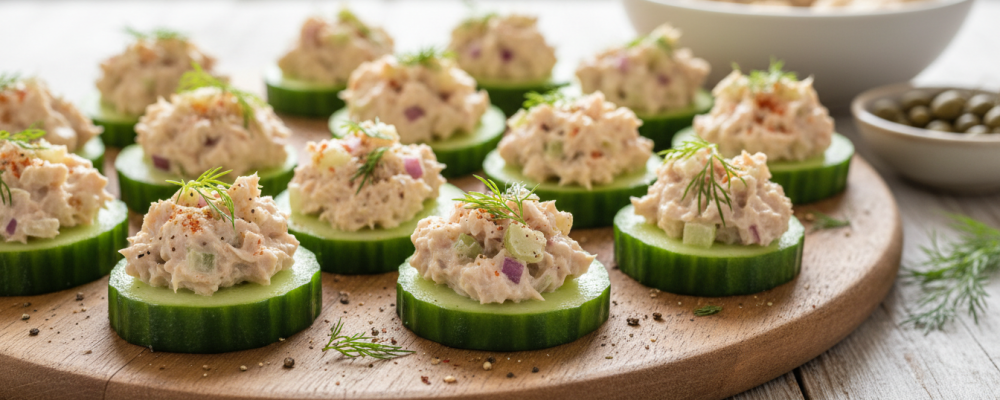

Sometimes the best meal prep recipes are the ones that don’t feel like meal prep at all. These Tuna Salad Cucumber Bites fall into that magical category—they’re so fresh, so light, and so satisfying that they feel like something you’d order at a lovely afternoon gathering, not something you batch-made on a Sunday while wearing sweatpants and listening to a podcast.
I started making these during a particularly snack-chaotic phase of my life when I’d find myself raiding the pantry at 3 PM, making questionable decisions involving crackers and whatever random spreads happened to be in the fridge. I needed something that felt substantial enough to actually satisfy hunger, but light enough that I wouldn’t feel sluggish for the rest of the afternoon. These cucumber bites became my solution—and eventually, my slight obsession.
What makes them special is the textural contrast. That first bite delivers the cool, crisp snap of fresh cucumber followed immediately by the creamy, savory richness of well-seasoned tuna salad. It’s refreshing without being insubstantial, satisfying without being heavy. The cucumber acts as both vessel and vegetable, adding hydration and crunch while eliminating the need for bread or crackers that might leave you feeling weighed down.
These bites have become my go-to for so many situations: mid-afternoon desk snacks, light lunches when I’m not terribly hungry, pre-dinner appetizers when guests arrive early, and post-workout refueling when I want protein but nothing too filling. That versatility makes them worth the small amount of effort required to prep them. One batch on Sunday, and you’ve got a week’s worth of moments where hunger strikes and you actually have something good waiting for you.
─────────
The Inspiration Behind This Recipe
This recipe emerged from two converging needs: wanting healthy snacks that were genuinely convenient, and craving something that satisfied protein requirements without feeling like I was eating “diet food.” I’d grown tired of the usual suspects—string cheese, protein bars, handfuls of almonds—and wanted something that felt more like real food, something I’d actually look forward to eating rather than just tolerating for nutritional necessity.
The cucumber-as-vehicle concept isn’t new, but its brilliance lies in simplicity. Cucumbers provide the structural stability of crackers with a fraction of the calories and none of the processed carbohydrates. They don’t get soggy like bread or stale like chips. They’re neutral enough to let other flavors shine while contributing their own fresh, clean taste. And perhaps most importantly for meal prep, they hold up remarkably well for several days when stored properly.
I experimented with the tuna salad ratio quite a bit before landing on this version. Too much mayo made the mixture slide off the cucumber; too little left it dry and unappetizing. The celery and onion needed to be chopped finely enough to distribute evenly but still provide textural interest. The lemon juice became the unexpected hero—it brightens the entire mixture while preventing that canned-tuna fishiness from dominating. Now, this combination feels perfectly calibrated, each ingredient earning its place in the bowl.
─────────
A Brief History of Tuna Salad and Canapé-Style Appetizers
Tuna salad entered American cuisine in the early 20th century as canned tuna became widely available and affordable. Initially considered a luxury ingredient, canned tuna democratized during World War II when meat rationing made shelf-stable proteins essential. The classic tuna salad preparation—mixing canned tuna with mayonnaise and crisp vegetables—emerged as a practical way to stretch protein while adding moisture and flavor to what could otherwise be dry, plain fish.
The tradition of serving spreads and salads on small, individual bases—what the French call canapés—dates back centuries in European cuisine. These bite-sized preparations served both practical and social purposes: they were easy to eat at standing gatherings, required no utensils, and allowed hosts to present multiple flavors in an elegant, organized way. The format traveled through various iterations, from elaborate Victorian tea sandwiches to mid-century American appetizer spreads on crackers.
What makes this cucumber bite version particularly contemporary is its alignment with modern eating preferences—lower carbohydrate, higher protein, minimally processed, and vegetable-forward. It takes the classic tuna salad that generations have loved and reimagines the delivery method for today’s nutritional awareness. The result is something that feels both nostalgic and completely current, connecting us to familiar flavors while meeting present-day dietary goals.
─────────
Why This No-Cook Method Works for Meal Prep
The beauty of this recipe lies in its stability—nothing needs cooking, nothing wilts dramatically, and the components actually improve slightly with time. Tuna salad benefits from what’s called “melding time,” where the flavors of mayonnaise, lemon juice, celery, and onion integrate and soften into one cohesive mixture rather than distinct elements. After 12-24 hours in the refrigerator, the onion’s sharpness mellows, the celery’s crunch softens just slightly, and the lemon juice fully distributes its brightness throughout.
Cucumbers maintain their structural integrity remarkably well when sliced and stored properly. Their high water content might seem like a liability, but cucumber cell walls are quite sturdy—they don’t collapse like, say, zucchini or summer squash might. The key is cutting them to the right thickness: too thin and they become flimsy, too thick and they’re awkward to bite through. That half-inch thickness provides the perfect balance of crispness and stability.
The mayonnaise-based tuna mixture actually benefits from refrigeration in terms of food safety and texture. Cold temperatures thicken mayonnaise slightly, which means your tuna salad becomes firmer and less likely to slide off the cucumber rounds. This is opposite to many preparations where refrigeration degrades texture—here, it improves functionality. The lemon juice serves double duty: it adds bright flavor while also providing acidity that inhibits bacterial growth and helps preserve the freshness of the raw vegetables mixed into the salad.
For optimal meal prep success, I recommend preparing the tuna salad and slicing the cucumbers separately, then assembling the bites 1-2 days before eating. This gives the tuna flavors time to meld while preventing the cucumber from releasing too much moisture into the salad. If you’re prepping for a full week, assemble half the batch initially and keep the remaining components separate to assemble fresh midweek.
─────────
Flavor Profile: What to Expect
These cucumber bites offer a refreshing, protein-rich flavor experience that feels light yet satisfying:
- Clean and crisp from the cucumber base, which provides refreshing crunch and subtle vegetal sweetness
- Creamy and rich from mayonnaise that coats the tuna and creates a luxurious mouthfeel
- Bright and tangy from fresh lemon juice that cuts through the richness and prevents the bites from feeling heavy
- Savory and oceanic from quality tuna that provides umami depth without being overly fishy
- Fresh and aromatic from chopped celery and onions that add layers of flavor and textural variation
- Well-seasoned from salt and black pepper that enhance all the other flavors without overwhelming them
The overall effect is reminiscent of a classic tuna sandwich but feels lighter and more refined. The cucumber’s water content provides natural refreshment between bites, preventing palate fatigue, while the tuna salad delivers enough richness to feel like a proper snack rather than just eating raw vegetables. Over the first day or two in the refrigerator, the raw onion mellows from sharp to sweet, and the celery releases subtle flavor into the mayonnaise, creating a more integrated taste that many people prefer to the freshly made version.
─────────
Tips for Making the Best Tuna Salad Cucumber Bites
This simple recipe becomes exceptional when you pay attention to a few key details:
- Choose the right cucumber variety: English cucumbers work best because they have thin skins, minimal seeds, and consistent diameter. Persian cucumbers are a good second choice. Avoid regular garden cucumbers, which have thick, waxy skins and large seed cavities.
- Drain tuna thoroughly: Press the tuna gently in a strainer or squeeze it in your hands to remove excess liquid. Wet tuna dilutes the mayonnaise and creates a watery mixture that slides off the cucumbers.
- Chop vegetables finely: Cut celery and onions into small, uniform pieces—about ¼-inch or smaller. Large chunks create uneven bites and make the mixture difficult to spread smoothly.
- Don’t overmix the tuna salad: Stir just until combined. Overmixing breaks down the tuna too much, creating a mushy, paste-like texture instead of maintaining some flaky structure.
- Cut cucumbers with a sharp knife: Dull knives crush the cucumber rather than slicing cleanly, which releases excess moisture and creates jagged edges. Clean cuts mean crisper bites.
- Salt cucumbers lightly if prepping far ahead: If assembling more than 24 hours in advance, lightly salt the cucumber rounds and let them sit for 10 minutes, then pat dry. This draws out excess moisture that might otherwise make the tuna salad watery.
- Use a small scoop for consistent portions: A small cookie scoop or melon baller ensures each cucumber round gets the same amount of tuna salad, making them look professional and ensuring even distribution.
- Store with paper towels: Place a paper towel in the bottom of your storage container to absorb any moisture released by the cucumbers, preventing soggy bites.
The quality of your tuna matters more than you might expect. Solid white albacore has better texture and milder flavor than chunk light tuna, making the difference between a snack you tolerate and one you genuinely crave.
─────────
Portioning and Container Suggestions
This recipe yields approximately 20-24 cucumber bites depending on the size of your cucumber and how generously you top each round. For meal prep purposes, I divide them into portions of 5-6 bites per serving, which provides about 15-20 grams of protein—perfect for a substantial snack or light lunch when paired with fruit or additional vegetables.
The ideal storage solution is a shallow, wide container where the bites can sit in a single layer without stacking. Stacking causes the tuna salad to smear and the cucumbers to release moisture under pressure. I use 9×13 glass containers with snap-on lids, which accommodate about 24 bites comfortably with space between each one. If you need to stack for space reasons, place parchment paper between layers to prevent them from sticking together.
For grab-and-go convenience, portion them into smaller containers—5-6 bites per container in lunch-sized glass or plastic containers. This makes them easy to throw into a work bag or eat at your desk without needing to transfer from a larger container. You can also use compartmented bento-style containers, placing the cucumber bites in one section and additional snacks like cherry tomatoes, crackers, or fruit in other compartments for a complete snack plate.
If you’re meal prepping for the full week, consider the assembly-as-you-go method: store the tuna salad in one container and pre-sliced cucumbers in another (in water to maintain crispness), then assemble 5-6 bites each morning. This adds literally two minutes to your morning routine but ensures maximum freshness, especially toward the end of the week.
─────────
Storage, Reheating, and Shelf Life Tips
- Refrigerator storage: Assembled cucumber bites stay fresh for 2-3 days in an airtight container. After day 3, cucumbers may start releasing moisture and becoming slightly soft, though they remain safe to eat through day 4.
- Component storage: Store tuna salad separately from cucumber slices, and both will last 4-5 days. The tuna mixture actually lasts longer than the assembled bites because it’s not exposed to cucumber moisture.
- Cucumber preservation: Store pre-sliced cucumbers submerged in cold water in the refrigerator, changing the water daily. This keeps them crisp for up to 5 days and prevents the cut surfaces from drying out.
- No reheating necessary: These are designed to be eaten cold, straight from the refrigerator. The cold temperature actually enhances their refreshing quality.
- Freezing not recommended: Neither cucumbers nor mayonnaise-based mixtures freeze well. The cucumber will become mushy and watery when thawed, and the mayonnaise will separate and become grainy.
- Signs of freshness: Fresh cucumber bites should be firm to the touch with no mushiness. If the cucumbers feel slimy or the tuna salad smells overly fishy or sour, discard them.
- Travel considerations: These bites require refrigeration and should not sit at room temperature for more than 2 hours. If packing for work, use an insulated lunch bag with an ice pack to maintain safe temperatures.
- Leftover strategy: If you have extra tuna salad but no more cucumbers, use it in other ways—stuffed into cherry tomatoes, spread on celery sticks, or even as a traditional sandwich or wrap filling.
─────────
Why This Recipe Deserves a Spot in Your Meal Prep Rotation
These cucumber bites represent something I value deeply in meal prep: efficiency without sacrifice. They require minimal active time—maybe 15 minutes from start to finish—yet provide multiple servings of protein-rich, satisfying snacks that genuinely improve your eating habits throughout the week. There’s no complicated technique to master, no special equipment needed, just straightforward assembly that anyone can execute successfully on the first try.
From a practical standpoint, they solve one of meal prep’s persistent challenges: having something available when you’re hungry but not meal-level hungry. That 3 PM slump, that post-gym window before dinner, that late-morning moment when breakfast has worn off but lunch is still an hour away—these are the times when good intentions falter and we reach for whatever’s convenient, regardless of nutritional value. Having these bites ready means convenience aligns with nutrition, making the healthy choice also the easiest choice.
Beyond logistics, there’s real pleasure in these little bites. The combination of textures—crisp cucumber against creamy tuna—creates sensory interest that keeps them from feeling monotonous even when you’re eating them several times per week. They feel special enough to serve to guests yet practical enough to eat standing at the kitchen counter between errands. That versatility, combined with their forgiving nature and low carbohydrate profile, makes them a recipe I return to again and again, especially during warmer months when heavier snacks feel less appealing.
─────────
Meal Prep Pairing Suggestions
While these cucumber bites work beautifully as a standalone snack, they integrate seamlessly into a broader meal prep strategy when you want variety throughout your week. Pair them with the Overnight Oats for a balanced approach—something creamy and substantial for breakfast, something light and protein-rich for snacks. The contrast keeps you from experiencing flavor fatigue while ensuring you have options for different hunger levels and times of day.
For a complete low-carb lunch spread, combine these cucumber bites with a batch of hard-boiled eggs, cherry tomatoes, and pre-portioned hummus or guacamole. This creates a deconstructed protein plate that you can mix and match throughout the week—some days you might eat everything together, other days you might take just the cucumber bites and eggs. The flexibility means you’re less likely to get bored with your meal prep while maintaining consistent nutrition.
These bites also function excellently as part of an appetizer spread if you’re entertaining. Prep them alongside the Chicken Grain Bowls and some roasted vegetables, and suddenly you have enough variety to feed guests or family without spending hours in the kitchen the day of. The cucumber bites can be your cold appetizer while you reheat other components, creating a more elegant, restaurant-style meal experience with minimal effort. That multi-functionality—casual snack or party-ready appetizer—makes them especially valuable in your rotation, giving you options without requiring completely different recipes.
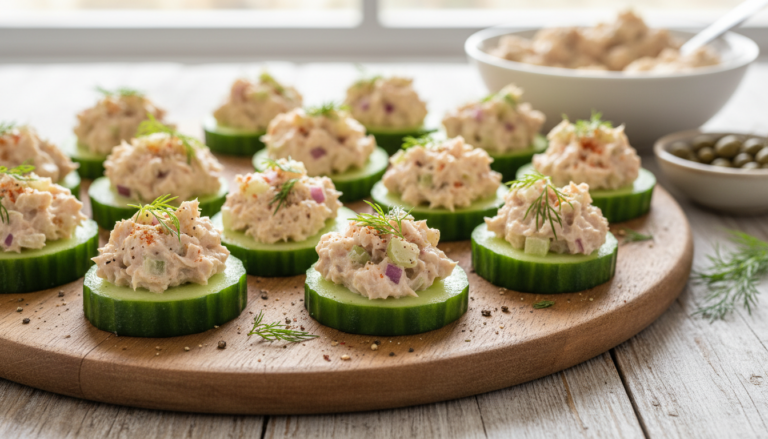
Tuna Salad Cucumber Bites
This tuna salad cucumber bites recipe transforms classic tuna salad into a low-carb, refreshing snack that stays crisp and satisfying for days in your meal prep rotation.
4
servings30
minutes40
minutes300
kcal1
hour10
minutesIngredients
1 can tuna
2 tablespoons mayonnaise
1 tablespoon lemon juice
2 tablespoons chopped celery
1 tablespoon chopped onions
1 pinch salt
1 pinch black pepper
1 cucumber
Directions
- Drain the can of tuna and place it into a medium-sized mixing bowl.
- Add mayonnaise, lemon juice, chopped celery, and chopped onions to the tuna.
- Mix the ingredients together thoroughly, ensuring that everything is well combined.
- Season the tuna mixture with a pinch of salt and black pepper, mixing again.
- Slice the cucumber into approximately half-inch thick rounds.
- Spread a spoonful of the tuna salad onto each cucumber slice evenly.
- Arrange the cucumber bites on a serving platter for easy access.
- Serve immediately or cover and refrigerate until ready to serve.
Nutrition Facts
- Total number of serves: 4
- Calories: 150kcal
- Cholesterol: 0mg
- Sodium: 620mg
- Potassium: 400mg
- Sugar: 8g
- Protein: 6g
- Calcium: 60mg
- Iron: 2mg
About This Author

Amelia Grace
Editor-in-Chief & Culinary Director
The heart and guiding voice of Daily Dish, Amelia leads our editorial vision and recipe development. With a background in food journalism and over a decade spent in professional kitchens, she has a knack for blending gourmet technique with real-world accessibility. Her goal? To make every reader feel like a confident cook, one dish at a time.
Favorite dish: Creamy lemon risotto with a sprinkle of fresh thyme.
Kitchen motto: “Good food doesn’t have to be complicated — it just has to be made with heart.”