
You’ve seen caramelized onions on a menu.
Sweet. Jammy. Deep brown. The kind that transforms a burger or tops a perfect steak.
So you try to make them at home. You slice onions, throw them in a pan, and wait.
Twenty minutes later, they’re still pale. Wet. Barely softened. Nothing like what you were hoping for.
The recipe said “caramelize the onions,” and you thought you knew what that meant.
But what you did wasn’t caramelizing. It was something else entirely.
Caramelizing Takes Time
Here’s the truth most recipes don’t tell you: properly caramelized onions take at least 45 minutes.
Often an hour. Sometimes longer.
Not 10 minutes. Not 20. Not “until softened and golden.”
Real caramelization—the chemical process that transforms onion sugars into those deep, sweet, complex flavors—requires sustained, patient heat.
Most home cooks give up long before that happens, thinking they’ve done something wrong when really they just haven’t waited long enough.
High Heat Ruins Everything
When people try to speed up caramelized onions, they crank the heat.
Bad idea.
High heat browns the outside of the onions through burning, not caramelization. It creates bitter, charred bits instead of sweet, jammy strands.
Chefs keep the heat low to medium-low. Sometimes just barely above low.
The onions cook slowly. They release their moisture gradually. The natural sugars have time to break down and transform without scorching.
It looks boring while it’s happening. Nothing dramatic. Just onions slowly, steadily changing color.
But the flavor at the end is worth every minute.
You’re Using Too Much Heat and Not Enough Time
The single biggest mistake: trying to caramelize onions in the same amount of time you’d sauté them.
Sautéing is fast cooking over high heat. You’re looking for texture and a bit of color. It takes minutes.
Caramelizing is slow cooking over gentle heat. You’re looking for a complete transformation of flavor. It takes an hour.
They’re not the same process. They don’t produce the same result.
Recipes that promise “caramelized onions in 15 minutes” are lying—or they’ve redefined what caramelized means.
The Liquid Has to Cook Off
Raw onions are mostly water.
Before they can caramelize, all that moisture needs to evaporate. If you try to rush it with high heat, the outside burns before the inside cooks through.
Low heat lets the water release slowly and evaporate naturally. The onions shrink. They become translucent, then soft, then they start to color.
Only after the moisture is gone can the sugars begin to caramelize.
This is why a huge pile of sliced onions in your pan eventually reduces to a fraction of what you started with. You’re literally cooking the water out.
You Need to Stir, But Not Constantly
Onions need attention, but not constant babysitting.
Stir them every few minutes to prevent sticking and ensure even cooking. But don’t stand there stirring nonstop—that just slows down the browning.
Let them sit undisturbed for a bit. Let the pan do its work. Then stir and redistribute.
Chefs develop a rhythm with this. They’ll check the onions while prepping other ingredients, give them a stir, then move on to the next task.
The onions become a background project that gets checked periodically, not the sole focus demanding constant attention.
Adding Sugar Is Cheating
Some recipes tell you to add sugar or baking soda to speed up caramelization.
It does speed things up. It also fundamentally changes what you’re making.
Real caramelized onions get their sweetness from the onions themselves. The slow breakdown of their natural sugars creates layers of flavor—sweetness, yes, but also savory depth and subtle bitterness.
Added sugar just makes them sweet. It’s one-dimensional.
Professional kitchens don’t add sugar. They don’t need to. They have time and patience.
A Little Salt Helps
Salt does two things for caramelizing onions.
It pulls out moisture, helping them cook down faster. And it seasons them as they cook, building flavor from the start.
Add a pinch when the onions first hit the pan. Don’t wait until the end.
This is one of the few ways to actually speed up the process without compromising the result.
The Pan Matters More Than You Think
A thin, cheap pan heats unevenly. Hot spots develop. Onions burn in some places while barely cooking in others.
A heavy-bottomed pan distributes heat evenly. The onions cook uniformly. You have much more control.
Chefs reach for stainless steel, enameled cast iron, or heavy skillets when they’re caramelizing onions—never flimsy nonstick.
You can still caramelize onions in a bad pan. It just requires more attention and more frequent stirring.
They Get Darker Than You Expect
When people think they’ve caramelized onions, they’re usually looking at onions that are tan or light golden.
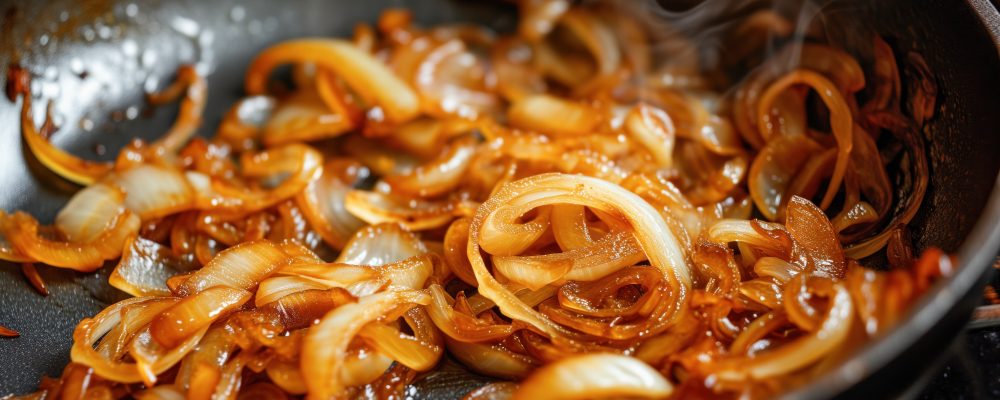
True caramelized onions are dark brown. Almost mahogany. They look like they might be on the edge of burning, but they’re not—they’re exactly right.
That deep color is a sign that the sugars have fully broken down and transformed.
If your onions are still pale, they’re not done. Keep going.
Deglazing Adds Another Layer
As onions cook, they leave behind fond—those browned bits stuck to the pan.
That’s pure concentrated flavor. Don’t let it burn, but don’t scrub it away either.
When your onions are nearly done, add a splash of water, wine, or stock and scrape up those bits. They dissolve into the onions, adding even more depth.
This is a technique chefs use to build complexity in almost everything they cook. It works especially well with onions.
Make Extra and Save Them
Since caramelized onions take so long, it makes sense to make a big batch.
They keep in the fridge for a week. They freeze beautifully for months.
Make a full pan on a Sunday. Use them throughout the week on sandwiches, in pasta, over pizza, stirred into soups.
Restaurants do this. They make large batches during prep, then use them across multiple dishes.
It’s the same time investment, but you get much more value out of it.
What You Can Do This Weekend
Set aside an hour. Slice several onions. Put them in your heaviest pan with some oil or butter and a pinch of salt.
Keep the heat low. Stir every few minutes. Don’t rush.
Let yourself experience what actually caramelizing onions feels like. Notice when they turn translucent. When they start to color. When they finally reach that deep brown sweetness.
Once you’ve done it properly, you’ll never confuse sautéed onions with caramelized ones again.
The Takeaway
Caramelized onions aren’t hard to make. They’re just slow.
Most home cooks fail at them not because they lack skill, but because they lack patience—and because recipes lie about how long it really takes.
Chefs know the truth: low heat, long time, occasional stirring.
That’s it. That’s the entire technique.
No shortcuts. No hacks. Just the willingness to let the process unfold at its own pace.
Because some things in cooking can’t be rushed.
And caramelized onions are one of them.