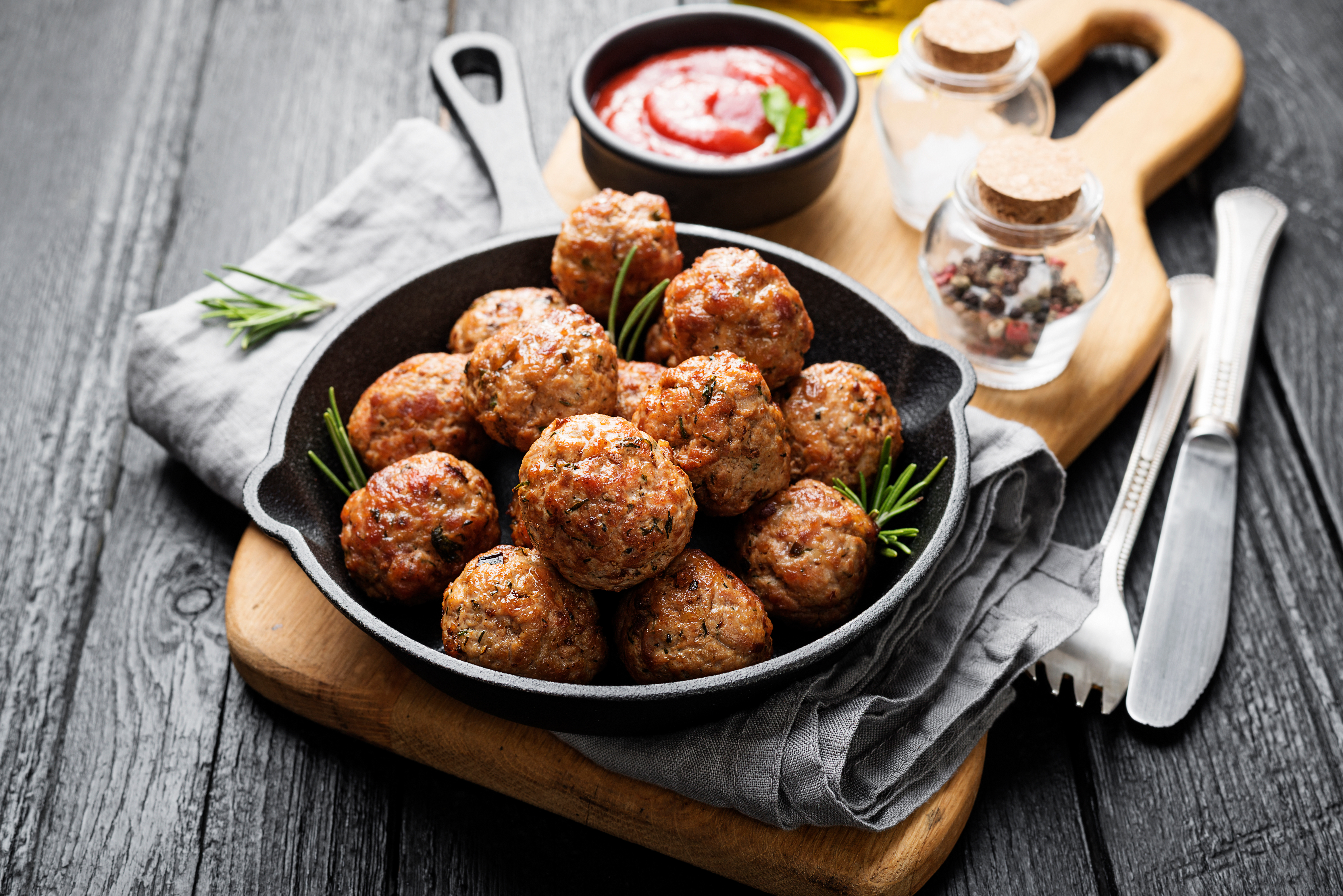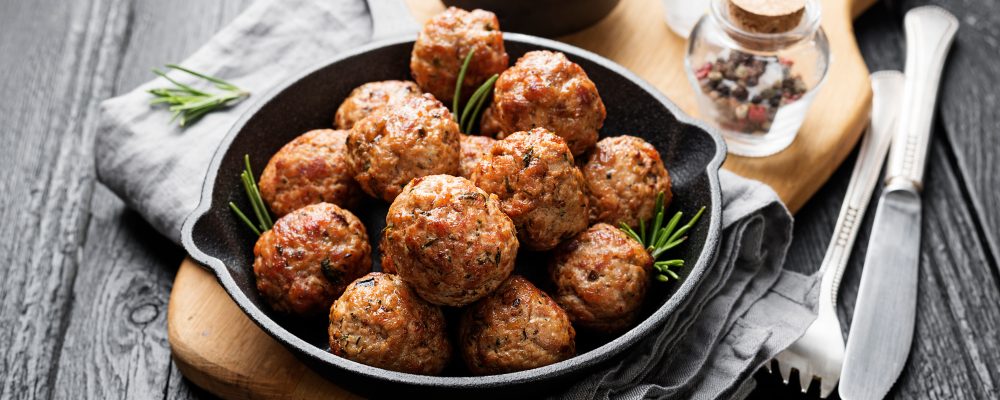

You form meatballs carefully.
Season the meat. Shape them into perfect spheres. Place them in the pan or oven.
They start falling apart. The edges crumble. Pieces break off. By the time they’re cooked, you have irregularly shaped meat lumps instead of intact meatballs.
Restaurant meatballs hold together perfectly. They’re uniform, round, and stay intact from pan to plate.
You assumed it was the meat quality or that you needed eggs or breadcrumbs or some binder.
Sometimes binders help. But usually, meatballs fall apart because of how you’re handling the meat and when you’re trying to move them during cooking.
Understanding what holds meatballs together—and what causes them to crumble—is what separates success from the frustrating pile of ground meat you keep ending up with.
You’re Overworking the Meat
This is the most common mistake and the most counterintuitive fix.
When you knead and compress ground meat too much, you break down the protein structure. The meat becomes dense and tight—like a meatloaf texture.
That tight, compressed texture is actually more prone to crumbling during cooking. The meat doesn’t have the natural give and structure that allows it to hold together.
Chefs handle meatball mixture minimally. They combine ingredients just enough to distribute them, then stop. They form meatballs gently without excessive compression.
The meat should just barely hold together when shaped. It shouldn’t feel dense or tightly packed.
Home cooks often knead meatball mixture vigorously, thinking they’re making it stronger. They’re actually weakening the structure.
Mix gently. Form balls with light pressure. The less you handle the meat, the better the meatballs hold together.
The Meat Is Too Lean
Fat acts as a binder in meatballs. It also creates moisture that helps everything hold together during cooking.
Very lean ground meat—90% lean or higher—doesn’t have enough fat to bind properly. The meatballs are dry and crumbly.
Chefs use 80/20 ground meat for meatballs. The 20% fat provides flavor and structure.
Some even use 70/30 for extra richness and better binding.
Home cooks often buy the leanest ground meat, thinking it’s healthier or will produce less grease. The meatballs fall apart because there’s insufficient fat to hold them together.
Use 80/20 ground beef, pork, or a blend. The fat content is essential for meatballs that stay intact.
If you must use lean meat, add extra egg or more panade (bread and milk mixture) to compensate for missing fat.
You’re Moving Them Too Soon
Meatballs need time to develop a crust before being moved or flipped.
That crust is what holds the exterior together. Without it, the meatball is fragile and crumbles when touched.
Chefs let meatballs cook undisturbed for several minutes—enough time for the bottom to develop a solid brown crust. Then they turn carefully.
Home cooks often try to flip or move meatballs after a minute or two. The exterior hasn’t set. The meatballs fall apart.
Let meatballs cook completely undisturbed for at least 4 to 5 minutes on the first side. They should have a deep brown crust and should release from the pan easily when you try to turn them.
If they stick or resist, they’re not ready. Wait longer.
There’s Not Enough Binder
While overworking meat is a problem, having insufficient binding ingredients is also an issue.
Eggs, breadcrumbs, and panade (bread soaked in milk) help hold meatballs together. They create structure that prevents crumbling.
The classic ratio is roughly 1 egg and 1/2 cup breadcrumbs per pound of meat.
Chefs follow these proportions because they’ve been proven to work. Too little binder and meatballs fall apart. Too much and they’re dense and heavy.
Home cooks sometimes skip breadcrumbs or use minimal egg, wanting meatballs that are “all meat.” Those meatballs don’t hold together reliably.
Use adequate binder. The meatballs will be more tender and will stay intact during cooking.
The Mixture Is Too Wet
Adding too much liquid—milk, water, or eggs—makes the mixture loose and hard to form into balls that hold shape.
Wet mixture creates meatballs that spread and flatten during cooking, eventually falling apart.
Chefs use just enough liquid to moisten the bread in panade. The mixture should be cohesive but not wet or sloppy.
If you squeeze a handful, it should hold together without liquid dripping out.
Home cooks sometimes add extra milk or too many eggs, thinking more moisture is better. The mixture becomes too loose to hold together.
Add liquid conservatively. Start with less than you think you need. You can always add more, but you can’t take it away.
You’re Cooking Them at Too High Heat
High heat cooks the exterior too quickly. It sets and shrinks while the interior is still raw.
This creates tension and stress on the meatball. The exterior can crack or pieces can break off.
Chefs cook meatballs over medium heat. They want gradual, even cooking that allows the interior to cook through without the exterior becoming too tight.
Home cooks often use high heat, trying to get good browning quickly. The meatballs develop cracks. The exterior becomes brittle. Pieces break off.
Medium heat. Be patient. Even browning takes time, but it produces meatballs that stay intact.
The Pan Isn’t Hot Enough When They Go In
Conversely, a pan that’s not hot enough doesn’t sear the meatballs quickly.
They stick to the pan and tear when you try to turn them.
Chefs preheat the pan thoroughly before adding meatballs. The pan should be hot enough that meatballs sizzle immediately on contact.
That instant sear creates the crust that prevents sticking and helps meatballs hold together.
Home cooks sometimes put meatballs in a barely warm pan. They stick. Attempts to turn them tear them apart.
Preheat your pan properly. Hot enough that oil shimmers. Hot enough that meatballs sizzle on contact.
That initial sear is what allows them to release cleanly later.
They’re Different Sizes
Inconsistent sizing means some meatballs are cooked while others are raw. Or some overcook while others are just done.
Overcooked meatballs are dry and prone to falling apart.
Chefs portion meatballs to consistent sizes using scoops or by weighing. Every meatball cooks at the same rate.
Home cooks often eyeball sizes. Some meatballs are twice as large as others. Cooking becomes inconsistent.
Use a cookie scoop or scale to portion meat. Consistent sizes ensure even cooking and prevent some meatballs from overcooking and crumbling.
You’re Using a Spatula to Turn Them
Spatulas can catch on meatballs and tear them when you try to flip.
The rigid edge doesn’t work well with round shapes.
Chefs use tongs or spoons to gently roll meatballs over. This maintains their shape without tearing the crust.
Home cooks often use spatulas out of habit. The meatballs resist or tear.
Use tongs. Gently grip each meatball and roll it to expose a new side. This preserves the crust and shape.
The Meatballs Are Too Large
Very large meatballs are hard to cook evenly. The outside overcooks before the inside is done.
Overcooked exterior becomes dry and brittle. It’s more likely to crack and crumble.
Chefs make meatballs between 1.5 and 2 inches in diameter. Large enough to have good texture, small enough to cook evenly.
Home cooks sometimes make golf-ball-sized or larger meatballs. These are difficult to cook through without overcooking the exterior.
Keep meatballs on the smaller side. They’ll cook more evenly and will be less likely to fall apart.
You’re Baking Them on a Flat Pan
Meatballs baked on a flat sheet pan sit in their own rendered fat. The bottoms don’t brown properly. They stick to the pan.
When you try to remove them, they tear.
Chefs often bake meatballs on a wire rack set over a sheet pan. The fat drips away. Air circulates around the meatballs. They brown evenly on all sides.
Or they brown meatballs in a pan first, then finish in sauce, which supports them and prevents crumbling.
Home cooks usually put meatballs directly on a sheet pan. They stick. They don’t brown evenly. They’re hard to remove intact.
Use a rack if baking. Or brown in a pan first, then finish in sauce. Both methods produce more intact meatballs.
The Meat Wasn’t Cold Enough
Warm meat is harder to form into balls that hold their shape.
The fat softens. The mixture becomes loose. The formed meatballs slump before cooking.
Chefs keep meat cold while mixing and forming. Some even chill formed meatballs briefly before cooking.
Cold fat solidifies and helps meatballs hold shape better.
Home cooks sometimes let meat sit at room temperature while they prep other things. By the time they form meatballs, the fat has softened.
Keep meat cold. Form meatballs with cold meat. If mixture feels soft, refrigerate for 15 to 30 minutes before cooking.
What You Should Do This Weekend
Mix ground meat (80/20) gently with egg, breadcrumbs soaked in milk, and seasonings. Don’t overwork—mix just until combined.
Portion into consistent sizes using a scoop. Form gently into balls with minimal compression. Refrigerate for 20 minutes.
Heat a pan to medium-high. Add oil. When it shimmers, add meatballs.
Don’t touch them for 4 to 5 minutes. Let them develop a crust. Turn gently with tongs when they release easily.
Continue cooking, turning occasionally, until browned on all sides and cooked through.
That process produces meatballs that stay intact from start to finish.
The Takeaway
Meatballs that fall apart aren’t about missing ingredients or bad technique.
They’re about overworking meat, using too-lean meat, or moving them before a crust forms.
Every one of these problems is fixable.
Restaurants serve intact meatballs because they handle meat gently, use 80/20 ground meat, and let meatballs develop a crust before moving them.
Home cooks often knead meat aggressively, use lean ground meat, and try to flip meatballs too early. The meatballs crumble before they’re done cooking.
But now you know what holds meatballs together.
Gentle handling. Adequate fat content. Patient cooking. Let the crust form before moving.
Do that and your meatballs finally stay intact instead of crumbling into pieces.
Not broken. Not crumbled. Perfect round meatballs.
The way they should be.