Daily Dish

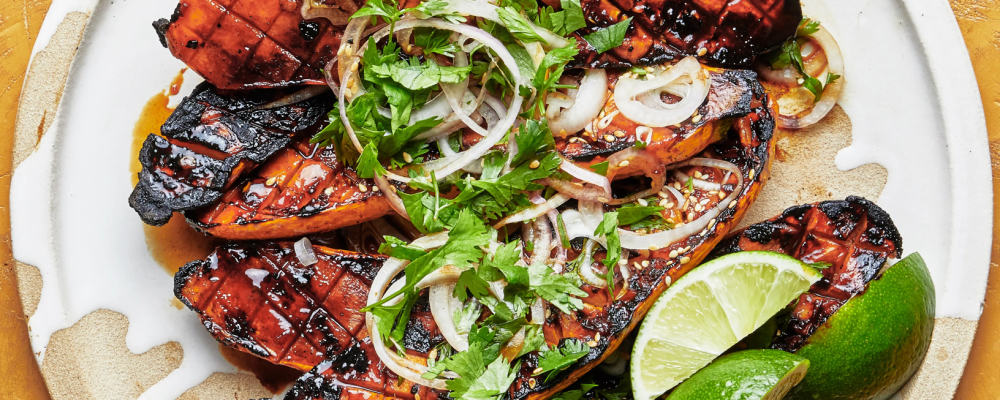
Sweet and Spicy Grilled Summer Squash

Healthy Fact of the Day

Summer squash, including zucchini and yellow squash, are low in calories and rich in essential nutrients like vitamin C, vitamin A, and potassium. They also contain dietary fiber, which supports digestive health and promotes feelings of fullness. Grilling the squash with a small amount of heart-healthy olive oil and natural sweeteners like honey helps create a nutritious and flavorful side dish.

Ingredients


  • 4 medium summer squash (zucchini and yellow squash), sliced lengthwise into 1/4-inch strips
  • 2 tbsp olive oil
  • 2 tbsp honey
  • 1 tbsp sriracha sauce (or your favorite hot sauce)
  • 2 garlic cloves, minced
  • 1 tsp smoked paprika
  • 1/2 tsp salt
  • 1/4 tsp freshly ground black pepper
  • Fresh cilantro, chopped, for garnish
  • Lime wedges for serving


Instructions

  1. Preheat your grill to medium-high heat (around 400°F or 200°C).

  2. In a small bowl, whisk together the olive oil, honey, sriracha sauce, minced garlic, smoked paprika, salt, and black pepper to create a marinade.

  3. Place the sliced summer squash in a large bowl and pour the marinade over them, tossing gently to coat evenly.

  4. Arrange the marinated squash slices on the preheated grill, cooking for 3-4 minutes per side, or until they are tender and have nice grill marks.

  5. Remove the grilled summer squash from the heat and transfer them to a serving platter.

  6. Garnish with chopped fresh cilantro and serve hot, accompanied by lime wedges for squeezing over the top.

Fire up the grill and let the sweet and spicy flavors of this summer squash dish dance on your tongue, creating a sizzling symphony that’ll have your taste buds singing with joy all season long!


Recent Recipes

Shrimp Tacos with Jalapeño Lime Slaw

  • August 11, 2026
  • 11 min read

Crispy Baked Italian Parmesan Chicken

  • August 11, 2026
  • 6 min read

The Sunday Roast: A Ritual Worth Reviving

  • August 11, 2026
  • 12 min read

Happy National S’mores Day — Here’s Every

  • August 10, 2026
  • 3 min read

Mozzarella and Spinach Crostini

  • August 10, 2026
  • 12 min read

Garlic Honey Lime Shrimp

  • August 10, 2026
  • 6 min read

The Watermelon Problem: Why the Most Summery

  • August 10, 2026
  • 10 min read

Dairy Queen Is Running the Best Blizzard

  • August 9, 2026
  • 2 min read

Tandoori Chicken & Cucumber Raita Rice Bowls

  • August 9, 2026
  • 15 min read

Blackberry Lavender Baked Ricotta Oat Cups

  • August 9, 2026
  • 14 min read

Tip of the Day

“Always let your meat rest before slicing.”

Whether you're roasting a chicken, grilling steak, or baking pork tenderloin, letting cooked meat rest for 5–10 minutes before slicing allows the juices to redistribute evenly. This simple step keeps your meat juicy and tender, ensuring every bite is flavorful and moist. Bonus: It gives you a moment to plate your sides or garnish for a perfect presentation!

Our Latest Recipes

Entrees
Benjamin Brown

Shrimp Tacos with Jalapeño Lime Slaw

Shrimp provides high-quality lean protein with minimal calories and fat, while the two-cabbage slaw delivers fiber, vitamins C and K, and antioxidants. Cabbage is one of the most nutrient-dense vegetables per calorie available. Using a modest amount of mayonnaise in the slaw dressing provides richness without excess, and the honey-lime base means you control sweetness naturally rather than relying on refined sugar.

Read More »
Chicken Recipes
Benjamin Brown

Crispy Baked Italian Parmesan Chicken

Baking breaded chicken rather than pan-frying or deep-frying significantly reduces the amount of oil absorbed by the crust while still achieving a golden, satisfying result. Pounding the chicken to even thickness means it cooks through in the same time the crust crisps—no overcooking required to ensure food safety, which keeps the lean breast meat as juicy as possible.

Read More »
Blog
Daily Disher

The Sunday Roast: A Ritual Worth Reviving

Bone-in roasts — the whole chicken, the leg of lamb, the pork shoulder — produce during roasting a rendered fat and a collagen-rich dripping that, when used as the basis for stock and as a cooking fat for the week’s subsequent meals, provide a continuous source of glycine, proline, and other amino acids that support joint health, gut lining integrity, and collagen synthesis. The Sunday roast practiced as a complete system — the initial meal, the stock from the bones, the fat used through the week — provides a meaningful and regular contribution of these nutrients that portioned, boneless preparations cannot match. The traditional Sunday roast is, in this specific sense, one of the most nutritionally complete meal formats available to any household that practices it consistently.

Read More »

Get your daily dose of delicious!

Skip to content












