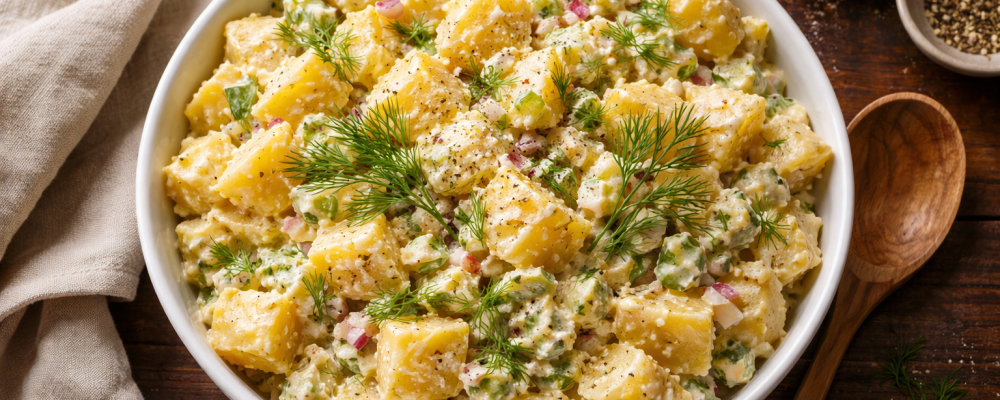

There’s a reason why steakhouse potato salad tastes different from the sweet, pickle-laden versions you find at most picnics—it’s sophisticated, tangy, and perfectly balanced, designed to complement premium beef rather than compete with it. This Steakhouse Potato Salad captures that refined approach with Yukon Gold potatoes, a creamy-tangy dressing built on mayonnaise, sour cream, and Dijon mustard, and just enough fresh dill and vegetables to add interest without overwhelming. It’s the kind of potato salad that adults genuinely appreciate rather than merely tolerate.
I developed this recipe after countless steakhouse visits where I found myself actually requesting extra potato salad—a side dish I’d historically considered boring. The difference was in the execution: using waxy potatoes that hold their shape, balancing creaminess with tanginess through sour cream and Dijon, and keeping add-ins minimal but impactful. The result is potato salad that tastes intentional and refined rather than like a vehicle for mayonnaise and sweet pickle relish.
What makes this version particularly successful is the restraint. There’s no overwhelming sweetness, no neon-colored relish, no bacon bits fighting for attention. Instead, you get creamy potatoes coated in a tangy dressing with just enough crunch from celery, sharpness from red onion, richness from hard-boiled eggs, and herbaceous brightness from fresh dill. Every component serves a purpose, creating a side dish that’s substantial enough to feel satisfying while remaining elegant enough to serve alongside quality steak without feeling like a step down.
The Inspiration Behind This Recipe
This recipe emerged from studying what makes steakhouse sides different from typical home versions—they’re designed to complement rather than compete, to enhance the main course rather than overshadow it. Steakhouse potato salad tends to be less sweet and more tangy than traditional American potato salad, with a cleaner flavor profile that doesn’t clash with beef.
The choice of Yukon Gold potatoes is deliberate—their waxy texture holds up well to boiling and mixing without falling apart, and their naturally buttery flavor adds richness without needing excessive mayo. The combination of mayonnaise and sour cream creates a dressing that’s creamy but has tang that cuts through richness, while Dijon mustard adds complexity and a subtle bite.
The technique of adding warm potatoes to the dressing allows them to absorb flavors more effectively, creating potato salad that’s seasoned throughout rather than just coated on the surface. This attention to detail separates good potato salad from exceptional potato salad.
A Brief History of Potato Salad
Potato salad likely originated in Germany, where it was traditionally dressed with vinegar, oil, and mustard—a tangy, less creamy version than what became popular in America. When German immigrants brought the dish to America in the 19th century, it evolved to incorporate mayonnaise, which was becoming widely available and popular.
By the early 20th century, American potato salad had diverged into regional styles—Southern versions often include mustard and pickles, Midwestern versions tend to be sweeter, and East Coast versions might include celery seed or vinegar-based dressings. Steakhouse potato salad represents a more refined approach that emerged in mid-century fine dining establishments where sides needed to complement expensive cuts of beef.
This Steakhouse Potato Salad honors that tradition—sophisticated, balanced, and designed to enhance rather than dominate the meal.
Why This Cooking Method Works
Boiling potatoes in salted water seasons them from the inside out, ensuring they’re flavorful rather than bland even before dressing. Cooking until fork-tender but not falling apart is crucial—overcooked potatoes turn to mush when mixed with dressing, while undercooked ones have an unpleasant raw-starchy center.
Adding warm potatoes to the dressing allows them to absorb flavors as they cool, creating more deeply seasoned potato salad. Cold potatoes don’t absorb dressing as well, resulting in a dish where the flavors sit on the surface rather than penetrating throughout.
The combination of mayonnaise and sour cream creates a dressing that’s rich but has enough tang to balance that richness. Mayonnaise provides body and creaminess, while sour cream adds tang and prevents the salad from feeling heavy. Dijon mustard contributes complexity and slight heat that elevates the entire dish.
Refrigerating for at least an hour allows flavors to meld and develop, softens the sharpness of the raw onion slightly, and allows the potatoes to finish absorbing the dressing. This resting time is essential—freshly made potato salad tastes good, but properly rested potato salad tastes great.
Flavor Profile: What to Expect
This potato salad delivers refined, well-balanced flavors:
- Creamy, buttery potatoes that hold their shape
- Tangy dressing from sour cream, Dijon, and vinegar
- Rich, savory depth from hard-boiled eggs
- Sharp crunch from red onion and celery
- Fresh, herbal notes from dill
- Subtle complexity from Dijon mustard
- Balanced seasoning that’s neither too heavy nor too bland
The result is potato salad that tastes sophisticated and intentional—the kind you’d be proud to serve at a dinner party or alongside quality grilled meats.
Tips for Making the Best Steakhouse Potato Salad
Technical precision ensures consistently excellent results:
- Use Yukon Gold potatoes: Their waxy texture and buttery flavor are ideal—russets fall apart too easily.
- Cut potatoes uniformly: Even cubes ensure consistent cooking throughout.
- Don’t overcook: Fork-tender is the goal—they should offer slight resistance, not fall apart.
- Dress while warm: This allows maximum flavor absorption.
- Refrigerate before serving: This dish needs at least an hour, preferably longer, for flavors to meld.
- Adjust seasoning after chilling: Cold food tastes less seasoned than warm food—taste and adjust before serving.
For extra richness, you can add a tablespoon of the potato cooking water to the dressing—the starchy water helps emulsify and adds subtle potato flavor. For more texture, leave some potatoes with skin on for rustic appeal.
Serving Suggestions and Side Pairings
This refined potato salad pairs beautifully with premium proteins:
- Grilled or pan-seared steaks of any cut
- Grilled chicken or pork chops
- Barbecued ribs or brisket
- Grilled fish like salmon or swordfish
- Burgers for elevated cookout fare
The salad is substantial enough to serve as a main component of the meal, so keep other sides relatively light—grilled vegetables, simple salads, or fresh corn work well without creating heaviness.
Storage, Reheating, and Make-Ahead Tips
This potato salad is excellent for meal prep and gatherings:
- Refrigerate in an airtight container for up to 4 days
- Make ahead completely up to 2 days before serving—flavors actually improve with time
- Don’t freeze: Potato salad doesn’t freeze well—potatoes become grainy and dressing separates
- Bring to cool room temperature before serving for best flavor
The potato salad actually tastes better on day two after flavors have had time to fully meld. If it seems dry after refrigeration, stir in a tablespoon of milk or sour cream to restore creaminess before serving.
Why This Recipe Deserves a Spot in Your Rotation
This Steakhouse Potato Salad proves that classic sides can be elevated without becoming complicated or pretentious. It delivers sophisticated flavor that adults genuinely appreciate while remaining accessible and crowd-pleasing. The make-ahead nature makes it perfect for entertaining or meal prep, and its versatility means it works for everything from casual cookouts to more formal dinners.
Once you’ve experienced how much better potato salad can be with proper technique and restrained, quality ingredients, you’ll find yourself making this for every gathering where potato salad is appropriate—and maybe even when it’s not strictly necessary.
Recommended Drink Pairing
The creamy, tangy flavors of this potato salad pair wonderfully with drinks that offer complementary or contrasting characteristics. When served alongside steak, the wine pairing should focus on the beef—a Cabernet Sauvignon or Malbec. For beer, a crisp lager or pilsner cuts through the richness beautifully.
For non-alcoholic options, iced tea (unsweetened or lightly sweetened) provides tannins that cut through creaminess, while lemonade offers tartness that complements the tangy dressing. Sparkling water with lemon provides refreshing palate-cleansing between bites.
Steakhouse Potato Salad
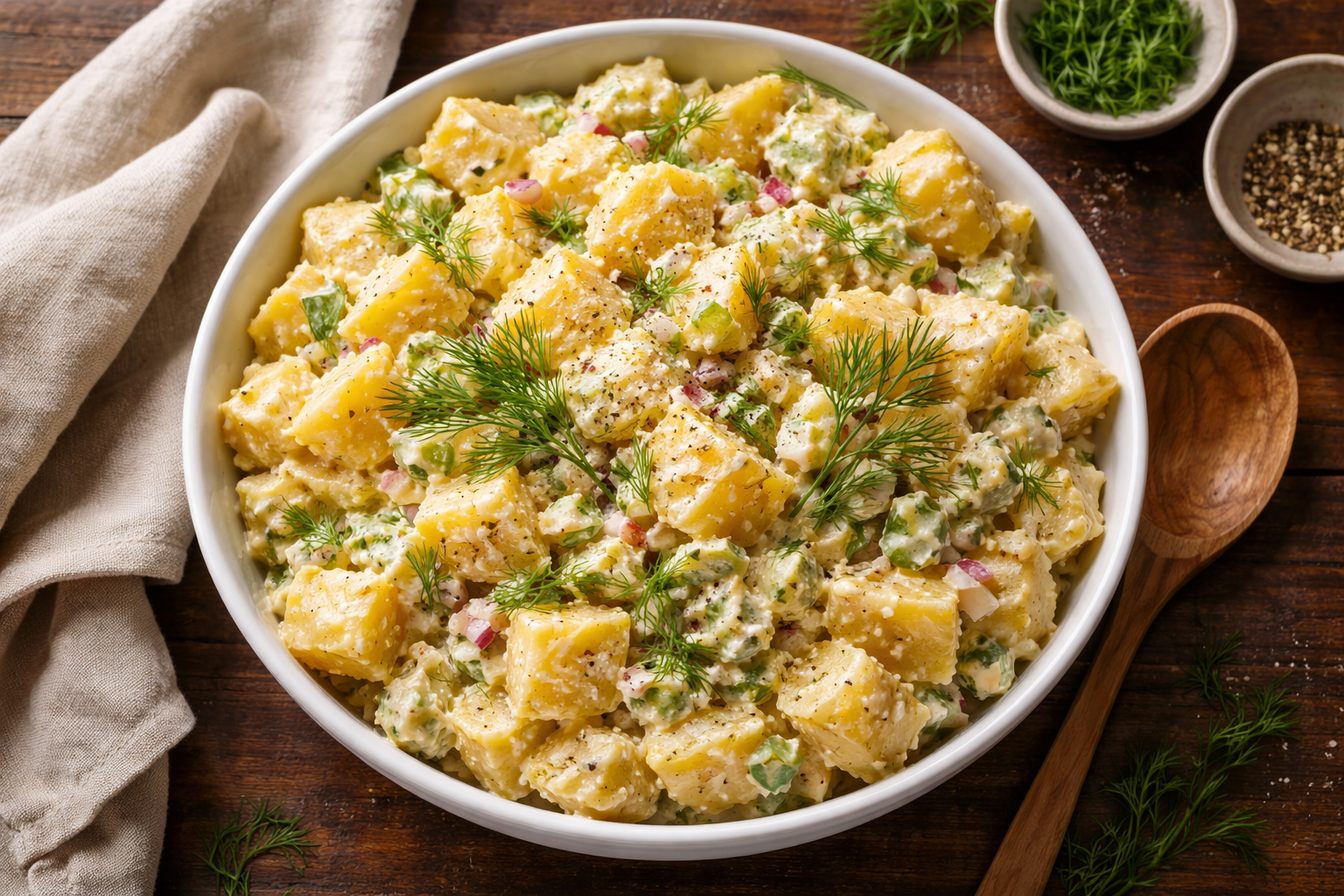
Steakhouse Potato Salad features tender Yukon Gold potatoes in a tangy mayo-sour cream dressing with Dijon, fresh dill, and hard-boiled eggs for refined flavor.
6
servings20
minutes15
minutes350
kcal35
minutesIngredients
3 pounds Yukon Gold potatoes
1 cup mayonnaise
0.25 cup sour cream
2 tablespoons Dijon mustard
2 tablespoons apple cider vinegar
0.5 cup chopped red onion
0.5 cup chopped celery
2 tablespoons chopped fresh dill
1.5 teaspoons salt
0.5 teaspoon black pepper
4 pieces hard-boiled eggs, chopped
Directions
- Peel and cut potatoes into cubes. Place them in a large pot of salted boiling water and cook for about 10-15 minutes until fork-tender.
- While potatoes are cooking, in a large bowl combine mayonnaise, sour cream, Dijon mustard, apple cider vinegar, salt, and black pepper.
- Once potatoes are cooked, drain them and let them cool slightly. Then add them to the mayonnaise mixture, stirring gently to coat.
- Stir in chopped red onion, celery, fresh dill, and chopped hard-boiled eggs. Mix well to combine all ingredients evenly.
- Cover the potato salad with plastic wrap and refrigerate for at least 1 hour to allow flavors to blend and to enhance the taste.
- Before serving, give the salad a final stir and adjust seasoning if necessary. Garnish with extra dill or paprika if desired.
Nutrition Facts
- Total number of serves: 4
- Calories: 350kcal
- Cholesterol: 0mg
- Sodium: 620mg
- Potassium: 400mg
- Sugar: 8g
- Protein: 6g
- Calcium: 60mg
- Iron: 2mg
About This Author

Benjamin Brown
Recipe Developer
Benjamin is our flavor engineer. A classically trained chef turned recipe developer, he’s obsessed with balancing taste, texture, and creativity. He ensures that every recipe we publish is not only delicious but also reliable, approachable, and repeatable — even for beginners.
Favorite dish: Slow-braised short ribs with red wine reduction.
Kitchen motto: “Cooking is part science, part soul.”