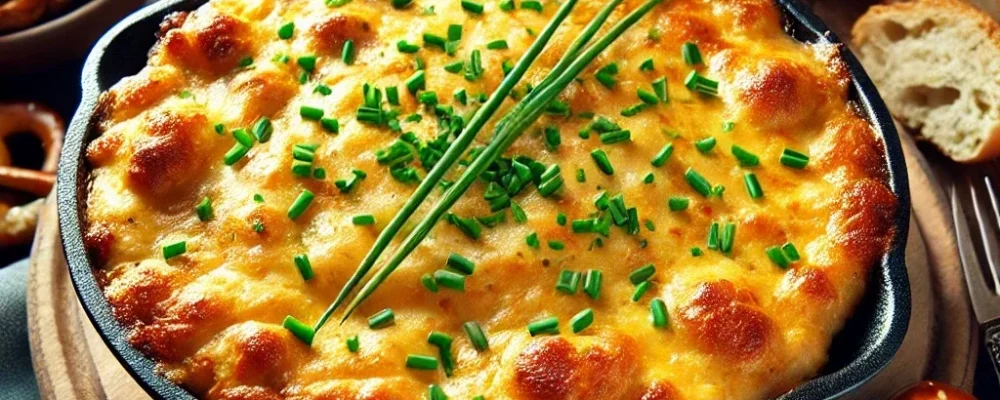
DALL-A-skillet-filled-with-rich-and-creamy-beer-cheese-topped-with-a-sprinkle-of-fresh-chives.-The-cheese-is-bubbling-and-golden-brown-on-the-edges-indic-e1720017762527

Skillet Beer Cheese

Healthy Fact of the Day

While indulgent, cheese is a good source of calcium and protein. The beer adds B vitamins and silicon, which may help strengthen bones.

Ingredients


  • 16 oz sharp cheddar cheese, shredded
  • 8 oz cream cheese, softened
  • 1 cup beer (preferably a lager or ale)
  • 2 cloves garlic, minced
  • 1 tsp Dijon mustard
  • 1 tsp Worcestershire sauce
  • 1/2 tsp smoked paprika
  • 1/4 tsp cayenne pepper (adjust to taste)
  • Salt to taste
  • Chopped chives or green onions for garnish
  • Pretzels, bread cubes, or crackers for dipping


Instructions

  1. In a large cast-iron skillet over medium-low heat, add the cream cheese and beer. Stir until the cream cheese is melted and smooth.

  2. Gradually add the shredded cheddar cheese, stirring constantly to ensure it melts evenly.

  3. Once all the cheese is melted, add the minced garlic, Dijon mustard, Worcestershire sauce, smoked paprika, and cayenne pepper. Stir to combine.

  4. Continue cooking and stirring until the mixture is smooth and bubbly, about 5-7 minutes.

  5. Taste and add salt if needed.

  6. If the cheese is too thick, add a splash more beer to thin it out. If it’s too thin, continue cooking for a few more minutes to reduce.

  7. Once you’ve reached your desired consistency, remove from heat.

  8. Garnish with chopped chives or green onions.

  9. Serve directly from the skillet (be careful, it’s hot!) with pretzels, bread cubes, or crackers for dipping.


Dip into this warm, gooey skillet of beer cheese and let the rich, tangy flavors dance on your tongue! It’s the perfect marriage of two beloved comfort foods, creating a dip so irresistible, you’ll find yourself saying “just one more bite” until the skillet is scraped clean. Who knew beer and cheese could create such delicious harmony?
Recent Recipes

The Trader Joe’s Frozen Appetizers Worth Building

  • May 9, 2026
  • 3 min read

Lemon Ricotta Pancakes

  • May 9, 2026
  • 11 min read

The Strange and Brilliant Science of Why

  • May 9, 2026
  • 8 min read

Mini Taco Cups

  • May 9, 2026
  • 8 min read

Sam’s Club Just Added a Chipotle-Style Chicken

  • May 8, 2026
  • 3 min read

How to Shop Like You Actually Know

  • May 8, 2026
  • 9 min read

Greek Chicken Casserole

  • May 8, 2026
  • 8 min read

Check Your Pantry and Freezer: Three More

  • May 7, 2026
  • 5 min read

Long Island Iced Coffee

  • May 7, 2026
  • 11 min read

What a Chef Learns in the First

  • May 7, 2026
  • 8 min read

Tip of the Day

“Always let your meat rest before slicing.”

Whether you're roasting a chicken, grilling steak, or baking pork tenderloin, letting cooked meat rest for 5–10 minutes before slicing allows the juices to redistribute evenly. This simple step keeps your meat juicy and tender, ensuring every bite is flavorful and moist. Bonus: It gives you a moment to plate your sides or garnish for a perfect presentation!

Our Latest Recipes

Blog
Daily Disher

The Trader Joe’s Frozen Appetizers Worth Building a Party Around

Frozen appetizers aren’t traditionally health food, but Trader Joe’s does offer some lighter options worth knowing about. The Vegetable Bird’s Nests and Cauliflower Bites are solid lower-calorie picks that still feel substantial on a spread. Rounding out the table with a fresh crudité platter or a store-bought hummus gives guests a lighter option and stretches your spread further without much extra effort.

Read More »
Breakfast
Aurora Wright

Lemon Ricotta Pancakes

Ricotta cheese provides high-quality protein and calcium while adding moisture that keeps these pancakes tender—making them more nutritious than standard pancakes without sacrificing any indulgence.

Read More »
Blog
Daily Disher

The Strange and Brilliant Science of Why Food Browns

While the Maillard reaction produces hundreds of desirable flavor compounds, it also produces small amounts of acrylamide — a compound that forms when starchy foods are cooked at high temperatures and that has been flagged in ongoing research for potential health considerations. Keeping browning controlled — achieving a deep golden color rather than a dark brown or black exterior on starchy foods like bread, potatoes, and cereals — significantly reduces acrylamide formation while preserving the flavor benefits of the reaction. The practical guidance is simple: golden, not dark.

Read More »

Get your daily dose of delicious!

Skip to content