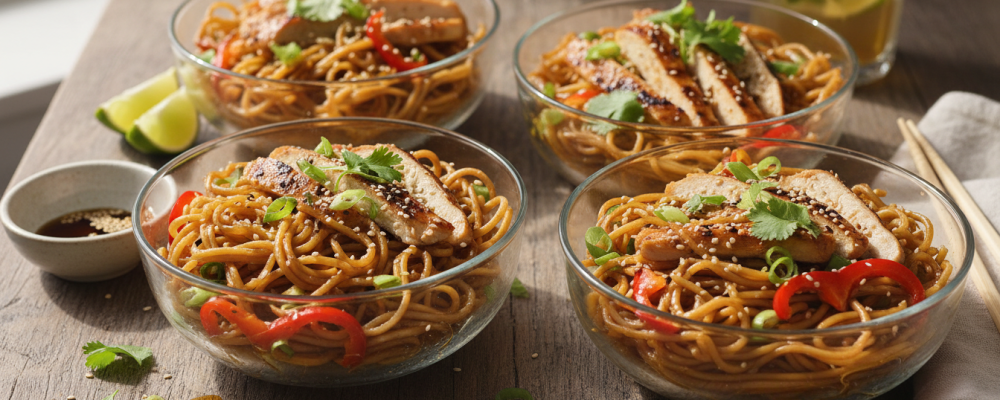

Cold noodle preparations present distinct technical challenges for meal prep: preventing noodle clumping during storage, managing sauce absorption that can make noodles gummy, maintaining vegetable crispness despite proximity to moisture-rich components, and creating flavor profiles that remain appealing when served cold or at room temperature. Most noodle-based meal prep fails by day two—the noodles become a congealed mass, the vegetables wilt into limp strands, and the sauce either pools at the bottom or gets completely absorbed, leaving dry, flavorless results.
This recipe addresses these challenges through strategic methodology: tossing hot noodles with sesame oil immediately after cooking creates a protective lipid coating that prevents starch retrogradation and clumping. The sauce composition—balanced between acid (rice vinegar), sweet (honey), and savory (soy sauce)—maintains its character over multiple days rather than becoming one-dimensional. The vegetables are selected specifically for their ability to maintain structural integrity without cooking: carrots, bell peppers, and snow peas all retain satisfying crunch for 4-5 days when kept cold.
What makes this Asian-inspired combination particularly effective for meal prep is how the flavor profile actually improves with time. Unlike dishes that peak immediately upon preparation and decline thereafter, these noodle bowls undergo positive development during storage. The ginger and garlic continue infusing the sauce, their sharp edges mellowing into rounded, complex aromatics. The noodles absorb seasoning gradually, becoming more flavorful rather than bland. The vegetables pickle slightly in the acidic dressing, developing enhanced flavor while maintaining their structural integrity. Day three often tastes superior to day one—a remarkable characteristic that makes these ideal for weekly meal prep.
The versatility of this preparation extends beyond just serving temperature. These bowls are excellent cold (refreshing, ideal for warm weather or when you want something light), at room temperature (flavors are most pronounced, convenient when reheating isn’t available), or gently warmed (comforting without being heavy). This temperature flexibility means they adapt to your preferences and circumstances rather than requiring specific serving conditions that might not be available when you’re eating at your desk or in your car.
The Inspiration Behind This Recipe
This recipe emerged from analyzing why restaurant cold noodle salads maintain quality during service while home versions often deteriorate rapidly. Professional kitchens employ specific techniques—noodle shocking in ice water to halt cooking, immediate oil coating to prevent clumping, sauce ratios calibrated for gradual absorption—that create noodle dishes capable of holding for hours without degrading. I needed to translate those principles into methodology suitable for 4-5 day meal prep storage rather than just same-day service.
The sesame-ginger flavor profile reflects both authentic Asian culinary traditions and practical meal prep considerations. Sesame oil provides nutty richness and fat that prevents noodle clumping while contributing distinctive flavor. Fresh ginger adds brightness and aromatic complexity that keeps these bowls tasting fresh rather than stale, even after multiple days of storage. The combination is recognizable enough to be approachable—most people enjoy Asian takeout flavors—but distinctive enough that these don’t taste generic or boring.
I tested various noodle types before determining that standard wheat-based noodles (spaghetti or linguine work perfectly) provide optimal texture for extended storage. Rice noodles, while traditional in many Asian preparations, become brittle when cold and don’t absorb sauce as effectively. Soba noodles work adequately but their delicate texture can become mushy. Wheat noodles maintain pleasant chew, absorb flavors well, and reheat successfully when desired—making them the most versatile choice for meal prep applications.
The raw vegetable approach reflects understanding that cooking vegetables initiates enzymatic breakdown that accelerates during storage. Julienned carrots, sliced bell peppers, and snow peas maintain their structural integrity and vibrant colors for 4-5 days because their cell walls remain intact. Cooked vegetables would soften progressively during storage, creating increasingly mushy texture. The raw approach also provides satisfying textural contrast against the tender noodles—essential for preventing these bowls from being texturally monotonous.
A Brief History of Cold Noodle Dishes and Asian Cuisine
Cold noodle preparations appear across multiple Asian culinary traditions—from Japanese hiyashi chuka to Korean naengmyeon to Chinese liangmian. These dishes emerged partly from practical necessity (serving noodles at room temperature or cold during hot weather) and partly from the culinary discovery that certain flavor profiles—acidic, spicy, aromatic—work exceptionally well when served chilled or at room temperature rather than hot.
The specific combination of sesame, ginger, soy sauce, and rice vinegar represents a fusion of various Asian flavor traditions rather than belonging to a single authentic cuisine. Sesame oil is fundamental to Chinese and Korean cooking; fresh ginger appears throughout Asian cuisines; soy sauce originated in China and spread throughout Asia; rice vinegar is essential in Japanese preparations. This combination creates a recognizably “Asian” flavor profile that’s approachable to Western palates without claiming authenticity to any specific regional tradition.
The adoption of Asian-inspired flavors into Western meal prep culture reflects growing interest in diverse flavor profiles beyond European and American traditions. As exposure to Asian cuisines increased through restaurants and travel, home cooks began seeking ways to recreate those flavors in formats suitable for advance preparation. Cold noodle salads solved multiple problems: they satisfied cravings for Asian takeout at a fraction of the cost, they provided vegetable-forward options that felt light and healthy, and they introduced flavor variety into meal prep rotations often dominated by Mediterranean or American preparations.
What makes these sesame ginger noodle bowls particularly suited to contemporary dietary patterns is their flexibility regarding protein additions. The base preparation is vegetarian, allowing it to serve multiple dietary approaches. Add grilled chicken, shrimp, tofu, or edamame and you’ve created complete meals tailored to individual preferences—one base recipe serving varied dietary needs through simple customization.
Why This Cooking Method Works for Meal Prep
The success of these noodle bowls for extended storage hinges on understanding starch retrogradation and how to prevent the textural degradation that makes most refrigerated noodles unpalatable. When cooked noodles cool, their gelatinized starches begin realigning into crystalline structures—this retrogradation process makes noodles firm, dry, and unpleasant. The solution involves creating protective barriers that slow this process while maintaining adequate moisture for tender texture.
Coating hot noodles with sesame oil immediately after draining serves multiple critical functions. The oil’s lipid molecules coat individual noodle strands, creating a hydrophobic barrier that prevents the noodles from sticking together. This coating also slows moisture loss that would make noodles dry and hard. The oil provides a medium for fat-soluble flavor compounds from ginger and garlic to adhere to noodles rather than remaining in the sauce. From a textural standpoint, the oil-coated noodles remain pleasantly separate and tender rather than forming the congealed mass characteristic of improperly stored noodles.
The sauce composition represents engineered balance between multiple functions: flavoring, preservation, and moisture management. The soy sauce provides umami depth and salt that seasons the noodles internally as they absorb liquid. The rice vinegar contributes acidity (pH approximately 3-4) that creates an environment less hospitable to bacterial growth while brightening flavors. The honey provides viscosity that helps sauce adhere to noodles and contributes gentle sweetness that balances the salty-acidic elements. Together, these components create a sauce that neither pools at the bottom (too thin) nor gets entirely absorbed leaving dry noodles (too thick).
The raw vegetable preparation maximizes both nutritional retention and textural quality. Cooking vegetables—even briefly—initiates enzymatic activity that continues during storage, progressively softening cell walls and creating mushiness. Raw vegetables maintain their protective cell walls intact, preserving crunch for 4-5 days. The vegetables’ exposure to the acidic dressing creates mild pickling effects that actually enhance rather than degrade their texture—the acid firms cell walls slightly while infusing flavor, improving the vegetables over time rather than deteriorating them.
The ginger and garlic’s aromatic compounds behave differently in oil-based versus water-based environments. In this preparation, they’re first sautéed briefly in sesame oil, which extracts fat-soluble flavor compounds while mellowing harsh edges. These oil-infused aromatics then integrate into the sauce, distributing throughout the noodles during tossing. Over storage time, the compounds continue developing—ginger’s gingerol converts to compounds with different flavor profiles, garlic’s allicin breaks down into more complex molecules. This chemical evolution creates increasingly sophisticated flavor rather than the deterioration common in many meal prep items.
Flavor Profile: What to Expect
These sesame ginger noodle bowls deliver vibrant, well-balanced Asian-inspired flavors:
- Nutty and rich from toasted sesame oil that provides distinctive Asian character and luxurious mouthfeel
- Bright and zesty from fresh ginger that adds peppery, aromatic heat without aggressive spiciness
- Savory and umami-forward from soy sauce that provides deep, satisfying saltiness
- Tangy and sharp from rice vinegar that cuts through richness with pleasant acidity
- Subtly sweet from honey that rounds out the sauce without creating cloying sweetness
- Aromatic and pungent from fresh garlic that adds savory depth
- Crisp and fresh from raw vegetables that provide textural contrast and clean vegetable flavors
- Toasty and complex from sesame seeds that add nutty crunch
- Fresh and bright from green onions that contribute sharp, oniony notes
The overall composition creates that characteristic Asian flavor profile—balanced between sweet, salty, sour, and umami with aromatic complexity from ginger and garlic. These taste distinctly Asian-inspired without being aggressively exotic or unfamiliar. The flavor intensity is moderate rather than overwhelming, making these suitable for repeated consumption without palate fatigue.
Over 3-5 days of storage, flavor development is remarkable and generally positive. The ginger’s sharpness mellows into rounded warmth. The garlic sweetens as its harsh sulfur compounds break down. The vegetables absorb sauce flavors while contributing their own mild pickling notes. The noodles become progressively more seasoned as they continue absorbing the dressing. Many people find day 3-4 bowls taste more complex and integrated than freshly made ones where components still taste somewhat distinct. This positive aging characteristic—improving rather than deteriorating—makes these exceptionally well-suited to meal prep timelines.
Tips for Making the Best Sesame Ginger Noodle Bowls
Precision in noodle handling and sauce composition creates bowls that remain appealing throughout storage:
- Don’t overcook the noodles: Cook to al dente (1-2 minutes less than package directions). They’ll soften slightly during storage, and slightly undercooked noodles maintain better texture than fully cooked ones.
- Rinse noodles after draining: Rinse under cold water to halt cooking and remove excess surface starch that would cause clumping. This also brings them to temperature suitable for immediate handling.
- Toss with oil while still warm: Coat noodles with sesame oil within 1-2 minutes of draining while they’re still warm enough for the oil to distribute evenly and coat thoroughly.
- Use fresh ginger, not dried: Fresh ginger provides bright, complex flavor that dried ginger can’t replicate. Grate finely using a microplane for best distribution.
- Sauté aromatics briefly: Cook ginger and garlic just until fragrant (30-60 seconds). Overcooking creates bitter flavors that intensify during storage.
- Whisk sauce completely: Ensure honey is fully dissolved into the liquid components before tossing with noodles. Undissolved honey creates sticky spots rather than even coating.
- Julienne vegetables uniformly: Cut carrots into thin matchsticks, slice peppers consistently, trim snow peas to similar sizes. Uniform sizing creates consistent texture and visual appeal.
- Add vegetables raw: Don’t cook the vegetables—their raw crunch provides essential textural contrast and they’ll soften slightly in the dressing over time.
- Toast sesame seeds: Lightly toast in a dry pan until golden and fragrant. This intensifies their nutty flavor significantly compared to raw seeds.
- Reserve some green onions: Add half during assembly, keep half fresh to add just before eating. This maintains bright onion flavor throughout the week.
- Don’t overdress: The noodles should be well-coated but not swimming in sauce. Excess sauce pools at the bottom and makes everything soggy.
The most critical factors are proper noodle cooking (al dente, rinsed, oil-coated), sauce balance (not too thin, not too thick), and keeping vegetables raw (maintains crunch that defines these bowls’ appeal).
Portioning and Container Suggestions
This recipe yields 4 generous meal-sized bowls when using approximately 8-12 ounces of dried noodles (which yields about 4-6 cups cooked). Each bowl provides roughly 350-400 calories before protein additions, with substantial complex carbohydrates, fiber from vegetables, and healthy fats from sesame oil—creating satisfying meals that sustain energy for 4-5 hours.
For optimal presentation and component separation, use shallow, wide containers (approximately 4-5 cup capacity) rather than deep, narrow ones. Shallow containers allow you to see all the colorful vegetables, making these bowls visually appealing when you open your lunch container. Wide containers also make eating easier—you can twirl noodles comfortably and access all components without digging through layers.
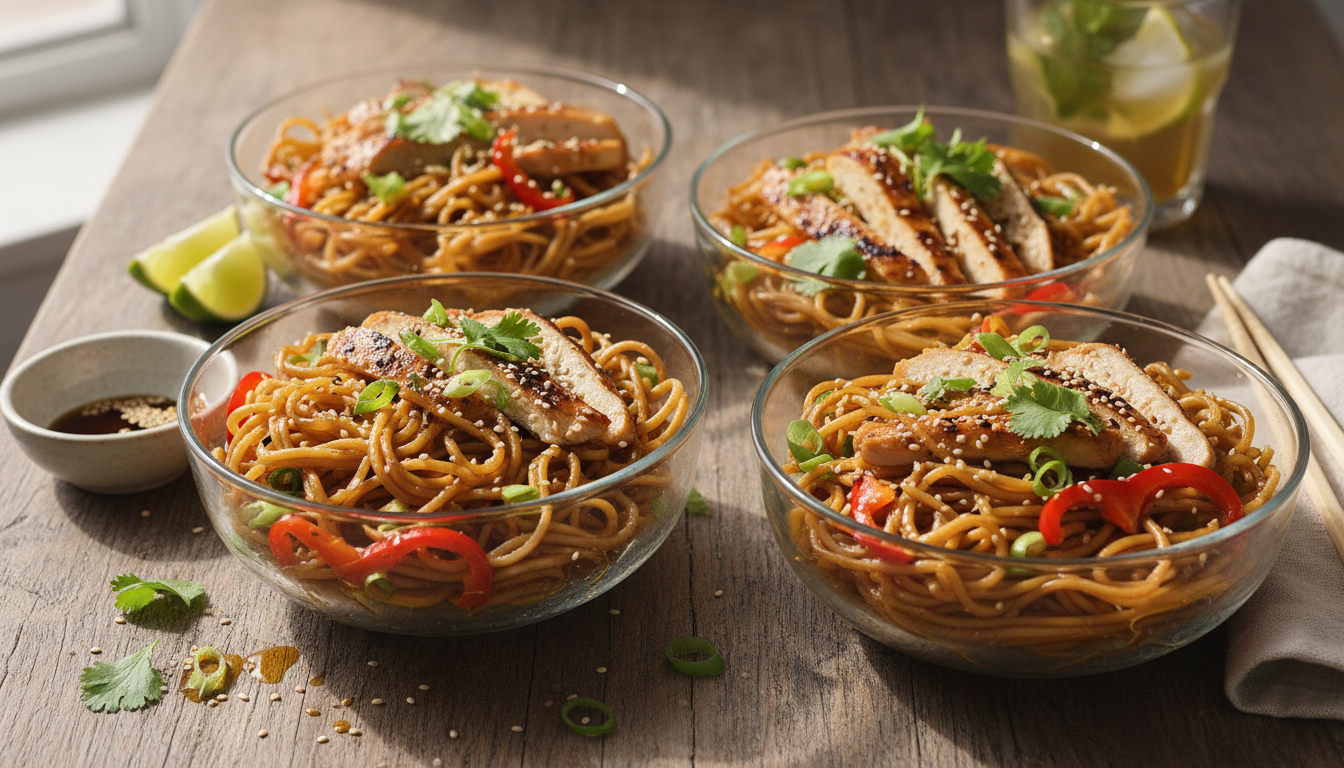
Glass containers with tight-sealing lids work excellently for these noodle bowls. Clear glass showcases the vibrant colors—orange carrots, red peppers, green snow peas, white noodles—creating visual appeal that makes you actually want to eat what you’ve prepped. Glass also doesn’t absorb the sesame oil or retain garlic odors, unlike some plastics that might develop lingering smells.
For strategic assembly, layer thoughtfully: noodles form the base, vegetables distribute throughout and on top for visual appeal, sesame seeds and green onions garnish the top layer. This composed approach creates restaurant-quality presentation despite being meal prep. When your lunch looks this good, eating healthy feels less like obligation and more like choosing something appealing.
If you’re adding protein (recommended for complete meals), store it separately and add just before eating. Grilled chicken, sautéed shrimp, baked tofu, or hard-boiled eggs can be prepped alongside the noodle bowls and added to create customized meals throughout the week without requiring separate recipe preparation.
Storage, Reheating, and Shelf Life Tips
- Refrigerator storage: Store in airtight containers for 4-5 days. The noodles and vegetables maintain excellent quality throughout, often improving as flavors meld.
- Serve at various temperatures: These bowls are excellent cold (refreshing, no reheating needed), at room temperature (maximum flavor, remove from fridge 15-20 minutes before eating), or gently warmed (comforting without being hot).
- Reheating method if desired: Microwave for 60-90 seconds until just warm, not hot. Overheating makes noodles mushy and vegetables limp. Many people prefer these bowls cold or room temperature.
- Add fresh elements when serving: Top with additional green onions, fresh cilantro, crushed peanuts, or a squeeze of lime for enhanced flavor and freshness.
- Protein addition timing: If adding protein, store separately and combine just before eating for maximum freshness and textural variety.
- Prevent drying: Ensure containers seal tightly. Exposure to refrigerator air dries noodle edges and makes them hard and unpleasant.
- Sauce adjustment: If noodles seem dry after a few days, drizzle with a little extra sesame oil or a splash of rice vinegar to refresh. The noodles continue absorbing sauce over time.
- Freezing not recommended: The vegetables’ water content and noodles’ starch structure don’t freeze well. These are refrigerator-only meal prep.
- Quality indicators: Fresh noodle bowls smell pleasantly of sesame, ginger, and garlic without any sour or fermented odors. Properly stored, they remain appealing through day 5.
- Texture expectations: Noodles may firm up slightly in the refrigerator but soften when brought to room temperature or gently warmed. Vegetables remain crisp through day 4, then may soften slightly by day 5 but remain perfectly edible.
- Meal prep efficiency: Double the recipe and use for both lunch and dinner, or make extra to have quick meals available when you don’t want to cook fresh.
Why This Recipe Deserves a Spot in Your Meal Prep Rotation
From a flavor diversity perspective, these Asian-inspired noodle bowls fill a critical gap in most meal prep rotations dominated by Mediterranean, Mexican, or American flavors. The sesame-ginger profile provides completely different taste experience from Greek salads, southwestern grain bowls, or Italian-inspired preparations—preventing the palate fatigue that often causes meal prep abandonment. When your weekly lineup includes genuinely diverse flavor profiles, eating prepared food feels less repetitive and more like having varied dining options at your disposal.
The temperature flexibility advantage deserves emphasis—unlike meals that require reheating to be palatable, these noodle bowls are intentionally designed for cold or room temperature consumption. This makes them ideal for situations where reheating isn’t available or convenient: eating at your desk without microwave access, packed lunches for outdoor work, meals consumed during commutes, or simply days when you want something refreshing rather than hot food. This versatility means you’ll actually eat what you’ve prepped rather than skipping it because reheating feels like too much effort.
The economic calculation is compelling: four noodle bowls cost approximately $8-10 to prepare—roughly $2-2.50 per bowl. Restaurant noodle bowls or Asian takeout costs $10-15 per comparable serving. You’re saving $8-12 per bowl, which compounds to $32-48 per weekly batch. Beyond direct cost savings, these bowls prevent the takeout temptation that undermines both budgets and health goals—when you have delicious Asian-inspired food already prepared, ordering delivery becomes unnecessary rather than just inadvisable.
But perhaps most valuable is how these noodle bowls demonstrate that meal prep can encompass virtually any cuisine or flavor profile you enjoy. Too often, people assume meal prep means accepting limited options—grilled chicken and vegetables, basic salads, boring grain bowls. These sesame ginger noodles prove you can meal prep literally anything you’d enjoy eating fresh, provided you understand the technical principles that make different preparations suitable for advance cooking and extended storage. That realization—that meal prep is limited only by your knowledge and creativity, not by inherent restrictions on what foods can be prepared ahead—transforms meal prep from constraint into freedom.
Meal Prep Pairing Suggestions
These sesame ginger noodle bowls function optimally within a diverse lunch strategy that prevents flavor monotony through varied cuisines and profiles. Pair them with Mediterranean-inspired options like Lemon Herb Salmon Bowls or Greek Chicken Wraps for a week covering different culinary traditions—Asian Monday and Wednesday, Mediterranean Tuesday and Thursday, your choice Friday. This geographic rotation prevents the repetitive eating that often derails meal prep while ensuring consistent nutrition across varied sources.
For those seeking plant-forward meal prep without full vegetarian commitment, these noodle bowls complement the Black Bean Farro Bowls perfectly. Alternate between Asian noodles and southwestern grain bowls throughout the week, add protein as desired to either base, and suddenly you have varied, satisfying, largely plant-based lunches without feeling restricted to a single flavor profile or cuisine. This approach—diverse plant-based options rather than monotonous repetition—makes reducing meat intake feel like expanding options rather than accepting limitations.
These noodle bowls also pair strategically with the protein-rich breakfast options for complete daily meal prep coverage. Combine sesame ginger noodles (lunch) with Spinach Feta Egg Bake or Cottage Cheese Scrambled Eggs (breakfast), various dinner options, and energy bites or vegetable-based snacks (between-meal hunger). This comprehensive system means Sunday preparation covers every eating occasion while providing enough variety to prevent the boredom that causes meal prep abandonment.
From a complete meal prep philosophy perspective, having this final recipe completes a comprehensive system covering every conceivable dietary need, preference, and circumstance:
Breakfasts: Sweet (Baked Oatmeal Cups, Sweet Potato Pancakes, Peanut Butter Banana Oat Cups) and savory (Egg Muffin Cups, Cottage Cheese Scrambled Eggs, Spinach Feta Egg Bake, Breakfast Burritos)
Lunches/Dinners: Mediterranean (Lemon Herb Salmon Bowls, Greek Chicken Wraps, Mason Jar Salads, Caprese Skewers), Southwestern (Black Bean Farro Bowls), Asian (Sesame Ginger Noodle Bowls), and versatile proteins (Sheet Pan Chicken, Chicken Grain Bowls)
Snacks: Sweet (Dark Chocolate Energy Bites, Almond Butter Balls), savory (Stuffed Mini Peppers, Turkey Hummus Pinwheels, Tuna Salad Cucumber Bites), and fresh (Caprese Skewers)
Dietary patterns covered: Omnivore, vegetarian, plant-forward, high-protein, low-carb options, gluten-free adaptable, dairy-free adaptable
Temperature preferences: Hot meals, cold meals, room temperature options, flexible serving temperatures
Preparation complexity: No-cook assembly, minimal cooking, full recipe preparation, batch-friendly options
Storage timelines: Refrigerator (3-5 days), freezer (1-3 months), various options for different planning horizons
This comprehensive coverage means you’re never stuck with inadequate options regardless of your current dietary approach, taste preferences, schedule constraints, or available kitchen equipment. You have recipes for every scenario, every craving, every circumstance. That breadth of capability—that confidence that you can meal prep successfully regardless of what life throws at you—transforms meal prep from fragile habit dependent on perfect conditions into robust practice that adapts and persists through changing circumstances.
The ultimate value of mastering this complete meal prep system isn’t just the individual recipes—it’s the competence and confidence they collectively create. You’re no longer dependent on restaurants, takeout, or daily cooking to eat well. You’re not vulnerable to the schedule chaos, budget pressures, or decision fatigue that derail most people’s healthy eating intentions. You have a comprehensive toolkit of proven recipes covering every meal, every flavor profile, every dietary need. You’ve developed the skills, knowledge, and systems that make healthy eating sustainable not through willpower or discipline, but through simple competence and preparation.
That’s what these 40+ recipes represent: not just instructions for making food, but a complete education in sustainable, flexible, genuinely enjoyable meal prep that can support you indefinitely. Use them well, adapt them to your preferences, and recognize that you now possess knowledge that most people lack—the ability to consistently, reliably, and pleasurably feed yourself well regardless of circumstances. That’s genuine food freedom, and it’s yours.
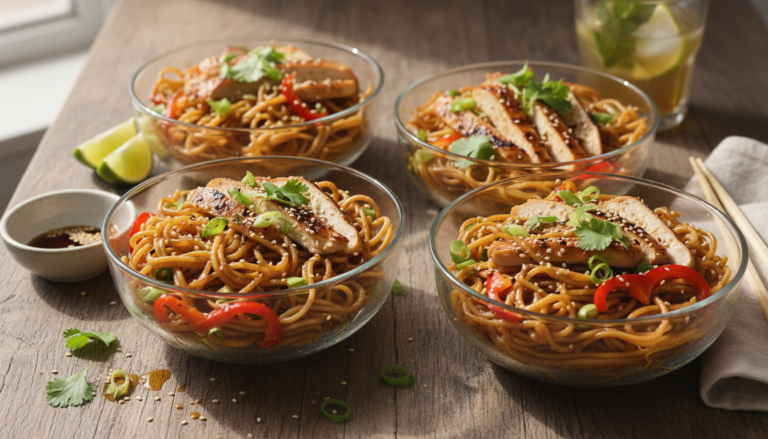
Sesame Ginger Noodle Bowls
This sesame ginger noodle bowls recipe delivers vibrant Asian-inspired flavors in a format that actually gets better over time as the sauce marinates the noodles and vegetables.
4
servings20
minutes10
minutes450
kcal30
minutesIngredients
8 oz spaghetti noodles
2 tbsp sesame oil
1 tbsp fresh ginger, grated
2 cloves garlic, minced
1/4 cup soy sauce
2 tbsp rice vinegar
1 tbsp honey
2 tsp sesame seeds
2 cups carrots, julienned
2 cups bell peppers, sliced
1 cup snow peas
3 stalks green onions, chopped
Directions
- Cook noodles according to package instructions and drain.
- Heat sesame oil in a pan and sauté ginger and garlic until fragrant.
- Add soy sauce, rice vinegar, and honey; stir well to combine.
- Toss noodles in the sauce until evenly coated.
- Add vegetables and sesame seeds, and toss to mix.
- Garnish with green onions before serving.
Nutrition Facts
- Total number of serves: 4
- Calories: 450kcal
- Cholesterol: 0mg
- Sodium: 620mg
- Potassium: 400mg
- Sugar: 8g
- Protein: 6g
- Calcium: 60mg
- Iron: 2mg
About This Author

Benjamin Brown
Recipe Developer
Benjamin is our flavor engineer. A classically trained chef turned recipe developer, he’s obsessed with balancing taste, texture, and creativity. He ensures that every recipe we publish is not only delicious but also reliable, approachable, and repeatable — even for beginners.
Favorite dish: Slow-braised short ribs with red wine reduction.
Kitchen motto: “Cooking is part science, part soul.”