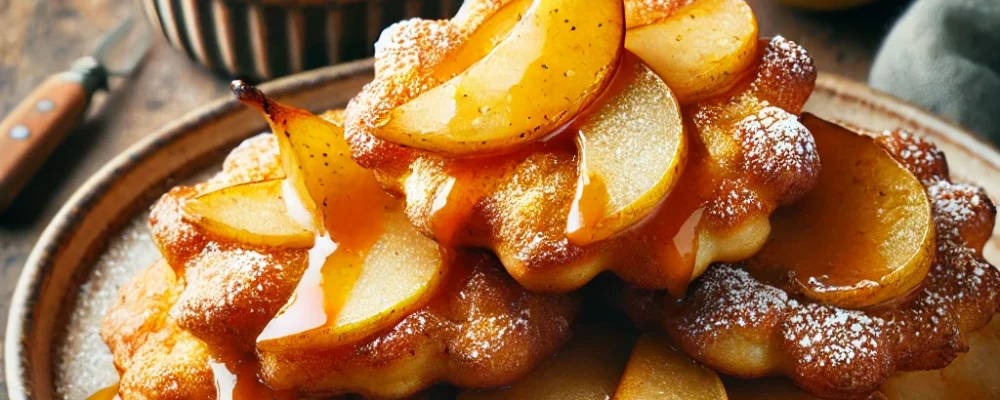
Salted-Caramel-Pear-Fritters

Salted Caramel Pear Fritters

Healthy Fact of the Day

Salted Caramel Pear Fritters are a decadent treat high in calories and sugar. Pears provide some fiber, vitamins, and antioxidants. To make a healthier version, consider baking the fritters instead of frying. Use whole wheat flour for added fiber and nutrients. Replace some sugar with mashed banana or applesauce for natural sweetness. For a lighter topping, use Greek yogurt mixed with a touch of honey and cinnamon instead of caramel sauce. Remember, these should be enjoyed as an occasional indulgence. Balance your diet by pairing a small fritter with a serving of fresh fruit or enjoying them as part of a special brunch alongside protein-rich options.

Ingredients


  • 2 ripe pears, peeled and diced
  • 2 cups all-purpose flour
  • 1/4 cup granulated sugar
  • 2 tsp baking powder
  • 1 tsp ground cinnamon
  • 1/4 tsp ground nutmeg
  • 1/2 tsp salt
  • 2 large eggs
  • 1 cup milk
  • 2 tbsp melted butter
  • 1 tsp vanilla extract
  • Vegetable oil for frying
  • 1 cup store-bought caramel sauce
  • 1 tsp flaky sea salt
  • Powdered sugar for dusting

Instructions

  1. In a large bowl, whisk together flour, sugar, baking powder, cinnamon, nutmeg, and salt.

  2. In another bowl, beat eggs, milk, melted butter, and vanilla.

  3. Stir wet ingredients into dry until just combined.

  4. Fold in diced pears.

  5. Heat 3 inches of oil in a heavy-bottomed pot to 350°F (175°C).

  6. Drop batter by spoonfuls into hot oil, frying 3-4 fritters at a time.

  7. Fry for 2-3 minutes per side until golden brown.

  8. Drain on paper towels.

  9. Warm caramel sauce in a microwave or small saucepan.

  10. Drizzle fritters with caramel sauce and sprinkle with flaky sea salt.

  11. Dust with powdered sugar before serving.

  12. Serve warm.

Sink your teeth into these Salted Caramel Pear Fritters and savor the interplay of sweet, salty, and spice. The crisp exterior gives way to a tender, pear-studded interior, while the drizzle of salted caramel adds a luxurious finish. It’s like biting into autumn itself, with all the warmth and comfort of the season captured in each golden morsel. Whether you’re serving them for a cozy weekend brunch or as a special dessert, these fritters are sure to elicit sighs of contentment. So fire up that oil, grab your mixing bowls, and get ready to fry up a batch of pure, sugary bliss!


Recent Recipes

The Food Scientist’s Guide to a Better

  • June 16, 2026
  • 10 min read

Pork Belly Tacos

  • June 16, 2026
  • 10 min read

Grilled Mini Sweet Peppers with Goat Cheese

  • June 16, 2026
  • 8 min read

The Lost Language of Regional American Food

  • June 15, 2026
  • 10 min read

Lemon Chicken Romano

  • June 15, 2026
  • 9 min read

Pepsi Just Dropped a 28-Can Variety Pack

  • June 15, 2026
  • 4 min read

S’mores Muddy Buddies

  • June 15, 2026
  • 11 min read

Father’s Day Is One Week Away —

  • June 14, 2026
  • 4 min read

Chocolate Caramel Cheesecake Bites

  • June 14, 2026
  • 16 min read

Smoky Black Bean & Cotija Bites

  • June 14, 2026
  • 14 min read

Tip of the Day

“Always let your meat rest before slicing.”

Whether you're roasting a chicken, grilling steak, or baking pork tenderloin, letting cooked meat rest for 5–10 minutes before slicing allows the juices to redistribute evenly. This simple step keeps your meat juicy and tender, ensuring every bite is flavorful and moist. Bonus: It gives you a moment to plate your sides or garnish for a perfect presentation!

Our Latest Recipes

Blog
Daily Disher

The Food Scientist’s Guide to a Better Home Kitchen

Understanding the science of cooking temperatures and protein denaturation has direct nutritional implications: cooking proteins at lower temperatures for longer periods — as in poaching, sous vide preparation, and gentle braising — preserves significantly more of the heat-sensitive B vitamins, particularly thiamine and B6, than high-heat cooking methods. The same scientific principles that produce better texture in gently cooked proteins also produce better nutritional retention — making the food science of low-temperature cooking a nutritional consideration as much as a culinary one.

Read More »
Entrees
Benjamin Brown

Pork Belly Tacos

While pork belly is undeniably rich, it provides high-quality protein and contains monounsaturated fats similar to those in olive oil. The key to enjoying it is portion control and balance—a few slices of pork belly with plenty of fresh vegetables and citrus creates a satisfying meal. The orange juice marinade adds vitamin C while helping tenderize the meat.

Read More »
Appetizers
Amelia Grace

Grilled Mini Sweet Peppers with Goat Cheese

Mini sweet peppers are an excellent source of vitamins C and A, and their natural sweetness means they need no added sugar to taste indulgent alongside the goat cheese filling. Goat cheese is lower in calories and fat than many other soft cheeses, and its strong flavor means a small amount per pepper provides rich, satisfying taste without a heavy hand.

Read More »

Get your daily dose of delicious!

Skip to content












