Daily-Dish

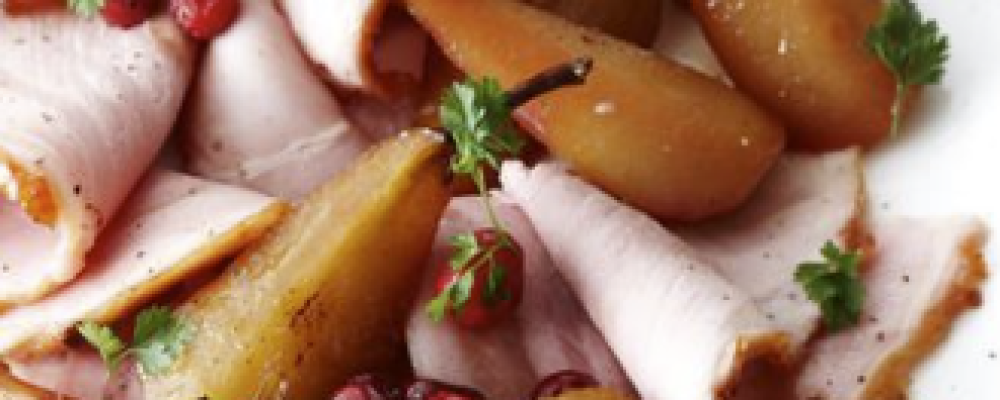
Maple, Honey, and Spice-Basted Ham with Glazed Pears

Healthy Fact of the Day

Maple, Honey, and Spice-Basted Ham with Glazed Pears is a delectable dish that balances the savory goodness of ham with the natural sweetness of maple and honey, complemented by warm spices. This recipe provides a flavorful twist to a classic ham dish with the added touch of caramelized glazed pears.

Ingredients


  • 1 bone-in ham, fully cooked (about 6-8 lbs)
  • 1/2 cup maple syrup
  • 1/4 cup honey
  • 2 tablespoons Dijon mustard
  • 1 teaspoon ground cinnamon
  • 1/2 teaspoon ground nutmeg
  • 1/4 teaspoon ground cloves
  • 1/4 teaspoon black pepper
  • 3-4 ripe pears, cored and sliced
  • 1/4 cup brown sugar
  • 2 tablespoons butter
  • Fresh thyme for garnish
  •  

Instructions


  1. Preheat your oven to 325°F (163°C).

  2. Place the ham in a roasting pan, fat side up.

  3. In a bowl, whisk together maple syrup, honey, Dijon mustard, ground cinnamon, ground nutmeg, ground cloves, and black pepper.

  4. Brush the ham with the maple and honey mixture, ensuring it is well coated.

  5. Cover the ham loosely with aluminum foil and bake in the preheated oven for about 1 hour.

  6. While the ham is baking, prepare the glazed pears. In a skillet, melt butter over medium heat.

  7. Add sliced pears and brown sugar to the skillet. Sauté for 5-7 minutes or until the pears are caramelized.

  8. Remove the ham from the oven and uncover.

  9. Baste the ham with the pan juices and arrange the glazed pears around the ham.

  10. Return the ham to the oven and bake for an additional 30-45 minutes or until the internal temperature reaches 140°F (60°C) and the ham is nicely glazed.

  11. Let the ham rest for 10-15 minutes before carving.

  12. Garnish with fresh thyme.


Serve the Maple, Honey, and Spice-Basted Ham with Glazed Pears as a centerpiece for a festive and flavorful meal!


Recent Recipes

USDA Issues Public Health Alert for White

  • March 25, 2026
  • 4 min read

Lemon Butter Scallops

  • March 25, 2026
  • 11 min read

Why Your Caramelized Onions Never Get Dark

  • March 25, 2026
  • 9 min read

Easy Greek Chicken Pasta

  • March 25, 2026
  • 9 min read

Burger King Is Dropping a New Customer-Created

  • March 24, 2026
  • 4 min read

Albondigas Tacos

  • March 24, 2026
  • 9 min read

The Coffee Brewing Mistake That Makes Everything

  • March 24, 2026
  • 9 min read

Slow Cooker Beef & Broccoli

  • March 24, 2026
  • 9 min read

Air Fryer Parmesan Truffle Fries

  • March 23, 2026
  • 10 min read

Why Your Homemade Pizza Dough Is Always

  • March 23, 2026
  • 9 min read

Tip of the Day

“Always let your meat rest before slicing.”

Whether you're roasting a chicken, grilling steak, or baking pork tenderloin, letting cooked meat rest for 5–10 minutes before slicing allows the juices to redistribute evenly. This simple step keeps your meat juicy and tender, ensuring every bite is flavorful and moist. Bonus: It gives you a moment to plate your sides or garnish for a perfect presentation!

Our Latest Recipes

Blog
Daily Disher

USDA Issues Public Health Alert for White Oak Pastures Ground Beef Over Possible Metal Contamination

Food safety alerts like this one are a good reminder to periodically check the dates on frozen meat in your freezer. Ground beef can be safely frozen for up to four months, but products stored beyond their sell-by date — especially those purchased from specialty or organic retailers — can be easy to lose track of. Make it a habit to label frozen meat with the purchase date and rotate older items to the front so nothing gets forgotten in the back of the freezer.

Read More »
Chicken Recipes
Daily Disher

Lemon Butter Scallops

Scallops are an excellent source of lean protein, vitamin B12, and omega-3 fatty acids while remaining naturally low in calories and fat—making them a guilt-free indulgence.

Read More »
Blog
Daily Disher

Why Your Caramelized Onions Never Get Dark Enough

Properly caramelized onions develop complex flavors that reduce the need for added salt, sugar, or fats in finished dishes, and the long, slow cooking process breaks down the onions’ fructans—compounds that can cause digestive discomfort in raw or lightly cooked onions—making them easier to digest while concentrating their natural antioxidants and anti-inflammatory compounds.

Read More »

Get your daily dose of delicious!

Skip to content












