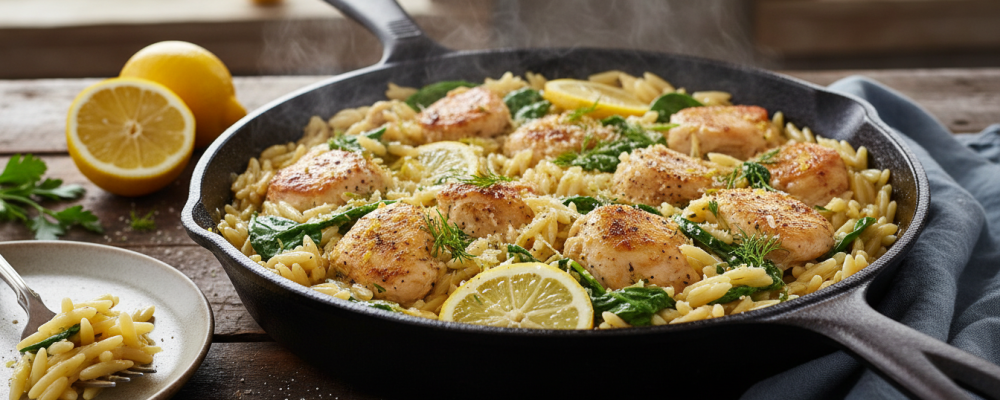

There’s something wonderful about one-pan meals that manage to be both elegant and effortless, and this Lemon Chicken Orzo Skillet achieves exactly that balance. The beauty of this dish lies in how everything cooks together—the chicken browns beautifully first, then the orzo toasts in those flavorful drippings before simmering in lemony broth that it absorbs while the chicken finishes cooking. By the time you lift the lid, you’ve got tender chicken, perfectly cooked orzo infused with lemon and garlic, and minimal cleanup. It’s the kind of meal that makes you feel like you’ve accomplished something impressive while barely breaking a sweat.
I developed this recipe while exploring how pasta could be cooked directly in flavorful liquids rather than boiled separately in plain water. Orzo is particularly well-suited to this technique because its small, rice-like shape cooks evenly and absorbs liquid beautifully, taking on whatever flavors you’re cooking it in. The lemon provides brightness that cuts through the richness of the chicken and Parmesan, while the garlic adds aromatic depth that makes your kitchen smell incredible as everything simmers together.
What makes this dish particularly successful is the layering of flavors. First, browning the chicken creates fond in the pan—those caramelized bits that add depth to everything that follows. Then toasting the orzo in that same pan allows it to pick up those flavors while developing its own nutty notes. Finally, the lemon-spiked broth ties everything together, creating a cohesive dish where every component tastes like it belongs. The finishing touches of Parmesan and fresh parsley add richness and freshness that make each bite feel complete.
The Inspiration Behind This Recipe
This dish emerged from the Mediterranean tradition of cooking grains and pasta in flavorful broths rather than plain water—a technique that infuses every grain with taste. Greek cuisine in particular excels at combining lemon, garlic, and herbs with chicken and pasta, creating bright, satisfying meals that feel nourishing without being heavy.
I wanted to create a one-pan version that captured those essential Mediterranean flavors while being practical for weeknight cooking. The challenge was timing everything so the chicken stayed juicy while the orzo cooked through without becoming mushy. After testing various liquid ratios and cooking times, I found the sweet spot where everything finishes perfectly together, creating a complete meal in a single skillet.
The technique of returning the chicken to the pan for the final simmer serves dual purposes: it allows the chicken to finish cooking gently without drying out, and it infuses the orzo with additional chicken flavor as everything simmers together. It’s efficient cooking that doesn’t sacrifice quality.
A Brief History of Orzo and Mediterranean Cooking
Orzo, despite its rice-like appearance, is actually pasta—small, oval-shaped pasta that’s called “risoni” in Italy (meaning “big rice”). It has been a staple in Mediterranean cuisines, particularly Greek and Italian, where it appears in soups, salads, and as a side dish similar to rice pilaf.
In Greek cuisine, orzo is often cooked in tomato-based sauces or lemon-herb broths, creating dishes like “kritharaki” that showcase the pasta’s ability to absorb and carry flavors. The combination of lemon, garlic, and herbs with chicken represents classic Greek flavor profiles that have been perfected over generations.
This Lemon Chicken Orzo Skillet honors those Mediterranean traditions while adapting them for modern American home cooking—one-pan convenience without sacrificing the bright, fresh flavors that define the cuisine.
Why This Cooking Method Works
Browning the chicken first develops crucial flavor through the Maillard reaction while creating fond—those browned bits stuck to the pan that dissolve into the broth and infuse everything with deeper, more complex taste. Removing the chicken prevents it from overcooking while you prepare the orzo base.
Toasting the orzo in the garlic-infused oil before adding liquid allows it to develop nutty flavor and helps the grains maintain their shape during cooking rather than becoming mushy. This step also allows the orzo to absorb some of that garlic flavor directly.
Cooking the orzo in broth rather than water means it absorbs savory flavor with every sip of liquid it takes in. The lemon juice added to the broth brightens everything while providing acidity that balances the richness. Bringing everything to a boil before reducing to a simmer ensures even cooking—the initial high heat starts the process, while the gentle simmer finishes it without scorching.
Returning the chicken to simmer with the orzo allows it to finish cooking gently while staying moist, and it adds additional chicken flavor to the orzo as everything melds together.
Flavor Profile: What to Expect
This skillet delivers bright Mediterranean flavors in every bite:
- Tender, juicy chicken with golden-brown exterior
- Bright, sunny lemon that’s prominent but not overwhelming
- Aromatic garlic infused throughout
- Creamy, nutty Parmesan adding richness
- Fluffy orzo that’s absorbed all the flavorful broth
- Fresh, herbal notes from parsley
- Savory depth from chicken broth and fond
The result is a dish that tastes fresh and light while being satisfying and substantial—comfort food that doesn’t weigh you down.
Tips for Making the Best Lemon Chicken Orzo Skillet
Small adjustments ensure consistently excellent results:
- Use bone-in, skin-on chicken if you prefer: It stays even juicier, though boneless breasts work fine for convenience.
- Don’t skip browning: Those caramelized bits are essential for flavor depth.
- Toast the orzo: This step adds complexity and helps prevent mushiness.
- Use fresh lemon juice: Bottled doesn’t provide the same bright, fresh flavor.
- Check liquid levels: If orzo absorbs all liquid before becoming tender, add a bit more broth.
- Let it rest: A few minutes off heat allows orzo to absorb any remaining liquid.
For extra richness, you can add a tablespoon of butter along with the Parmesan at the end. For more vegetables, spinach or peas stirred in during the final few minutes add color and nutrition.
Serving Suggestions and Side Pairings
This complete one-pan meal pairs beautifully with simple accompaniments:
- Greek salad with feta and olives
- Crusty bread for soaking up any remaining broth
- Roasted asparagus or green beans
- Simple tomato and cucumber salad
- Garlic bread for extra indulgence
The dish is substantial enough that heavy sides aren’t necessary—focus on fresh, bright accompaniments that echo the Mediterranean theme.
Storage, Reheating, and Make-Ahead Tips
This skillet stores well and reheats beautifully:
- Refrigerate leftovers in an airtight container for up to 3 days
- Reheat on stovetop with splash of broth to restore moisture, or microwave covered
- Not recommended for freezing: Orzo texture suffers when frozen and thawed
- Prep ingredients ahead by cutting chicken and measuring everything, then cook when ready
The orzo will continue to absorb liquid as it sits, so adding a splash of broth when reheating helps restore the original consistency. The flavors actually deepen overnight, making leftovers particularly delicious.
Why This Recipe Deserves a Spot in Your Rotation
This Lemon Chicken Orzo Skillet proves that impressive meals don’t require multiple pots and complicated techniques. It delivers restaurant-quality flavor and presentation in a single pan, making it perfect for busy weeknights when you want something better than the usual rotation but don’t have time for elaborate cooking. The Mediterranean-inspired flavors feel fresh and interesting without being unfamiliar, making it accessible to various palates.
Once you’ve experienced how well orzo cooks in flavorful broth alongside chicken, you’ll find yourself making this regularly and perhaps experimenting with different herbs, vegetables, or seasonings to keep things interesting.
Recommended Drink Pairing
The bright, lemony flavors of this dish pair beautifully with crisp white wines that echo those Mediterranean characteristics. A Greek Assyrtiko, Italian Pinot Grigio, or Sauvignon Blanc all offer refreshing acidity that complements the lemon while cutting through the Parmesan richness.
For beer, try a pilsner or wheat beer that won’t overwhelm the delicate flavors. Non-alcoholic options like sparkling water with lemon, white grape juice, or iced herbal tea all provide refreshing accompaniment to this bright, flavorful dish.
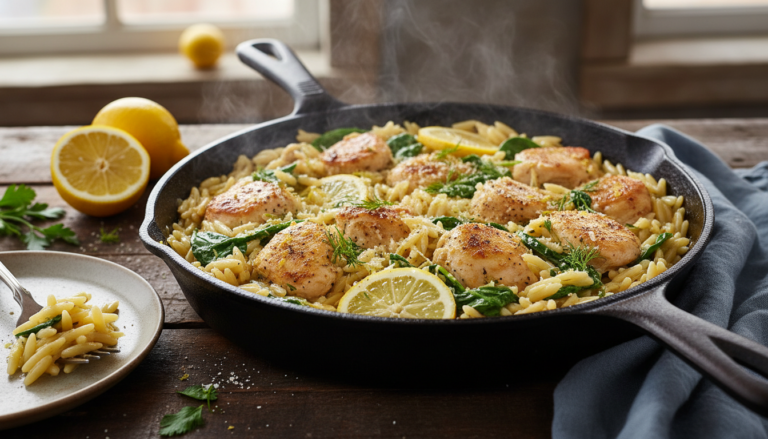
Lemon Chicken Orzo Skillet
Lemon Chicken Orzo Skillet combines tender chicken with orzo cooked in lemony broth, finished with Parmesan and fresh herbs for easy Mediterranean flavor.
4
servings10
minutes30
minutes450
kcal40
minutesIngredients
1 lb chicken breast
1 1/2 cups orzo
2 tbsp olive oil
1 large lemon
3 cups chicken broth
1 tsp salt
1 tsp black pepper
2 cloves garlic
1/2 cup Parmesan cheese
1/4 cup parsley
Directions
- Heat the olive oil in a large skillet over medium-high heat and add the chicken breasts. Cook each side until nicely browned, about 5 minutes per side.
- Remove the chicken from the skillet and set aside. In the same skillet, add the garlic and saute for about 1 minute until fragrant.
- Add the orzo to the skillet and stir well to coat with the garlic and oil. Allow the orzo to toast slightly for about 2 minutes.
- Pour in the chicken broth, then add the juice of one lemon, salt, and pepper. Bring the mixture to a boil.
- Return the chicken to the skillet, ensuring it’s partially submerged in the broth. Cover and reduce the heat to simmer for 15 minutes.
- Remove the lid and check the orzo. It should be tender, and the broth mostly absorbed. Stir in the Parmesan cheese and chopped parsley.
- Serve the dish hot, garnished with additional lemon slices and parsley if desired for an extra touch of freshness.
Nutrition Facts
- Total number of serves: 4
- Calories: 450kcal
- Cholesterol: 0mg
- Sodium: 620mg
- Potassium: 400mg
- Sugar: 8g
- Protein: 6g
- Calcium: 60mg
- Iron: 2mg
About This Author

Amelia Grace
Editor-in-Chief & Culinary Director
The heart and guiding voice of Daily Dish, Amelia leads our editorial vision and recipe development. With a background in food journalism and over a decade spent in professional kitchens, she has a knack for blending gourmet technique with real-world accessibility. Her goal? To make every reader feel like a confident cook, one dish at a time.
Favorite dish: Creamy lemon risotto with a sprinkle of fresh thyme.
Kitchen motto: “Good food doesn’t have to be complicated — it just has to be made with heart.”