
Few things in cooking are as satisfying as achieving a perfect sear on a sea scallop. That moment when you flip it over and see that gorgeous golden-brown crust—the result of the Maillard reaction meeting properly prepared seafood—represents culinary technique at its most elemental and rewarding. Lemon Butter Scallops are deceptively simple: just a handful of quality ingredients, proper heat management, and about 10 minutes of actual cooking time. Yet the results rival anything you’d order at a high-end seafood restaurant.
What makes this dish fascinating from a technical standpoint is how little margin for error exists. Scallops are delicate and quick-cooking, which means overcooking by even a minute can transform sweet, tender seafood into rubbery disappointment. The key lies in understanding moisture management—dry scallops sear properly, while wet scallops steam and never achieve that caramelized crust. The lemon butter sauce serves multiple purposes: it adds richness to naturally lean scallops, provides acid to balance their sweetness, and creates a glossy coating that makes everything look as good as it tastes.
From a wine pairing perspective, scallops present an ideal canvas. Their natural sweetness pairs beautifully with fruit-forward whites, while their delicate texture demands wines with finesse rather than power. The lemon butter sauce adds complexity—the citrus calls for wines with bright acidity, while the butter suggests fuller-bodied options with some richness. The garlic provides aromatic complexity that wines with herbal or mineral notes can echo beautifully.
This is cooking that rewards attention and precision. It’s not difficult, but it is exacting. Get the technique right—dry scallops, hot pan, patience to let them sear undisturbed—and you’ll create something extraordinary with minimal effort. That’s the kind of efficiency and elegance that makes weeknight cooking feel special.
─────────
The Inspiration Behind This Recipe
This recipe draws from classic French technique—specifically coquilles Saint-Jacques, where scallops are prepared with butter, lemon, and herbs. The French have long understood that the best way to showcase premium ingredients is through simplicity and proper execution rather than complex preparations. By using a hot pan to develop a caramelized crust, then finishing with a quick butter sauce enriched with lemon and garlic, we’re honoring traditional French cooking while adapting it for modern home kitchens. The result is a dish that feels luxurious and sophisticated while remaining accessible to anyone willing to master a few fundamental techniques.
─────────
A Brief History of Scallops in Fine Dining
Sea scallops have been prized in coastal cuisines for millennia, with archaeological evidence of scallop consumption dating back to ancient civilizations around the Mediterranean and Asia. In European cuisine, scallops became particularly celebrated in French cooking, where they were featured in dishes like coquilles Saint-Jacques (named after Saint James, whose symbol is the scallop shell). The technique of searing scallops to create a caramelized crust while maintaining a tender interior became a hallmark of nouvelle cuisine in the 1970s, representing the movement’s emphasis on precise technique and allowing quality ingredients to shine. Today, perfectly seared scallops remain a benchmark dish that separates skilled cooks from novices—simple in concept, demanding in execution.
─────────
Why This Cooking Method Works
The science behind the technique:
- Moisture removal (patting dry): Eliminates surface water that would prevent browning and create steam instead of a sear
- High heat searing: Creates Maillard reaction (caramelization) at 300°F+, developing complex flavors and golden color
- Minimal movement: Leaving scallops undisturbed allows crust formation; moving them disrupts the process
- Short cooking time: Scallops cook in 2-3 minutes per side; their proteins set quickly, and overcooking causes toughening
- Butter sauce reduction: Butter emulsifies with lemon juice and pan drippings to create a cohesive, glossy sauce
- Garlic aromatics: Cooking garlic in butter releases fat-soluble flavor compounds without burning (medium heat is key)
- Lemon juice timing: Adding acid at the end preserves brightness and prevents curdling the butter
- Resting in sauce: Brief return to pan allows scallops to absorb flavor while finishing cooking gently
─────────
Flavor Profile: What to Expect
Sweet • Buttery • Bright • Delicate • Elegant
These scallops deliver pure, sweet seafood flavor with a caramelized, slightly nutty crust. The lemon butter sauce adds silky richness balanced by bright citrus acidity that enhances rather than masks the scallops’ natural sweetness. Garlic provides aromatic depth without overwhelming, while fresh parsley adds a clean, herbaceous note. The texture contrast is key—crispy, golden exterior giving way to tender, almost custard-like interior. It’s refined, elegant, and tastes expensive despite being remarkably simple. The overall effect is coastal luxury that celebrates the scallop itself rather than burying it under heavy sauces.
─────────
Tips for Making the Best Lemon Butter Scallops
Scallop selection and preparation:
- Choose “dry” scallops (not treated with preservatives) for best searing—they’re labeled as dry-packed or chemical-free
- “Wet” scallops are treated with sodium tripolyphosphate (STP) and release moisture, preventing proper browning
- Look for scallops that are ivory or pale pink with a sweet, ocean smell (not fishy)
- Remove the small side muscle (abductor muscle) if still attached—it’s tough when cooked
- Bring scallops to room temperature 15 minutes before cooking for even searing
Critical drying technique:
- Pat scallops thoroughly dry with paper towels—this is non-negotiable for a good sear
- Let them sit on fresh paper towels for 5-10 minutes to air-dry further
- Pat dry again immediately before seasoning
- Season with salt and pepper just before cooking, not in advance (salt draws out moisture)
Achieving the perfect sear:
- Use a heavy pan (cast iron or stainless steel) that retains heat
- Heat pan until very hot—a drop of water should sizzle and evaporate immediately
- Use high smoke-point oil (light olive oil, grapeseed, or avocado oil)
- Don’t overcrowd the pan—cook in batches if necessary, leaving space between scallops
- Place scallops in the pan and DON’T TOUCH for 2-3 minutes—resist the urge to peek or move them
- They’re ready to flip when they release easily from the pan and have a deep golden crust
- Flip only once—multiple flips prevent proper crust development
Sauce perfection:
- Reduce heat to medium before adding butter to prevent burning
- Fresh garlic is essential—jarred minced garlic won’t provide the same aromatic punch
- Don’t let garlic brown or it will taste bitter
- Use fresh lemon juice, not bottled—the flavor difference is dramatic
- Swirl the pan to emulsify butter and lemon into a cohesive sauce
- Finish with cold butter for extra glossiness if desired
Timing is everything: Scallops go from perfect to overcooked in seconds. They’re done when just opaque in the center—slightly translucent is better than overcooked.
─────────
Wine Pairing Guide
Perfect pairings for Lemon Butter Scallops:
Chablis ★ Best Match Unoaked Chardonnay from Burgundy’s northernmost region offers steely minerality, crisp green apple flavors, and vibrant acidity that complements the lemon beautifully. The wine’s lean, precise character won’t overpower delicate scallops, while its subtle complexity enhances their natural sweetness. The minerality echoes the oceanic quality of fresh seafood.
Albariño Spanish coastal white with saline minerality, stone fruit flavors, and bright acidity makes it a natural partner for seafood. The wine’s fuller body stands up to butter while maintaining the freshness needed for lemon, and its subtle tropical notes complement scallops’ sweetness without overwhelming.
Muscadet (Sur Lie) Classic French seafood pairing with crisp acidity, subtle salinity, and light body. The sur lie aging (on yeast lees) adds texture and subtle richness that complements butter while the wine’s lean character keeps everything balanced and refreshing.
Grüner Veltliner Austrian white with citrus, white pepper, and herbal notes that echo the parsley and lemon in the dish. The wine’s characteristic acidity and medium body make it wonderfully food-friendly, while its slight pepperiness adds an intriguing layer of complexity.
Champagne or Quality Sparkling Wine For special occasions, the bubbles and acidity of Champagne cut through butter beautifully while the wine’s elegance matches the dish’s sophistication. Blanc de Blancs (100% Chardonnay) offers particular synergy with the scallops’ delicate character.
Alternative pairing: A Sancerre or Pouilly-Fumé (Sauvignon Blanc from Loire Valley) brings vibrant citrus and mineral notes that complement lemon butter while providing the crisp acidity that seafood demands.
─────────
Serving Suggestions and Side Pairings
Restaurant-quality presentations:
- Classic elegance: Arrange 3-4 scallops on a white plate, spoon lemon butter sauce over and around, garnish with fresh parsley and lemon wedge
- Modern plating: Create a swoosh of sauce, place scallops on top, add microgreens or edible flowers
- Rustic coastal: Serve in the skillet family-style with crusty bread for dipping
- Over pasta: Toss with angel hair or linguine for a complete meal
Ideal side dishes:
- Garlic Rosemary Focaccia Muffins: Essential for soaking up the precious lemon butter sauce
- Spinach Mushroom Orzo: Creamy, earthy pasta that complements without competing
- Roasted asparagus: Classic pairing that adds color and fresh vegetable contrast
- Simple arugula salad: Peppery greens with lemon vinaigrette echo the main dish’s brightness
- Cauliflower purée: Creamy, elegant base that showcases the scallops
For a complete Wine Wednesday spread: Create a coastal seafood celebration: start with oysters or a light shrimp cocktail, serve these scallops as the main event with elegant sides, and finish with lemon panna cotta or key lime pie. Offer multiple white wine options to explore how different styles interact with the lemon butter sauce. Add Garlic Parmesan Roasted Shrimp to create a luxurious surf-and-surf dinner that showcases your seafood prowess.
─────────
Storage, Reheating, and Make-Ahead Tips
Storage:
- Refrigerate cooked scallops in an airtight container for up to 1 day
- Store sauce separately from scallops to maintain texture
- Note: Scallops are best enjoyed fresh; texture degrades significantly when reheated
Reheating (not ideal, but if necessary):
- Stovetop (best method): Warm sauce gently in a pan, add scallops just to heat through (30-60 seconds max)
- Oven: Warm at 275°F for 5-7 minutes, just until heated through
- Never microwave—it will make scallops rubbery
- Expect texture changes; reheated scallops won’t have the same tender quality
Make-ahead strategies:
- Pat scallops dry and refrigerate up to 4 hours before cooking
- Prepare garlic and parsley ahead; store covered
- Measure and have all ingredients ready (mise en place) for quick cooking
- Critical: This dish is best made and served immediately; the cooking time is so short that “make-ahead” isn’t really necessary
Pro tip for entertaining: Complete all prep work (dry scallops, prep ingredients, set table, pour wine) before guests arrive. The actual cooking takes only 10 minutes, so you can prepare this while everyone’s enjoying appetizers, then serve it immediately at peak perfection.
─────────
Why This Recipe Deserves a Spot in Your Wine Wednesday Rotation
Lemon Butter Scallops prove that elegant, restaurant-quality cooking doesn’t require hours of work or complicated techniques—it requires understanding fundamentals and respecting quality ingredients. This is the dish you make when you want to feel like a skilled chef, when you want to impress someone special, or when you simply want to treat yourself to something luxurious on a Wednesday evening that doesn’t deserve to be ordinary.
What makes this particularly perfect for Wine Wednesday is how the dish creates a genuine partnership with wine rather than merely tolerating its presence. The scallops’ natural sweetness, the butter’s richness, and the lemon’s brightness create multiple interaction points with wine, making each sip and bite more interesting than either would be alone. A great Chablis doesn’t just wash down this meal—it elevates it, with the wine’s minerality echoing the ocean’s character and its acidity cutting through richness to keep everything balanced and vibrant.
The recipe also demonstrates an important culinary principle: simple doesn’t mean easy, but it can mean accessible. Getting that perfect golden crust on a scallop requires attention and technique, but it doesn’t require advanced training. It requires a hot pan, dry scallops, and the patience to leave them alone while they sear. Master this, and you’ve unlocked a skill that will serve you forever.
Most importantly, this is cooking that respects your time while delivering maximum impact. Ten minutes of focused effort yields something that looks and tastes like you spent an hour. That efficiency, combined with the undeniable luxury of fresh sea scallops bathed in lemon butter, makes this exactly the kind of dish Wine Wednesday was made for.
So invest in good scallops, pull out your best white wine, and give yourself permission to create something beautiful on a weeknight. Heat that pan properly, trust your technique, and remember that sometimes the most impressive cooking is also the simplest. Just a few perfect ingredients, executed with care and precision, paired with a wine that understands the assignment.
That’s not just dinner—that’s culinary confidence. And it tastes absolutely magnificent.
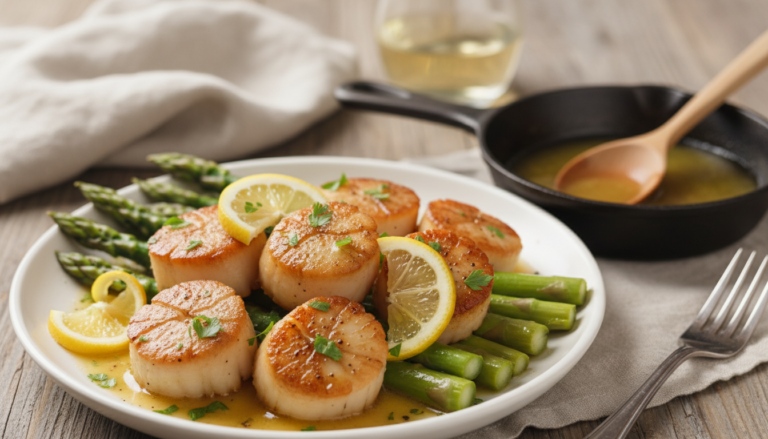
Lemon Butter Scallops
Caramelized scallops with a golden crust bathed in bright lemon butter sauce—effortless elegance that shines with wine.
4
servings10
minutes10
minutes430
kcal20
minutesIngredients
1 pound sea scallops
2 tablespoons olive oil
3 tablespoons butter
2 cloves garlic, minced
1 whole lemon, juiced
1 tablespoon fresh parsley, chopped
1 pinch salt
1 pinch pepper
Directions
- Pat the scallops dry with paper towels and season with salt and pepper.
- Heat olive oil in a large pan over medium-high heat.
- Add scallops to the pan and sear for 2-3 minutes on each side until golden brown.
- Remove scallops from the pan and set aside.
- Reduce heat to medium and add butter to the same pan.
- Once butter is melted, add garlic and cook for 1 minute until fragrant.
- Stir in lemon juice and bring to a simmer.
- Return scallops to the pan, spoon sauce over scallops, and cook for 1-2 minutes.
- Garnish with parsley and serve immediately.
Nutrition Facts
- Total number of serves: 4
- Calories: 430kcal
- Cholesterol: 0mg
- Sodium: 620mg
- Potassium: 400mg
- Sugar: 8g
- Protein: 6g
- Calcium: 60mg
- Iron: 2mg
About This Author

Benjamin Brown
Recipe Developer & Wine Enthusiast
Benjamin is our flavor engineer. A classically trained chef turned recipe developer, he’s obsessed with balancing taste, texture, and creativity. He ensures that every recipe we publish is not only delicious but also reliable, approachable, and repeatable — even for beginners.
Favorite dish: Slow-braised short ribs with red wine reduction.
Kitchen motto: “Cooking is part science, part soul.”