
There’s something deeply satisfying about food that connects you to a place and its people, and Irish Boxty is exactly that kind of recipe. These humble potato pancakes have been a staple of Irish kitchens for centuries, born from the practical need to make the most of every potato—a crop that literally sustained Irish families through difficult times. When you make boxty, you’re not just cooking breakfast; you’re participating in a tradition that spans generations and geographies.
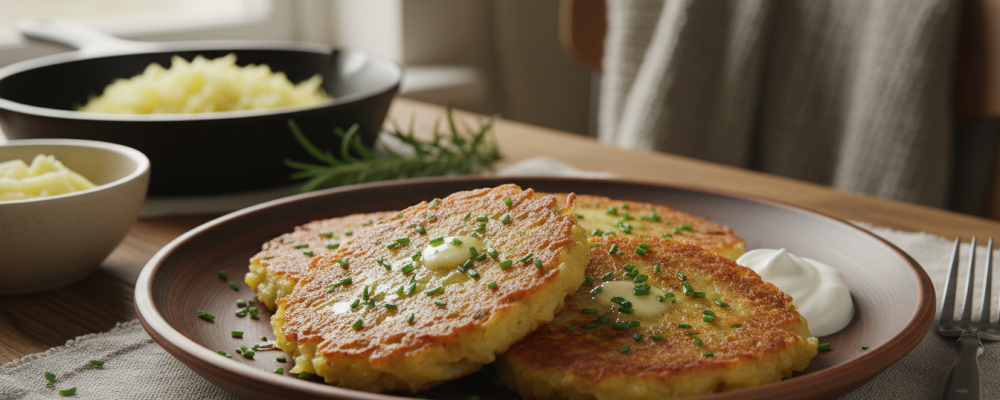
What I love most about boxty is how it transforms the simplest ingredients into something truly special. You’re working with potatoes in two forms—grated raw and already-mashed—which creates this incredible texture contrast that makes each bite interesting. The edges get beautifully crispy and golden in the pan, while the interior stays tender and almost fluffy. It’s comfort food that doesn’t feel heavy, substantial enough to anchor a full Irish breakfast but light enough that you’re not overstuffed afterward.
These pancakes invite you to slow down and enjoy the process. There’s something meditative about grating potatoes, mixing the batter, watching each one turn golden in the pan. It’s breakfast that asks for your attention but rewards you with something memorable—the kind of morning meal that makes you want to linger at the table with good company and strong tea.
─────────
The Inspiration Behind This Recipe
This recipe came into my life during a trip to Ireland years ago, where I stayed at a small B&B in County Mayo. The owner, a woman named Maeve, made boxty every morning alongside eggs and rashers, and I was immediately captivated by these golden pancakes that looked simple but tasted extraordinary. When I asked about the recipe, she laughed and said every Irish grandmother has her own version, but the basic principle stays the same: use what you have, waste nothing, and make it delicious.
That philosophy resonated deeply with me. Boxty traditionally uses leftover mashed potatoes combined with fresh grated potatoes—a perfect example of Irish resourcefulness. You’re not starting from scratch with every element; you’re building on what’s already in your kitchen. The combination of the two potato preparations isn’t just practical, though—it’s what creates the unique texture that makes boxty special. The mashed potatoes provide structure and creaminess, while the grated raw potatoes add moisture and create those crispy edges when they hit the hot pan.
I’ve made countless batches since that trip, experimenting with different proportions and cooking methods, but I always come back to this straightforward version. It honors the traditional approach while being realistic about what modern home cooks have available. No special equipment required, no complicated techniques—just honest ingredients and patient cooking that yields something wonderfully satisfying.
─────────
A Brief History of Irish Boxty
Boxty has been a cornerstone of Irish cuisine for centuries, particularly in the northern and western counties where potatoes were a dietary staple. The name likely derives from the Irish phrase “arán bocht tí,” meaning “poor-house bread”—a reference to its humble origins as peasant food that made precious potatoes stretch further. An old Irish rhyme captures its cultural significance: “Boxty on the griddle, boxty in the pan; if you can’t make boxty, you’ll never get a man.”
The dish emerged during a time when potatoes were Ireland’s most important crop, providing the majority of calories for rural families. Boxty represented clever resourcefulness: by combining leftover mashed potatoes with freshly grated ones, families could create filling meals without waste. The addition of flour made the potatoes go further while creating a batter that could be formed into pancakes, dumplings, or even a loaf-style bread depending on regional traditions.
Regional variations abound throughout Ireland. Some areas make boxty as thin pancakes, others as thick cakes, and still others form the mixture into dumplings or bake it as a loaf. What remains consistent is the fundamental combination of raw and cooked potatoes, which creates boxty’s characteristic texture. Today, boxty has experienced a revival both in Ireland and internationally, appearing on restaurant menus as comfort food that connects diners to Irish heritage and culinary tradition.
─────────
Why This Cooking Method Works
The combination of raw grated potatoes and cooked mashed potatoes is what makes boxty unique. The raw potatoes release starch as they sit in the batter, which acts as a natural binder that holds everything together without excessive flour. This starch also contributes to the crispy exterior when the pancakes hit the hot pan—the surface starch caramelizes and crisps beautifully. Meanwhile, the mashed potatoes provide a fluffy, tender interior and help create a batter consistency that spreads easily in the pan.
Adding baking powder might seem unconventional for what’s essentially a potato pancake, but it serves an important purpose: it creates slight leavening that keeps the interior light and prevents the pancakes from becoming dense or gummy. Without it, you’d have solid, heavy potato cakes. With it, you get pancakes that have some airiness despite being potato-based, creating a more pleasant eating experience.
Cooking boxty requires moderate heat and patience. Too high, and the exterior burns before the interior cooks through. Too low, and you lose the crispy edges that make boxty special. The butter adds flavor while helping achieve that golden-brown color, while the oil prevents the butter from burning during the cooking process. This combination gives you both flavor and function—the best of both fats working together to create perfect texture and taste.
─────────
Flavor Profile: What to Expect
These potato pancakes deliver earthy, comforting flavors with appealing textural contrast:
- Potato earthiness – Pure, straightforward potato flavor that’s both familiar and satisfying
- Buttery richness – From the cooking fat, adding depth without overwhelming the potato
- Crispy edges – Caramelized, slightly crunchy borders that provide textural interest
- Fluffy interior – Tender and light with a pleasant mouthfeel
- Subtle salt – Enhances the natural potato flavor without making it taste overtly salty
- Mild tanginess – From the baking powder, adding barely perceptible lift and complexity
- Golden-brown notes – Maillard reaction flavors that add depth and visual appeal
The overall experience is one of simple, honest comfort. These aren’t fancy or complicated—they taste like really good potatoes cooked really well. The texture is what elevates them: that contrast between crispy exterior and tender interior, the way they’re substantial but not heavy. They’re the kind of food that makes you feel grounded and satisfied, like wrapping yourself in a warm blanket on a cold morning.
─────────
Tips for Making the Best Irish Boxty
Use starchy potatoes like russets rather than waxy varieties for the best texture and flavor.
- Squeeze out excess moisture – After grating raw potatoes, wrap them in a clean kitchen towel and squeeze firmly to remove liquid
- Work quickly with grated potatoes – They oxidize and turn brown when exposed to air; mix the batter promptly
- Use leftover mashed potatoes – Day-old mashed potatoes actually work better than freshly made
- Don’t make the batter too thick – It should be spreadable but hold together, similar to pancake batter
- Let the first side fully cook – Wait until it’s golden brown before flipping to prevent breaking
- Keep finished boxty warm – Place on a baking sheet in a 200°F oven while you cook the rest
- Use enough fat – Don’t skimp on butter and oil; they’re essential for crispy edges
- Test the heat – The first pancake is always a test; adjust temperature as needed
For the most traditional experience, serve immediately with plenty of butter melting on top. They’re also excellent topped with sour cream, applesauce, smoked salmon, or even as a base for poached eggs—their versatility is part of their charm.
─────────
Serving Suggestions and Side Pairings
Boxty is wonderfully versatile, working equally well in sweet or savory contexts. For a traditional Irish breakfast, serve alongside fried eggs, rashers (Irish bacon), black and white pudding, grilled tomatoes, and baked beans. The potato pancakes soak up runny egg yolks beautifully and provide a starchy foundation that balances the richness of the other components.
For a more contemporary brunch presentation, top boxty with smoked salmon, crème fraîche, capers, and fresh dill for an elegant dish that feels special enough for entertaining. They also work wonderfully as a base for eggs Benedict—the crispy potato cake replaces the English muffin with something more interesting. For a simpler approach, serve with just butter and jam, or applesauce and sour cream like you might with latkes.
These pancakes are perfect for casual weekend breakfasts, St. Patrick’s Day celebrations, or any time you want to try something a little different from your usual breakfast routine. They’re particularly good for using up leftover mashed potatoes from last night’s dinner, turning yesterday’s side dish into today’s star attraction. The make-ahead friendly nature means you can prep components in advance and cook them fresh when needed.
─────────
Storage, Reheating, and Make-Ahead Tips
- Prep potatoes ahead: Grate raw potatoes up to 2 hours ahead, store submerged in cold water to prevent browning
- Use leftover mashed potatoes: Day-old mashed potatoes from dinner work perfectly in this recipe
- Mix batter early: Combine everything up to 1 hour before cooking; stir well before using
- Cook ahead partially: Make boxty up to 2 hours ahead, slightly undercook, then finish in the oven before serving
- Store cooked boxty: Refrigerate in an airtight container for up to 3 days
- Reheat properly: Pan-fry in butter to restore crispiness, or bake at 375°F for 10 minutes
- Freeze successfully: Freeze cooked boxty between parchment paper layers for up to 2 months
- Reheat from frozen: Cook directly from frozen in a hot skillet until heated through and crispy
The key to maintaining texture when reheating is avoiding the microwave, which makes them soggy. A hot skillet with a bit of butter restores most of the original crispiness and makes leftover boxty nearly as good as fresh.
─────────
Why This Recipe Deserves a Spot in Your Rotation
This recipe earns its place because it gives you a way to use leftover mashed potatoes while creating something that feels special and different from typical breakfast fare. It’s one of those dishes that makes you feel accomplished—there’s something satisfying about making pancakes from scratch that aren’t just flour-based. The fact that boxty connects you to centuries of Irish tradition adds meaning beyond just flavor, making breakfast feel like a cultural experience rather than just fuel.
Beyond the heritage aspect, these pancakes simply taste wonderful and work in countless contexts. They’re equally at home at a casual weekend breakfast or an elegant brunch party. They pair with sweet or savory toppings, work as a side or a main, and satisfy both light and hearty appetites depending on how you serve them. The recipe is forgiving and adaptable, making it accessible even for less experienced cooks while still delivering results that feel impressive.
─────────
Recommended Drink Pairing
Traditional Irish boxty calls for traditional Irish beverages, and strong black tea is the classic choice. Barry’s Tea or Lyon’s Tea, brewed properly strong and served with milk and sugar if desired, provides the slightly bitter, malty counterpoint that cuts through the potato richness. The tea’s warmth and tannins cleanse your palate between bites, making each taste as satisfying as the first.
For coffee drinkers, a medium-bodied brew with nutty or chocolate notes complements the earthy potatoes without overwhelming them. Irish coffee—regular coffee with a shot of Irish whiskey and topped with lightly whipped cream—makes this an especially festive brunch when you want to lean into the Irish theme. For non-caffeinated options, apple cider (served warm or cold) brings fruity sweetness that pairs beautifully with the savory pancakes, especially if you’re serving them with applesauce. If you’re creating a full Irish breakfast spread, Guinness for the adults adds traditional authenticity and its roasted, slightly bitter profile balances the meal’s richness. Fresh orange juice provides a simpler, brighter option that works well with both sweet and savory toppings, though it feels less thematically connected to the dish’s Irish roots.
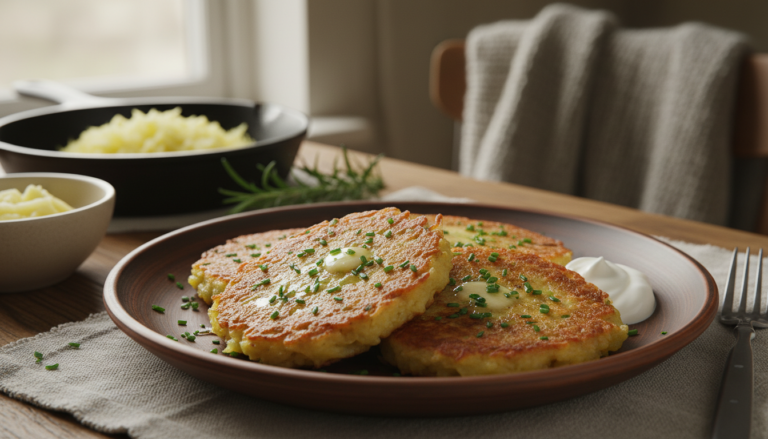
Irish Boxty
These Irish Boxty pancakes blend raw grated potatoes with creamy mashed potatoes, creating golden-brown cakes with crispy exteriors and tender, fluffy interiors—a traditional comfort food that’s perfect for savory brunches or hearty breakfasts.
4
servings15
minutes25
minutes220
kcal40
minutesIngredients
1 cup grated raw potatoes
1 cup mashed potatoes
1 cup all-purpose flour
1 cup milk
1 teaspoon baking powder
0.5 teaspoon salt
1 tablespoon butter
2 tablespoons vegetable oil
Directions
- In a large bowl, mix grated potatoes, mashed potatoes, flour, milk, baking powder, and salt until combined to form a smooth batter.
- Heat a large skillet over medium heat and add a tablespoon of butter, allowing it to melt and coat the surface evenly.
- Pour a ladleful of batter into the hot skillet and spread it into a thin circle using a spoon or spatula.
- Cook each side of the boxty for about 3 to 4 minutes or until they are golden brown and crispy around the edges.
- Repeat the process with the remaining batter, adding more oil to the skillet as needed to ensure even cooking.
- Serve the boxty immediately with your choice of side dishes, such as sour cream or applesauce.
Nutrition Facts
- Total number of serves: 4
- Calories: 220kcal
- Cholesterol: 0mg
- Sodium: 620mg
- Potassium: 400mg
- Sugar: 8g
- Protein: 6g
- Calcium: 60mg
- Iron: 2mg
About This Author

Amelia Grace
Editor-in-Chief & Culinary Director
The heart and guiding voice of Daily Dish, Amelia leads our editorial vision and recipe development. With a background in food journalism and over a decade spent in professional kitchens, she has a knack for blending gourmet technique with real-world accessibility. Her goal? To make every reader feel like a confident cook, one dish at a time.
Favorite dish: Creamy lemon risotto with a sprinkle of fresh thyme.
Kitchen motto: “Good food doesn’t have to be complicated — it just has to be made with heart.”