Daily Dish

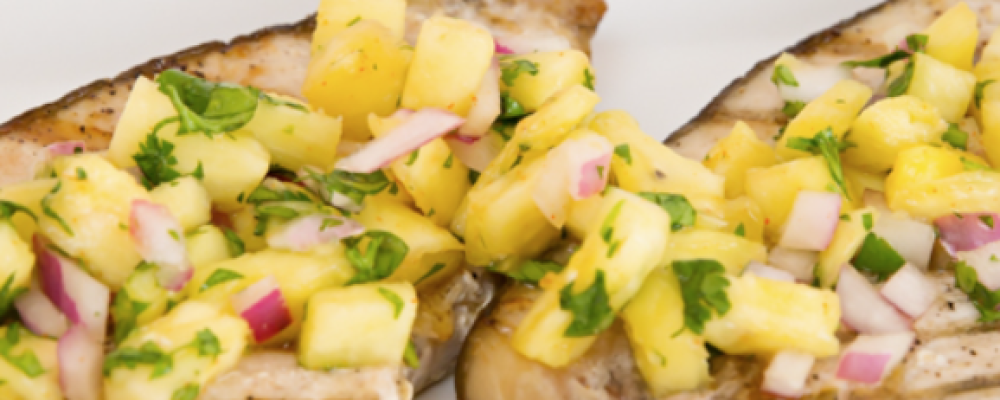
Grilled Swordfish Steaks with Pineapple Salsa

Healthy Fact of the Day

Swordfish is an excellent source of lean protein, vitamins, and minerals, including vitamin B12, selenium, and niacin. The pineapple salsa adds a burst of fresh flavor and provides vitamins C and K, as well as fiber.

Ingredients


For the Swordfish: 

  • 4 swordfish steaks (about 6 oz each)
  • 2 tablespoons olive oil
  • Salt and pepper to taste


For the Pineapple Salsa:

  • 1 cup diced fresh pineapple
  • 1/2 red bell pepper, diced
  • 1/4 cup diced red onion
  • 2 tablespoons chopped fresh cilantro
  • 1 jalapeño, seeded and minced (optional, for heat)
  • 2 tablespoons lime juice
  • 1 tablespoon honey
  • Salt and pepper to taste

Instructions


For the Swordfish:

  1. Preheat your grill or grill pan to medium-high heat.

  2. Brush the swordfish steaks with olive oil and season them generously with salt and pepper on both sides.

  3. Grill the swordfish for 4-5 minutes per side, or until it’s cooked through and flakes easily with a fork. Adjust cooking time based on thickness.

For the Pineapple Salsa:

  1. In a medium bowl, combine the diced pineapple, red bell pepper, red onion, cilantro, and jalapeño (if using).

  2. In a small bowl, whisk together the lime juice, honey, salt, and pepper.

  3. Pour the lime juice mixture over the pineapple mixture and gently toss to combine.

  4. Serve the grilled swordfish steaks hot, topped with the fresh pineapple salsa.

Enjoy this flavorful and nutritious grilled swordfish with the bright and refreshing pineapple salsa for a delicious and healthy meal!

Recent Recipes

Campbell’s Just Did Something It Hasn’t Done

  • July 16, 2026
  • 3 min read

Grapefruit Margarita

  • July 16, 2026
  • 11 min read

The Forgotten Virtue of Eating Slowly

  • July 16, 2026
  • 11 min read

Loaded Baked Potato Salad

  • July 16, 2026
  • 5 min read

Wingstop Just Added a Chamoy Flavor —

  • July 15, 2026
  • 4 min read

The Summer Kitchen Without a Recipe: Learning

  • July 15, 2026
  • 10 min read

Cheesy Garlic Butter Mushroom Stuffed Chicken

  • July 15, 2026
  • 12 min read

Slow Cooker Chicken Pasta

  • July 15, 2026
  • 7 min read

McDonald’s Is Bringing Caesar Back — In

  • July 14, 2026
  • 3 min read

Bang Bang Shrimp Tacos

  • July 14, 2026
  • 10 min read

Tip of the Day

“Always let your meat rest before slicing.”

Whether you're roasting a chicken, grilling steak, or baking pork tenderloin, letting cooked meat rest for 5–10 minutes before slicing allows the juices to redistribute evenly. This simple step keeps your meat juicy and tender, ensuring every bite is flavorful and moist. Bonus: It gives you a moment to plate your sides or garnish for a perfect presentation!

Our Latest Recipes

Blog
Daily Disher

Campbell’s Just Did Something It Hasn’t Done in 128 Years — Changed the Color of Its Soup Can

Campbell’s Protein Soups are one of the more nutritionally complete canned soup options on the market right now — 20 grams of protein, 5 to 13 grams of fiber depending on the flavor, and notably lower sodium than many comparable canned soups. For an easy high-protein lunch, pair a can with a slice of whole grain toast or a handful of crackers to add complex carbohydrates that slow digestion and keep you fuller longer. The Mediterranean Lentil is the highest-fiber option of the five and a great choice for anyone looking to support digestive health alongside their protein goals. And because these soups are heat-and-serve, they’re a practical alternative to protein shakes on days when you want real food but don’t have time to cook.

Read More »
Beverages
Benjamin Brown

Grapefruit Margarita

Fresh grapefruit juice is loaded with vitamin C, lycopene, and antioxidants that support immune health and may help reduce inflammation — a citrus powerhouse in every sip!

Read More »
Blog
Daily Disher

The Forgotten Virtue of Eating Slowly

Multiple large-scale studies on eating pace and metabolic health have found that fast eaters are significantly more likely to be overweight, have elevated blood sugar levels, and develop metabolic syndrome compared to slow eaters — independent of the actual content of their diet. A 2017 study published in the British Medical Journal found that self-reported slow eaters had a significantly lower body mass index and waist circumference than fast eaters, with the difference persisting after controlling for diet quality, physical activity, and other confounding variables. The pace of eating appears to be an independent variable in metabolic health — making slow eating one of the most accessible and most evidence-supported dietary practices available, requiring no change in what is eaten but only in how it is eaten.

Read More »

Get your daily dose of delicious!

Skip to content