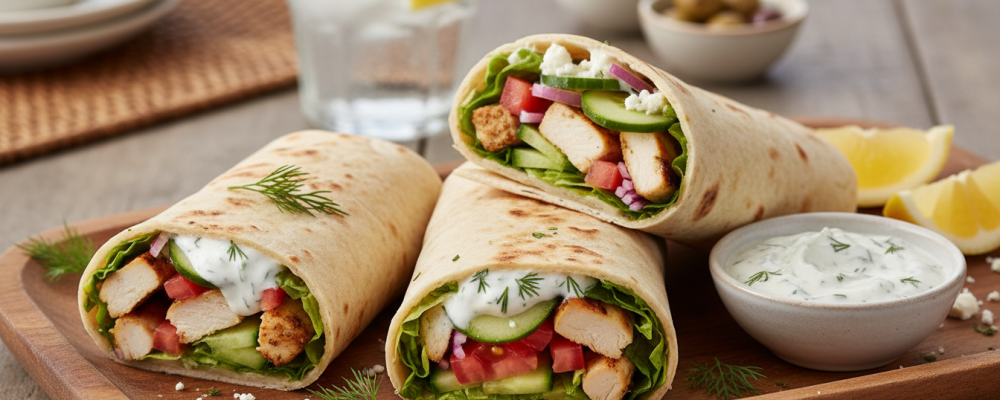

Portable meals present a unique engineering challenge: how to package proteins, vegetables, and sauces together in a format that remains structurally sound, texturally appealing, and food-safe over multiple days of storage. Most attempts fail at one or more of these criteria—sandwiches become soggy, proteins dry out, vegetables wilt, or everything melds into an unappetizing mass. Greek chicken wraps, when constructed correctly, solve all these problems through strategic ingredient selection and methodical assembly that respects the physical properties of each component.
The wrap format offers distinct advantages over traditional sandwich construction. The tortilla’s flexibility allows for tighter rolling that minimizes air pockets where bacteria can proliferate. The cylindrical shape creates a more compact package with better structural integrity during transport. The lack of a top piece of bread means one less surface absorbing moisture from the filling. These aren’t trivial details—they’re fundamental to why properly made wraps maintain quality for 3-4 days while traditional sandwiches often fail by day two.
What makes this Greek-inspired version particularly effective for meal prep is the synergy between ingredients specifically chosen for their storage characteristics. Chicken breast, when cooked correctly to preserve moisture, remains tender without releasing excessive liquid. Cucumber, cherry tomatoes, and red onion all have relatively low moisture content at their surfaces and high structural integrity that prevents them from becoming limp or waterlogged. Feta cheese is a preserved product—its salt content and crumbly texture mean it doesn’t become slimy or separate like fresh cheeses might. The tzatziki provides creaminess and moisture where needed while its yogurt base and cucumber content create a relatively stable emulsion that doesn’t soak through the wrap immediately.
The assembly sequence matters more than most people realize. Every wrap ingredient has optimal placement based on its moisture content, structural characteristics, and how it interacts with adjacent components. Getting this order right creates wraps that taste freshly made on day four, getting it wrong creates disappointing, soggy lunches by day two. This is food science applied to practical meal prep—using knowledge about ingredient behavior to engineer better outcomes.
─────────
The Inspiration Behind This Recipe
This recipe emerged from analyzing why restaurant wraps rarely translate well to meal prep. Commercial wraps are designed for immediate consumption—they can afford to be generously sauced, packed with high-moisture ingredients, and wrapped loosely because they’ll be eaten within minutes. Home meal prep requires different thinking: we need wraps that maintain integrity over 72-96 hours while being handled, refrigerated, and transported. That constraint demands strategic choices at every level.
I developed this specific combination through systematic testing of Mediterranean ingredients for their meal prep viability. Greek cuisine offered an ideal starting point because many traditional Greek ingredients evolved specifically for preservation in warm climates before refrigeration—feta is brined, tzatziki is yogurt-based with natural acidity, oregano is dried, olive oil is shelf-stable. These preservation-friendly characteristics translate beautifully to modern meal prep challenges, even though the original context was entirely different.
The chicken preparation method reflects understanding of protein moisture retention. Many meal prep chicken recipes produce dry, unappetizing protein by midweek because the initial cooking drives off too much moisture. Cooking chicken strips in olive oil over medium heat—rather than high heat—allows the exterior to brown while the interior stays at the minimum safe temperature (165°F) without exceeding it. This gentle approach, combined with allowing the chicken to rest in the pan off heat for a few minutes before assembly, creates protein that remains tender for days rather than becoming progressively drier and tougher with each passing day in the refrigerator.
─────────
A Brief History of Wraps and Greek Portable Meals
The concept of wrapping food in flatbread spans virtually every cuisine with wheat cultivation—from Mexican burritos to Middle Eastern shawarma to Indian kati rolls. The wrap as a distinct category in Western cuisine emerged relatively recently, gaining mainstream popularity in the 1990s when restaurants and food service operations recognized that tortillas offered versatility beyond Mexican food. The format solved practical problems: faster assembly than sandwiches, infinitely customizable, and more structurally sound for ingredients that would make bread soggy.
Greek cuisine has a long tradition of portable meals, though not originally in wrap format. The classic gyro—sliced meat with vegetables and tzatziki in pita—represents Greece’s traditional approach to handheld meals. Pita bread’s pocket structure created a natural vessel for hot, saucy fillings, making it ideal for street food. However, pita’s thickness and pocket opening make it less suitable for tight rolling and extended storage compared to thin, flexible tortillas.
The Greek wrap as we know it today represents a fusion: traditional Greek flavors and ingredients adapted to the American wrap format’s superior structural properties for meal prep. This evolution reflects a broader pattern in contemporary cooking—taking traditional flavor profiles and reengineering their format to meet modern lifestyle requirements. The result isn’t “authentic” in a historical sense, but it’s optimized for its intended purpose: delivering Greek restaurant flavors in a format designed for advance preparation and extended storage.
─────────
Why This Assembly Method Works for Meal Prep
The success of these wraps for multi-day storage hinges on understanding moisture migration and strategic barrier creation. Tzatziki sauce goes directly on the tortilla first, creating what’s essentially a moisture barrier. The yogurt-based sauce has enough fat content and viscosity to coat the tortilla surface without immediately soaking through, while its contact with the tortilla creates a sealed layer that prevents other, wetter ingredients from reaching the wrap’s structure. This is counterintuitive—most people would put sauce on last, thinking it should be “protected”—but the physics say otherwise.
The chicken layer sits directly on top of the tzatziki for multiple reasons. Chicken is relatively dry on its surface (assuming proper cooking and cooling), so it won’t contribute additional moisture to compromise the tortilla. Placing it early in the layering sequence means it’s protected from direct contact with the higher-moisture vegetables by the sauce layer below and its own mass. The herbs and spices in the chicken also benefit from proximity to the tzatziki—over time, flavors migrate between adjacent layers, and having seasoned chicken near tangy sauce creates better flavor integration than if they were separated by vegetables.
The vegetable placement follows a specific logic: cucumbers, being the driest of the three vegetables, go on the chicken. Red onions, which have moderate moisture and strong flavor, go next—their position in the middle of the wrap means their flavor distributes throughout without dominating. Cherry tomatoes, having the highest moisture content, go near the outer edge where they’re farthest from the tortilla base and where rolling pressure will help contain their juice within the wrap structure rather than allowing it to seep toward the tortilla.
Feta cheese serves as the final interior layer before rolling. Its crumbly texture means it fills gaps between other ingredients, and its salt content actually helps draw moisture away from the tortilla through osmosis. The feta essentially acts as a desiccant within the wrap structure, helping keep the tortilla from becoming soggy by absorbing ambient moisture from the filling.
The rolling technique creates a final structural advantage: tight rolling expels excess air and creates compression that holds ingredients in place. This compression prevents ingredients from shifting during storage and transport, which would create gaps where moisture could pool and make the tortilla soggy. The fold-in-the-edges technique creates closed ends that prevent filling from escaping and maintain the cylindrical structure that’s more compact and transport-friendly than open-ended rolls.
─────────
Flavor Profile: What to Expect
These Greek chicken wraps deliver classic Mediterranean flavors with excellent balance between rich, fresh, and tangy elements:
- Herbaceous and aromatic from oregano and garlic powder that give the chicken traditional Greek seasoning
- Tender and mild from properly cooked chicken breast that provides substantial protein without dominating other flavors
- Cool and refreshing from cucumber that adds hydrating crunch and subtle vegetal sweetness
- Sharp and pungent from red onion that contributes bite and aromatic complexity
- Bright and juicy from cherry tomatoes that burst with sweet-tart flavor
- Salty and tangy from feta cheese that provides characteristic Greek sharpness
- Creamy and cooling from tzatziki sauce that ties everything together with yogurt tang and cucumber freshness
- Wholesome and nutty from whole wheat wraps that provide fiber and earthy flavor
The overall composition creates that distinctive Greek flavor profile—bright acidity from yogurt and tomatoes balanced against rich elements like olive oil and feta, with fresh vegetables providing textural contrast to tender protein. The oregano and garlic are subtle enough to enhance rather than overpower, allowing each ingredient’s natural flavor to contribute to the whole.
Over 2-3 days of storage, flavor development is generally positive. The tzatziki continues to infuse the chicken and tortilla with its tangy, garlicky notes. The red onion mellows from sharp to sweet as the sauce’s acidity begins breaking down its sulfur compounds. The feta’s brine mingles with the tzatziki, distributing salty-tangy flavor more evenly throughout the wrap. The tomatoes release minimal juice within the compressed wrap structure, creating pockets of concentrated flavor rather than making everything wet. By day three, many people prefer the more integrated, complex flavor to day one’s brighter but more distinct layers.
─────────
Tips for Making the Best Greek Chicken Wraps
Precision in technique transforms this straightforward recipe into genuinely excellent meal prep:
- Slice chicken into uniform strips: Aim for ½-inch thickness so they cook evenly and at the same rate. Inconsistent sizing means some pieces overcook and dry out while others remain undercooked.
- Don’t overcook the chicken: Use an instant-read thermometer to verify 165°F internal temperature. Even 5-10 degrees over significantly impacts moisture retention over multiple days of storage.
- Let chicken cool completely before assembly: Warm chicken creates condensation in wrapped packages that makes tortillas soggy and promotes bacterial growth. Room temperature is essential.
- Cut vegetables to similar sizes: Thin, uniform slices (about ⅛-inch) distribute evenly and create consistent bites. Large chunks make wraps difficult to roll tightly and create uneven filling distribution.
- Pat vegetables dry: After slicing, use paper towels to remove surface moisture from cucumbers and tomatoes. This small step significantly extends wrap freshness.
- Use quality whole wheat tortillas: Choose tortillas that are pliable and relatively thick (burrito-style rather than fajita-size). Thin tortillas tear easily during rolling and provide inadequate moisture barrier.
- Spread tzatziki edge-to-edge: Complete coverage creates a moisture barrier across the entire tortilla surface. Missing spots allow other ingredients to contact and soak the tortilla.
- Don’t overfill: Use approximately 1 cup total filling per wrap. Overstuffed wraps won’t roll tightly, are difficult to eat, and tend to fall apart during storage.
- Roll tightly using the burrito technique: Place filling in the lower third of the tortilla, fold in both sides, then roll from bottom to top while maintaining tension. Tight rolling is critical for structural integrity.
- Wrap immediately in foil or plastic wrap: This compression maintains the roll and prevents unraveling. Wrap while the tortilla is still pliable from the tzatziki moisture.
- Store seam-side down: Gravity helps keep the wrap closed. This orientation prevents the roll from opening and maintains better shape during storage.
The most critical factors are chicken temperature (must be completely cool) and rolling tightness (must be compressed). These two elements determine whether your wraps last 3-4 days or fail by day two.
─────────
Portioning and Container Suggestions
This recipe yields four large wraps when using standard burrito-size (10-inch) whole wheat tortillas. Each wrap provides approximately 30-35 grams of protein from the chicken, substantial fiber from the whole wheat tortilla and vegetables, and healthy fats from olive oil and feta—creating a balanced meal that typically provides 400-500 calories depending on exact portions and tzatziki quantity.
For optimal storage, wrap each individual wrap tightly in aluminum foil or plastic wrap immediately after rolling. The wrapping serves multiple functions: it maintains compression that keeps the roll tight, prevents the wrap from drying out, and creates a moisture barrier that protects it from absorbing refrigerator odors. Foil has the advantage of being reusable as the wrap’s container—you can pack it in a lunch bag still wrapped in foil, which keeps it compressed during transport.
If you prefer containers over individual wrapping, choose rectangular containers that closely match the wrap’s length and width. A wrap rolling around in an oversized container loses its compression and tends to fall apart. Shallow, rectangular glass containers (approximately 9×6 inches) work well—they fit most lunch bags, maintain proper compression, and allow you to see exactly what’s inside when you open the refrigerator.
For portion control and dietary tracking, measure chicken portions (4-5 ounces per wrap), which ensures consistent protein across all four wraps. Weigh or measure your vegetables and cheese as well if you’re tracking macronutrients carefully. Consistent portioning means predictable nutrition—important if you’re following specific dietary guidelines or caloric targets.
─────────
Storage, Reheating, and Shelf Life Tips
- Refrigerator storage: Tightly wrapped in foil or plastic, these wraps maintain excellent quality for 3-4 days when stored at 40°F or below. The structural integrity actually improves over the first 24 hours as compression helps everything adhere together.
- Store in main refrigerator compartment: Temperature consistency matters. The door has the most temperature fluctuation; the main compartment maintains stable cold that extends freshness.
- Freezing not recommended: The vegetables’ high water content means they become mushy and watery when thawed. The tzatziki separates and becomes grainy. These are strictly refrigerator-only meal prep.
- Eating cold is excellent: These wraps are designed to be delicious at refrigerator temperature. The cold enhances the refreshing quality of vegetables and tzatziki.
- Reheating option: If you prefer warm wraps, microwave (unwrapped from foil) for 30-45 seconds. This warms the chicken and softens the tortilla while keeping vegetables relatively cool—pleasant temperature contrast.
- Unwrap and rewrap: If eating only half, unwrap completely, cut in half with a sharp knife, rewrap the uneaten half immediately in fresh plastic wrap to maintain freshness.
- Transport considerations: Keep wraps cold during transport using an insulated lunch bag with ice pack. Room temperature for more than 2 hours creates food safety concerns with chicken and dairy-based tzatziki.
- Moisture management: Slight moisture accumulation inside the wrap is normal and actually beneficial—it keeps the tortilla pliable. Excessive liquid pooling (rare with proper construction) means too much tzatziki or insufficiently dried vegetables.
- Quality indicators: Fresh wraps smell pleasantly herby and garlicky. If chicken develops an off odor, sour smell, or if you see any mold growth on the tortilla, discard immediately. Within 3-4 days, this shouldn’t occur.
- Texture expectations: The tortilla remains pliable and the vegetables stay crisp through day 3. By day 4, vegetables may soften slightly but remain perfectly edible and flavorful.
─────────
Why This Recipe Deserves a Spot in Your Meal Prep Rotation
From a practical efficiency standpoint, these wraps deliver exceptional return on time investment. The total active preparation time—cooking chicken, chopping vegetables, assembling four wraps—runs approximately 25-30 minutes. That generates four complete meals, working out to roughly 6-7 minutes per lunch. Compare this to the time required to go out for lunch (typically 30-45 minutes including travel and wait time) or prepare lunch fresh each day (15-20 minutes minimum), and the efficiency advantage becomes irrefutable.
The economic calculation is equally compelling. Four wraps cost approximately $10-12 to prepare—roughly $2.50-3 per meal. Restaurant wraps or comparable Greek-style lunches typically cost $10-15 per serving. You’re saving $28-48 per weekly batch, which annualizes to $1,456-2,496 in savings from a single meal prep strategy. These aren’t trivial numbers; this represents significant budget optimization that can fund other financial goals or simply reduce economic stress.
The nutritional architecture provides comprehensive benefits beyond basic calorie and macronutrient delivery. The whole wheat tortilla contributes complex carbohydrates and fiber for sustained energy release and digestive health. The chicken provides complete protein with all essential amino acids for muscle maintenance and satiety. The vegetables deliver vitamins (particularly vitamin C from tomatoes), minerals, antioxidants, and additional fiber. The tzatziki and feta contribute calcium and probiotics. The olive oil provides heart-healthy monounsaturated fats. This combination creates meals that support stable blood sugar, prevent mid-afternoon energy crashes, and provide comprehensive nutrition rather than just filling your stomach.
But perhaps the most valuable aspect is reliability without monotony. These wraps provide consistent nutrition and convenience while avoiding the exact repetition that causes meal prep burnout. Each wrap contains the same core ingredients, but the distribution varies slightly—no two bites are identical, and the flavor integration changes subtly day to day as ingredients continue marinating in the tzatziki. This subtle evolution maintains interest without requiring additional effort or complexity, creating sustainable meal prep habits rather than temporary enthusiasm that fades after a few weeks.
─────────
Meal Prep Pairing Suggestions
Greek chicken wraps function optimally as part of a comprehensive lunch strategy that provides variety without multiplying preparation complexity. The most logical pairing is with Mason Jar Salads, which share Mediterranean flavor profiles but offer a cold, fork-based alternative to handheld wraps. Some days you’ll crave the substantial, portable nature of wraps; other days a fresh, crisp salad sounds more appealing. Having both options prepped covers different moods and contexts—wraps for eating at your desk or in the car, salads for when you have time to sit and use utensils.
For those requiring higher caloric intake or more substantial lunches, these wraps pair excellently with the Stuffed Mini Peppers or Tuna Salad Cucumber Bites as side additions. Add 3-4 stuffed peppers or 5-6 cucumber bites to your lunch container alongside your wrap, and suddenly you have a more complete Mediterranean spread without preparing entirely separate meals. This modular approach—base meal plus optional sides—provides flexibility to adjust daily caloric intake based on morning hunger levels and afternoon activity plans.
From a complete weekly meal prep perspective, combining Greek chicken wraps (lunch) with Baked Oatmeal Cups or Greek Yogurt Parfaits (breakfast) and Sheet Pan Chicken with Vegetables (dinner) creates a food system where Sunday preparation covers all primary eating occasions. This comprehensive approach maximizes the efficiency of meal prep time—once you’ve committed to batch cooking, extending that session to cover multiple meals provides disproportionate value compared to the incremental effort required.
The flavor synergy across these pairings deserves attention as well. Mediterranean-inspired flavors—oregano, lemon, olive oil, feta—appear across multiple recipes in your rotation, which means you can buy ingredients in larger quantities and use them across different preparations. Buying a large container of quality feta and using it in both wraps and stuffed peppers, or using oregano across multiple recipes, improves per-serving economics while reducing shopping complexity. This ingredient-sharing strategy represents optimal meal prep thinking: maximum variety achieved through strategic ingredient reuse rather than completely disparate recipes requiring entirely different shopping lists.
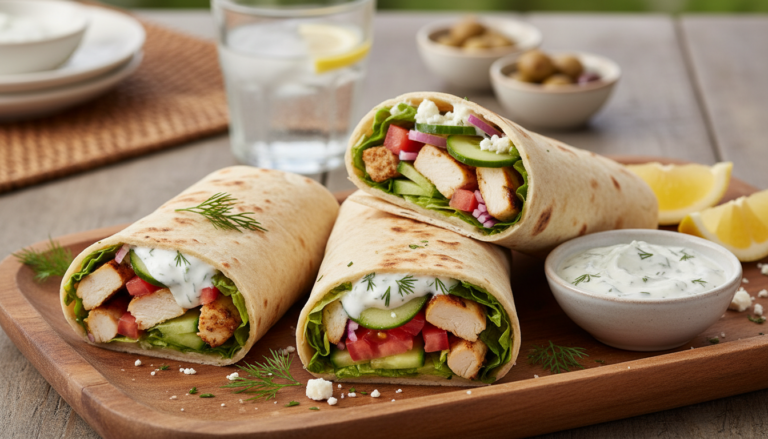
Greek Chicken Wraps
This Greek chicken wrap recipe delivers restaurant-quality Mediterranean flavors in a grab-and-go format that holds up beautifully for days through strategic layering and smart ingredient selection.
4
servings15
minutes10
minutes350
kcal25
minutesIngredients
500 grams chicken breast
1 tbsp olive oil
1 tsp oregano
1 tsp garlic powder
1/2 tsp salt
1/4 tsp black pepper
1 cucumber
1 red onion
1 cup cherry tomatoes
1 cup feta cheese
1/2 cup tzatziki sauce
4 whole wheat wraps
Directions
- Heat the olive oil in a pan over medium heat, and add the chicken breast cut into strips. Cook for about 5 minutes until golden brown.
- Season the chicken with oregano, garlic powder, salt, and black pepper. Stir well and cook for additional 3 minutes until fully cooked.
- Slice the cucumber, red onion, and cherry tomatoes into thin strips. Ensure all vegetables are evenly sized for easy wrapping.
- Lay the whole wheat wraps flat and spread tzatziki sauce evenly over each one to cover the surface.
- Distribute the cooked chicken evenly onto each wrap, followed by the sliced vegetables and crumbled feta cheese.
- Roll each wrap tightly, folding in the edges to keep the filling secured, and cut in half if desired before serving.
Nutrition Facts
- Total number of serves: 4
- Calories: 350kcal
- Cholesterol: 0mg
- Sodium: 620mg
- Potassium: 400mg
- Sugar: 8g
- Protein: 6g
- Calcium: 60mg
- Iron: 2mg
About This Author

Benjamin Brown
Recipe Developer
Benjamin is our flavor engineer. A classically trained chef turned recipe developer, he’s obsessed with balancing taste, texture, and creativity. He ensures that every recipe we publish is not only delicious but also reliable, approachable, and repeatable — even for beginners.
Favorite dish: Slow-braised short ribs with red wine reduction.
Kitchen motto: “Cooking is part science, part soul.”