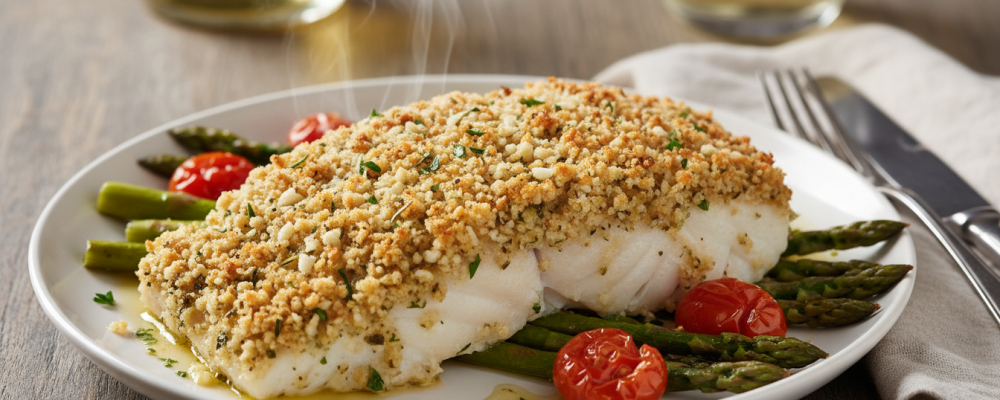

There’s something remarkable about how a simple crust can transform delicate fish into something that looks and tastes restaurant-worthy. This Garlic Parmesan Crusted Halibut achieves exactly that transformation—taking pristine halibut fillets and topping them with a golden, crispy mixture of Parmesan, panko, garlic, and lemon that adds textural contrast and bold flavor without overwhelming the fish’s natural sweetness. The result is elegant enough for special occasions yet straightforward enough for weeknight cooking when you want to feel like you’re treating yourself.
I developed this recipe while exploring how to add interest to mild, delicate fish without masking their quality. Halibut is one of the finest fish available—firm-textured, mild-flavored, and substantial enough to feel satisfying—but it can sometimes feel plain when simply baked or grilled. The crust solves that problem beautifully, creating a golden-brown topping that’s packed with flavor while the fish underneath stays moist and flaky. The combination of butter and olive oil in the crust ensures proper browning and richness, while the Parmesan adds nutty, salty depth that complements rather than competes with the halibut.
What makes this technique particularly successful is how the crust protects the fish during cooking. The layer of breadcrumbs and cheese acts as insulation, preventing the delicate halibut from drying out while creating that satisfying textural contrast between crispy topping and tender fish. When you press your fork through the golden crust and it gives way to perfectly flaky halibut, you understand why this simple preparation has become a steakhouse and fine dining staple.
The Inspiration Behind This Recipe
This dish emerged from studying how high-end restaurants prepare fish—they often use crusts, toppings, or coatings that add visual appeal and textural interest while protecting delicate proteins during cooking. The Parmesan-panko combination has become popular because it delivers consistently excellent results: the panko provides larger, crispier crumbs than regular breadcrumbs, while the Parmesan contributes flavor and helps the crust brown beautifully.
I wanted to create a version that home cooks could execute reliably without specialized equipment or techniques. The key was finding the right ratio of cheese to breadcrumbs (enough cheese for flavor and binding, but not so much that it becomes heavy), and the proper fat balance (butter for flavor, olive oil to help with browning and prevent burning).
The addition of fresh garlic and lemon zest transforms the crust from merely crispy to genuinely flavorful, adding aromatic complexity that makes each bite interesting. These elements also complement halibut’s mild sweetness perfectly, enhancing rather than overwhelming the fish’s natural character.
A Brief History of Crusted Fish Preparations
The technique of coating fish with breadcrumbs or other coatings has European roots, particularly in French and Italian cuisines where protecting delicate proteins during cooking has long been standard practice. “En croûte” preparations—wrapping foods in pastry or crusts—date back centuries, while simpler breadcrumb coatings became popular as more accessible alternatives.
Parmesan-crusted preparations specifically gained prominence in Italian-American cooking, where generous use of this aged cheese became a hallmark of the cuisine. The combination of Parmesan and breadcrumbs appeared on everything from chicken to veal to fish, creating the crispy, cheesy coatings that became beloved in red-sauce Italian restaurants across America.
This Garlic Parmesan Crusted Halibut represents the continued evolution of that tradition—taking the classic technique and applying it to premium fish with a focus on letting quality ingredients shine while adding just enough embellishment to make the dish feel special.
Why This Cooking Method Works
Baking at 400°F provides high enough heat to brown the crust and cook the fish through without drying it out. This temperature is hot enough to achieve proper browning on the Parmesan and panko while the fish underneath cooks gently to perfect flakiness.
The combination of melted butter and olive oil in the crust serves multiple purposes: the butter adds rich flavor and helps the Parmesan brown, while the olive oil has a higher smoke point and contributes to crispiness. Together, they create a crust that’s golden, flavorful, and texturally satisfying rather than greasy or soggy.
Pressing the crust mixture onto the fish ensures good adhesion, preventing it from sliding off during or after cooking. The mixture itself—breadcrumbs, cheese, and fat—forms a cohesive coating that browns evenly and stays intact when you portion and serve the fish.
The lemon zest in the crust provides bright, aromatic notes that cut through the richness of the butter and cheese while complementing the fish’s natural flavors. Fresh lemon wedges at serving add another layer of brightness that guests can adjust to their preference.
Flavor Profile: What to Expect
This halibut delivers sophisticated, well-balanced flavors:
- Mild, sweet halibut that’s flaky and moist
- Nutty, salty Parmesan adding savory depth
- Crispy, golden crust providing textural contrast
- Aromatic garlic that’s present but not overwhelming
- Bright lemon notes from zest and fresh wedges
- Rich, buttery undertones throughout the crust
- Fresh, herbal finish from parsley garnish
The result is fish that tastes elegant and refined while remaining approachable and satisfying—the kind of dish that impresses without intimidating.
Tips for Making the Best Garlic Parmesan Crusted Halibut
Technical precision ensures perfect results every time:
- Use fresh halibut: Look for firm, white flesh with no fishy smell—quality matters with delicate fish.
- Pat fish completely dry: Moisture prevents the crust from adhering properly.
- Don’t skimp on the crust: A generous layer ensures every bite has that crispy topping.
- Press gently but firmly: The crust needs to adhere but the fish is delicate—find the balance.
- Check doneness carefully: Halibut is done at 130-135°F internal temperature—overcooked fish becomes dry and tough.
- Use panko, not regular breadcrumbs: Panko’s larger flakes create superior crispiness.
For extra golden color, you can briefly broil during the last 1-2 minutes of cooking, watching carefully to prevent burning. This creates an even more dramatic, restaurant-quality presentation.
Serving Suggestions and Side Pairings
This elegant fish pairs beautifully with refined but simple accompaniments:
- Roasted asparagus or green beans for color and elegance
- Garlic mashed potatoes or risotto for creamy richness
- Simple arugula salad with lemon vinaigrette
- Roasted fingerling potatoes with herbs
- Sautéed spinach or Swiss chard
The fish is the star, so sides should be complementary and elegant without competing for attention. Focus on fresh, seasonal vegetables and simple starches that let the halibut shine.
Storage, Reheating, and Make-Ahead Tips
This fish is best enjoyed fresh but stores reasonably well:
- Refrigerate leftovers for up to 2 days maximum—fish doesn’t keep as long as other proteins
- Reheat gently in a 300°F oven to restore some crispness—microwave makes the crust soggy
- Prep crust ahead by mixing the topping and refrigerating for up to 24 hours
- Don’t freeze cooked crusted fish—both texture and quality suffer significantly
The crust mixture can be prepared in advance and kept refrigerated, making final assembly quick when you’re ready to cook. This makes the dish practical for entertaining since most prep can be done ahead.
Why This Recipe Deserves a Spot in Your Rotation
This Garlic Parmesan Crusted Halibut proves that impressive, restaurant-quality fish dishes are achievable at home without specialized skills or equipment. It delivers elegant presentation and sophisticated flavor while being straightforward enough for confident home cooks to execute successfully. The dish is special enough for date nights or dinner parties yet practical enough for those evenings when you want to elevate your weeknight routine.
Once you’ve experienced how this simple crusting technique transforms fish into something genuinely impressive, you’ll find yourself using it regularly and perhaps adapting it for other fish varieties or proteins.
Recommended Drink Pairing
The delicate, refined flavors of this halibut pair beautifully with wines that offer complementary characteristics. A buttery Chardonnay echoes the richness of the crust, while a crisp Sauvignon Blanc or Pinot Grigio provides refreshing contrast. For something with more body, a white Burgundy or Viognier works beautifully.
For beer, try a Belgian witbier or wheat beer that won’t overwhelm the delicate fish. Non-alcoholic options like sparkling water with lemon, white grape juice, or a light herbal tea complement the dish without competing with its subtle flavors.
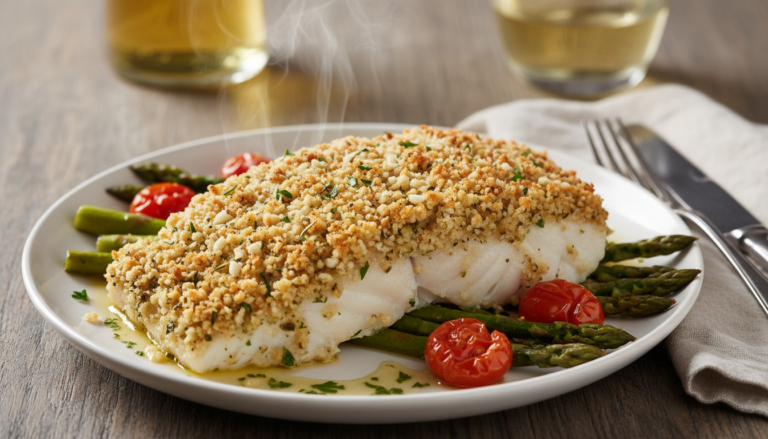
Garlic Parmesan Crusted Halibut
Garlic Parmesan Crusted Halibut features tender halibut fillets topped with a golden crust of Parmesan, panko, garlic, and lemon zest for elegant simplicity.
4
servings15
minutes20
minutes350
kcal35
minutesIngredients
1 lb halibut fillets
0.5 cup grated Parmesan cheese
0.25 cup Panko breadcrumbs
3 cloves garlic, minced
2 tbsp unsalted butter, melted
1 tbsp olive oil
1 tsp lemon zest
0.5 tsp salt
0.25 tsp black pepper
2 tbsp fresh parsley, chopped
1 unit lemon, cut into wedges for serving
Directions
- Preheat your oven to 400 degrees Fahrenheit. Line a baking sheet with parchment paper for easy cleanup.
- In a small bowl, combine the Parmesan cheese, Panko breadcrumbs, minced garlic, melted butter, olive oil, and lemon zest.
- Place the halibut fillets on the prepared baking sheet. Season them with salt and black pepper on both sides.
- Spread the Parmesan and Panko mixture evenly over the top of each halibut fillet, pressing gently to adhere.
- Bake the crusted halibut in the preheated oven for about 15 to 20 minutes, or until the fish flakes easily with a fork.
- After baking, remove the halibut from the oven and sprinkle with fresh parsley before serving.
- Serve the halibut fillets with lemon wedges on the side for added flavor. Enjoy your delicious meal.
Nutrition Facts
- Total number of serves: 4
- Calories: 350kcal
- Cholesterol: 0mg
- Sodium: 620mg
- Potassium: 400mg
- Sugar: 8g
- Protein: 6g
- Calcium: 60mg
- Iron: 2mg
About This Author

Benjamin Brown
Recipe Developer
Benjamin is our flavor engineer. A classically trained chef turned recipe developer, he’s obsessed with balancing taste, texture, and creativity. He ensures that every recipe we publish is not only delicious but also reliable, approachable, and repeatable — even for beginners.
Favorite dish: Slow-braised short ribs with red wine reduction.
Kitchen motto: “Cooking is part science, part soul.”