Daily Dish

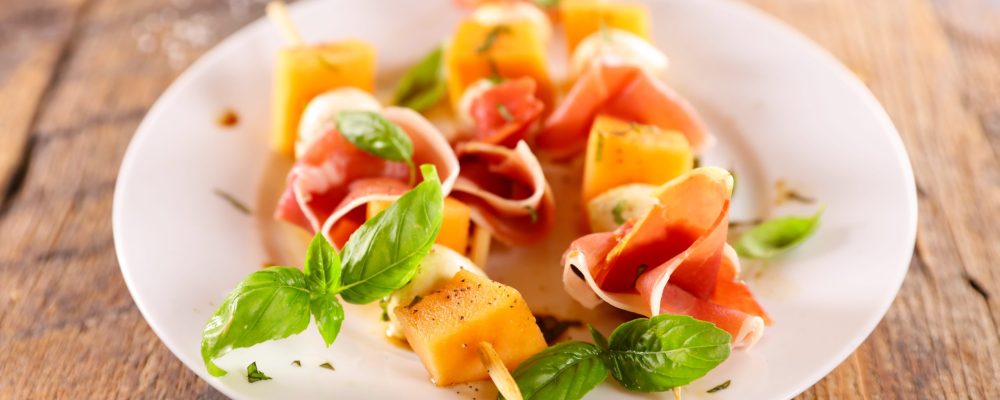
Elegant Melon Prosciutto Skewers

Healthy Fact of the Day

Melons are excellent sources of vitamins A and C, as well as potassium. They're also high in water content, making them a hydrating snack for hot summer days.

Ingredients


  • 1 ripe cantaloupe, cut into 1-inch cubes
  • 1 ripe honeydew melon, cut into 1-inch cubes
  • 8 oz prosciutto, thinly sliced and cut into 2-inch strips
  • 8 oz fresh mozzarella pearls
  • 1/4 cup fresh basil leaves
  • 2 tbsp extra-virgin olive oil
  • 1 tbsp balsamic glaze
  • Freshly ground black pepper to taste
  • Wooden skewers (about 6 inches long)


Instructions

  1. Begin assembling the skewers by folding a strip of prosciutto and threading it onto the skewer.

  2. Follow with a cube of cantaloupe, a mozzarella pearl, and a cube of honeydew melon.

  3. Fold a basil leaf in half and add it to the skewer.

  4. Repeat the process, ending with another folded strip of prosciutto.

  5. Arrange the completed skewers on a serving platter.

  6. Drizzle the skewers lightly with extra-virgin olive oil and balsamic glaze.

  7. Finish with a sprinkle of freshly ground black pepper.

  8. Chill the skewers for about 15 minutes before serving to allow the flavors to meld.

Bite into these Melon Prosciutto Skewers and savor the perfect balance of sweet, salty, and creamy flavors! Each skewer is a miniature work of art that captures the essence of a lazy summer afternoon in the Italian countryside. It’s not just an appetizer; it’s a passport to Mediterranean bliss, no plane ticket required!

Recent Recipes

Chili Lime Pepita Clusters

  • June 21, 2026
  • 15 min read

Za’atar Roasted Chicken & Bulgur Bowls

  • June 21, 2026
  • 15 min read

The Strange and Beautiful Science of Color

  • June 21, 2026
  • 10 min read

Coconut Matcha Overnight Oat Jars

  • June 21, 2026
  • 14 min read

Oreo Lasagna

  • June 21, 2026
  • 17 min read

Taco Sloppy Joes

  • June 21, 2026
  • 8 min read

Little Caesars Is Offering $5 Large Pizzas

  • June 20, 2026
  • 3 min read

The Farmers Market as a Way of

  • June 20, 2026
  • 11 min read

One Can of Tomatoes, Five Completely Different

  • June 20, 2026
  • 3 min read

German Apple Pancake

  • June 20, 2026
  • 12 min read

Tip of the Day

“Always let your meat rest before slicing.”

Whether you're roasting a chicken, grilling steak, or baking pork tenderloin, letting cooked meat rest for 5–10 minutes before slicing allows the juices to redistribute evenly. This simple step keeps your meat juicy and tender, ensuring every bite is flavorful and moist. Bonus: It gives you a moment to plate your sides or garnish for a perfect presentation!

Our Latest Recipes

Meal Prep
Benjamin Brown

Chili Lime Pepita Clusters

Pepitas are one of the most nutritionally dense seeds available—delivering magnesium, zinc, plant-based iron, and a complete spectrum of antioxidants in a single ounce alongside heart-healthy unsaturated fats and a meaningful amount of plant-based protein. They are, gram for gram, one of the best-return snack ingredients in the pantry.

Read More »
Chicken Recipes
Amelia Grace

Za’atar Roasted Chicken & Bulgur Bowls

Bulgur wheat is one of the most nutritionally efficient whole grains available—higher in fiber than brown rice or quinoa, with a glycemic index low enough to support steady blood sugar across the full afternoon. Its minimal processing preserves the bran and germ layers intact, making every serving a meaningful source of B vitamins, manganese, and plant-based iron alongside its impressive fiber content.

Read More »
Blog
Daily Disher

The Strange and Beautiful Science of Color in Food

The pigments that produce color in fruits and vegetables are, in many cases, the same compounds responsible for their most significant health benefits. Anthocyanins — the pigments responsible for the blue, purple, and red colors of blueberries, red cabbage, and cherries — are among the most potent dietary antioxidants and have been associated with improved cardiovascular health, cognitive function, and inflammatory markers in multiple clinical studies. Carotenoids — responsible for the orange and red colors of carrots, sweet potatoes, and tomatoes — include beta-carotene, lycopene, and lutein, each with specific and well-documented health effects. Eating a wide variety of colored fruits and vegetables is not just nutritional advice — it is a practical strategy for consuming the widest possible range of protective plant compounds.

Read More »

Get your daily dose of delicious!

Skip to content