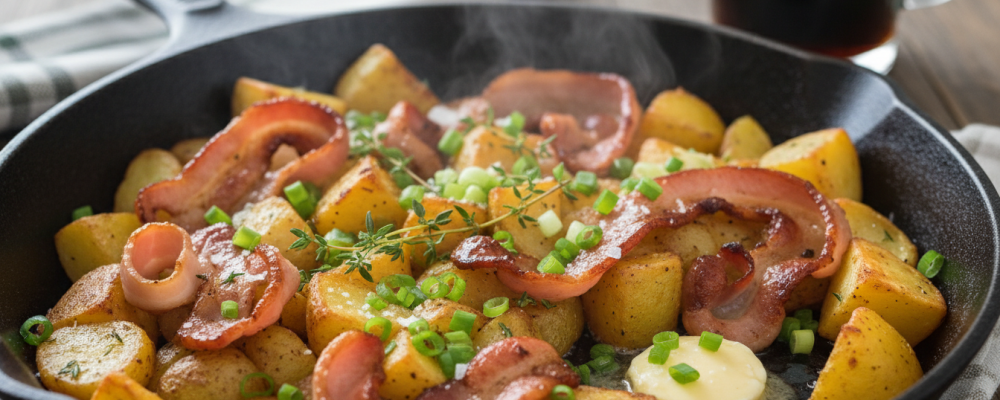

There’s something wonderfully comforting about simple skillet dishes that transform basic ingredients into something genuinely satisfying, and this Crispy Irish Bacon Potato Skillet embodies that principle perfectly. The combination of golden, crispy potatoes and savory Irish bacon (which is closer to Canadian bacon than American crispy bacon) creates a dish that’s hearty, flavorful, and endlessly versatile—perfect for breakfast, brunch, or even a casual dinner. The potatoes get beautifully caramelized in the rendered bacon fat, developing crispy edges while staying tender inside, and the onions add sweet, aromatic depth that ties everything together.
I developed this recipe while exploring traditional Irish and British comfort foods that rely on quality ingredients prepared simply but with proper technique. Irish bacon—which is back bacon rather than streaky bacon—has a meatier texture and less fat than American bacon, making it substantial enough to feel like a protein rather than just a flavoring. When you cook the potatoes in the rendered fat along with olive oil, they absorb all those savory flavors while developing that essential crispy exterior that makes you reach for one more forkful.
What makes this skillet particularly appealing is its flexibility and practicality. It works for any meal of the day, scales easily to feed more people, and uses ingredients that are straightforward and accessible. The technique is simple—get everything crispy and golden, season well, finish with fresh herbs—but the results taste like something that required far more effort. When you serve this straight from the skillet with a sprinkle of fresh parsley, you’re delivering comfort food that feels both homey and somehow special.
The Inspiration Behind This Recipe
This dish emerged from the Irish and British tradition of fry-ups—hearty breakfast plates featuring fried potatoes, eggs, bacon, and other components cooked in the same pan for maximum flavor and minimal cleanup. While full Irish breakfasts can be elaborate affairs, this streamlined version captures the essential elements—potatoes and bacon cooked together until everything is golden and delicious.
I wanted to create something that honored those breakfast traditions while being practical for modern home cooking. By focusing on just potatoes, bacon, and onions, I created a dish that’s substantial enough to feel like a complete meal but simple enough to make regularly without fatigue. The Irish bacon is traditional, but if you can’t find it, thick-cut Canadian bacon or even quality ham works as a substitute.
The technique of getting the potatoes properly crispy is crucial—patience is required to let them develop those golden edges without constant stirring. This isn’t quick-cooked hash; it’s properly crisped potatoes that have absorbed bacon flavor and developed complex, caramelized notes that make each bite interesting.
A Brief History of Irish Bacon and Breakfast Traditions
Irish bacon, also known as rashers, is cut from the back of the pig rather than the belly, resulting in a leaner, meatier product than American bacon. This style of bacon has been traditional in Ireland and Britain for centuries, where it’s a staple of the full breakfast plate.
The Irish breakfast tradition developed as a hearty meal for farmers and laborers who needed substantial food to sustain them through morning work. Potatoes, introduced to Ireland in the late 16th century, became a staple ingredient that appeared in nearly every meal, including breakfast. The combination of bacon and potatoes cooked together in a skillet was both practical (one pan, minimal cleanup) and delicious (the flavors meld beautifully).
This Crispy Irish Bacon Potato Skillet represents that practical tradition adapted for contemporary home cooking—simple ingredients, straightforward technique, satisfying results that work for any meal of the day.
Why This Cooking Method Works
Sautéing onions first in olive oil allows them to soften and begin caramelizing, creating a sweet, aromatic base. Adding potatoes to that flavored oil ensures they pick up onion flavor from the start while having enough fat to develop proper browning.
Cooking potatoes over medium heat for fifteen minutes before adding bacon gives them time to develop crispy exteriors and tender interiors. Rushing this step by using too-high heat results in potatoes that are burnt outside and raw inside. Patience and occasional stirring (not constant) allows proper browning.
Adding bacon after potatoes have started crisping prevents the bacon from overcooking while the potatoes finish. Irish bacon cooks relatively quickly since it’s already cured, so timing the addition ensures everything finishes at optimal doneness simultaneously.
The rendered bacon fat that releases during cooking further flavors the potatoes and onions, creating cohesion where everything tastes like it belongs together rather than separate components sharing a pan.
Flavor Profile: What to Expect
This skillet delivers hearty, satisfying flavors:
- Golden, crispy potatoes with tender, fluffy interiors
- Savory, meaty bacon that’s substantial and flavorful
- Sweet, caramelized onions adding depth
- Rich, bacon-infused flavor throughout the potatoes
- Fresh, herbal brightness from parsley
- Simple, clean seasoning that lets ingredients shine
The result is comfort food that tastes homey and satisfying—the kind of dish that feels like a warm hug on a plate.
Tips for Making the Best Crispy Irish Bacon Potato Skillet
Small adjustments ensure consistently excellent results:
- Cut potatoes uniformly: Even cubes ensure consistent cooking throughout.
- Don’t overcrowd the pan: Use a large skillet with plenty of surface area for proper browning.
- Resist constant stirring: Let potatoes sit undisturbed for a few minutes between stirs to develop crispy edges.
- Use waxy potatoes: Yukon Gold or red potatoes hold their shape better than russets.
- Season generously: Potatoes can handle bold seasoning—don’t be shy with salt and pepper.
- Use fresh parsley: The bright, fresh herb flavor is essential for balance.
For extra richness, you can finish with a pat of butter. For more substantial meals, top with fried or poached eggs. For additional vegetables, add bell peppers or cabbage along with the onions.
Serving Suggestions and Side Pairings
This versatile skillet pairs with various accompaniments depending on the meal:
For Breakfast/Brunch:
- Fried or poached eggs on top
- Toast or soda bread
- Baked beans (traditional Irish breakfast component)
- Grilled tomatoes
For Dinner:
- Simple green salad
- Steamed vegetables
- Crusty bread
- Applesauce or sauerkraut
The skillet is substantial enough to serve as a main course or work as a hearty side dish alongside other proteins.
Storage, Reheating, and Make-Ahead Tips
This skillet stores well and reheats beautifully:
- Refrigerate in an airtight container for up to 3 days
- Reheat in a skillet over medium heat to restore crispness—microwave makes potatoes soggy
- Prep potatoes ahead by cutting and storing in cold water up to 24 hours
- Make ahead completely and reheat, though fresh is always best for optimal texture
Leftover skillet makes excellent breakfast hash—just reheat with an egg on top for a complete meal. It can also be used as a base for frittatas or breakfast burritos.
Why This Recipe Deserves a Spot in Your Rotation
This Crispy Irish Bacon Potato Skillet proves that simple, traditional foods remain beloved for good reasons—they’re straightforward to prepare, use accessible ingredients, and deliver genuine satisfaction without pretension or complication. It’s the kind of recipe that works for lazy weekend breakfasts, quick weeknight dinners, or anytime you want something hearty and comforting that doesn’t require significant planning or effort.
Once you’ve experienced how satisfying this simple combination can be when prepared with proper technique, you’ll find yourself making it regularly and perhaps adding your own variations while maintaining the essential character that makes it so appealing.
Recommended Drink Pairing
The hearty, savory flavors of this skillet pair with traditional breakfast and brunch beverages. Strong Irish breakfast tea or coffee provides classic accompaniment. For something more indulgent, Irish coffee (coffee with whiskey and cream) echoes the Irish theme beautifully.
For non-alcoholic options, fresh orange juice provides acidic contrast to the rich potatoes and bacon, while apple cider (hot or cold depending on season) complements the savory flavors. Cold milk or buttermilk also work well with this hearty dish.
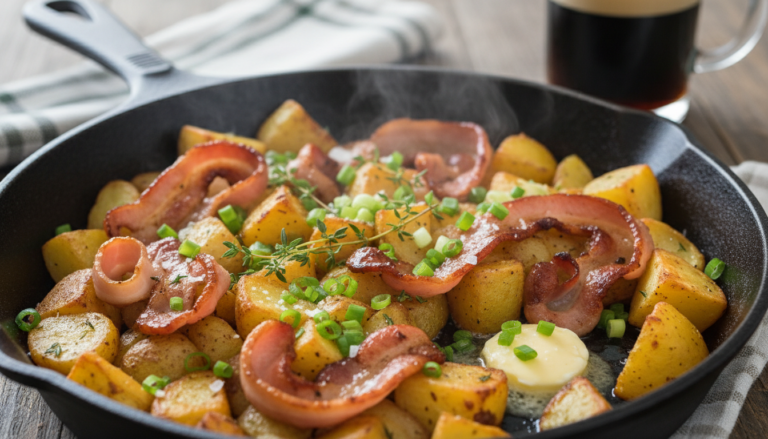
Crispy Irish Bacon Potato Skillet
Crispy Irish Bacon Potato Skillet combines golden potatoes with savory Irish bacon and caramelized onions for hearty, all-day comfort food.
4
servings10
minutes30
minutes450
kcal40
minutesIngredients
1.5 pounds potatoes
8 ounces Irish bacon
1 large onion
2 tablespoons olive oil
0.5 teaspoon salt
0.25 teaspoon black pepper
1 tablespoon fresh parsley
Directions
- Peel the potatoes and cut them into small cubes, about half an inch each, ensuring even cooking.
- Heat olive oil in a large skillet over medium heat, then add the chopped onion and sauté until transparent.
- Add the cubed potatoes to the skillet, stirring occasionally, cooking for fifteen minutes or until they start to crisp.
- Slice the Irish bacon into small strips and add them to the skillet, cooking until crispy and browned.
- Season the mixture in the skillet with salt and pepper, adjusting to taste if necessary, then stir to combine.
- Sprinkle freshly chopped parsley over the top of the skillet, then serve the dish immediately while hot.
Nutrition Facts
- Total number of serves: 4
- Calories: 450kcal
- Cholesterol: 0mg
- Sodium: 620mg
- Potassium: 400mg
- Sugar: 8g
- Protein: 6g
- Calcium: 60mg
- Iron: 2mg
About This Author

Amelia Grace
Editor-in-Chief & Culinary Director
The heart and guiding voice of Daily Dish, Amelia leads our editorial vision and recipe development. With a background in food journalism and over a decade spent in professional kitchens, she has a knack for blending gourmet technique with real-world accessibility. Her goal? To make every reader feel like a confident cook, one dish at a time.
Favorite dish: Creamy lemon risotto with a sprinkle of fresh thyme.
Kitchen motto: “Good food doesn’t have to be complicated — it just has to be made with heart.”