Daily Dish

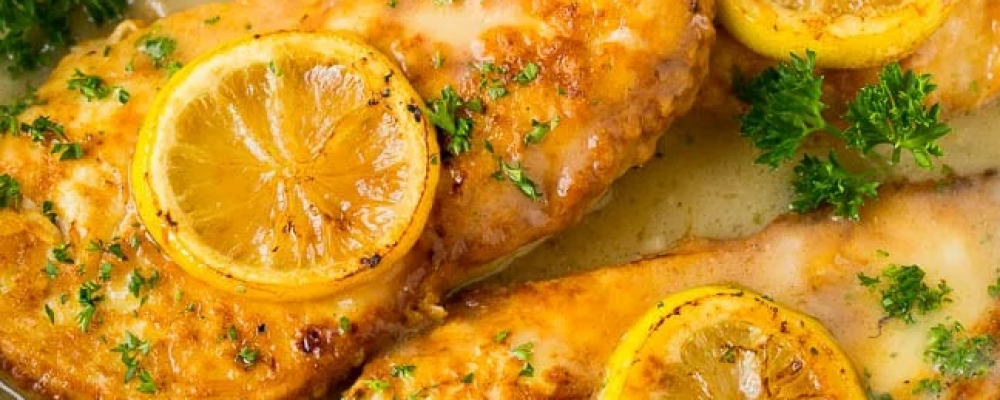
Chicken Francese

Healthy Fact of the Day

Chicken is an excellent source of lean protein, while the addition of lemon juice provides a boost of vitamin C and the breadcrumb coating adds a satisfying crunch.

Ingredients


  • 4 boneless, skinless chicken breasts
  • 1/2 cup all-purpose flour
  • 2 large eggs, beaten
  • 1 cup seasoned breadcrumbs
  • 1/4 cup grated Parmesan cheese
  • 4 tablespoons unsalted butter, divided
  • 2 tablespoons olive oil
  • 1/2 cup dry white wine
  • 1/2 cup chicken broth
  • 1/4 cup freshly squeezed lemon juice
  • 2 tablespoons capers, drained
  • 2 tablespoons chopped fresh parsley
  • Lemon wedges for serving


Instructions

  1. Place the chicken breasts between two sheets of plastic wrap or wax paper and gently pound them to an even 1/4-inch thickness using a meat mallet or rolling pin.

  2. Set up a breading station with three shallow dishes: one with flour, one with beaten eggs, and one with a mixture of seasoned breadcrumbs and grated Parmesan cheese.

  3. Dredge the chicken breasts in the flour, dip them in the beaten eggs, and then coat them evenly with the breadcrumb mixture, pressing gently to adhere.

  4. In a large skillet, melt 2 tablespoons of butter and the olive oil over medium-high heat.

  5. Cook the breaded chicken breasts for 3-4 minutes per side, or until golden brown and cooked through. Transfer the cooked chicken to a plate and keep warm.

  6. In the same skillet, add the remaining 2 tablespoons of butter and the white wine. Use a wooden spoon to scrape up any browned bits from the bottom of the pan.

  7. Add the chicken broth and lemon juice to the skillet, and bring the mixture to a simmer.

  8. Return the cooked chicken breasts to the skillet, along with the capers, and simmer for 2-3 minutes, spooning the sauce over the chicken to coat it.

  9. Remove the skillet from heat and sprinkle with chopped fresh parsley.

  10. Serve the Chicken Francese immediately, garnished with lemon wedges for squeezing over the top.

Enjoy this delightful Chicken Francese, a classic Italian dish bursting with bright lemon flavor and a crispy, golden coating that’s sure to impress.


Recent Recipes

Chili Lime Pepita Clusters

  • June 21, 2026
  • 15 min read

Za’atar Roasted Chicken & Bulgur Bowls

  • June 21, 2026
  • 15 min read

The Strange and Beautiful Science of Color

  • June 21, 2026
  • 10 min read

Coconut Matcha Overnight Oat Jars

  • June 21, 2026
  • 14 min read

Oreo Lasagna

  • June 21, 2026
  • 17 min read

Taco Sloppy Joes

  • June 21, 2026
  • 8 min read

Little Caesars Is Offering $5 Large Pizzas

  • June 20, 2026
  • 3 min read

The Farmers Market as a Way of

  • June 20, 2026
  • 11 min read

One Can of Tomatoes, Five Completely Different

  • June 20, 2026
  • 3 min read

German Apple Pancake

  • June 20, 2026
  • 12 min read

Tip of the Day

“Always let your meat rest before slicing.”

Whether you're roasting a chicken, grilling steak, or baking pork tenderloin, letting cooked meat rest for 5–10 minutes before slicing allows the juices to redistribute evenly. This simple step keeps your meat juicy and tender, ensuring every bite is flavorful and moist. Bonus: It gives you a moment to plate your sides or garnish for a perfect presentation!

Our Latest Recipes

Meal Prep
Benjamin Brown

Chili Lime Pepita Clusters

Pepitas are one of the most nutritionally dense seeds available—delivering magnesium, zinc, plant-based iron, and a complete spectrum of antioxidants in a single ounce alongside heart-healthy unsaturated fats and a meaningful amount of plant-based protein. They are, gram for gram, one of the best-return snack ingredients in the pantry.

Read More »
Chicken Recipes
Amelia Grace

Za’atar Roasted Chicken & Bulgur Bowls

Bulgur wheat is one of the most nutritionally efficient whole grains available—higher in fiber than brown rice or quinoa, with a glycemic index low enough to support steady blood sugar across the full afternoon. Its minimal processing preserves the bran and germ layers intact, making every serving a meaningful source of B vitamins, manganese, and plant-based iron alongside its impressive fiber content.

Read More »
Blog
Daily Disher

The Strange and Beautiful Science of Color in Food

The pigments that produce color in fruits and vegetables are, in many cases, the same compounds responsible for their most significant health benefits. Anthocyanins — the pigments responsible for the blue, purple, and red colors of blueberries, red cabbage, and cherries — are among the most potent dietary antioxidants and have been associated with improved cardiovascular health, cognitive function, and inflammatory markers in multiple clinical studies. Carotenoids — responsible for the orange and red colors of carrots, sweet potatoes, and tomatoes — include beta-carotene, lycopene, and lutein, each with specific and well-documented health effects. Eating a wide variety of colored fruits and vegetables is not just nutritional advice — it is a practical strategy for consuming the widest possible range of protective plant compounds.

Read More »

Get your daily dose of delicious!

Skip to content












