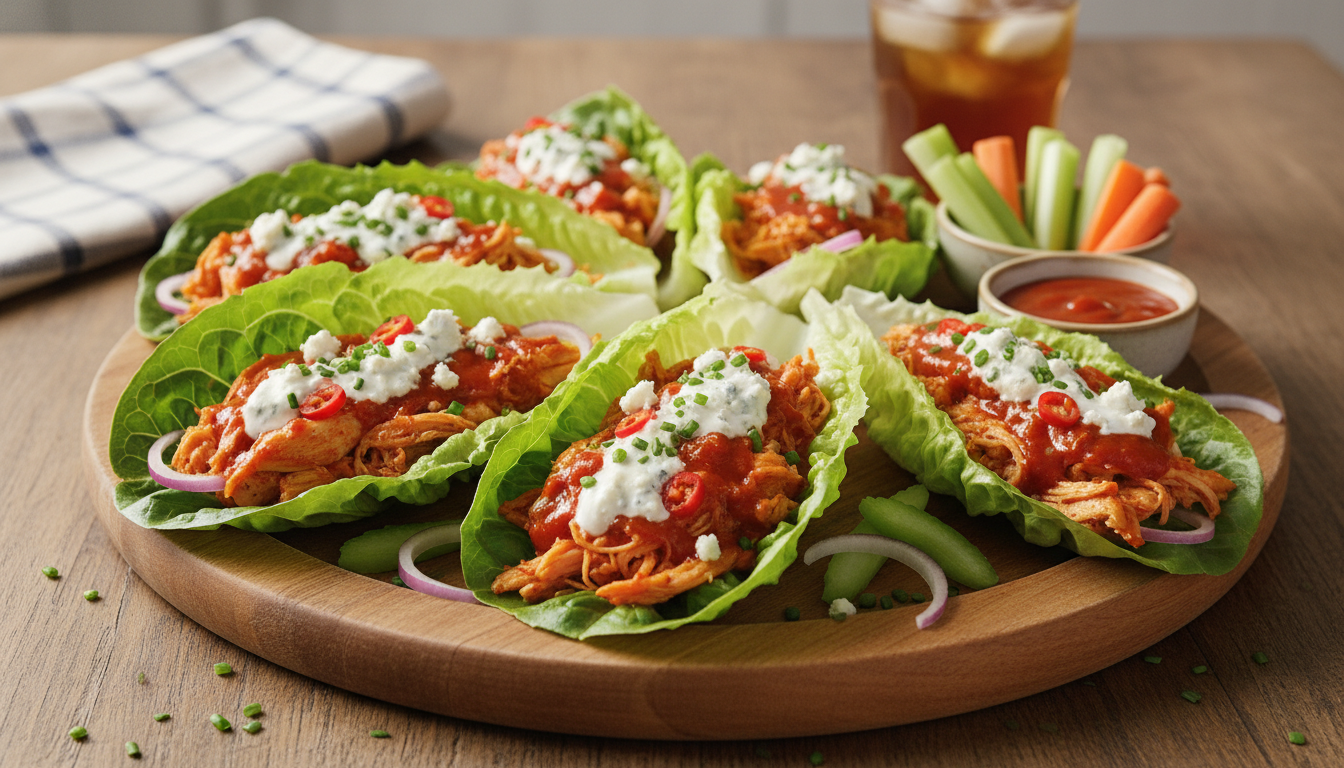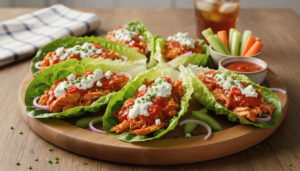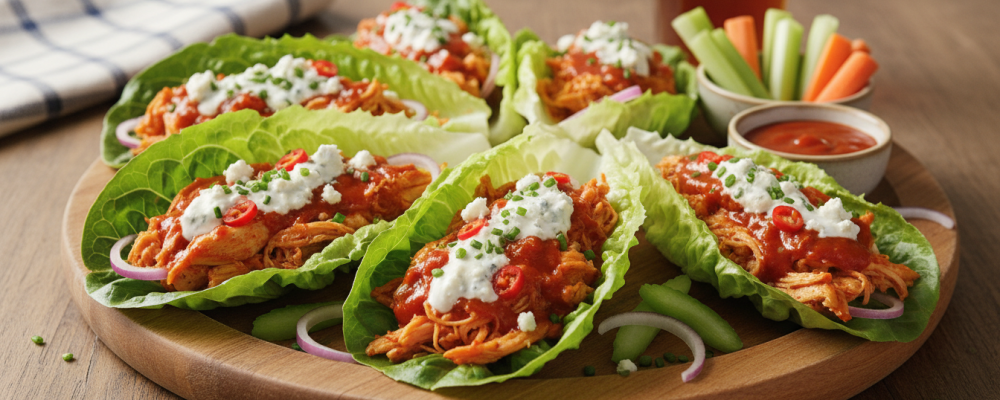

There’s a version of meal prep that asks you to do everything at once—cook, assemble, stack, and seal—and then wonder why your food feels tired and soggy by Wednesday. Buffalo Chicken Lettuce Wraps are built on a different philosophy. The strategy here is component-based prep: cook the chicken, prepare the toppings, store everything separately, and assemble at the moment of eating. That single structural decision is what separates a genuinely great meal prep recipe from one that just technically qualifies.
Buffalo chicken has always been a crowd-pleaser, but it earns its place in a meal prep rotation for a specific reason—the sauce doesn’t just flavor the protein, it actively preserves moisture throughout the week. Shredded chicken, by nature, has more surface area than a whole breast or thigh, which means it absorbs and holds onto sauce more efficiently. The result is chicken that stays tender and flavorful on day four just as it does on day one, provided it’s stored correctly.
The lettuce wrap format is equally deliberate. Butter lettuce or romaine leaves function as a natural vessel with structural integrity—they’re firm enough to hold a generous filling without collapsing, yet light enough to keep the overall macronutrient profile clean. Paired with the cool, creamy bite of blue cheese and the textural contrast of shredded carrots and celery, this recipe hits every sensory note. It’s engineered, not accidental.
─────────────────────────────────────────
The Inspiration Behind This Recipe
The original challenge was this: how do you deliver a lunch that feels indulgent but doesn’t derail nutritional goals, and still holds up for four or five days in the fridge? Most high-satisfaction flavors—creamy sauces, rich proteins, bold spice—come with trade-offs in the context of meal prep. They often don’t reheat cleanly, or they deteriorate texturally once stored. Buffalo sauce solves both problems. It’s acidic enough to keep the chicken from tasting flat and bold enough that even a small amount delivers maximum flavor impact.
The lettuce wrap format was chosen specifically for its storage advantages. Unlike a grain bowl or a wrap in a flour tortilla, the components here are stored entirely separate and assembled fresh. There’s no starch absorbing the sauce overnight, no sogginess, no compressed filling. Each container is essentially a mise en place setup waiting for a two-minute assembly. For anyone managing a busy workweek, that kind of efficiency is worth building around.
What resulted was a recipe that doesn’t ask you to compromise. The flavor profile is aggressive and satisfying. The macros skew toward high protein and low carbohydrate. And the prep process is streamlined enough that it fits comfortably into a Sunday batch-cooking session without dominating the afternoon.
─────────────────────────────────────────
A Brief History of Buffalo Chicken
Buffalo chicken traces its origins to Buffalo, New York—specifically to the Anchor Bar, where, in 1964, Teressa Bellissimo reportedly fried leftover chicken wings and tossed them in a mixture of hot sauce and butter. The dish became a regional staple and eventually a nationwide phenomenon, expanding from wings to every format imaginable: sandwiches, pizzas, dips, and, eventually, lettuce wraps.
The flavor profile of buffalo sauce is deceptively simple—vinegar-based hot sauce combined with fat—but that simplicity is exactly what makes it so versatile. The acidity cuts through richness, the heat builds gradually, and the fat carries flavor across every surface it touches. When applied to shredded chicken breast, the sauce creates a lean, high-protein base that punches far above its caloric weight in terms of flavor delivery.
The evolution of buffalo chicken into low-carb and meal-prep-friendly formats reflects broader shifts in how people think about weekday eating. The lettuce wrap version specifically emerged from the intersection of two trends: the demand for convenient, portable lunches and the widespread adoption of lower-carbohydrate eating patterns. What started as bar food has become one of the most adaptable proteins in the modern meal prep toolkit.
─────────────────────────────────────────
Why This Cooking Method Works for Meal Prep
Skillet-cooking the chicken breast before shredding is the most efficient method for this recipe, and it’s not arbitrary. A flat cooking surface creates even direct heat contact across the protein, developing a slight crust on the exterior that locks in moisture during the initial cook. When you shred a properly rested, skillet-cooked breast, the muscle fibers separate cleanly and evenly—which matters because uniform shred size means uniform sauce distribution.
The buffalo sauce is added after cooking, not during, and this timing is intentional. Cooking protein in a vinegar-based sauce accelerates moisture loss through evaporation and can cause the exterior to tighten before the interior is fully cooked. Adding it post-shred allows the hot chicken to absorb the sauce as it rests, drawing it into the fibers rather than just coating the outside. The result is chicken that’s seasoned throughout, not just on the surface.
Storing the shredded buffalo chicken, toppings, and lettuce leaves in separate containers is what makes this recipe genuinely meal-prep-functional rather than just meal-prep-tolerant. Lettuce loses its structural integrity the moment moisture touches it, so keeping it sealed and dry until assembly preserves that critical textural contrast between the cool, crisp leaf and the warm, saucy filling. Reheat only the chicken—everything else should remain cold and fresh for optimal results.
─────────────────────────────────────────
Flavor Profile: What to Expect
Buffalo Chicken Lettuce Wraps deliver a layered contrast of bold heat, cool creaminess, and fresh crunch in every bite:
- Tangy heat – Frank’s-style buffalo sauce brings a vinegar-forward sharpness that builds gradually rather than overwhelming
- Savory depth – Garlic powder and black pepper on the chicken create a subtle, seasoned base beneath the sauce
- Cool creaminess – Blue cheese crumbles introduce a rich, funky counterpoint that tempers the spice without neutralizing it
- Fresh crunch – Shredded carrots add a mild sweetness and structural bite; celery contributes its characteristic clean, slightly bitter snap
- Crisp wrap – The lettuce itself is cool and faintly grassy, functioning as both vessel and palate cleanser between bites
The flavors integrate and deepen as the chicken sits in the sauce overnight. By day two, the shredded chicken is noticeably more saturated and flavorful than it is immediately after cooking—the sauce has fully penetrated the fibers rather than sitting on the surface. The toppings, assembled fresh at each serving, ensure the textural contrast stays consistent throughout the week.
─────────────────────────────────────────
Tips for Making the Best Buffalo Chicken Lettuce Wraps
A few key techniques will meaningfully improve both the quality and the longevity of this recipe:
- Rest before shredding – Allow cooked chicken to rest for 5 minutes before pulling it apart. This allows juices to redistribute rather than running out immediately, resulting in more consistently moist shredded meat.
- Shred while warm – Chicken is significantly easier to shred when it’s still hot. Cold cooked chicken pulls apart less cleanly and can become stringy rather than tender.
- Control your sauce ratio – Start with less buffalo sauce than you think you need. You can always add more, but over-sauced chicken becomes wet and soft by day two. A lightly dressed shred holds up better across the week.
- Use the right lettuce – Butter lettuce and romaine hearts are the two best structural choices. Iceberg works in a pinch but tears unpredictably. Avoid anything too leafy or delicate, like green leaf lettuce.
- Pre-portion your toppings – Store blue cheese, carrots, and celery in small separate containers or compartments so each day’s assembly takes under two minutes. A sectioned prep container works perfectly here.
- Store lettuce leaves dry – Pat them dry before refrigerating and keep them in a paper-towel-lined container to absorb any condensation. This keeps them crisp through day four or five.
Optional: Add a drizzle of ranch dressing alongside the blue cheese for a milder heat experience that still complements the buffalo flavor profile.
─────────────────────────────────────────
Portioning and Container Suggestions
This recipe portions most efficiently into a two-container system per day: one for the buffalo chicken and one for the assembled toppings and lettuce. The chicken holds best in an airtight glass or BPA-free plastic container, portioned into roughly equal serving sizes—approximately 4–5 ounces of shredded chicken per serving works well as a lunch portion, yielding four solid servings from two average chicken breasts.
The lettuce leaves should be stored flat or loosely stacked in a container lined with a dry paper towel, sealed tightly. A wide, shallow container works better than a deep one here—stacking too many leaves creates pressure that accelerates bruising. For the toppings, a single small container with the carrots, celery, and blue cheese crumbles together is sufficient, since they’re all going on simultaneously at assembly.
For grab-and-go convenience, a bento-style container with divided compartments is an excellent all-in-one solution. Load the buffalo chicken into the largest compartment, fold two or three lettuce leaves alongside it, and pack the toppings in the smaller sections. At lunchtime, the entire assembly is a two-minute process directly from the container—no additional dishes required.
─────────────────────────────────────────
Storage, Reheating, and Shelf Life Tips
- Refrigerator storage: Buffalo chicken keeps well for up to 4–5 days in an airtight container. Toppings (carrots, celery, blue cheese) last the same duration. Lettuce leaves stay crisp for 3–4 days when stored dry.
- Freezer storage: Shredded buffalo chicken freezes exceptionally well for up to 2 months. Portion into single servings before freezing for efficient weekday thawing.
- Reheating the chicken: Microwave in 30-second intervals, stirring between each, until heated through—usually 60–90 seconds. Alternatively, reheat briefly in a small skillet over medium heat. Avoid overheating, which tightens the protein fibers and dries out the shred.
- Do not reheat the lettuce or toppings. These should always be served cold and assembled after the chicken is warm.
- Sauce refresh: If the chicken seems a little dry after refrigeration, add a small drizzle of fresh buffalo sauce before reheating to restore moisture and flavor intensity.
- Freezing note: Lettuce, carrots, celery, and blue cheese are not suitable for freezing—prep fresh toppings when thawing frozen chicken.
─────────────────────────────────────────
Why This Recipe Deserves a Spot in Your Meal Prep Rotation
Buffalo Chicken Lettuce Wraps occupy a specific and valuable niche in a weekly meal prep lineup: they’re high in protein, low in carbohydrates, and big in flavor—a combination that’s genuinely difficult to achieve with the kind of efficiency this recipe demands. Most high-flavor meal prep options require significant active cooking time or complex ingredient lists. This one requires a skillet, a pair of forks, and about 25 minutes of total kitchen time to produce four or five complete lunches.
The component-based structure also makes it one of the most adaptable recipes in a rotation. The buffalo chicken itself can anchor multiple different meals throughout the week—serve it in a lettuce wrap on Monday, over rice on Wednesday, or on top of a simple green salad on Friday. That kind of versatility gives a single prep session a disproportionate return on investment, which is ultimately what separates a good meal prep recipe from a great one.
─────────────────────────────────────────
Meal Prep Pairing Suggestions
Buffalo Chicken Lettuce Wraps pair naturally with sides that balance their bold heat with something cooling or starchy. A simple batch of cilantro-lime rice or cauliflower rice works well for those who want a more substantial meal—the mild base absorbs any extra buffalo sauce that escapes the wrap during eating. A prepped cucumber and tomato salad with a light vinegar dressing is another strong pairing, reinforcing the acidic notes in the sauce while adding hydrating freshness.
For a complete weekly spread, consider pairing this recipe with our Sheet Pan Chicken and Vegetables for a heartier, oven-roasted protein option on the days when a lighter wrap doesn’t feel like enough, or our Mediterranean Chicken Grain Bowls for a contrasting flavor profile that gives the week’s lunches variety without requiring additional prep complexity. Having two or three protein anchors prepped at once is the most efficient way to keep a full week of meals interesting—and these three recipes cover enough tonal range to make five days of lunch feel anything but repetitive.
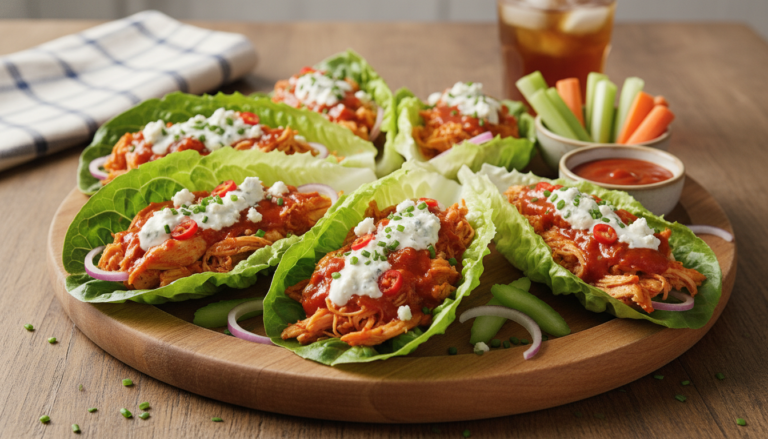
Buffalo Chicken Lettuce Wraps
These Buffalo Chicken Lettuce Wraps deliver all the bold, tangy heat of classic buffalo chicken in a light, crisp package that meal preps beautifully for satisfying, low-carb lunches all week long.
4
servings15
minutes20
minutes250
kcal35
minutesIngredients
1 pound chicken breasts, boneless and skinless
0.5 cup Buffalo sauce
8 leaves lettuce, large
0.25 cup blue cheese crumbles
1 cup carrots, shredded
0.5 cup celery, chopped
1 tablespoon olive oil
1 teaspoon garlic powder
0.5 teaspoon salt
0.5 teaspoon black pepper
Directions
- Heat olive oil in a skillet over medium heat.
- Season chicken with salt, pepper, and garlic powder.
- Cook chicken in skillet for 7-8 minutes per side until done.
- Remove chicken, shred with forks, and mix with buffalo sauce.
- Place shredded chicken in lettuce leaves.
- Top with carrots, celery, and blue cheese crumbles.
- Fold lettuce leaves over filling and serve immediately.
Nutrition Facts
- Total number of serves: 4
- Calories: 250kcal
- Cholesterol: 0mg
- Sodium: 620mg
- Potassium: 400mg
- Sugar: 8g
- Protein: 6g
- Calcium: 60mg
- Iron: 2mg
About This Author

Benjamin Brown
Recipe Developer
Benjamin is our flavor engineer. A classically trained chef turned recipe developer, he’s obsessed with balancing taste, texture, and creativity. He ensures that every recipe we publish is not only delicious but also reliable, approachable, and repeatable — even for beginners.
Favorite dish: Slow-braised short ribs with red wine reduction.
Kitchen motto: “Cooking is part science, part soul.”