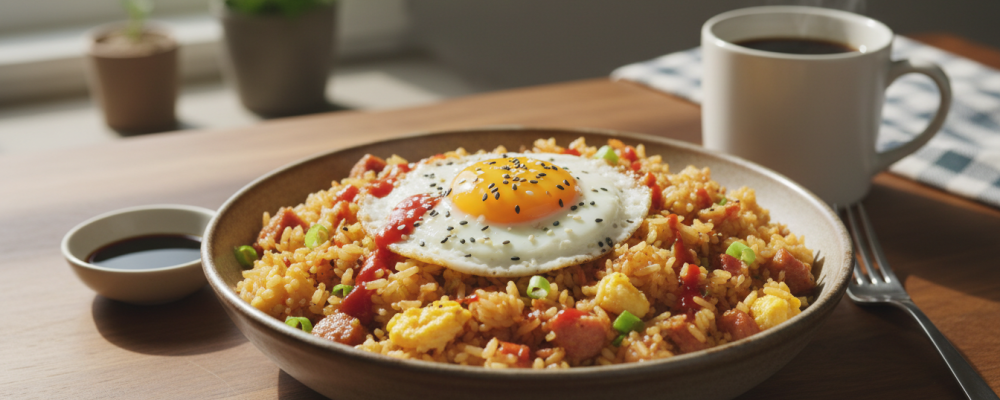

Breakfast fried rice solves one of home cooking’s most common challenges: what to do with leftover rice that’s sitting in your refrigerator. The traditional answer—regular fried rice—works perfectly well, but by shifting the ingredients slightly toward breakfast territory with bacon and scrambled eggs, you create something that feels appropriate for morning while maintaining all the textural appeal and savory satisfaction that makes fried rice so compelling.
The technique here is fundamentally sound. You’re using the bacon fat as your primary cooking medium, which adds depth and richness that vegetable oil simply can’t match. The eggs cook separately to maintain their distinct texture rather than getting lost in the rice. The vegetables add color, nutrition, and textural contrast. The cold rice—essential for proper fried rice texture—crisps up in the hot skillet, creating those slightly crunchy bits that make this dish so addictive.
What I appreciate most about this recipe is its efficiency and practicality. You’re transforming ingredients that might otherwise languish unused into a complete, satisfying breakfast that comes together in roughly twenty minutes. It’s the kind of recipe that rewards having a well-stocked refrigerator and understanding basic stir-fry technique. Once you grasp the fundamental method, you can adapt it endlessly based on what you have available.
─────────
The Inspiration Behind This Recipe
This recipe emerged from recognizing a gap in American breakfast culture. We’ve embraced savory breakfast options like eggs and bacon, but we’ve been slower to adopt the kind of rice-based morning meals common throughout Asia. In countries like China, Japan, and Thailand, rice appears at breakfast as naturally as toast does in Western kitchens. The idea was to bridge that gap by using familiar breakfast ingredients—bacon and scrambled eggs—in a format that might feel novel to American home cooks.
The practical inspiration was equally important. Leftover rice is one of the most common refrigerator orphans, and fried rice represents the gold standard for using it effectively. By positioning this as a breakfast dish rather than dinner, you create a new use case for those leftovers while solving the perpetual “what’s for breakfast” question. The bacon substitutes for the Chinese sausage or ham you might find in traditional versions, making the ingredient list more accessible.
What started as an experiment in cross-cultural adaptation became a recipe I now make regularly. It hits that perfect intersection of practical (uses leftovers), efficient (one pan, twenty minutes), and genuinely delicious (crispy, savory, satisfying). It’s the kind of recipe that makes you rethink breakfast conventions in the best possible way.
─────────
A Brief History of Fried Rice
Fried rice originated in China during the Sui Dynasty (589-618 CE), emerging as a practical solution for using leftover rice—a valuable commodity that shouldn’t be wasted. The dish spread throughout Asia, with each culture developing regional variations that reflected local ingredients and preferences. Japanese yakimeshi, Thai khao pad, Indonesian nasi goreng, and Korean bokkeum-bap all share the fundamental technique while expressing distinct flavor profiles.
The method itself represents brilliant culinary problem-solving. Day-old rice has lower moisture content than freshly cooked rice, allowing it to crisp properly in a hot wok without turning mushy. High heat and constant movement prevent sticking while creating those desirable charred bits. The technique works because it respects the ingredient’s characteristics rather than fighting against them—dried rice needs high heat and fat to transform into something texturally interesting.
Fried rice came to America with Chinese immigrants in the 19th century and has since become a staple of Chinese-American cuisine. The breakfast adaptation is more recent, emerging from fusion cooking trends and home cooks experimenting with savory breakfast options. This evolution continues fried rice’s original purpose: taking something leftover and transforming it into something desirable and delicious.
─────────
Why This Cooking Method Works
Cooking the bacon first and using its rendered fat for subsequent cooking serves multiple purposes. The fat adds rich, smoky flavor to everything that follows—the eggs pick up bacon notes, the vegetables gain depth, and the rice develops a savory coating that vegetable oil alone couldn’t provide. The bacon drippings also have a higher smoke point than butter, allowing you to achieve the high heat necessary for proper stir-frying without burning.
Scrambling the eggs separately before adding them to the final dish ensures they maintain distinct texture rather than becoming homogeneous with the rice. When eggs cook in contact with rice from the beginning, they tend to coat individual grains rather than forming distinct curds. By cooking them separately and adding them back at the end, you create textural variety—pockets of fluffy egg contrast with crispy rice grains and tender vegetables.
The order of ingredient addition isn’t arbitrary. Vegetables go in after the eggs because they need time to thaw and cook through. Rice follows because it needs to make direct contact with the hot skillet to crisp properly—if you add it too early or bury it under vegetables, it steams instead of frying. The soy sauce and seasonings go in near the end because adding liquid too early would create steam and prevent the rice from crisping. This sequencing is what separates good fried rice from mediocre versions—it’s technique, not ingredients, that makes the difference.
─────────
Flavor Profile: What to Expect
This breakfast fried rice delivers satisfying savory complexity:
- Smoky bacon richness – Permeates every component, adding depth and unmistakable breakfast character
- Soy sauce umami – Provides salty, fermented complexity that ties everything together
- Toasted sesame notes – Subtle nutty aroma and flavor from the sesame oil
- Scrambled egg texture – Tender, fluffy pockets that contrast with crispy rice
- Black pepper heat – Gentle spice that lifts the other flavors without overwhelming
- Fresh green onion – Bright, sharp bite that cuts through the richness
- Crispy rice bits – Those slightly charred grains that provide textural interest
The overall experience is deeply savory and satisfying—the kind of breakfast that feels substantial and nourishing rather than sweet or light. Each bite should include multiple textures: crispy rice, tender vegetables, fluffy eggs, and crunchy bacon bits. The soy sauce and sesame oil create an aromatic base that’s distinctly Asian-influenced while the bacon keeps it firmly in breakfast territory.
─────────
Tips for Making the Best Breakfast Fried Rice
Use day-old rice that’s been refrigerated—the drier texture is crucial for achieving proper crispiness instead of mushiness.
- Break up rice clumps before cooking – Cold rice clumps together; separate it with your hands before adding to the skillet
- Keep the heat high – Fried rice needs sustained high heat to crisp rather than steam
- Don’t overcrowd the pan – If making large quantities, work in batches to maintain proper temperature
- Use a large skillet or wok – Surface area matters for achieving that characteristic crispy texture
- Save some bacon fat – Don’t drain it all; you need that rendered fat for flavor
- Scramble eggs fully – Undercooked eggs will continue cooking in the rice and become rubbery
- Add soy sauce gradually – Start with less than you think; you can always add more
- Finish with fresh elements – Green onions and a drizzle of sesame oil added at the end provide brightness
For extra richness, create a small well in the center of the finished rice, crack an additional egg into it, and let it fry sunny-side-up. Break the yolk when serving so it runs through the rice like a sauce—pure indulgence.
─────────
Serving Suggestions and Side Pairings
This fried rice is substantial enough to be a complete breakfast on its own, but it pairs beautifully with lighter sides that provide textural and flavor contrast. A simple cucumber salad with rice vinegar and sesame seeds adds cooling crunch and acidity. Sliced avocado provides creamy richness and healthy fats. For a more complete Asian-inspired breakfast spread, consider adding kimchi for probiotic benefits and spicy tang, or a soft-boiled egg with soy sauce for extra protein.
Presentation-wise, serve this in bowls rather than on plates—the bowl shape contains everything and makes eating easier. Garnish generously with sliced green onions and a drizzle of sesame oil for visual appeal and aromatic impact. Sriracha or chili crisp on the side allows guests to adjust heat levels according to preference. For a restaurant-quality touch, serve in individual cast iron skillets that maintain heat and create a dramatic presentation.
This dish works well for casual weekend brunches, quick weekday breakfasts, or even breakfast-for-dinner situations. It’s particularly good for feeding groups because you can easily scale the recipe and everything cooks in one pan. The savory profile makes it appropriate for people who don’t enjoy sweet breakfast foods, expanding your hosting repertoire.
─────────
Storage, Reheating, and Make-Ahead Tips
- Cook rice ahead: Prepare rice 1-2 days in advance specifically for this recipe; store refrigerated
- Prep bacon early: Cook and crumble bacon up to 2 days ahead; store in the refrigerator
- Chop vegetables ahead: Measure and prepare frozen vegetables the night before for quick assembly
- Store leftovers: Refrigerate in an airtight container for up to 3 days
- Reheat properly: Use a hot skillet with a small amount of oil to restore crispiness—never microwave if you can avoid it
- Freeze portions: Freeze individual portions for up to 1 month; reheat directly from frozen in a skillet
- Refresh with fat: Add a small amount of sesame oil or bacon fat when reheating to restore moisture and flavor
The key to successful leftovers is reheating in a skillet rather than the microwave. The microwave steams the rice, making it soft and mushy, while a hot skillet can restore some of the original crispy texture. Add fresh green onions after reheating for brightness.
─────────
Why This Recipe Deserves a Spot in Your Rotation
This recipe earns its place because it solves multiple problems simultaneously: it uses leftover rice, provides a savory breakfast option for people who don’t want sweet foods, cooks quickly in one pan, and delivers genuinely satisfying results. It’s one of those rare recipes where the practical benefits (using leftovers, minimal cleanup) align perfectly with excellent flavor and texture. You’re not compromising to use up ingredients—you’re actively creating something delicious.
Beyond the practical advantages, this fried rice expands your breakfast repertoire in meaningful ways. It introduces Asian flavors and techniques to the morning meal while remaining approachable and familiar through the use of bacon and eggs. It’s versatile enough to accommodate different vegetables, proteins, and seasonings based on what you have available. Most importantly, it’s genuinely delicious—the kind of recipe you’ll make even when you don’t have leftover rice because you’ll cook rice specifically for it.
─────────
Recommended Drink Pairing
The savory, umami-rich nature of this fried rice pairs excellently with beverages that can either complement or contrast its intensity. Green tea—particularly a robust sencha or genmaicha—provides traditional accompaniment with subtle vegetal notes and gentle astringency that cleanses the palate. The tea’s natural bitterness balances the salty soy sauce while the warmth complements the dish’s comforting nature.
For coffee drinkers, a medium roast with nutty or chocolate notes works better than bright, acidic varieties. The coffee’s roasted flavors harmonize with the toasted sesame oil and bacon without competing. A simple black coffee provides a bitter counterpoint that enhances the savory elements. For something lighter, jasmine tea adds floral aromatics that lift the dish’s richness. If you prefer cold beverages, unsweetened iced tea with lemon offers refreshment and acidity that cuts through the bacon fat. For a more indulgent option, a Bloody Mary brings additional savory complexity and spice that complements the Asian-inspired flavors while adding morning cocktail sophistication. Fresh orange juice provides a sweeter contrast if you prefer traditional breakfast beverages, though its flavor profile feels less cohesive with the savory dish.
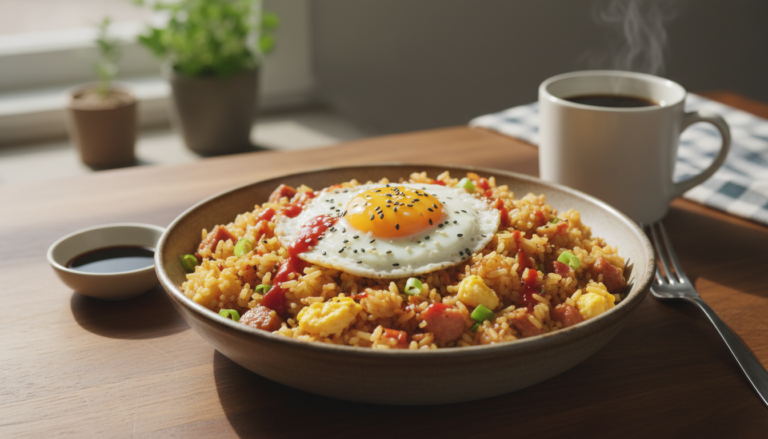
Breakfast Fried Rice
This clever breakfast fried rice reimagines the classic Asian takeout dish for morning appetites—crispy bacon, fluffy scrambled eggs, and savory rice come together in one skillet for a satisfying start that’s equal parts comfort food and culinary ingenuity.
4
servings10
minutes20
minutes350
kcal30
minutesIngredients
2 cups cooked rice
4 slices bacon
2 eggs
1 cup frozen mixed vegetables
2 tablespoons soy sauce
1/4 teaspoon black pepper
2 tablespoons sesame oil
2 green onions
Directions
- Heat a large skillet over medium heat and cook bacon until crispy. Once done, remove and place on a paper towel.
- In the same skillet with bacon drippings, scramble the eggs until fully cooked, then remove and set aside.
- Add the sesame oil to the skillet, stir-fry the frozen mixed vegetables for about 5 minutes until heated through.
- Add the cold cooked rice to the skillet, breaking up any clumps and stir-frying for another 5 minutes.
- Pour soy sauce and sprinkle black pepper over rice, mixing well to evenly distribute the seasoning.
- Crumble the cooked bacon and add it to the rice along with scrambled eggs, stirring until well combined.
- Chop green onions finely and sprinkle over the fried rice before serving. Enjoy your breakfast fried rice warm.
Nutrition Facts
- Total number of serves: 4
- Calories: 350kcal
- Cholesterol: 0mg
- Sodium: 620mg
- Potassium: 400mg
- Sugar: 8g
- Protein: 6g
- Calcium: 60mg
- Iron: 2mg
About This Author

Benjamin Brown
Recipe Developer
Benjamin is our flavor engineer. A classically trained chef turned recipe developer, he’s obsessed with balancing taste, texture, and creativity. He ensures that every recipe we publish is not only delicious but also reliable, approachable, and repeatable — even for beginners.
Favorite dish: Slow-braised short ribs with red wine reduction.
Kitchen motto: “Cooking is part science, part soul.”