Daily Dish

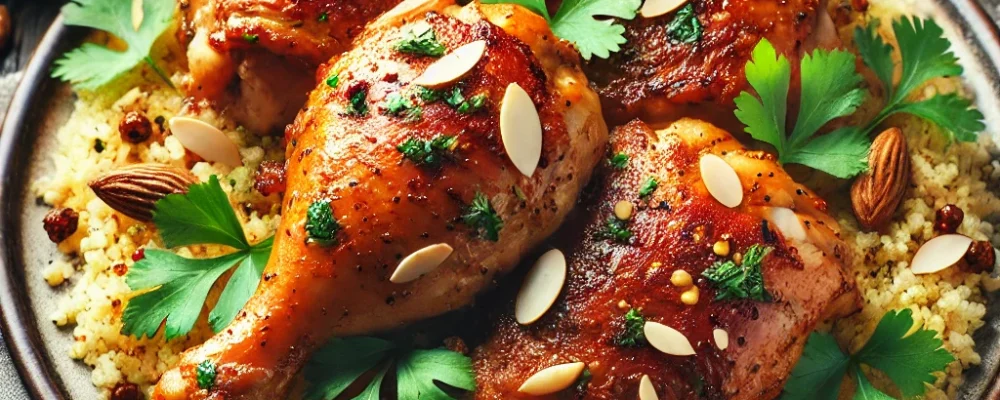
Aromatic Moroccan Chicken Thighs

Healthy Fact of the Day

Moroccan cuisine is known for its unique blend of sweet and savory flavors, often combining meat with fruits and aromatic spices. For an authentic touch, serve this dish with couscous or flatbread to soak up the flavorful sauce.

Ingredients


  • 8 bone-in, skin-on chicken thighs
  • 2 tbsp olive oil
  • 1 large onion, finely chopped
  • 4 cloves garlic, minced
  • 1 tbsp ground cumin
  • 1 tbsp ground coriander
  • 1 tsp ground cinnamon
  • 1 tsp paprika
  • 1/2 tsp turmeric
  • 1/4 tsp cayenne pepper
  • 1 cup chicken broth
  • 1/2 cup green olives, pitted
  • 1/2 cup dried apricots, chopped
  • Zest and juice of 1 lemon
  • 1/4 cup fresh cilantro, chopped
  • Salt and pepper to taste


Instructions

  1. Season chicken thighs with salt and pepper.

  2. In a large skillet, heat olive oil over medium-high heat. Brown chicken thighs skin-side down for 5-7 minutes, then flip and cook for 3 more minutes. Remove and set aside.

  3. In the same skillet, sauté onion until translucent.

  4. Add garlic and spices, cooking until fragrant.

  5. Pour in chicken broth, scraping up any browned bits from the bottom of the pan.

  6. Add olives, apricots, and lemon zest. Bring to a simmer.

  7. Return chicken to the skillet, skin-side up.

  8. Cover and simmer for 20-25 minutes until chicken is cooked through.

  9. Stir in lemon juice and cilantro. Adjust seasoning if needed.

  10. Serve hot, garnished with extra cilantro.

Dive into these succulent Moroccan Chicken Thighs and let the complex blend of spices, tangy olives, and sweet apricots transport you to the vibrant markets of Marrakech. Each bite is a perfect harmony of flavors that tells a story of centuries-old culinary traditions. It’s not just a meal; it’s an aromatic journey through North African cuisine that’ll have your taste buds dancing with delight!

Recent Recipes

The Frozen Foods Your Air Fryer Was

  • April 18, 2026
  • 3 min read

Herb and Cheese Scones

  • April 18, 2026
  • 11 min read

The Resting Rules Every Home Baker Breaks

  • April 18, 2026
  • 7 min read

Easy Pineapple Pork Chops

  • April 18, 2026
  • 10 min read

The Costco Dip That People Panicked Over

  • April 17, 2026
  • 4 min read

How Chefs Use Salt Differently Than Everyone

  • April 17, 2026
  • 7 min read

Shrimp Creole

  • April 17, 2026
  • 10 min read

Today Is the Day: Krispy Kreme’s Strawberry

  • April 16, 2026
  • 3 min read

Cherry Blossom Spritz

  • April 16, 2026
  • 10 min read

The Knife Habits That Separate Home Cooks

  • April 16, 2026
  • 7 min read

Tip of the Day

“Always let your meat rest before slicing.”

Whether you're roasting a chicken, grilling steak, or baking pork tenderloin, letting cooked meat rest for 5–10 minutes before slicing allows the juices to redistribute evenly. This simple step keeps your meat juicy and tender, ensuring every bite is flavorful and moist. Bonus: It gives you a moment to plate your sides or garnish for a perfect presentation!

Our Latest Recipes

Blog
Daily Disher

The Frozen Foods Your Air Fryer Was Born to Cook

The air fryer isn’t just a crispiness hack — it’s also a meaningful way to cut down on added fat. Most of these frozen foods come pre-oiled, which means they don’t need anything extra to get great results. Compare that to deep frying, which can add hundreds of calories per serving in absorbed oil alone. If you’re buying frozen, look for options with shorter ingredient lists and less sodium — the air fryer will do the rest without needing the extra stuff to compensate.

Read More »
Other
Benjamin Brown

Herb and Cheese Scones

Fresh herbs like parsley, thyme, and chives are packed with vitamins A, C, and K, plus antioxidants that support immune health—making these indulgent scones surprisingly nutrient-rich.

Read More »
Blog
Daily Disher

The Resting Rules Every Home Baker Breaks

Allowing bread to cool completely before slicing isn’t just a texture decision — it also affects how the body processes it. Fully cooled bread has a higher proportion of resistant starch than bread eaten warm, which slows digestion, lowers the glycemic response, and feeds beneficial gut bacteria. The same loaf, eaten at different temperatures, has a meaningfully different effect on blood sugar.

Read More »

Get your daily dose of delicious!

Skip to content