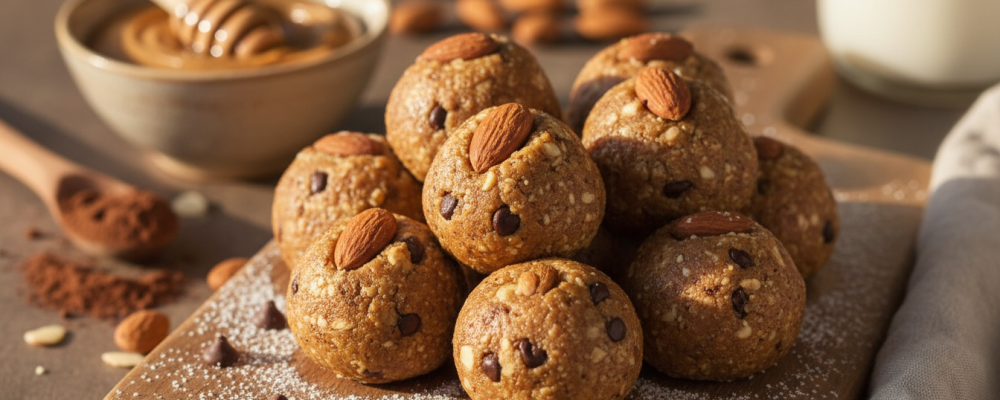

I’ve spent years perfecting complicated desserts that require precise temperatures, specific techniques, and patient timing. So believe me when I tell you that some of the most satisfying sweet things you’ll ever make require absolutely none of those things. These almond butter balls are proof—no oven, no thermometer, no special skills, just five minutes of stirring and rolling, and suddenly you have two weeks’ worth of snacks that taste like you’re eating cookie dough but are actually giving your body real nutrition.
What delights me about these little energy balls is how they occupy this perfect space between treat and fuel. They’re sweet enough to satisfy dessert cravings—those chocolate chips see to that—but they’re not so sugary that you feel guilty or get that inevitable crash thirty minutes later. The almond butter provides richness and protein, the oats add substance and fiber, the coconut brings texture and subtle tropical notes, and the honey? Just enough to make everything stick together and taste special without tipping into candy territory.
I started making variations of these during my pastry chef days when I needed something to keep me going during those long afternoon stretches between lunch and dinner service. Professional kitchens are full of temptations—there’s always something sweet nearby, always scraps of cake or extra cookies—but most of it is pure sugar and butter designed to taste amazing for three bites, not to actually fuel you through a fourteen-hour shift. These energy balls became my secret weapon: portable enough to keep in my chef’s coat pocket, substantial enough to actually curb hunger, and delicious enough that I genuinely looked forward to them.
The best part? These look impressive despite being ridiculously easy to make. When you bring a container of these perfectly round, chocolate-studded spheres to work or pack them in your gym bag, people assume you spent significant time on them. The reality—fifteen minutes from opening the pantry to closing the refrigerator—remains your delicious secret. That gap between effort and result is one of my favorite kitchen magic tricks, and it works just as well for meal prep as it does for impressing dinner guests.
─────────
The Inspiration Behind This Recipe
This recipe emerged from a simple frustration: store-bought energy bars and protein balls are either genuinely good but absurdly expensive ($2-3 per bar), or affordable but taste like sweetened cardboard with a protein powder aftertaste. I knew the ingredients were simple—nut butter, oats, a sweetener, maybe some mix-ins—so why was I paying premium prices or choking down mediocre products when I could make something better at home?
The breakthrough came when I stopped thinking of these as a “recipe” requiring precise measurements and started approaching them like a ratio—a technique I learned in pastry school where certain preparations follow fundamental proportions that you can scale and adapt infinitely. Energy balls follow a basic formula: one part nut butter, one part binding sweetener, two parts dry ingredients (oats, coconut, seeds, whatever you like). Once you understand that ratio, you can make these without measuring anything precisely, substituting based on what’s in your pantry and what flavors sound good that week.
I chose almond butter as the base because it has this beautiful, slightly sweet nuttiness that pairs well with virtually any mix-in. The honey provides just enough sticky sweetness to bind everything while contributing its characteristic floral notes. Rolled oats add heartiness and that satisfying chewy texture. Shredded coconut contributes textural interest and keeps these from feeling too dense. And those chocolate chips? They’re the element that transforms “healthy energy ball” into “treat I actually crave.” Without chocolate, these are virtuous but forgettable. With chocolate, they’re something you genuinely look forward to eating.
─────────
A Brief History of Energy Balls and No-Bake Confections
No-bake sweets have existed as long as humans have combined ingredients—from ancient fruit and nut mixtures to medieval marzipan to the peanut butter balls grandmothers made for holidays. These preparations emerged partly from practicality (not everyone had reliable ovens) and partly from the reality that some ingredients bind together naturally without heat, creating shelf-stable foods perfect for travel or storage.
The modern “energy ball” or “protein ball” emerged in the 1990s and 2000s alongside the natural foods movement and the rise of health-conscious snacking. Athletes and outdoor enthusiasts sought portable, nutrient-dense foods that provided sustained energy without the sugar crash of conventional candy or granola bars. The format offered perfect portion control—each ball contains a predictable amount of calories and macronutrients—while remaining completely customizable to individual preferences and dietary restrictions.
What makes energy balls particularly suited to contemporary meal prep culture is how they solve multiple problems simultaneously: they’re genuinely nutritious enough to support fitness and wellness goals, convenient enough for busy lifestyles, customizable enough to prevent boredom, and economical enough to justify making regularly. The no-bake format also removes barriers—you don’t need baking skills or even an oven, just a bowl and hands willing to roll some mixture into spheres. That accessibility, combined with genuine tastiness, has elevated energy balls from hippie health food stores to mainstream meal prep staple.
─────────
Why This No-Bake Method Works for Meal Prep
The success of these almond butter balls for extended storage hinges on understanding the chemistry of nut butters and how they interact with other ingredients. Almond butter is primarily fat and protein with minimal water content—that composition makes it remarkably stable at room temperature and even more so when refrigerated. When you mix almond butter with honey (another naturally preservative food due to low water activity and high sugar content), you’re creating a base mixture that’s inherently resistant to spoilage.
The rolled oats serve multiple functions beyond nutrition. Their starchy structure absorbs some of the oils from the almond butter, preventing the mixture from being too greasy or loose. The oats also contribute texture—that pleasant chewiness—while their fiber content slows digestion and provides sustained energy release rather than quick sugar spikes. Importantly, oats are dry goods with excellent shelf life, so they don’t introduce moisture or perishability concerns into the mixture.
Shredded coconut adds textural complexity while contributing its own preservative properties—coconut’s natural fats are relatively stable, and the shredded format has low moisture content. The chocolate chips, contrary to what you might expect, don’t compromise storage at all. Quality chocolate chips are designed to maintain their structure at room temperature (which is why they don’t melt in cookies until they’re baked), and in refrigerator conditions they remain perfectly intact, providing pleasant little bursts of chocolate throughout each bite.
The refrigeration step isn’t strictly necessary for food safety—these balls are shelf-stable at room temperature for several days due to their low moisture and high fat content—but chilling serves important textural purposes. Cold temperature firms up the almond butter, making the balls easier to handle and more pleasant to bite into. The balls hold their shape better when cold, and the slight firmness creates better mouthfeel than room-temperature versions that can feel too soft or greasy. This is why these keep beautifully for 2-3 weeks refrigerated—the cold temperature maintains optimal texture while the ingredients’ natural preservation properties prevent spoilage.
─────────
Flavor Profile: What to Expect
These almond butter balls deliver satisfying sweetness with complex nutty flavors and delightful textural contrast:
- Rich and nutty from almond butter that provides deep, slightly sweet nuttiness as the dominant flavor
- Naturally sweet with floral notes from honey that adds gentle sweetness without cloying intensity
- Warm and aromatic from vanilla extract that rounds out the sweetness and adds comforting depth
- Toasty and wholesome from rolled oats that contribute heartiness and pleasant chewiness
- Tropical and textured from shredded coconut that adds subtle sweetness and satisfying little fibers throughout
- Sweet and indulgent from chocolate chips that provide bursts of rich chocolate in every few bites
The overall impression is of something that tastes like a treat—specifically like no-bake cookies or cookie dough—while remaining surprisingly balanced and not overly sweet. The almond butter’s richness keeps these from tasting one-dimensional, while the honey provides just enough sweetness to satisfy without overwhelming. Those chocolate chips are strategically important—they’re what makes these feel indulgent rather than merely functional.
The beauty of these balls is that flavor remains remarkably consistent over weeks of storage. Unlike baked goods that can go stale or lose moisture, or fresh foods that deteriorate, these maintain their texture and taste almost indefinitely when refrigerated. If anything, the flavors integrate slightly more over the first day or two as the honey continues to coat all the oat and coconut pieces, but the difference is minimal. Day fourteen tastes just as good as day one—a rare achievement in meal prep.
─────────
Tips for Making the Best Almond Butter Balls
Despite their simplicity, small refinements create significantly better results:
- Use creamy, well-stirred almond butter: Natural almond butter separates, with oil on top. Stir thoroughly before measuring to ensure consistent texture. Crunchy almond butter works but creates a denser, less cohesive texture.
- Warm almond butter slightly if necessary: If your almond butter is very thick or has been refrigerated, microwave it for 10-15 seconds to make mixing easier. Cold, stiff almond butter resists incorporating other ingredients smoothly.
- Mix almond butter and honey thoroughly first: Get these two completely blended before adding dry ingredients. This creates a uniform base that coats everything evenly rather than leaving clumps.
- Use old-fashioned rolled oats: Quick oats work in a pinch but create a mushier texture. Steel-cut oats are too hard and don’t bind properly. Rolled oats provide the ideal chewiness and structure.
- Refrigerate the mixture before rolling: If your mixture feels too soft or sticky to shape easily, chill it for 10-15 minutes first. This firms up the almond butter and makes rolling far easier and less messy.
- Keep hands slightly damp when rolling: Lightly wet your palms between balls to prevent sticking. Don’t oversaturate—just a light dampness makes the rolling process much smoother.
- Make uniform sizes: Use a small cookie scoop (about 1 tablespoon) to portion mixture before rolling. Consistent sizing means predictable calories per ball and more professional appearance.
- Roll firmly but gently: Apply enough pressure to create cohesive spheres, but don’t squeeze excessively or you’ll make them too dense. They should hold together without being compacted into hard pellets.
- Add chocolate chips last and fold gently: Aggressive stirring breaks chocolate chips into tiny pieces. Gentle folding maintains whole chips that create pleasant chocolate moments rather than chocolate-flavored paste.
- Customize thoughtfully: Want to add chia seeds? Protein powder? Different mix-ins? Go ahead, but maintain the basic ratio—roughly equal parts almond butter and honey, then twice that amount in combined dry ingredients. This ratio ensures proper binding.
The most important factor is the almond butter-to-honey ratio. Too much honey makes them overly sweet and sticky; too little makes them crumbly and dry. The written proportions hit the sweet spot, but if you’re substituting ingredients, maintain similar volumes.
─────────
Portioning and Container Suggestions
This recipe yields approximately 20-24 balls depending on how large you roll them. Standard 1-inch diameter balls (about 1 tablespoon of mixture each) provide roughly 80-100 calories per ball with 3-4 grams of protein—perfect for a substantial snack or pre/post-workout fuel. Two balls typically satisfy most people’s between-meal hunger without feeling too heavy.
For storage, I prefer airtight glass containers that allow you to see your supply at a glance. A medium-sized container (about 4-cup capacity) holds a full batch comfortably without stacking too many layers. If you need to stack, place parchment paper between layers to prevent them from sticking together—though proper refrigeration firms them enough that sticking is rarely an issue.
For grab-and-go convenience, consider portioning balls into individual snack-sized containers or small zip-top bags—2-3 balls per portion creates perfectly sized snacks you can throw in your gym bag, purse, or car without thinking. This pre-portioning also helps with mindful eating—you’re less likely to eat six balls standing at the kitchen counter if they’re already divided into reasonable servings.
If you’re meal prepping for the entire household or want to stock up, double or triple the recipe. These keep so well that there’s no downside to making large batches, and having a month’s worth of snacks in your refrigerator provides tremendous convenience. Store half in the refrigerator for immediate use and freeze the rest, transferring balls from freezer to fridge as you run low.
─────────
Storage, Reheating, and Shelf Life Tips
- Refrigerator storage: Store in an airtight container for 2-3 weeks. The balls maintain excellent texture and flavor throughout, showing virtually no degradation over time.
- Room temperature storage: These can sit at room temperature for 3-5 days without issues, making them perfect for packing in lunches, keeping in your desk drawer, or bringing on road trips where refrigeration isn’t available.
- Freezer storage: Freeze for up to 3 months. Place balls in a single layer on a baking sheet, freeze until solid (about 1 hour), then transfer to a freezer bag. This prevents them from freezing together in a clump.
- No reheating necessary: These are designed to be eaten cold or at room temperature. The cold temperature actually enhances the texture—they’re firmer and more pleasant to bite into when chilled.
- Thawing from frozen: Transfer desired number of balls to the refrigerator the night before, or let them sit at room temperature for 20-30 minutes. They thaw quickly and can even be eaten while still slightly frozen for a firmer texture.
- Prevent sticking: If balls become sticky during warmer weather or from sitting at room temperature, dust them lightly with additional shredded coconut or cocoa powder. This creates a dry coating that makes handling easier.
- Container selection: Glass containers are ideal because they don’t absorb odors or oils. Plastic works fine but may eventually retain a slight oily residue from the almond butter—not harmful, just cosmetic.
- Portion in advance: If you struggle with portion control, pack individual servings immediately after making them. It’s much easier to eat “one portion” than to stop yourself from eating “just one more ball” when the whole container is in front of you.
- Quality indicators: Fresh balls smell nutty and slightly sweet. If you detect any rancid odor (from the nuts or coconut), or if mold appears (extremely rare due to low moisture content), discard. Within 2-3 weeks refrigerated, this should never happen.
- Texture changes: Over time, the oats may absorb more moisture from the almond butter, making the balls slightly denser. This is normal and doesn’t indicate spoilage—just a minor textural evolution that many people don’t even notice.
─────────
Why This Recipe Deserves a Spot in Your Meal Prep Rotation
As someone who’s made elaborate desserts professionally for years, I can tell you that the most valuable recipes aren’t always the most complicated—they’re the ones you’ll actually make repeatedly because they solve real problems without demanding perfection. These almond butter balls solve a problem I see constantly: the gap between wanting healthy snacks and actually having healthy snacks available when hunger strikes. When 3 PM rolls around and you need something to get you through to dinner, having these balls in your refrigerator means you’re not desperately raiding vending machines or convincing yourself that a handful of chocolate chips counts as a snack.
The time-to-value ratio is extraordinary. Fifteen minutes of effort—most of which is just rolling mixture between your palms while listening to music or a podcast—generates 20+ snacks that last for weeks. That works out to less than one minute per snack when you do the math. Compare that to driving to the store to buy individual bars ($2-3 each) or stopping at a coffee shop for a snack ($4-6), and both the time savings and economic benefits become impossible to ignore. You’re saving hours and hundreds of dollars while actually eating something better.
From a nutritional standpoint, these balls deliver what most people actually need from snacks: sustained energy without blood sugar spikes, enough protein and fat to create genuine satiety, and sufficient fiber to support digestive health. The almond butter provides healthy monounsaturated fats that support heart health and help you feel full. The oats contribute beta-glucan fiber that helps regulate cholesterol. The honey, despite being sugar, has a lower glycemic index than refined sugar and provides trace minerals. You’re not just eating a snack—you’re choosing something that actively supports your wellness goals rather than undermining them.
But what I value most is how these balls make healthy snacking feel like pleasure rather than discipline. When your snack contains chocolate chips and tastes like cookie dough, you don’t feel deprived or virtuous—you feel satisfied and slightly indulged. That emotional experience matters more than most nutrition advice acknowledges. Sustainable healthy eating comes from choosing foods you genuinely enjoy, not from white-knuckling your way through foods you tolerate because they’re “good for you.” These balls taste good enough that you’d choose them over conventional treats, which makes them infinitely more valuable than nutritionally perfect snacks you’d never actually eat.
─────────
Meal Prep Pairing Suggestions
While these almond butter balls work beautifully as standalone snacks, they integrate seamlessly into a comprehensive snack strategy that prevents boredom and covers different craving types. Pair them with the Stuffed Mini Peppers for a sweet-and-savory snack rotation—some afternoons you’ll crave the rich sweetness of energy balls, other times the savory, creamy peppers sound more appealing. Having both prepped ensures you’re never stuck eating something that doesn’t match your current craving, which significantly improves meal prep adherence.
For those who want varied snack options throughout the day, combine these balls with Greek Yogurt Parfaits (for substantial breakfast or afternoon snacks), Tuna Salad Cucumber Bites (for protein-focused savory snacking), and fresh fruit portions. This creates a complete snack ecosystem where you have options for every scenario: something sweet (energy balls), something savory and substantial (peppers or cucumber bites), something light and fresh (parfaits or fruit). You’re never bored, never stuck without options, and never tempted to grab less nutritious alternatives because you have variety built into your system.
These energy balls also function brilliantly as pre- or post-workout fuel—a role that makes them especially valuable if you’re active. Two balls eaten 30-45 minutes before exercise provide carbohydrates for energy and fats for sustained fuel without sitting too heavy in your stomach. Post-workout, they offer quick carbohydrates to replenish glycogen plus protein to support muscle recovery. This dual functionality—casual snack or strategic workout fuel—means you’re getting more use cases from the same meal prep effort.
For a complete weekly meal prep strategy covering all eating occasions, combine these energy balls (snacks) with Baked Oatmeal Cups or Greek Yogurt Parfaits (breakfast), Greek Chicken Wraps or Mason Jar Salads (lunch), and Sheet Pan Chicken with Vegetables (dinner). This comprehensive approach means Sunday’s few hours of preparation cover every meal and snack Monday through Friday—no decisions, no stress, just good food ready when you need it. The energy balls anchor your snacking with something genuinely satisfying that prevents the afternoon grazing and evening overeating that often derail healthy eating intentions. When you know you have something delicious waiting for you, saying no to less healthy options becomes effortless rather than requiring willpower.
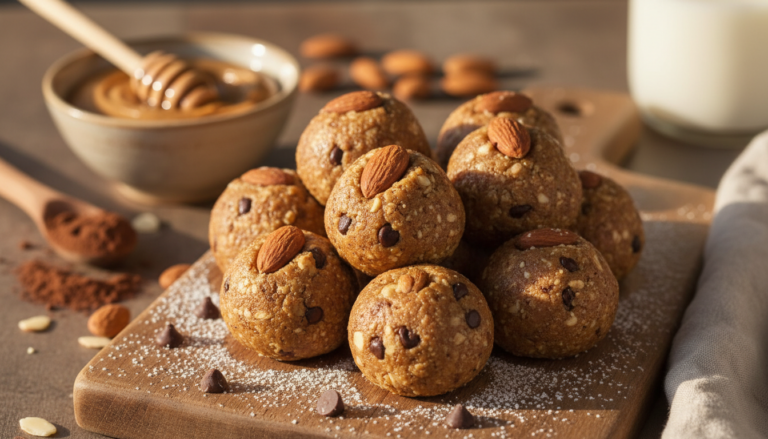
Almond Butter Balls
This almond butter balls recipe transforms pantry staples into perfectly portioned, naturally sweetened energy bites that store for weeks and taste like cookie dough.
4
servings30
minutes40
minutes300
kcal1
hour10
minutesIngredients
1 cup almond butter
0.5 cup honey
1 teaspoon vanilla extract
1 cup rolled oats
0.5 cup shredded coconut
0.25 cup chocolate chips
Directions
- In a large mixing bowl, combine almond butter and honey until well blended. Stir in vanilla extract for added flavor.
- Add rolled oats and shredded coconut to the almond butter mixture and mix until ingredients are evenly incorporated.
- Gently fold in chocolate chips, ensuring they are distributed throughout the mixture. Prepare for shaping the balls.
- Using a small scoop or your hands, roll the mixture into 1-inch balls and place them on a lined baking sheet.
- Refrigerate the almond butter balls for at least 30 minutes to allow them to firm up before serving.
Nutrition Facts
- Total number of serves: 4
- Calories: 150kcal
- Cholesterol: 0mg
- Sodium: 620mg
- Potassium: 400mg
- Sugar: 8g
- Protein: 6g
- Calcium: 60mg
- Iron: 2mg
About This Author

Aurora Wright
Pastry Chef & Dessert Editor
Aurora is the sweet side of Daily Dish. A trained pastry chef and dessert stylist, she’s responsible for our mouth-watering cakes, cookies, and confections. She brings precision, artistry, and a touch of whimsy to every recipe she creates — and taste-tests more chocolate than she’ll admit.
Favorite dish: Flourless dark chocolate torte.
Kitchen motto: “Life’s too short to skip dessert.”