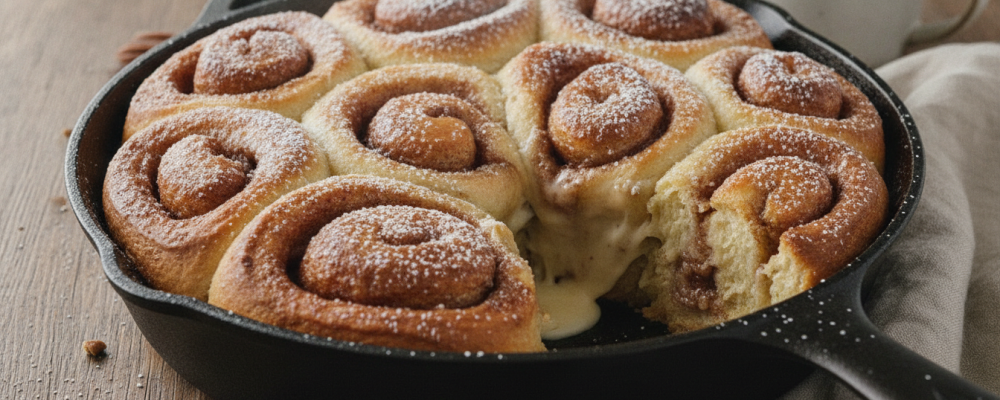

I have a deep, abiding love for cinnamon rolls—the real ones, the yeast-leavened, overnight-rising, roll-and-slice-and-wait kind that fill your kitchen with the most intoxicating aroma imaginable. But I also have mornings where I want all of that flavor and none of that time investment, and that’s exactly where this Cinnamon Roll Skillet Bread swoops in and saves the day. It’s everything I love about cinnamon rolls distilled into a baking powder-leavened skillet bread that goes from bowl to oven in about ten minutes. Honestly? Some mornings it’s even better than the real thing.
What makes this recipe sing is the layering technique. Rather than mixing the cinnamon sugar into the batter (which would give you a pleasant but uniform result), you build distinct strata—batter, cinnamon-sugar, batter, cinnamon-sugar—then drench the whole thing in melted butter before it goes into the oven. As it bakes, those layers create pockets of caramelized, molten cinnamon filling throughout the bread that you’d swear came from a professional bakery. And then comes the glaze: powdered sugar, milk, vanilla, drizzled over warm bread so it seeps into every crack and crevice and sets into the most gorgeous, sweet finish.
The cast iron skillet is genuinely important here—it creates direct bottom heat that makes the base beautifully crispy while the interior stays tender and pull-apart soft. It also makes the most stunning presentation vehicle: bringing a golden-brown, glaze-drizzled skillet bread to the table feels festive and special in a way that a regular baking pan simply doesn’t. This is breakfast as theater, and I am absolutely here for every act.
─────────
The Inspiration Behind This Recipe
This recipe was born from an honest moment of cinnamon roll craving at 8 o’clock on a Sunday morning when I absolutely did not have two hours to spare. I stood in my kitchen, wanting desperately that warm, spiced, sweet comfort, and started thinking about how to get there faster without sacrificing what actually matters. The flavor matters. The layers matter. The glaze absolutely matters. The yeast dough and the rising times? Those I could work around.
The solution came from thinking about what a cinnamon roll fundamentally is: layers of dough, butter, and cinnamon sugar, baked until golden and finished with sweet glaze. A baking powder dough gives you tender, layered bread without any waiting. Pouring melted butter over the top mimics the butter that gets rolled into traditional cinnamon roll dough. Building layers rather than spirals creates the same internal pockets of cinnamon-sugar filling. And a cast iron skillet provides the even, intense heat that creates proper browning and a slight crust.
What surprised me most about the finished result was how completely it satisfied the craving. The texture is different from a yeasted cinnamon roll—denser, more bread-like, with a crispier exterior—but the flavor is entirely there, and the pull-apart quality of eating it straight from the skillet is arguably more fun. It’s become my go-to when I want to make something impressive for brunch guests without waking up two hours early to start dough.
─────────
A Brief History of Skillet Breads
Skillet breads have deep roots in American culinary history, emerging from necessity in an era before reliable ovens were available in every home. Cast iron cooking vessels were the workhorses of the American kitchen throughout the 18th and 19th centuries, used for everything from cornbread to biscuits to simple quick breads cooked directly over fire. The skillet provided even heat distribution and retained temperature consistently—qualities that produced excellent baked goods even in primitive cooking environments.
The tradition of sweet skillet breads represents a natural evolution of this practical cooking tradition. As baking powder became widely available in the mid-1800s, home cooks discovered they could create tender, quick-leavened breads without yeast—perfect for skillets that required no long rising times. Sweet versions incorporating cinnamon, sugar, and dried fruit became popular breakfast treats, particularly in the American South where cast iron cooking was especially embedded in culinary culture.
The modern cinnamon roll skillet bread represents contemporary baking culture’s embrace of both convenience and nostalgia simultaneously. Today’s home bakers want the comforting, aromatic experience of traditional cinnamon rolls with realistic time investment for busy lives. The skillet format delivers on both counts: it evokes heritage cooking traditions and grandmother’s kitchen while being achievable on any weekend morning. It’s a beautiful example of how classic techniques continue adapting to contemporary needs without losing their essential soul.
─────────
Why This Cooking Method Works
The baking powder leavening system creates immediate lift without any resting or rising time. When baking powder’s acid and base components contact liquid and heat, they produce carbon dioxide bubbles that leaven the dough instantly. This is why you must work quickly once the wet ingredients meet the dry—the leavening action begins immediately and you want those bubbles in the oven before they escape. The result is tender, slightly airy bread that’s more delicate than yeasted dough but equally satisfying.
Building the layers separately rather than incorporating cinnamon sugar into the batter is the critical technique that creates the cinnamon roll experience. When the cinnamon-brown sugar sits between layers of batter, it remains distinct throughout baking—creating pockets of caramelized, gooey filling rather than a uniformly spiced bread. The filling’s brown sugar melts and caramelizes slightly against the surrounding batter, creating those characteristic sticky, sweet interior layers that make each bite more interesting than the last.
Pouring melted butter over each layer—and especially over the top—serves multiple functions. The butter adds richness and flavor throughout, but more importantly it helps the top layer brown beautifully and creates a slightly crispy, caramelized surface that contrasts with the tender interior. In the oven, the butter also carries the cinnamon-sugar’s flavor compounds throughout the bread as it soaks through the layers. The cast iron skillet amplifies this effect by providing intense, even bottom heat that creates a slightly crispy base—textural contrast that makes every slice more interesting.
─────────
Flavor Profile: What to Expect
This skillet bread delivers pure cinnamon roll satisfaction in every bite:
- Caramelized cinnamon sugar – Warm, spiced layers that become gooey and slightly sticky during baking
- Buttery richness – Present throughout from both the batter and the melted butter pour-over
- Sweet vanilla glaze – The finishing touch that adds sweetness and the classic cinnamon roll experience
- Brown sugar depth – Molasses notes that create complexity beyond simple sweetness
- Tender crumb – Soft, pull-apart interior with slight density from the quick-bread method
- Crispy skillet edges – Caramelized, slightly crunchy borders from the cast iron heat
- Golden-brown crust – Concentrated butter flavor and texture that contrasts beautifully with the interior
The overall experience is deeply comforting and indulgent—this tastes like a love letter to cinnamon rolls, capturing everything essential about the original. The texture is its own wonderful thing: not quite as pillowy as yeasted rolls, but with a rustic pull-apart quality and those crispy cast iron edges that are genuinely exceptional. When the warm glaze seeps into the cracks and sets slightly, it creates that iconic cinnamon roll sweetness in every single bite.
─────────
Tips for Making the Best Cinnamon Roll Skillet Bread
Use a well-seasoned 10-inch cast iron skillet for the best heat distribution and those gorgeous, caramelized edges.
- Work quickly with the batter – Baking powder activates immediately; get it in the oven promptly
- Don’t overmix the batter – Stir just until combined; lumps are fine and keep the bread tender
- Be generous with the cinnamon mixture – This is where the flavor lives; don’t hold back
- Pour butter evenly – Take a moment to distribute it across the entire surface for even browning
- Check doneness carefully – A toothpick inserted in the center should come out with just a few crumbs
- Glaze while warm, not hot – Let the bread cool 5 minutes before glazing so it absorbs rather than just running off
- Make the glaze thick enough – It should slowly drizzle, not pour; add powdered sugar if too thin
- Serve immediately – This bread is at its absolute best warm from the oven
For extra indulgence, add a layer of softened cream cheese between the batter layers along with the cinnamon sugar—it creates an interior similar to cream cheese cinnamon rolls and adds rich, tangy contrast to the sweet filling.
─────────
Serving Suggestions and Side Pairings
This skillet bread is spectacular enough to be the entire brunch conversation on its own, but it pairs beautifully with simple, lighter accompaniments that provide balance. Fresh berries or a simple fruit salad adds brightness and cuts through the sweetness. Crispy bacon or breakfast sausage provides the savory counterpoint that makes sweet breakfasts more satisfying. A bowl of Greek yogurt with honey offers creamy tang that plays beautifully against the warm cinnamon bread.
Presentation is effortless with this recipe—bring the entire skillet to the table still warm and let people tear into it themselves. There’s something wonderfully communal about pull-apart skillet bread that brings everyone together and creates that casual, festive atmosphere that makes brunches memorable. Provide a small pitcher of extra glaze on the side for devoted enthusiasts who want more sweetness.
This bread shines at holiday breakfasts, lazy weekend brunches, or any morning when you want something that feels celebratory and special. It’s particularly wonderful for overnight guests because the aroma it creates while baking is enough to draw everyone out of bed and into the kitchen—possibly the most effective alarm clock imaginable.
─────────
Storage, Reheating, and Make-Ahead Tips
- Mix dry ingredients ahead: Combine flour, sugar, baking powder, and salt the night before; store covered
- Prep cinnamon mixture early: Combine brown sugar and cinnamon ahead; store in an airtight container
- Store baked bread: Cover skillet or transfer to airtight container; keep at room temperature for up to 2 days
- Refrigerate for longer: Up to 4 days refrigerated, though texture becomes denser when cold
- Reheat in oven: Warm at 300°F for 10-12 minutes, covered with foil to prevent drying
- Microwave individual portions: 15-20 seconds restores warmth, though edges lose crispness
- Make glaze fresh: Always prepare just before using for best consistency and flavor
- Freeze baked bread: Wrap well (unglazed) and freeze up to 2 months; glaze after reheating
Like most quick breads, this is genuinely best fresh from the oven when the interior is still slightly warm and the glaze hasn’t fully set. That said, day-two portions warmed in the oven are a very close second—which makes this excellent for meal prep when you want impressive breakfasts throughout the week.
─────────
Why This Recipe Deserves a Spot in Your Rotation
This recipe earns its place because it solves one of baking’s most persistent tensions: the desire for something special and homemade versus the reality of limited morning time. It delivers genuine cinnamon roll satisfaction—the flavor, the aroma, the sweet glaze finish—through a technique that’s accessible on any weekend morning without alarm clocks or advance planning. Once you make it, you’ll find yourself reaching for it whenever the cinnamon roll craving strikes but the full project feels like too much.
Beyond the practical appeal, this skillet bread creates something genuinely magical: that moment when you bring the golden, glazed skillet to the table and watch everyone lean in, drawn by the warm cinnamon aroma and the beautiful presentation. Food that creates that kind of spontaneous joy—that makes people smile before they’ve even tasted it—is always worth having in your repertoire. These are the recipes that become part of your story, the ones associated with particular mornings and good company and the simple pleasure of sharing something homemade and wonderful.
─────────
Recommended Drink Pairing
The warm cinnamon and brown sugar flavors of this skillet bread call for beverages that match its cozy, indulgent personality. Coffee is my absolute first choice—a medium roast with caramel or nutty notes harmonizes beautifully with the brown sugar and cinnamon, while the coffee’s natural bitterness provides essential balance to the sweet glaze. A cinnamon latte or brown sugar oat milk latte doubles down on the flavors in the most delightful way, creating a breakfast pairing that feels thoroughly considered and intentional.
Chai tea is an exceptional alternative—the warming spices (cinnamon, cardameg, ginger, clove) create beautiful harmony with the skillet bread’s cinnamon profile, while the black tea base provides the bitterness needed to prevent sweetness overload. For something lighter, chamomile with a drizzle of honey offers gentle floral sweetness and calming warmth that pairs surprisingly well with the buttery, spiced bread.
For brunch gatherings with a celebratory mood, a sparkling cider or apple bellini adds festive bubbles and fruit sweetness that complement the cinnamon without competing. Hot apple cider—particularly with a cinnamon stick garnish—creates thematic harmony and warming comfort. Cold milk remains the quintessential pairing for anything this sweet and cinnamon-forward—cooling, creamy, and calibrated to make each bite of glazed, caramelized skillet bread taste like the best version of itself. For something a little more indulgent, hot chocolate with whipped cream turns breakfast into a genuinely celebratory occasion that perfectly matches the spirit of this joyful, beautiful skillet bread.
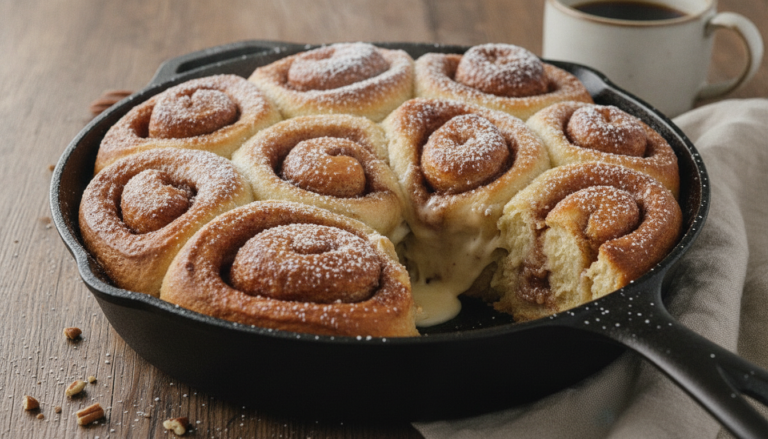
Cinnamon Roll Skillet Bread
This Cinnamon Roll Skillet Bread captures everything you love about cinnamon rolls—buttery layers, brown sugar swirls, and sweet vanilla glaze—baked into one stunning, shareable skillet bread that comes together in under 45 minutes.
8
servings20
minutes30
minutes320
kcal50
minutesIngredients
2 cups all-purpose flour
2 tablespoons sugar
1 tablespoon baking powder
1 teaspoon salt
1/4 cup unsalted butter
3/4 cup milk
1 large egg
1/2 cup brown sugar
2 tablespoons ground cinnamon
1/4 cup butter, melted
1/2 cup powdered sugar
2 tablespoons milk
1/2 teaspoon vanilla extract
Directions
- Preheat your oven to 375°F (190°C).
- In a bowl, mix flour, sugar, baking powder, and salt.
- Cut in butter until the mixture resembles coarse crumbs.
- Add milk and egg, stirring until just combined.
- In a separate bowl, combine brown sugar and cinnamon.
- Pour half of the melted butter in the skillet.
- Layer half of the batter into the skillet.
- Sprinkle with half of the cinnamon mixture.
- Repeat layers with remaining batter and cinnamon mixture.
- Pour remaining melted butter on top.
- Bake for 25-30 minutes until golden brown.
- Mix powdered sugar, milk, and vanilla for the glaze.
- Drizzle glaze over warm bread. Serve and enjoy.
Nutrition Facts
- Total number of serves: 4
- Calories: 320kcal
- Cholesterol: 0mg
- Sodium: 620mg
- Potassium: 400mg
- Sugar: 8g
- Protein: 6g
- Calcium: 60mg
- Iron: 2mg
About This Author

Aurora Wright
Pastry Chef & Dessert Editor
Aurora is the sweet side of Daily Dish. A trained pastry chef and dessert stylist, she’s responsible for our mouth-watering cakes, cookies, and confections. She brings precision, artistry, and a touch of whimsy to every recipe she creates — and taste-tests more chocolate than she’ll admit.
Favorite dish: Flourless dark chocolate torte.
Kitchen motto: “Life’s too short to skip dessert.”