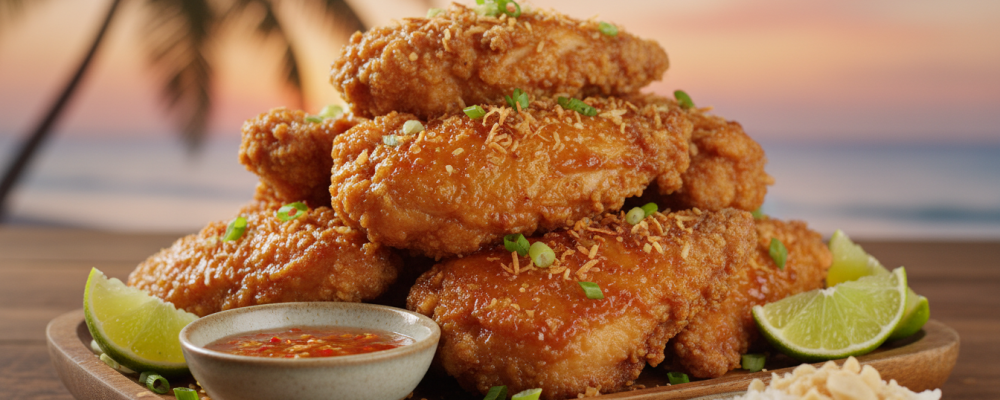

There are fried chicken recipes that produce good fried chicken, and then there are fried chicken recipes that produce the kind of fried chicken people talk about long after the meal is over. This Hawaiian Crispy Fried Chicken belongs to the second category—and the secret is in the marinade. Buttermilk and soy sauce together create something that no standard fried chicken brine can replicate: the buttermilk tenderizes and adds the tangy, dairy richness that produces an incredibly moist interior, while the soy sauce introduces a savory, umami depth that seasons the chicken all the way through and creates a slightly different crust character than a plain buttermilk soak. Two hours minimum in that marinade, and the chicken that emerges is deeply flavorful before a single gram of flour has touched it.
The flour dredge is where the crunch is built, and the baking powder is the ingredient most people don’t know to include and most people should. A small addition of baking powder in the seasoned flour creates carbon dioxide bubbles in the crust as it hits the hot oil, producing a lighter, more aerated texture that stays crispier longer than a baking-powder-free dredge. Combined with paprika and cayenne in the flour mixture, the crust develops a deeply golden color, a warm spice character, and the kind of shatter that makes a great piece of fried chicken genuinely satisfying to bite into.
The Hawaiian influence in this recipe comes primarily from the soy sauce marinade—a reflection of Hawaii’s Japanese and Asian culinary traditions that have shaped the islands’ food culture for over a century. It’s a subtle shift that makes a significant difference, producing fried chicken with a slightly deeper, more complex flavor profile than its mainland American counterpart.
The Inspiration Behind This Recipe
This recipe draws from Hawaii’s vibrant plate lunch culture—the tradition of serving generously portioned, comforting food built on the diverse culinary traditions of the islands’ multicultural community. Fried chicken appears across Hawaii’s food scene in various forms influenced by Japanese karaage, Korean yangnyeom chicken, and American Southern-style frying—all of which share the same fundamental technique of marinating and coating chicken before deep frying, while varying the marinade and seasoning profile.
The buttermilk-soy marinade is this recipe’s defining character—a combination that bridges the American Southern buttermilk brine tradition with the Japanese-Hawaiian tradition of soy-marinated proteins. The result is something that honors both heritages while producing a fried chicken that is distinctly its own.
A Brief History of Fried Chicken and Hawaii’s Food Culture
Fried chicken has been a cornerstone of American Southern cooking since at least the 19th century, when the combination of a seasoned flour dredge and hot lard produced the golden, crackling crust that has defined the preparation for generations. The technique spread with American culture throughout the 20th century and was adopted, adapted, and improved by virtually every culinary tradition it encountered.
In Hawaii, fried chicken absorbed the influence of the Japanese karaage tradition—chicken marinated in soy sauce, ginger, and sake before a light potato starch coating and deep frying—and the Korean fried chicken tradition of double-frying for maximum crispness. Hawaii’s plantation-era food culture, which brought together Japanese, Filipino, Chinese, Korean, and Portuguese workers alongside Native Hawaiian traditions, created a unique culinary environment where these techniques merged naturally into a fried chicken with no direct mainland American equivalent. This recipe draws from that merged tradition—buttermilk and baking powder from the American South, soy sauce and garlic from the Asian-Hawaiian pantry.
Why the Buttermilk-Soy Marinade Works
The combination of buttermilk and soy sauce in the marinade is the foundational technique decision that sets this recipe apart from standard fried chicken preparations, and it operates on two distinct principles simultaneously. Buttermilk’s mild acidity gently denatures the surface proteins of the chicken, creating a slightly roughened texture that the flour coating adheres to more effectively than it would on unmarinated chicken. The lactic acid in the buttermilk also tenderizes the meat throughout the marinade period, producing a noticeably more tender interior than oil-based or acidic marinades.
The soy sauce adds something the buttermilk can’t: concentrated umami from its fermented amino acid content, plus a subtle sweetness from its natural sugars that caramelizes in the hot oil and contributes to the crust’s deep, complex color. The garlic in the marinade blooms its flavor into both the buttermilk and soy over the two-hour minimum marinating period, ensuring every surface of the chicken carries that aromatic depth through the dredge and into the finished crust.
Flavor Profile: What to Expect
This fried chicken delivers a layered, deeply satisfying flavor experience:
- Shatteringly crispy, deeply golden crust with a texture that is lighter and crunchier than a standard fried chicken dredge thanks to the baking powder addition
- Warm, spiced paprika and cayenne that distribute heat and color evenly through the crust without overwhelming the chicken’s natural flavor
- Savory, umami-rich interior seasoned by the soy sauce marinade that carries flavor all the way through to the bone
- Tender, juicy chicken that the buttermilk tenderizing has protected through the frying process
- Slightly caramelized crust edges where the soy’s natural sugars have developed during frying into something deeply complex and slightly sweet
- Aromatic garlic that blooms through the marinade and carries into every bite of the finished chicken
The overall effect is crispy, juicy, deeply savory, warmly spiced, and more complex in flavor than any standard buttermilk fried chicken—a piece of chicken that rewards attention.
Tips for Making the Best Hawaiian Crispy Fried Chicken
These technique details will produce consistently exceptional results:
- Marinate for the full two hours minimum: The buttermilk and soy need time to penetrate and work. A rushed marinade produces a surface-seasoned chicken rather than one that is flavored all the way through.
- Let excess marinade drip fully before dredging: Too much liquid on the surface creates a gummy, uneven coating rather than a uniform, crispy crust.
- Press the flour coating firmly: After dredging, press the flour mixture firmly onto all surfaces of the chicken. A firmly pressed coating adheres better and produces more surface area for crisping.
- Maintain oil temperature at 350°F: Temperature management is the most critical variable in frying. Too hot and the exterior burns before the interior cooks through; too cool and the chicken absorbs excess oil and produces a greasy, soft crust.
- Fry in batches: Crowding the pot drops the oil temperature significantly. Work in small batches and allow the oil to return to temperature between batches.
- Rest on a wire rack, not paper towels: A wire rack allows air circulation under the chicken, keeping the bottom as crispy as the top. Paper towels trap steam underneath and soften the crust.
Serving Suggestions and Side Pairings
Hawaiian Crispy Fried Chicken is versatile enough to work across a range of serving formats:
- Over white rice with mac salad for the full Hawaiian plate lunch experience
- With a drizzle of hot honey for a sweet-heat finish that pairs beautifully with the soy-seasoned crust
- Alongside a simple coleslaw and corn on the cob for a classic summer spread
- In a sandwich with pickles, lettuce, and spicy mayo on a toasted bun
- As a party platter with various dipping sauces—ranch, honey mustard, or sriracha mayo
Storage, Reheating, and Make-Ahead Tips
Fried chicken holds up well with the right approach:
- Refrigerate on a wire rack (not stacked) for up to 3 days. Stacking traps moisture and softens the crust.
- Reheat in a 400°F oven on a wire rack for 12–15 minutes to restore crispness. This is dramatically better than the microwave, which turns the crust soft and rubbery.
- Marinate ahead: The chicken can marinate for up to 24 hours in the buttermilk-soy mixture. Beyond that, the texture can become overly soft from prolonged acid exposure.
- Freeze fried chicken for up to 2 months. Thaw overnight and reheat in the oven as directed for the best texture restoration.
Why This Recipe Deserves a Spot in Your Rotation
Hawaiian Crispy Fried Chicken earns its place as the fried chicken recipe that makes everyone ask what you did differently. The soy-buttermilk marinade is the answer—a detail that takes the same fundamental technique and produces a result with noticeably more depth, more tenderness, and more complexity than a standard preparation. Whether it’s a Sunday dinner, a backyard gathering, or just a Friday night when you want something genuinely exceptional, this fried chicken delivers the kind of satisfaction that becomes a standing request.
Recommended Drink Pairing
A fried chicken this crispy and deeply flavored calls for something cold, refreshing, and slightly tropical. An Aloha Rum Punch is a natural companion—its tropical fruit character echoes the Hawaiian spirit of the recipe while the sweetness provides a refreshing counterpoint to the savory, spiced crust. A cold Hawaiian-style lager or a sparkling lemonade is the crowd-friendly option that works every time alongside great fried chicken.
For non-alcoholic options, a cold, lightly sweetened passion fruit tea or a sparkling pineapple agua fresca keeps the palate refreshed and complements the Hawaiian character of the dish beautifully.
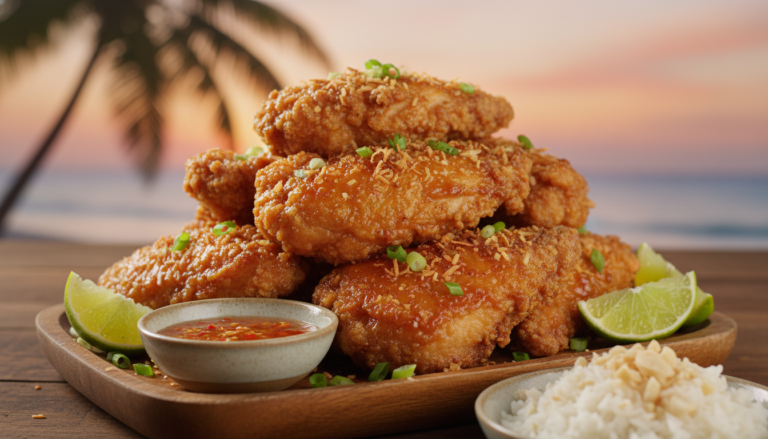
Hawaiian Crispy Fried Chicken
Hawaiian Crispy Fried Chicken marinated in buttermilk and soy sauce produces a deeply seasoned, shatteringly crispy fried chicken with a complex, umami-rich flavor profile that is unlike any fried chicken you’ve made before.
4
servings20
minutes30
minutes460
kcal50
minutesIngredients
1 kg chicken pieces
200 ml buttermilk
1 tbsp soy sauce
2 cloves garlic, minced
240 g all-purpose flour
1 tsp baking powder
1 tsp paprika
1 tsp salt
0.5 tsp black pepper
0.5 tsp cayenne pepper
1 L vegetable oil for frying
Directions
- In a bowl, mix buttermilk, soy sauce, and minced garlic. Add chicken and marinate for at least 2 hours.
- In another bowl, combine flour, baking powder, paprika, salt, black pepper, and cayenne pepper.
- Remove chicken from marinade, letting excess drip off.
- Coat chicken pieces thoroughly in the flour mixture, pressing on a thick layer.
- Heat oil in a large pot until it reaches 175°C (350°F).
- Fry chicken in hot oil in batches, turning occasionally, until golden brown and cooked through, about 10-12 minutes.
- Drain on paper towels and let rest for a few minutes before serving.
Nutrition Facts
- Total number of serves: 4
- Calories: 460kcal
- Cholesterol: 0mg
- Sodium: 620mg
- Potassium: 400mg
- Sugar: 8g
- Protein: 6g
- Calcium: 60mg
- Iron: 2mg
About This Author

Benjamin Brown
Recipe Developer
Benjamin is our flavor engineer. A classically trained chef turned recipe developer, he’s obsessed with balancing taste, texture, and creativity. He ensures that every recipe we publish is not only delicious but also reliable, approachable, and repeatable — even for beginners.
Favorite dish: Slow-braised short ribs with red wine reduction.
Kitchen motto: “Cooking is part science, part soul.”