
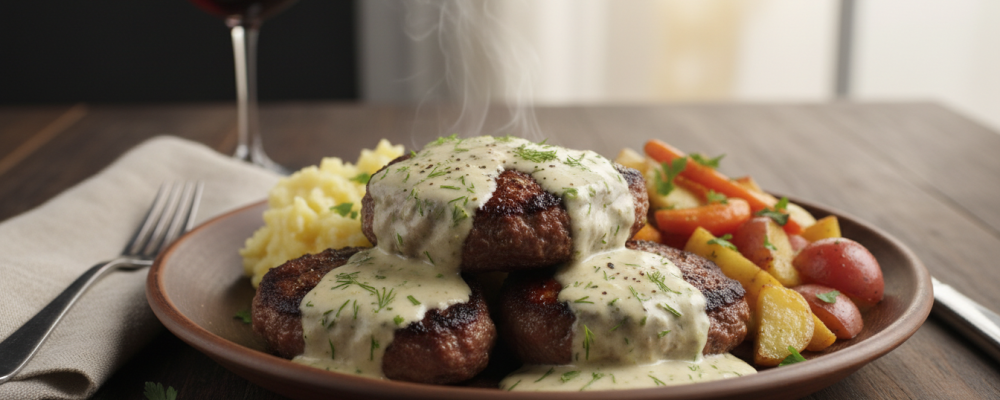

There are dishes that define an era of American cooking, and Salisbury steak is unquestionably one of them. It appeared on diner menus, in TV dinner trays, and on family dinner tables across the country for decades—and for good reason. A well-made Salisbury steak is genuinely excellent: a seasoned beef patty cooked to a deep, caramelized crust and finished in a rich, savory sauce that transforms the skillet drippings into something far greater than their parts. This version takes that beloved classic and makes one inspired move: swapping the standard mushroom gravy for a bold, tangy horseradish cream sauce that cuts through the richness of the beef and gives the entire dish a sharp, unexpected edge.
Horseradish is one of those ingredients I come back to whenever I want to add personality to a beef preparation without overpowering it. Its heat is different from chile heat—more sinus-forward, more fleeting, more aromatic—and it has a natural affinity for beef that centuries of culinary tradition have confirmed. In a cream-based pan sauce built from beef broth and sour cream, it blooms into something rounded and sophisticated, losing none of its character but gaining the kind of depth that only comes from being cooked into a proper sauce rather than served as a raw condiment.
What I respect most about this recipe is how much it achieves with so little. Four patties, one skillet, one sauce—and the result is a dinner that is deeply savory, beautifully sauced, and satisfying in a way that feels both nostalgic and genuinely elevated. This is a Salisbury steak that earns the name.
The Inspiration Behind This Recipe
My inspiration here was a desire to take one of the most misunderstood dishes in American cooking and give it the treatment it deserves. Salisbury steak has suffered from decades of association with frozen dinners and institutional food service—an unfair reputation that obscures what it fundamentally is: a well-seasoned beef patty finished in a flavorful pan sauce. Done correctly, it’s a compelling, satisfying dinner that competes with any bistro-style beef preparation.
The horseradish sauce was the creative decision that reframes the entire dish. By replacing the expected gravy with a sour cream and horseradish sauce, this recipe steps away from the nostalgic and toward something that feels genuinely considered—a classic format given a new identity through one bold, well-chosen ingredient.
A Brief History of Salisbury Steak
Salisbury steak has a more distinguished origin than its TV dinner reputation suggests. It was created by Dr. James Henry Salisbury in the 19th century—a physician who advocated for a diet centered on minced beef patties as a health food, consumed three times daily. His reasoning was rooted in the dietary theories of the time, but the dish itself—ground beef seasoned and formed into a patty, cooked and served with sauce—proved far more enduring than any specific health claim.
The dish became a staple of American home cooking and restaurant culture throughout the 20th century, particularly in the post-World War II era when ground beef was affordable, widely available, and central to weeknight cooking across the country. Its association with frozen TV dinners came later and cemented its reputation as comfort food—a label that, in the right hands, is a compliment rather than a criticism.
Why This Cooking Method Works
Building the sauce in the same skillet used to cook the patties is the single most important technique decision in this recipe, and it’s one that pays dividends in flavor that a separately made sauce simply can’t replicate. When the patties cook, they leave behind a layer of browned drippings and caramelized fond on the bottom of the pan—concentrated beef flavor that, when the broth is added, dissolves and becomes the backbone of the entire sauce.
Sour cream and horseradish are added after the broth has simmered and begun to thicken, which prevents the dairy from curdling under high heat while still allowing the horseradish’s volatile aromatic compounds to bloom into the sauce. Returning the patties to simmer in the finished sauce for a final five minutes ensures that the beef absorbs the surrounding flavors and the whole dish comes together as something cohesive and deeply satisfying rather than a patty with sauce poured over it.
Flavor Profile: What to Expect
Every element of this dish pulls in a deliberate direction:
- Deep, savory beef from the properly browned patties—Worcestershire-seasoned and caramelized at the edges for maximum flavor
- Rich, tangy sour cream that forms the creamy backbone of the sauce and provides a dairy counterpoint to the beef’s intensity
- Sharp, aromatic horseradish that adds a bold, distinctive heat that cuts through the richness and defines the character of the dish
- Concentrated beef broth that carries the fond from the pan into the sauce and gives it a savory, meaty depth
- Warm onion powder that rounds out the sauce and provides a quiet aromatic base beneath the more assertive horseradish
The overall effect is bold, savory, creamy, and deeply satisfying—a dish with real edge and real comfort in equal measure.
Tips for Making the Best Salisbury Steaks in Horseradish Sauce
Technique matters at every step here. These details will make the difference:
- Don’t overwork the beef mixture: Mix only until the ingredients are just combined. Overworking develops the protein in the ground beef and produces a dense, tough patty rather than a tender one.
- Make uniform patties: Even thickness—about three-quarters of an inch—ensures the patties cook through at the same rate without the edges overdoing before the center is done.
- Don’t move the patties: Let them sit undisturbed for the full four to five minutes per side to develop a proper, deeply caramelized crust. That crust is where the flavor lives.
- Deglaze thoroughly: When the broth goes in, use a wooden spoon to scrape every bit of the browned fond from the bottom of the pan. That fond is the foundation of the sauce.
- Add the sour cream off direct high heat: Reduce the temperature before stirring in the sour cream to prevent it from breaking or curdling in the sauce.
- Taste the horseradish before adding: Prepared horseradish varies significantly in heat between brands. Start with the specified amount and adjust to your heat preference.
Serving Suggestions and Side Pairings
Salisbury steak in horseradish sauce calls for the kind of sides that can soak up a great pan sauce:
- Creamy mashed potatoes—the classic, non-negotiable companion for any sauced beef patty
- Buttered egg noodles for a slightly lighter but equally satisfying base
- Roasted root vegetables or glazed carrots for a sweet, earthy contrast to the sharp sauce
- Steamed green beans or buttered peas for a simple, clean vegetable side
- Crusty bread for mopping every last drop of horseradish cream from the pan
Storage, Reheating, and Make-Ahead Tips
This dish holds up well and reheats beautifully:
- Refrigerate patties and sauce together in an airtight container for up to 4 days. The flavors deepen as they sit.
- Reheat gently in a covered skillet over low heat with a splash of beef broth to loosen the sauce. Avoid high heat, which can cause the sour cream-based sauce to separate.
- Freeze the cooked patties separately from the sauce for up to 2 months. Make the sauce fresh when reheating for the best consistency.
- Make ahead by forming and refrigerating the uncooked patties for up to 24 hours—cook and sauce fresh at dinnertime for the best texture.
Why This Recipe Deserves a Spot in Your Rotation
Salisbury Steaks in Horseradish Sauce earns its place by taking a genuinely great American classic and making it better—more interesting, more flavorful, and more memorable than the version most people grew up with. It’s fast, affordable, one-pan practical, and produces a finished plate that satisfies deeply. Whether it’s a quick weeknight dinner or a casual weekend meal that deserves something a little extra, this recipe delivers every time with the kind of bold, honest flavor that never goes out of style.
Recommended Drink Pairing
A dish this bold and savory calls for a red wine with enough structure to stand alongside the horseradish without being overwhelmed. A Côtes du Rhône or a medium-bodied Merlot brings dark fruit and earthy depth that mirrors the intensity of the beef without competing with the sharpness of the sauce. A Zinfandel is another excellent choice if you prefer something with a little more spice.
For cocktails, a Bourbon Smash Cocktail brings warm, oaky depth and citrus brightness that plays beautifully alongside the Worcestershire-seasoned beef and the creamy, tangy horseradish sauce. For non-alcoholic options, a cold sparkling water with lemon or a dark, lightly sweetened iced tea keeps things refreshing alongside a dinner this rich and satisfying.
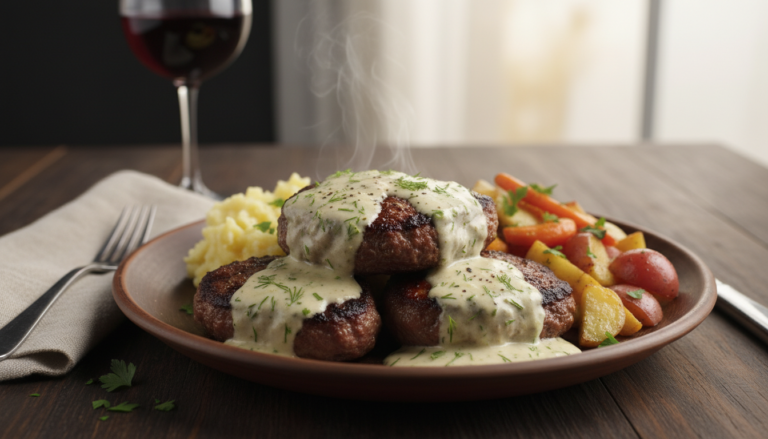
Salisbury Steaks in Horseradish Sauce
Salisbury Steaks in Horseradish Sauce take the beloved American classic to a bolder place—seasoned beef patties seared to a deep crust and finished in a rich, tangy sour cream and horseradish pan sauce that makes every bite genuinely unforgettable.
4
servings15
minutes30
minutes480
kcal45
minutesIngredients
1 pound ground beef
1 egg
1 cup breadcrumbs
2 tbsp Worcestershire sauce
1 tsp salt
0.5 tsp black pepper
2 tbsp vegetable oil
1 cup beef broth
1 cup sour cream
2 tbsp horseradish
0.5 tsp onion powder
Directions
- In a large bowl, mix ground beef, egg, breadcrumbs, Worcestershire sauce, salt, and black pepper until combined.
- Form the mixture into four patties.
- Heat vegetable oil in a skillet over medium heat.
- Cook patties for about 4-5 minutes each side or until browned and cooked through.
- Remove patties from the skillet and set aside.
- In the same skillet, add beef broth, sour cream, horseradish, and onion powder.
- Stir and simmer the sauce for about 5 minutes until thickened.
- Return the patties to the skillet and cover with the sauce.
- Simmer for an additional 5 minutes to heat through.
Nutrition Facts
- Total number of serves: 4
- Calories: 480kcal
- Cholesterol: 0mg
- Sodium: 620mg
- Potassium: 400mg
- Sugar: 8g
- Protein: 6g
- Calcium: 60mg
- Iron: 2mg
About This Author

Benjamin Brown
Recipe Developer
Benjamin is our flavor engineer. A classically trained chef turned recipe developer, he’s obsessed with balancing taste, texture, and creativity. He ensures that every recipe we publish is not only delicious but also reliable, approachable, and repeatable — even for beginners.
Favorite dish: Slow-braised short ribs with red wine reduction.
Kitchen motto: “Cooking is part science, part soul.”















