
There is a section of the farmers market that most shoppers walk past without stopping.
Not the tomatoes, which draw a crowd in summer. Not the stone fruit or the lettuces or the familiar root vegetables arranged in their usual bins. The section with the unfamiliar things — the gnarled roots, the strange greens, the vegetables whose names require asking and whose preparation requires thinking.
Most people keep walking.
They shouldn’t.
The vegetables that have fallen out of mainstream cooking — the ones that dominated European and American tables for centuries before industrial agriculture narrowed the produce aisle to a predictable roster of high-yield, long-shelf-life crops — are among the most interesting, most flavorful, and most underused ingredients available to any home cook willing to seek them out.
They are not exotic. They are not difficult. They are simply forgotten — casualties of an agricultural system that prioritized uniformity and transportability over flavor and variety, and of a food culture that stopped cooking them when they disappeared from the shelves.
They are worth finding again.
Sunchokes: The Vegetable That Tastes Like Its Season
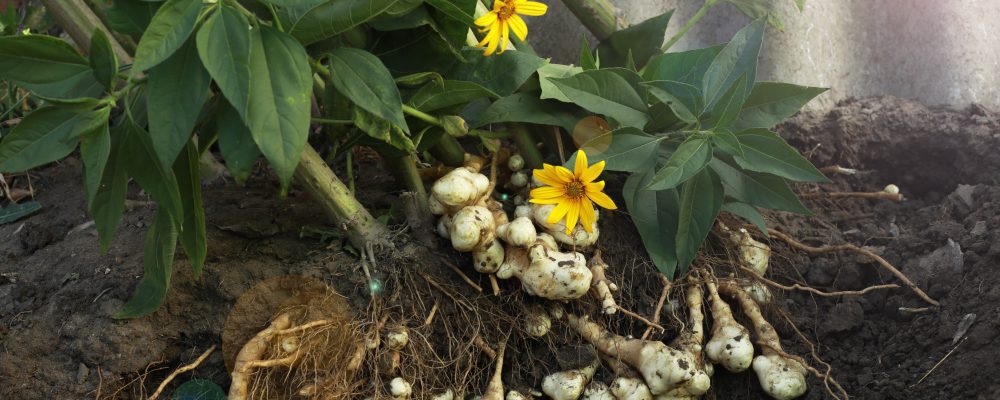
The Jerusalem artichoke — which has nothing to do with Jerusalem and is not an artichoke — is a tuber produced by a species of sunflower native to North America. Its name in Italian, girasole, means sunflower, and the corruption of that word into “Jerusalem” is one of the more entertaining etymological accidents in food history.
The sunchoke, as it is more commonly called today, was a staple food for Indigenous peoples across North America long before European contact. It was brought to Europe in the early seventeenth century, where it was briefly fashionable before being displaced by the potato — a more productive, more reliably starchy, and less gastronomically challenging crop.
The sunchoke’s challenge, and its particular appeal, lies in its unusual carbohydrate composition. Unlike most root vegetables, which store energy as starch, the sunchoke stores it as inulin — a prebiotic fiber that passes through the small intestine undigested and is fermented by bacteria in the large intestine. The result is a vegetable with a sweet, nutty, distinctly earthy flavor that is unlike anything else in the produce section, and a reputation for producing digestive discomfort in the unprepared — a reputation so well-established that M.F.K. Fisher once referred to them as “fartichokes,” a name that has stuck with affection in certain food writing circles ever since.
Prepared well — roasted until caramelized, pureed into a silky soup, shaved raw into a salad — the sunchoke delivers a flavor that justifies the negotiation with its digestive peculiarities. Start with small quantities, cook them thoroughly, and the issue diminishes significantly.
Celeriac: The Root That Has Always Been Better Than It Looks
Celeriac — celery root — is one of the most unfairly overlooked vegetables in the produce section, perhaps because it is one of the most visually unappealing. Gnarled, knobby, covered in root tendrils and dirt, it looks like something that was left in the ground too long and forgotten.
Peel it, and what’s underneath is a revelation.
The interior of celeriac is cream-colored, dense, and fragrant with a flavor that is simultaneously celery-like and entirely its own — earthy, slightly sweet, with a depth that raw celery doesn’t have and that develops further with cooking. Roasted, it caramelizes beautifully into something rich and complex. Boiled and pureed, it produces one of the most elegant and underrated of all vegetable preparations — a puree that is silkier than mashed potato, with a flavor that seems far more sophisticated than its humble root vegetable origins suggest.
Céleri rémoulade — celeriac grated raw and dressed with a mustardy, creamy sauce — is a classic of the French bistro tradition that remains almost completely unknown in American home cooking despite being simple, delicious, and requiring nothing more than a box grater and a mixing bowl.
Celeriac is available in most well-stocked grocery stores throughout the fall and winter — the peak of its season — for a price that reflects its general unpopularity. It is one of the best bargains in the produce section and one of the most rewarding vegetables for the cook willing to engage with its unusual appearance.
Kohlrabi: The Vegetable That Doesn’t Know What It Is
Kohlrabi looks, at first encounter, like a science fiction vegetable — a pale green or purple sphere with stems shooting out in multiple directions, each topped with a leaf, the whole thing suggesting a Sputnik more than a food.
It tastes, at first encounter, like a mild, sweet, slightly peppery version of a broccoli stem — which makes sense, as kohlrabi is a member of the same family and the edible part is the swollen stem rather than the root or the leaf.
Kohlrabi is one of the great raw vegetables — peeled, sliced thin, and eaten with nothing more than salt and a squeeze of lemon, it has a satisfying crunch and a clean, fresh flavor that makes it one of the better crudité options available. It holds up better than most vegetables to salting — sliced thin and salted, it softens slightly and becomes the base of a slaw that has more character than cabbage without the aggressiveness of radish.
Cooked, kohlrabi becomes sweeter and more tender — roasted with olive oil until caramelized, it develops a depth that its raw form doesn’t suggest. Braised or steamed and then finished with butter, it is a simple and elegant side dish that has no recognizable equivalent in mainstream produce cooking.
Nettles: The Weed Worth Cooking
Stinging nettles — the plant most people know only as the thing that produces a painful rash on contact with bare skin — are one of the most flavorful and nutritious wild greens available, with a history of use in European cooking that stretches back centuries.
The sting, which is produced by formic acid in the plant’s hollow hairs, is completely neutralized by heat or by thorough drying. A handful of nettles dropped into boiling water is, within seconds, nothing more than an intensely flavored green vegetable — one that tastes like a more complex, more minerally, more distinctly seasonal version of spinach.
Nettles appear in Italian cooking as a filling for fresh pasta — nettle pasta, tinted green by the puree of the cooked leaves, is a spring tradition in many northern Italian regions. In British cooking, nettle soup is a dish of considerable antiquity. In Scandinavian cooking, nettles appear in soups, pies, and as a simple braised green finished with butter.
In spring, when the young, tender growing tips of the nettle are at their most flavorful, they appear at farmers markets and specialty grocers in the brief window of their seasonal peak. Handled with gloves while raw and treated like spinach once cooked, they are one of the most rewarding seasonal vegetables available to a cook willing to engage with an ingredient that most people have only encountered painfully.
Sorrel: The Herb That Thinks It’s a Vegetable
Sorrel occupies an unusual position in the culinary world — too large and too abundant to function purely as an herb, too intensely flavored to be used in the quantities of a leafy green, it exists somewhere between the two categories without fully belonging to either.
Its flavor is its defining quality: a sharp, clean, almost shocking acidity produced by oxalic acid, the same compound responsible for the tartness of rhubarb. A single raw leaf of sorrel has more acidity than a squeeze of lemon — which makes it, used with understanding, one of the most effective natural acidifiers in the kitchen.
Sorrel soup — the classic preparation of the French tradition, made by wilting sorrel in butter until it collapses into an almost sauce-like texture and then finishing with cream — demonstrates the vegetable’s particular magic. The heat transforms the bright, sharp acidity of the raw leaf into something softer, more rounded, and deeply savory, with a flavor that is entirely distinctive and that no other ingredient replicates.
Sorrel stirred into a cream sauce for fish — a classic pairing in French cooking, where the acidity of the sorrel cuts through the richness of the cream and complements the delicacy of the fish — is one of those preparations that tastes so right it seems inevitable, despite being almost completely absent from mainstream home cooking.
The Broader Lesson
The vegetables that have fallen out of common use are worth seeking out not just for their individual flavors but for what their existence points toward.
For most of agricultural history, the variety of vegetables available to any given cook was significantly wider than what lines the shelves of a modern grocery store. Regional varieties, heirloom cultivars, wild-gathered greens — these formed the raw material of cuisines that were, in their variety and their rootedness in specific seasons and specific places, more diverse than most contemporary home cooking.
The narrowing of that variety — the process by which a handful of high-yield, easily transported, long-shelf-life crops came to dominate the produce aisle — was not driven by flavor. It was driven by the economics of industrial agriculture. The vegetables that survived the narrowing did so because they were easy to grow at scale, easy to ship without damage, and easy to store without significant quality loss.
The vegetables that were lost were often lost specifically because they resisted these conditions — because they were too seasonal, too fragile, too specific in their requirements, too unfamiliar in their appearance to survive in a market that prioritized convenience and consistency over character and flavor.
Finding them — at farmers markets, at specialty grocers, in the occasional well-stocked produce section — is an act of culinary recovery. It is the retrieval of flavors and preparations that were, not so long ago, part of ordinary cooking.
The Takeaway
The most interesting vegetables are often the ones that require the most effort to find — and the least effort to cook well, once found.
Seek out sunchokes in fall and winter, when their flavor is deepest. Find celeriac and make the remoulade. Buy kohlrabi at the farmers market and eat it raw with salt. Handle nettles with gloves, cook them in butter, and eat them in spring. Grow sorrel in a pot on a windowsill and stir it into cream sauces.
The produce aisle is not the limit of what’s available. And the vegetables beyond its edges are, very often, the ones most worth cooking.