

There is a moment in almost every serious cook’s development when something shifts.
It usually happens after years of accumulation — more techniques, more ingredients, more complexity, more ambition. The food gets more elaborate. The plating gets more intricate. The menus get longer and denser with components that announce effort at every turn.
And then something changes.
A meal eaten somewhere simple. A dish with three ingredients that stops the room. A bowl of pasta so perfect it makes everything more complicated feel slightly embarrassing.
The best cooks in the world — the ones who have spent decades accumulating technique and knowledge — tend to arrive, eventually, at the same place.
Simplicity. Pursued with the same obsession that once drove them toward complexity.
Complexity Hides. Simplicity Reveals.
There is a reason that culinary school teaches classical technique before it teaches modern innovation. And there is a reason that the chefs who come out the other side of decades of professional cooking tend to cook simpler food than the ones just starting out.
Complex food has somewhere to hide. A dish with fourteen components, three sauces, and two garnishes can cover a multitude of technical shortcomings — one element compensating for another, the whole masking the parts. A diner overwhelmed by complexity often doesn’t isolate what isn’t working because there’s too much happening to identify it.
Simple food has nowhere to hide at all.
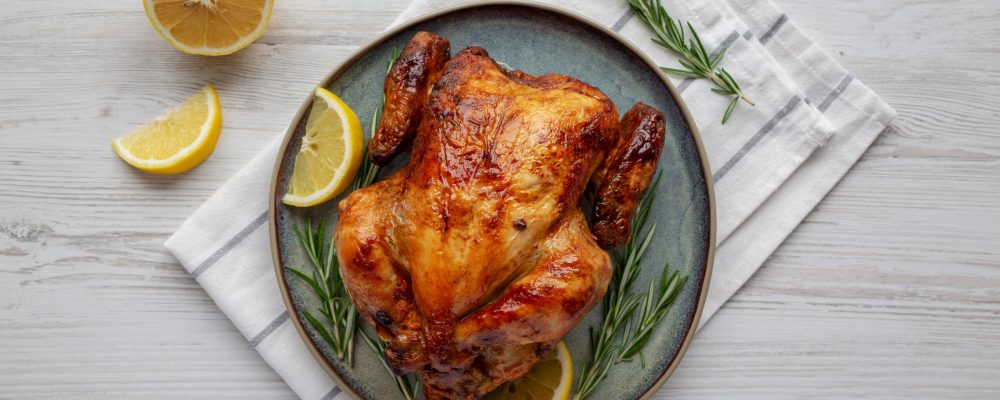
A roast chicken with nothing but salt and good technique is one of the most revealing dishes in cooking. A plate of pasta dressed with olive oil and parmesan shows every flaw in the pasta itself, the quality of the oil, the accuracy of the seasoning. Three ingredients, and there is nothing to compensate for any one of them being wrong.
This is why the simplest dishes are often the hardest to do perfectly. The standard is absolute because there is nothing else on the plate to dilute it. And this is why chefs who have mastered their craft return to simple food not as a retreat from ambition but as its highest expression.
The Japanese Concept That Changed How the World Cooks
There is a principle in Japanese aesthetics called ma — the idea that the space between things carries as much meaning as the things themselves. And there is a culinary philosophy in Japanese cooking, particularly in the washoku tradition, that treats simplicity not as a limitation but as a form of profound respect for the ingredient.
A piece of fish in the Japanese culinary tradition is not a canvas for technique. It is the subject. The chef’s job is to understand what the fish is, what it wants to be, and how to remove every obstacle between its natural state and the plate. Seasoning that would overwhelm is removed. Cooking that would alter the essential character is replaced with something gentler or omitted entirely. What arrives on the plate is not what the chef added — it is what the chef chose not to add.
This philosophy has influenced professional cooking globally in ways that now seem unremarkable because they’ve become so widely adopted. The instinct to strip away, to find the minimum required to make an ingredient taste most fully like itself, is one of the most significant intellectual shifts in professional cooking over the last several decades — and it came from a culinary tradition built on the premise that simplicity is not the absence of sophistication but its fullest expression.
The Ingredients Are the Technique
The cooks who cook the simplest food source the most obsessively.
This is not a coincidence. It is cause and effect.
When a dish has only three components, each of those components must be extraordinary. There is no complexity to supplement mediocre sourcing, no layering of flavors to compensate for an ingredient that isn’t at its peak. The olive oil must be excellent because the pasta can’t hide it. The tomato must be perfect because nothing is being done to it except salt and heat.
This is why the chefs most associated with simple cooking — those who have built reputations on dishes that seem to require no technique at all — are also, almost universally, the most disciplined and demanding sourcers of ingredients. The simplicity of the dish is funded by the obsessive quality of what goes into it.
For home cooks, this is one of the most actionable insights in professional cooking: fewer, better ingredients produce superior results to more, mediocre ones. A dish made with two exceptional components outperforms a dish made with six ordinary ones almost every time.
The restraint is the technique.
Why Restraint Is Harder Than It Looks
Here is the uncomfortable truth about simplicity in cooking: it is harder to achieve than complexity.
Adding another component to a dish that isn’t quite working is easy. Reducing a dish to only what it needs — and trusting that what remains is enough — requires a confidence and a discipline that takes years to develop.
The instinct when something seems missing from a simple dish is to add something. More ingredients, more garnish, more sauce. This instinct is almost always wrong. What seems missing from a simple dish is usually depth in the existing components — better sourcing, more careful technique, more accurate seasoning — rather than the presence of additional ones.
Professional cooks who have internalized simplicity recognize the difference between a dish that is incomplete because it needs more and a dish that is incomplete because what it has isn’t good enough. The solution to the first is addition. The solution to the second is improvement — and improvement, unlike addition, requires confronting the actual problem rather than covering it.
The Lesson That Takes the Longest to Learn
Ask almost any chef with twenty or thirty years of serious cooking behind them what they know now that they wish they’d understood at the beginning.
The answer is almost never a technique. Almost never a recipe. Almost never a method or an approach or a philosophy about flavor.
It is almost always something about restraint. About listening to the ingredient rather than imposing on it. About understanding that the cook’s job is not to demonstrate what they know but to serve what the ingredient is.
The lesson that takes the longest is the simplest one: the less you do to something extraordinary, the more extraordinary it remains.
This is counterintuitive for a beginner, for whom cooking means doing things — adding, transforming, combining. It becomes intuitive, eventually, for the experienced cook who has spent enough time over enough dishes to understand that restraint is not inaction. It is the most skilled action of all.
The Takeaway
The pursuit of simplicity in cooking is not a retreat from ambition. It is ambition refined — sharpened by experience into something more demanding than complexity, not less.
Simple food requires excellent ingredients, precise technique, accurate seasoning, and the confidence to leave well enough alone. It requires knowing when a dish is complete and resisting every instinct to add more.
The cooks who arrive at simplicity after years of complexity aren’t cooking less. They’re cooking more honestly.
And honest cooking, done with extraordinary ingredients and quiet technique, is the hardest — and the most satisfying — cooking there is.














