
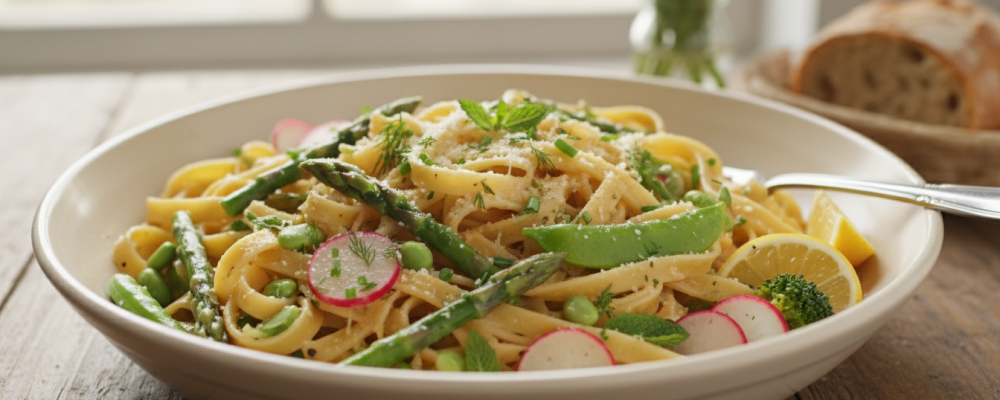

There are recipes that feel like the culinary expression of a season, and Spring Vegetable Fettuccine Alfredo captures everything I love about the transition from winter to spring in a single, stunning bowl. Silky, butter-rich Alfredo sauce coating tender fettuccine, threaded through with bright green asparagus, sweet peas, and wilted spinach—it’s a dish that manages to feel simultaneously indulgent and fresh, luxurious and light, deeply comforting and vibrantly alive. This is the pasta I make the moment asparagus appears at the farmers market, and I make it on repeat until summer arrives.
What I find most beautiful about this recipe is how perfectly the spring vegetables and the classic Alfredo sauce complement each other. Alfredo in its purest, most authentic form—butter, cream, and Parmesan—is one of the great Italian pasta sauces, but it can tip toward heaviness without the right balance. The asparagus, peas, and spinach provide exactly the freshness and lightness the dish needs, their bright green color and clean, slightly sweet flavors cutting through the richness of the cream and butter in the most natural, effortless way. It’s a pairing that feels less like a creative decision and more like an inevitability.
The result is a pasta that earns its place at the table in every season while feeling most perfectly, most poetically suited to spring.
The Inspiration Behind This Recipe
This recipe was inspired by two things simultaneously: a deep reverence for the classic Alfredo sauce and a personal philosophy that great comfort food should always be open to evolution. Classic Fettuccine Alfredo is already a near-perfect dish—silky, indulgent, and deeply satisfying in the way that only great pasta can be. But the idea of lifting it with the freshest, most vibrant vegetables of the spring season felt like not just an improvement but a genuine revelation.
The specific combination of asparagus, peas, and spinach was a deliberate editorial choice rooted in both flavor and visual impact. These three vegetables represent the most emblematic flavors of spring—the tender, slightly grassy bite of asparagus, the sweet, round pop of fresh peas, and the earthy, mineral character of wilted spinach—and together they create a vegetable medley that’s greater than any single green could achieve alone. Against the ivory creaminess of the Alfredo sauce, they’re also visually stunning in a way that makes this pasta as beautiful to look at as it is to eat.
It’s a recipe born from a love of seasonal cooking and the belief that the best pasta dishes are always, at their core, about balance.
A Brief History of Fettuccine Alfredo
Fettuccine Alfredo has one of the most charming and well-documented origin stories in Italian culinary history, attributed to Alfredo di Lelio, a Roman restaurateur who created the dish in the early twentieth century for his wife recovering from childbirth. His original preparation—fresh fettuccine tossed tableside with an extraordinary amount of butter and Parmesan until a silky, emulsified sauce formed—became a sensation when American actors Douglas Fairbanks and Mary Pickford visited his restaurant in 1927 and brought the recipe back to the United States with them.
In America, the dish evolved from its elegant, minimalist Roman origins into the cream-enriched version that became a staple of Italian-American restaurants throughout the mid-twentieth century—richer, more sauce-forward, and arguably more accessible to American palates than the original butter-only preparation. This cream-based version became one of the most beloved pasta sauces in American home cooking and restaurant menus alike, inspiring countless variations including this beautiful spring vegetable interpretation.
Adding seasonal vegetables to Alfredo represents the most natural and inspired evolution of the dish—bringing freshness and lightness to a sauce that benefits enormously from both.
Why This Cooking Method Works
Cooking the vegetables separately before building the Alfredo sauce in the same skillet is the technique that gives this dish its exceptional quality and ensures every component reaches its optimal texture. Asparagus and peas cooked in hot olive oil with garlic develop a slight caramelization and concentrated flavor that vegetables cooked directly in cream sauce never quite achieve. Removing them before building the sauce ensures they remain perfectly tender-crisp rather than becoming overcooked and soft in the surrounding dairy.
Building the Alfredo sauce in the same pan preserves every bit of the garlic-infused oil and vegetable fond, incorporating those flavors into the sauce base from the very beginning. Adding the Parmesan gradually and stirring continuously is the critical technique that produces a smooth, emulsified sauce rather than a clumpy, separated one—the cheese needs to be incorporated one small addition at a time to melt evenly without seizing.
Tossing the pasta in the finished sauce while everything is still hot ensures maximum coating on every strand of fettuccine and allows the starch in the pasta to help bind the sauce into a cohesive, silky whole.
Flavor Profile: What to Expect
This pasta delivers a beautifully layered, deeply satisfying flavor experience that captures the best of both worlds—indulgent and fresh simultaneously:
Silky, luxurious Alfredo sauce with the rich, buttery depth of heavy cream and the sharp, nutty character of good Parmesan that coats every strand of fettuccine in the most deeply satisfying way
Tender asparagus with its characteristic slightly grassy, earthy bite that provides a clean, fresh contrast to the richness of the cream sauce throughout
Sweet, bright peas that pop with natural sweetness in every bite and add a playful, spring-forward energy that makes the dish feel vibrant and alive
Earthy, mineral spinach that wilts into the sauce and adds a subtle depth and beautiful green color that threads through every forkful
Fragrant garlic that forms the aromatic backbone of the dish and adds a warm, savory depth that prevents the sauce from tasting purely rich or one-dimensional
Silky fettuccine that carries the Alfredo sauce beautifully in every long, twirled forkful and provides the hearty, satisfying pasta base the dish is built on
The overall effect is indulgent and fresh, rich and bright—a pasta that satisfies deeply while never feeling heavy.
Tips for Making the Best Spring Vegetable Fettuccine Alfredo
A few key techniques produce consistently outstanding results:
Reserve pasta water before draining: A cup of starchy pasta cooking water is one of the most valuable tools in pasta cooking. A splash added to the finished sauce helps it cling to the fettuccine and loosens any thickness without diluting the flavor.
Add Parmesan gradually and off high heat: High heat causes Parmesan to clump rather than melt smoothly. Reducing to medium-low before adding the cheese and stirring continuously produces the silkiest possible sauce.
Don’t overcook the asparagus: Three to five minutes in the hot skillet should leave the asparagus tender but still with a pleasant bite. Overcooked asparagus loses both its color and its characteristic fresh flavor quickly.
Use freshly grated Parmesan: Pre-grated Parmesan contains anti-caking agents that prevent smooth melting. Freshly grated from a block produces a dramatically silkier, more flavorful sauce.
Serve immediately: Alfredo sauce thickens quickly as it cools and the fettuccine continues to absorb it. This dish is at its absolute best the moment it’s finished—serve straight from the skillet for the optimal experience.
Cut asparagus into consistent pieces: Uniform pieces ensure even cooking throughout and make the finished pasta easier and more pleasant to eat than long, unwieldy asparagus spears.
Serving Suggestions and Side Pairings
This pasta is rich, complete, and satisfying as a standalone meal, but a few well-chosen accompaniments elevate the experience beautifully:
A crisp arugula salad with lemon vinaigrette and shaved Parmesan for a peppery, bright contrast to the richness of the Alfredo sauce
Warm garlic bread or crusty Italian bread for scooping up the incredible creamy sauce that pools at the bottom of the bowl
A simple tomato and basil bruschetta as a light, acidic starter that sets the Italian tone before the pasta arrives
Grilled or roasted chicken alongside for a more substantial, protein-forward presentation
A light vegetable soup as a first course that complements the spring character of the pasta without competing with its richness
Storage, Reheating, and Make-Ahead Tips
Alfredo-based pastas require some care through storage but hold up well with the right approach.
Refrigerate in an airtight container for up to 3 days—the sauce will thicken considerably as it chills, which is easily corrected during reheating.
Reheat gently on the stovetop over low heat with a generous splash of heavy cream or milk, stirring frequently to restore the sauce to its original silky consistency.
Avoid microwaving if possible—it heats unevenly and can make the sauce oily rather than creamy. If necessary, microwave in short intervals with a splash of cream, stirring between each.
For best results when meal prepping, store the Alfredo sauce and cooked vegetables separately from the pasta and combine fresh at serving time to prevent the fettuccine from absorbing all of the sauce overnight.
Why This Recipe Deserves a Spot in Your Rotation
Spring Vegetable Fettuccine Alfredo deserves a permanent, season-defining place in your recipe collection because it represents pasta cooking at its most joyful and its most balanced. It’s a dish that celebrates the arrival of spring’s best vegetables while honoring one of the great Italian pasta sauce traditions—producing something that’s deeply comforting and unmistakably seasonal at the same time. Fast enough for any weeknight, beautiful enough for a dinner party, and satisfying enough to earn enthusiastic requests for the recipe at every table it graces, this pasta is a reminder that the best cooking always finds a way to honor both tradition and the season.
Once it’s in your repertoire, it becomes the pasta you make every spring without fail—the one that signals the season has truly, deliciously arrived.
Recommended Drink Pairing
The rich, cream-forward Alfredo sauce and bright spring vegetables in this dish call for a wine with enough body to complement the richness while offering the acidity needed to keep every bite feeling fresh and balanced. A lightly oaked Chardonnay is the classic and ideal choice—its buttery notes echo the cream sauce while its acidity lifts the dish beautifully. A Pinot Grigio or a Vermentino also works wonderfully, their clean minerality and subtle fruit providing a refreshing counterpoint to the Parmesan richness.
For non-alcoholic options, a sparkling water with lemon and fresh mint, a chilled white grape juice spritzer with elderflower, or a lightly sweetened iced green tea with cucumber all complement the bright, spring-forward character of this beautiful pasta dish perfectly.
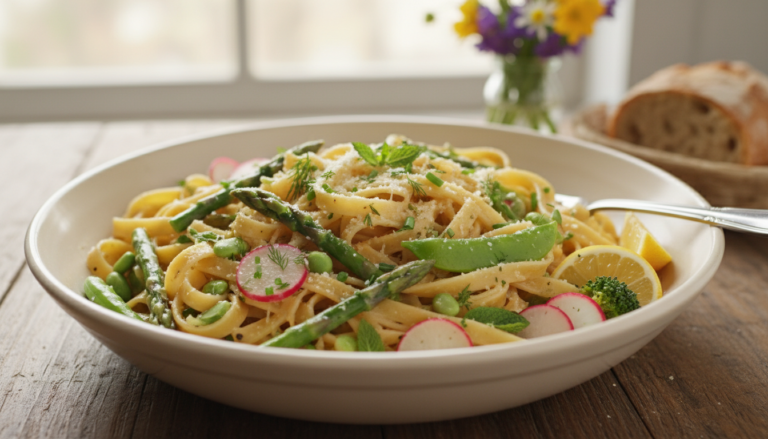
Spring Vegetable Fettuccine Alfredo
Classic fettuccine Alfredo lifted with tender asparagus, sweet peas, and wilted spinach—rich, creamy, and unmistakably spring.
4
servings15
minutes20
minutes540
kcal35
minutesIngredients
8 oz fettuccine pasta
1 cup heavy cream
1 cup Parmesan cheese, grated
2 tbsp butter
1 cup asparagus, chopped
1 cup peas, fresh or frozen
1 cup spinach
2 cloves garlic, minced
1 tbsp olive oil
1 pinch salt
1 pinch black pepper
Directions
- Cook fettuccine pasta according to package instructions. Drain and set aside.
- In a large skillet, heat olive oil over medium heat. Add garlic and sauté until fragrant.
- Add asparagus and peas to the skillet. Cook for 3-5 minutes until they start to soften.
- Add spinach and cook until wilted. Remove vegetables from the skillet and set aside.
- In the same skillet, melt butter over medium heat. Stir in heavy cream.
- Add Parmesan cheese gradually, stirring constantly until the sauce thickens.
- Season the sauce with salt and pepper.
- Return the vegetables to the skillet, combining them with the Alfredo sauce.
- Add drained fettuccine to the skillet, tossing to coat the pasta completely.
- Serve immediately, garnished with additional Parmesan if desired.
Nutrition Facts
- Total number of serves: 4
- Calories: 540kcal
- Cholesterol: 0mg
- Sodium: 620mg
- Potassium: 400mg
- Sugar: 8g
- Protein: 6g
- Calcium: 60mg
- Iron: 2mg
About This Author

Amelia Grace
Editor-in-Chief & Culinary Director
The heart and guiding voice of Daily Dish, Amelia leads our editorial vision and recipe development. With a background in food journalism and over a decade spent in professional kitchens, she has a knack for blending gourmet technique with real-world accessibility. Her goal? To make every reader feel like a confident cook, one dish at a time.
Favorite dish: Creamy lemon risotto with a sprinkle of fresh thyme.
Kitchen motto: “Good food doesn’t have to be complicated — it just has to be made with heart.”















