
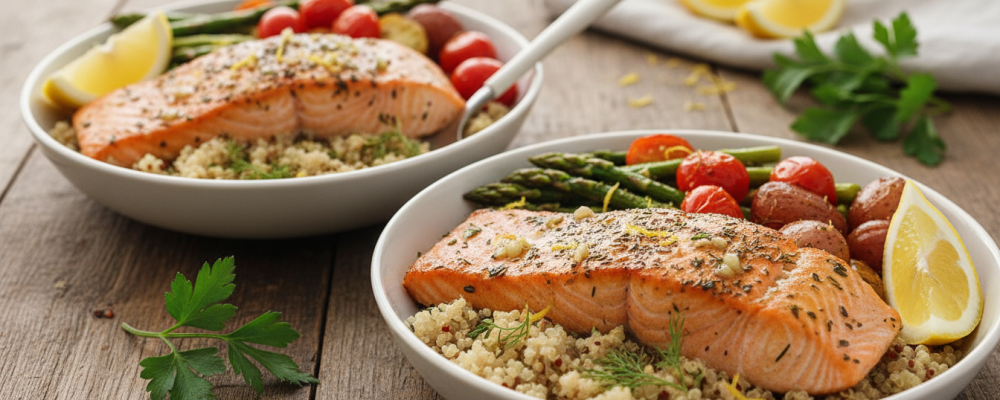

I know what you’re thinking—a pastry chef writing about salmon bowls? But here’s what most people don’t realize: the same principles that make a beautiful dessert also make a beautiful savory dish. It’s all about color, composition, texture, and that ineffable quality that makes you want to take a photo before you take a bite. These salmon bowls have all of that, and watching them come together feels remarkably like plating a dessert—layering colors and textures intentionally, creating something that feeds your eyes before it feeds your body.
What captivates me about this recipe is how the ingredients arrange themselves into something naturally stunning without requiring any special plating techniques or garnish wizardry. That golden-pink salmon against the fluffy white quinoa, the deep green spinach, the bright red tomato halves, the pale green cucumber rounds—it’s a composition that practically creates itself. When your meal prep containers look like they could be served at a nice restaurant, eating lunch at your desk suddenly feels less like obligation and more like a small luxury you’re giving yourself.
I discovered salmon bowls during a period when I was tired of my own field’s richness—after spending all day working with butter, cream, and sugar, the last thing I wanted for dinner was anything remotely heavy. I craved something fresh and bright and clean, something that tasted like it was good for me but didn’t taste like punishment. These bowls became my answer, and I found myself making them even when I wasn’t trying to meal prep, just because the process of building them felt creative and satisfying in the same way that plating desserts does.
The lemon and dill combination is what seals the deal for me. There’s something about fresh herbs and citrus that just makes food taste alive and intentional, like someone actually thought about what they were eating rather than just throwing things together. That bright, clean flavor profile keeps these bowls from ever feeling heavy or boring, even when you’re eating them for the fourth day in a row. Each bite still tastes fresh, still tastes light, still tastes like something you’d choose to eat even if you weren’t trying to be healthy.
─────────
The Inspiration Behind This Recipe
This recipe emerged from a realization I had while eating yet another disappointing takeout grain bowl: restaurants charge $15-18 for these bowls, and most of the time they’re just rice or grains, some protein that’s been sitting under heat lamps, and vegetables that should have been fresher. I kept thinking, “I could make this better at home for a quarter of the price,” and then I actually did it and discovered I was absolutely right.
The key insight was understanding that grain bowls are essentially about strategic assembly—cooking each component properly, then combining them in a way that respects each ingredient’s individual characteristics. The salmon needs to be tender and flavorful, not dry and overcooked. The quinoa should be fluffy and separate, not clumpy and mushy. The vegetables need to stay crisp, not wilted and sad. Getting all of those elements right simultaneously is what separates gorgeous, craveable bowls from cafeteria food that happens to be arranged in circular containers.
I chose salmon specifically because it’s one of the few proteins that actually improves slightly with refrigeration in this context. Unlike chicken which can dry out, or beef which can toughen, properly cooked salmon develops this almost custard-like texture when cold—it becomes even more tender, more luxurious, more special. The lemon-herb marinade penetrates deeper over time, infusing the fish with brightness that prevents it from tasting fishy or heavy. By day three, the flavors have integrated so beautifully that some people actually prefer the refrigerated version to freshly made.
The vegetable selection was purely aesthetic at first—I wanted colors that would look beautiful together in containers—but I quickly realized that cucumbers, tomatoes, and spinach also happen to maintain their structural integrity beautifully over multiple days. They don’t wilt like delicate lettuces, don’t release excessive moisture like zucchini might, and don’t oxidize or brown like avocado. Beautiful and practical—my favorite combination.
─────────
A Brief History of Grain Bowls and Salmon in Contemporary Cuisine
The grain bowl format has ancient precedents—from Japanese donburi to Korean bibimbap to various Middle Eastern rice-and-protein preparations. These traditional formats understood something fundamental: combining grains, protein, and vegetables in a single vessel creates a complete, satisfying meal that’s greater than the sum of its parts. The modern “bowl” phenomenon, however, is distinctly contemporary, emerging in the 2000s and 2010s as fast-casual restaurants sought alternatives to traditional plate presentations.
Salmon has undergone a remarkable transformation in American food culture over the past few decades. Once considered exotic or special-occasion food, farmed salmon’s availability and relatively affordable pricing has made it a regular protein choice for health-conscious consumers. The fish’s rich omega-3 content and complete protein profile aligned perfectly with growing nutritional awareness, while its relatively quick cooking time and mild flavor made it accessible to home cooks who might be intimidated by other seafood preparations.
The marriage of salmon and grain bowls represents the convergence of several contemporary food trends: the desire for restaurant-quality meals at home, the emphasis on visual presentation (particularly for social media sharing), the focus on balanced macronutrients and nutritional density, and the recognition that healthy food doesn’t have to sacrifice pleasure or aesthetic appeal. These bowls embody the evolution of meal prep from purely functional to genuinely enjoyable—food that supports health goals while delivering genuine sensory satisfaction.
─────────
Why This Cooking Method Works for Meal Prep
The success of these salmon bowls for multi-day storage hinges on understanding how salmon’s unique fat composition and protein structure respond to gentle cooking and cold storage. Salmon contains significant intramuscular fat—those white lines you see marbling through the flesh—which is primarily omega-3 fatty acids. When salmon is cooked properly to an internal temperature of 125-130°F (medium doneness), these fats remain fluid and distributed throughout the flesh, creating that characteristic rich, almost buttery texture.
The 400°F oven temperature and 15-20 minute cooking time are calibrated to achieve this doneness without overcooking. Higher temperatures or longer cooking would drive the internal temperature past 145°F, at which point the proteins contract excessively and squeeze out moisture, creating dry, chalky-textured fish. Lower temperatures would require longer cooking times that could still produce the same drying effect. This moderate heat allows even cooking throughout while maintaining moisture and that tender, flaky texture that makes salmon so appealing.
The lemon-herb mixture serves multiple preservation and flavor functions. The acid in lemon juice provides mild curing effects—it doesn’t “cook” the salmon like ceviche would, but it does create a slightly firmer surface texture that helps the fish maintain structure during storage. The olive oil in the mixture coats the salmon, creating a lipid barrier that reduces moisture loss and oxidation during refrigeration. The fresh dill and garlic infuse aromatic compounds that actually intensify over time as they continue marinating the fish in the refrigerator.
Quinoa’s superiority for meal prep over rice deserves explanation. Quinoa has a natural protective coating (saponin, removed during processing) and a protein-rich structure that maintains its fluffy, separate grain texture even after days of refrigeration. Rice tends to retrograde—the starch molecules realign into crystalline structures that make reheated rice dry and hard. Quinoa resists this process, remaining relatively fluffy and pleasant even when eaten cold directly from the refrigerator.
The raw vegetable approach reflects understanding of texture preservation over time. Cooking vegetables initiates enzymatic breakdown that accelerates during storage, creating mushy textures and off-flavors. Raw cucumbers, tomatoes, and spinach maintain their structural integrity for 4-5 days because their cell walls remain intact and protective. The slight wilting that eventually occurs with spinach doesn’t create unpleasant sogginess—it actually makes the greens more tender and integrated with the other bowl components.
─────────
Flavor Profile: What to Expect
These lemon herb salmon bowls deliver bright, fresh Mediterranean-inspired flavors with excellent balance:
- Rich and buttery from properly cooked salmon that provides luxurious fatty richness without being heavy
- Bright and zesty from fresh lemon juice and zest that cut through the salmon’s richness with citrus acidity
- Fresh and herbaceous from chopped dill that adds that distinctive, slightly sweet herb flavor
- Aromatic and savory from minced garlic that provides depth without overwhelming the delicate fish
- Nutty and fluffy from quinoa that contributes mild, pleasant grain flavor and satisfying texture
- Cool and crisp from cucumber that adds refreshing crunch and mild, clean taste
- Bright and juicy from cherry tomatoes that burst with sweet-tart flavor
- Fresh and slightly mineral from spinach leaves that provide green vegetable notes
The overall composition creates that coveted “fresh and light but still satisfying” quality that makes you feel nourished without feeling weighed down. The salmon provides enough richness to create satiety, while the lemon and vegetables keep everything tasting bright and alive rather than heavy. The combination reads as sophisticated and intentional—like something you’d order at a nice lunch spot—rather than just throwing ingredients together.
Over 3-4 days of storage, the flavors develop beautifully rather than degrading. The lemon and dill continue infusing the salmon, creating more integrated, complex flavor where everything tastes like it belongs together. The garlic mellows from sharp to sweet as it marinates in the olive oil and lemon juice. The quinoa absorbs subtle flavors from any juices released by tomatoes or the lemon-oil mixture on the salmon. By day three, many people find these bowls taste more harmonious and refined than freshly assembled ones where the components still taste somewhat distinct.
─────────
Tips for Making the Best Lemon Herb Salmon Bowls
Small refinements elevate these bowls from adequate to genuinely restaurant-quality:
- Choose quality salmon: Look for bright, firm salmon with no fishy odor. Wild-caught has more pronounced flavor; farmed is milder and higher in fat. Both work excellently—choose based on preference and budget.
- Don’t overcook the salmon: Use an instant-read thermometer to check internal temperature. Pull salmon at 125-130°F for medium doneness that stays tender after refrigeration. Overcooked salmon becomes dry and chalky, especially after storage.
- Let salmon cool completely before assembling: Hot salmon releases moisture that makes quinoa soggy. Cool salmon to room temperature (about 20-30 minutes) before adding to bowls.
- Use freshly cooked, properly prepared quinoa: Rinse quinoa before cooking to remove any remaining saponin bitterness. Cook in a 2:1 ratio (2 cups liquid to 1 cup quinoa), let steam with lid on after cooking, then fluff with a fork. This creates light, separate grains.
- Don’t overdress the salmon: The lemon-herb mixture should coat the salmon without pooling on the baking sheet. Too much liquid makes the salmon steam rather than roast, compromising texture.
- Cut vegetables uniformly: Slice cucumbers into consistent rounds, halve cherry tomatoes evenly. Uniform sizing creates better visual presentation and more consistent eating experience.
- Layer strategically in containers: Quinoa on bottom provides a stable base, salmon on top of quinoa, vegetables arranged around the sides. This organization maintains separation and looks intentional rather than haphazard.
- Store components separately for maximum freshness: For ultimate quality, store cooked salmon, cooked quinoa, and prepared vegetables in separate containers, then assemble bowls each morning. This adds 2 minutes to morning routine but significantly improves texture.
- Use quality containers: Glass containers with tight-sealing lids prevent odors from escaping and keep everything fresh. Clear glass also showcases the beautiful colors, making lunch more appealing.
- Zest before juicing: Always zest the lemon before cutting and juicing it. Trying to zest a cut lemon is frustrating and wasteful. The zest provides concentrated lemon flavor that juice alone can’t match.
The most critical factor is cooking the salmon properly. Overcooked salmon ruins these bowls because there’s no way to reverse that dryness. A few degrees difference in doneness determines whether these are spectacular or disappointing.
─────────
Portioning and Container Suggestions
This recipe yields four generous meal-sized bowls when using approximately 6 ounces of salmon per serving. Each bowl provides roughly 400-500 calories with 35-40 grams of protein, substantial fiber from quinoa and vegetables, and healthy fats from salmon and olive oil—creating balanced nutrition that satisfies for 4-5 hours without heaviness.
For optimal presentation and freshness, use shallow, wide containers (approximately 4-5 cup capacity) rather than deep, narrow ones. Shallow containers allow you to see all the components at once, maintaining that restaurant-bowl aesthetic rather than having everything buried under spinach. Wide containers also make eating easier—you can mix components together or keep them separate based on preference, rather than having to dig through layers.
Glass containers with snap-on lids work beautifully for these bowls. The clear glass showcases those gorgeous colors—the pink salmon, white quinoa, red tomatoes, green cucumber and spinach. When your lunch looks this appealing through the container lid, you’re far more likely to get excited about eating it rather than viewing meal prep as just another chore you have to follow through on.
For strategic assembly, create visual appeal through deliberate arrangement: quinoa forms the base (about 3/4 to 1 cup cooked), salmon piece sits prominently on top or to one side, vegetables arranged in sections around the bowl’s perimeter. This composed-plate approach makes lunch feel special rather than just throwing food in a container. The extra 30 seconds spent arranging components thoughtfully transforms these from “meal prep” to “meals I actually look forward to eating.”
─────────
Storage, Reheating, and Shelf Life Tips
- Refrigerator storage: Store assembled bowls in airtight containers for 3-4 days. The salmon remains fresh and the vegetables maintain good texture throughout this period.
- Component storage for maximum freshness: Store salmon, quinoa, and vegetables separately if you want absolute peak quality. Assemble bowls each morning—takes 2 minutes and ensures every component tastes just-made.
- Salmon storage: Cooked salmon stays fresh for 3-4 days when properly refrigerated. Keep it in the coldest part of your refrigerator (usually the back of the bottom shelf) for optimal preservation.
- Reheating options: These bowls are excellent eaten cold—many people prefer them that way. If you want warm salmon and quinoa, microwave for 60-90 seconds, leaving vegetables cold for temperature contrast.
- Partial reheating technique: Remove vegetables before microwaving, warm salmon and quinoa for 60 seconds, then add cold vegetables back. This creates pleasant temperature contrast and prevents vegetables from becoming limp.
- Add fresh lemon at serving: Squeeze fresh lemon wedge over the bowl just before eating. This brightens flavors and makes day-four bowls taste newly made.
- Prevent drying: If salmon seems dry after a few days, drizzle with a little olive oil or add a dollop of Greek yogurt-based tzatziki for moisture and flavor.
- Freezing not recommended: Cooked salmon’s texture changes significantly after freezing—it becomes more crumbly and drier. These bowls are best as refrigerator-only meal prep.
- Quality indicators: Fresh salmon smells clean and oceanic, not fishy. Any strong fishy odor or slimy texture indicates spoilage. Properly stored, this shouldn’t occur within 3-4 days.
- Texture expectations: Salmon may firm up slightly in the refrigerator, developing that custard-like texture mentioned earlier. Quinoa stays fluffy. Vegetables remain crisp through day 3, then may soften slightly by day 4 but remain perfectly edible.
- Transport considerations: Keep cold with ice packs in insulated lunch bags. Salmon and mayo-free components are relatively stable but still benefit from proper temperature control.
─────────
Why This Recipe Deserves a Spot in Your Meal Prep Rotation
As someone who works in an industry obsessed with visual presentation, I can tell you that appearance affects taste more than most people realize. When food looks beautiful—genuinely, thoughtfully beautiful—your brain registers it as more valuable, more special, more worthy of attention and appreciation. These salmon bowls look beautiful. Not in a fussy, over-garnished restaurant way, but in a naturally gorgeous way that makes you want to pause and appreciate what you’re about to eat. That moment of visual appreciation genuinely improves the eating experience, making lunch feel like something to look forward to rather than just fuel you need to consume.
The nutritional profile delivers comprehensive benefits that extend beyond basic macronutrients. Salmon’s omega-3 fatty acids (EPA and DHA specifically) support cardiovascular health, reduce inflammation, and contribute to brain function and mood regulation. The complete protein from both salmon and quinoa provides all essential amino acids for muscle maintenance. The vegetables contribute fiber, vitamins (particularly vitamin C from tomatoes, vitamin K from spinach), minerals, and antioxidants. The olive oil provides additional healthy fats and helps with absorption of fat-soluble vitamins. You’re not just eating lunch—you’re consuming genuinely health-promoting food that tastes like a treat.
From a practical standpoint, these bowls solve the eternal lunch problem: what to eat that’s satisfying but not heavy, that keeps you full but doesn’t make you want to nap at your desk, that tastes good cold or reheated, and that you’ll actually be excited to eat rather than just tolerating for nutritional virtue. The answer for me has been these salmon bowls, which check every single box while also looking gorgeous enough that my coworkers regularly ask where I ordered from. The answer—my own kitchen, for about $5 per serving instead of the $16 they’d pay at the lunch spot downstairs—always surprises them.
But what I value most is how these bowls represent the possibility of meal prep that doesn’t feel like deprivation or sacrifice. For too long, healthy eating has been positioned as something aesthetically boring, something you endure for results. These bowls prove that’s completely false—you can eat food that’s genuinely beautiful, genuinely delicious, genuinely exciting, and still be supporting every health goal you’ve set. When your meal prep looks this good, you’re not forcing yourself to stick with healthy habits through willpower. You’re choosing them enthusiastically because the experience is genuinely pleasurable, which is the only sustainable approach to long-term healthy eating.
─────────
Meal Prep Pairing Suggestions
Lemon herb salmon bowls function beautifully within a comprehensive lunch strategy that provides variety while maintaining nutritional balance. Pair them with Greek Chicken Wraps or Mason Jar Salads for a week of Mediterranean-inspired lunches—all three share similar flavor profiles (lemon, herbs, fresh vegetables) but offer different formats and textures. Some days you’ll crave the substantial satisfaction of a warm grain bowl, other days a cold, crisp salad or a portable wrap sounds more appealing.
For those who want variety beyond Mediterranean flavors, these salmon bowls complement the Sheet Pan Chicken with Vegetables perfectly—alternate between fish and poultry throughout the week to prevent palate fatigue while maintaining high-quality protein intake. The flavor profiles are different enough (bright lemon-dill versus roasted garlic-herb) that you won’t feel like you’re eating variations on the same meal, even though both provide similar nutritional benefits.
These bowls also pair excellently with any of the breakfast options for a complete daily meal prep strategy. Combine salmon bowls (lunch) with Baked Oatmeal Cups or Sweet Potato Pancakes (breakfast), and Dark Chocolate Energy Bites or Stuffed Mini Peppers (snacks) for a full day of gorgeous, nutritious food that requires minimal daily decision-making. When breakfast, lunch, and snacks are all handled through Sunday preparation, the mental load of eating well essentially disappears.
From a broader meal prep philosophy perspective, having one impressive, restaurant-quality recipe in your rotation—like these salmon bowls—provides psychological benefits beyond nutrition. When you’re eating something this beautiful and delicious from your meal prep, you don’t feel like you’re settling or sacrificing. You feel like you’re actually treating yourself, like you’ve made a choice that’s both good for you AND genuinely enjoyable. That alignment between health goals and genuine pleasure is what makes meal prep sustainable long-term. You’re not relying on willpower or discipline—you’re simply choosing what you want to eat, and what you want happens to be exactly what supports your wellness. That’s when healthy eating stops being work and starts being just… how you live.
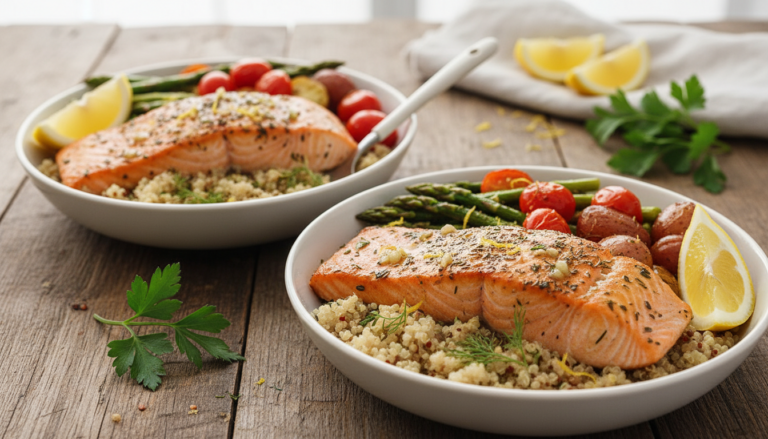
Lemon Herb Salmon Bowls
This lemon herb salmon bowls recipe delivers omega-3-rich fish with vibrant vegetables and fluffy quinoa in a format that holds up beautifully for days, proving healthy meal prep can be genuinely gorgeous.
4
servings15
minutes20
minutes450
kcal35
minutesIngredients
1 lb salmon fillets
2 tbsp olive oil
1 tbsp lemon juice
1 tsp lemon zest
1 tbsp fresh dill, chopped
2 cloves garlic, minced
1 tsp salt
0.5 tsp black pepper
2 cups cooked quinoa
1 cup cucumber, sliced
1 cup cherry tomatoes, halved
1 cup spinach leaves
Directions
- Preheat oven to 400°F (200°C).
- Place salmon fillets on a baking sheet lined with parchment paper.
- In a bowl, mix olive oil, lemon juice, lemon zest, dill, garlic, salt, and pepper.
- Brush the lemon herb mixture over the salmon fillets.
- Bake salmon for 15-20 minutes or until cooked through.
- Serve the salmon over a bed of cooked quinoa.
- Add cucumber, cherry tomatoes, and spinach to the bowls.
- Garnish with additional fresh dill if desired.
Nutrition Facts
- Total number of serves: 4
- Calories: 450kcal
- Cholesterol: 0mg
- Sodium: 620mg
- Potassium: 400mg
- Sugar: 8g
- Protein: 6g
- Calcium: 60mg
- Iron: 2mg
About This Author

Aurora Wright
Pastry Chef & Dessert Editor
Aurora is the sweet side of Daily Dish. A trained pastry chef and dessert stylist, she’s responsible for our mouth-watering cakes, cookies, and confections. She brings precision, artistry, and a touch of whimsy to every recipe she creates — and taste-tests more chocolate than she’ll admit.
Favorite dish: Flourless dark chocolate torte.
Kitchen motto: “Life’s too short to skip dessert.”















