
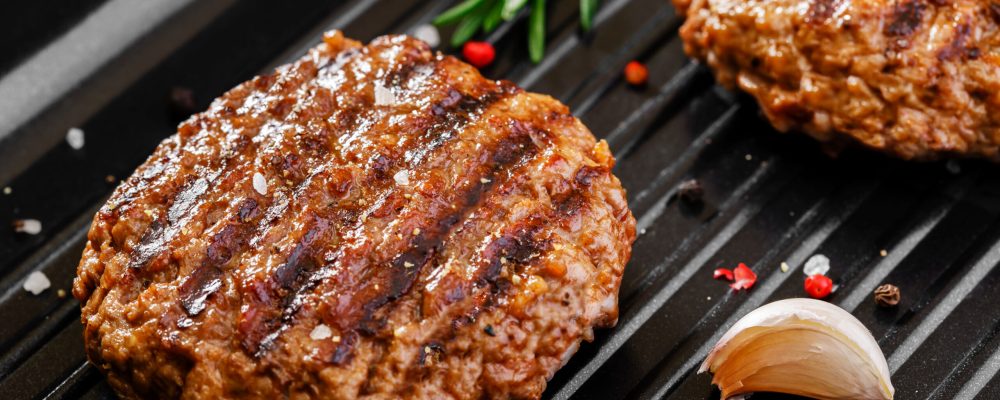

You make burger patties. Season them. Put them on the grill.
Halfway through cooking, they start crumbling. Pieces break off when you try to flip them. By the time they’re done, you’re eating something closer to loose ground beef than an intact burger.
Meanwhile, restaurant burgers hold together perfectly. They flip cleanly. They stay in one piece from grill to bun.
You assume it’s the meat quality or that you need some kind of binder.
Sometimes meat quality matters. But usually, burgers fall apart because of how you’re forming the patties and what you’re doing to them before and during cooking.
Small technique mistakes that seem insignificant are actually destroying the structural integrity of your burgers.
You’re Overworking the Meat
When you mix and form burger meat too much, you’re breaking down the protein structure that holds it together.
The more you handle ground meat, the more the proteins bind and create a dense, tight texture—like a meatball or meatloaf. This seems like it would make burgers hold together better, but it does the opposite.
Overworked meat becomes rubbery and compact. It doesn’t have the loose, tender texture that good burgers need. And paradoxically, this tight texture makes burgers more likely to crack and fall apart during cooking.
Chefs handle burger meat as little as possible. They form patties gently, with minimal compression and mixing.
The meat should just barely hold together when formed. It shouldn’t feel dense or tightly packed.
Home cooks often knead and compress burger meat like they’re making meatballs, thinking they’re making it stronger. They’re actually making it more brittle.
The Meat Is Too Lean
Lean ground beef—90% lean or higher—doesn’t have enough fat to bind properly.
Fat acts as both flavor and glue. As burgers cook, the fat renders and helps hold the meat together. Without sufficient fat, the meat proteins have nothing to help them cohere.
Restaurants typically use 80/20 ground beef—80% lean, 20% fat. Some even go to 70/30 for extra juiciness.
That fat content isn’t just about flavor. It’s structural. The burgers hold together better during cooking because the fat creates a matrix that keeps everything intact.
Home cooks often buy the leanest ground beef, thinking it’s healthier or will produce less grease. Then they wonder why their burgers crumble.
If your burgers consistently fall apart, the meat is probably too lean. Try 80/20 next time. The difference is immediate and obvious.
You’re Making Them Too Thick or Too Thin
Very thick patties don’t cook evenly. The outside overcooks while the inside is raw. This creates structural weak points where the meat breaks apart.
Very thin patties don’t have enough mass to hold together. They’re fragile and prone to crumbling, especially when flipped.
The ideal burger patty is about three-quarters of an inch thick—substantial enough to stay intact but thin enough to cook through evenly.
Chefs are consistent with patty thickness. Every burger is formed to the same specifications so they all cook at the same rate and have the same structural integrity.
Home cooks often make patties by feel, resulting in inconsistent thickness. Some burgers work, some fall apart, and there’s no clear pattern to explain why.
The Patties Don’t Have an Indentation
As burgers cook, the proteins contract and the patties puff up in the middle.
This creates a domed burger that doesn’t sit flat on the bun and is structurally less stable.
Chefs press a shallow indentation into the center of each patty before cooking. As the burger cooks and swells, the indentation fills in, creating a flat, even surface.
This isn’t just aesthetic. Flat burgers hold together better. Domed burgers are more likely to crack along the curve where the meat is under tension.
Most home cooks form smooth, even patties without any indentation. Then they end up with domed burgers that are harder to manage and more prone to breaking.
Make a thumbprint in the center of each patty before it goes on the grill. Deep enough to be noticeable but not so deep it goes all the way through.
You’re Flipping Them Too Many Times
Every time you flip a burger, you risk breaking it.
Before a crust forms, the meat is soft and vulnerable. Moving it around or flipping it repeatedly increases the chance it’ll fall apart.
Chefs flip burgers once. Maybe twice for very thick patties. That’s it.
They put the burger down and leave it alone until the bottom develops a solid crust. Then they flip carefully and leave it alone again.
Home cooks often flip burgers multiple times, either out of nervousness or because they think frequent flipping creates more even cooking.
For burgers, it just creates more opportunities for them to break. Resist the urge. Flip once. Let the crust do its job.
The Grill or Pan Isn’t Hot Enough
A proper crust forms quickly on high heat. That crust is what holds the burger together during cooking.
On moderate heat, the burger cooks slowly. The meat firms up gradually without developing a crust. It’s more likely to stick to the grill and tear when you try to flip it.
Chefs use high heat for burgers. The grill or pan should be hot enough that the burger immediately sizzles when it makes contact.
This creates a seared crust within the first minute or two of cooking. Once that crust forms, the burger is much easier to handle.
Home cooks often use medium heat, worried about burning the outside. But without aggressive heat, burgers never develop the structural crust they need.
Preheat your grill or pan properly. It should be legitimately hot—uncomfortable to hold your hand over—before burgers go on.
You’re Pressing Down on Them
Pressing burgers with a spatula seems helpful. Like you’re helping them cook or making them flatter.
You’re actually squeezing out moisture and fat, which are essential for holding the burger together.
The pressure also disrupts the protein structure while it’s still forming. The burger is more likely to crack or crumble.
Chefs never press burgers. They put them down and leave them completely alone except for the single flip.
Home cooks often can’t resist pressing, thinking they’re doing something productive. They’re not. They’re actively making burgers more likely to fall apart.
Hands off. Let the burger cook undisturbed.
The Meat Is Too Cold
Forming patties with ice-cold meat straight from the refrigerator creates burgers that are too firm.
Cold meat is harder to shape gently. You end up compressing it more than you should just to get it to hold together.
That compression, again, makes burgers more prone to falling apart during cooking.
Chefs let ground beef sit at room temperature for 15 to 20 minutes before forming patties. The meat is easier to shape and requires less handling.
The patties also cook more evenly when they’re not fridge-cold, which reduces the stress on the meat that can cause crumbling.
Home cooks often go straight from fridge to patty formation because they’re worried about food safety. But 20 minutes at room temperature is perfectly safe and produces better burgers.
They’re Not Salted at the Right Time
Salt draws moisture out of meat. That’s fine for some applications. For burgers, timing matters.
Salting ground beef and letting it sit for more than a few minutes creates a situation where moisture pools on the surface. The meat becomes wetter and looser, making it harder to handle.
Chefs salt burgers right before cooking—literally seconds before they go on the grill. This seasons the exterior without drawing out moisture that would compromise structure.
Alternatively, they salt burgers after forming patties and cook them immediately, before moisture has time to be drawn out.
Home cooks often season ground beef, mix it in, then let it sit while they prep other things. By the time they form patties, the meat is wetter and harder to work with.
Salt at the last possible moment. Not minutes before. Seconds before.
You’re Using Binders That Aren’t Necessary
Adding eggs, breadcrumbs, or other binders to burger meat is a meatloaf technique, not a burger technique.
These additions change the texture, making burgers denser and less beefy-tasting. They also don’t actually help as much as people think.
Properly handled ground beef with adequate fat content doesn’t need binders. It holds together on its own.
Chefs make burgers with nothing but ground beef, salt, and pepper. That’s it.
Home cooks often add eggs or breadcrumbs because they’ve been told it helps burgers hold together. It does, slightly—but at the cost of texture and flavor.
If your burgers need binders to stay intact, the real problem is one of the other issues: too lean, overworked, wrong temperature, improper handling.
Fix those and you won’t need binders.
The Grill Isn’t Clean
Old residue on grill grates causes sticking, which leads to tearing when you try to flip burgers.
Even if the burger is well-formed and properly cooked, it can fall apart if you have to scrape it off stuck grates.
Chefs clean and oil their grill grates before every use. The surface is smooth and the burgers release cleanly.
Home cooks often grill on dirty grates, either because cleaning seems like a hassle or because they don’t realize how much it affects results.
A clean, oiled grill means burgers release easily. That alone prevents a lot of the falling-apart issues that seem like the meat’s fault.
What You Can Do This Weekend
Buy 80/20 ground beef. Let it sit at room temperature for 20 minutes.
Form patties gently, handling the meat as little as possible. Make them three-quarters of an inch thick.
Press a thumbprint indentation into the center of each patty.
Season with salt and pepper right before cooking.
Preheat your grill or pan until it’s very hot. Make sure grates are clean and oiled.
Put burgers down and don’t touch them. Don’t press, don’t move, don’t flip until a crust forms—at least 3 to 4 minutes.
Flip once. Let the other side cook undisturbed.
That’s it. That’s how you get burgers that stay intact from start to finish.
The Takeaway
Burgers that fall apart aren’t a meat quality issue or a recipe problem.
They’re a technique issue. Specifically, they’re the result of overworking meat, using lean beef, mishandling during cooking, or cooking at the wrong temperature.
Every one of these problems is fixable.
Restaurants serve intact burgers because they follow basic structural principles: gentle handling, adequate fat content, high heat, minimal flipping.
Home cooks often ignore these principles without realizing they’re the reason burgers fail.
But now you know.
And once you start forming and cooking burgers with these guidelines in mind, falling apart becomes a thing of the past.
Not occasionally. Every single time.
Because burgers aren’t complicated. They’re just ground beef cooked with attention to what keeps them together.
Do that, and they’ll cooperate.














