
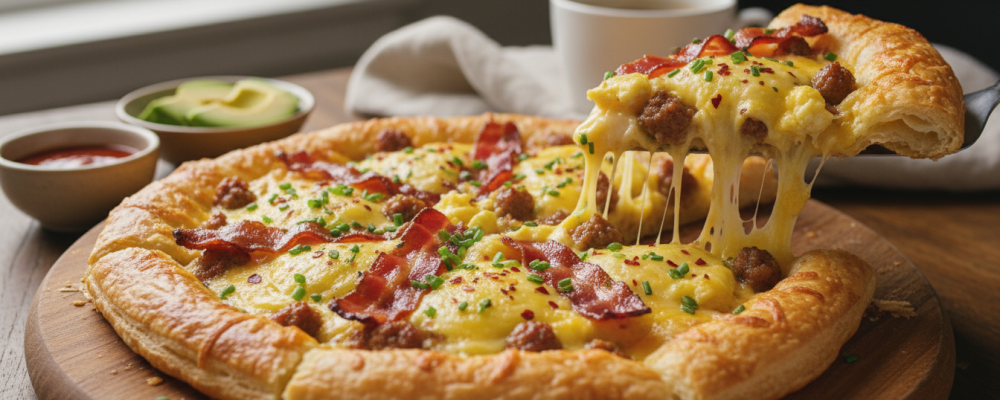

Breakfast pizza represents one of those brilliant culinary concepts where form and function align perfectly. By using puff pastry as your base, you’re leveraging a product that delivers professional-level flakiness and butter flavor without requiring any technical pastry skills. The result is a breakfast that looks sophisticated and tastes complex while being remarkably straightforward to execute—exactly the kind of efficiency I appreciate in recipe development.
What makes this particular version successful is the careful layering and timing. The cheese creates a moisture barrier that prevents the pastry from becoming soggy, while also providing structural support for the eggs. The bacon adds essential savory depth and textural contrast. The eggs bake at precisely the right rate to set their whites while keeping yolks slightly soft, assuming you follow the temperature and timing guidelines. Each component serves a specific purpose in the final construction.
This recipe demonstrates why understanding technique matters more than having elaborate ingredients. You’re working with supermarket staples—frozen puff pastry, eggs, bacon, cheese—but the method of assembly and the controlled baking environment transform them into something that exceeds the sum of its parts. It’s breakfast engineering at its most accessible and delicious.
─────────
The Inspiration Behind This Recipe
This recipe emerged from observing how restaurant kitchens handle breakfast service for large groups. Traditional egg preparations require constant attention and precise timing—difficult to scale without sacrificing quality. I wanted to develop something that could feed multiple people simultaneously, maintain visual appeal, and deliver consistently good results without requiring a cook to stand at the stove managing individual portions.
Puff pastry solved multiple problems at once. It provides a ready-made base that requires no mixing or rolling, bakes predictably, and creates an impressive presentation. By treating it like a pizza crust rather than a traditional pastry, you open up endless topping possibilities while maintaining a familiar, approachable format. The pizza concept also makes portioning simple—just cut into squares or rectangles and serve.
The specific combination of mozzarella, eggs, and bacon came from analyzing what flavors and textures work together at breakfast. You need richness (eggs, cheese), saltiness (bacon), and something with textural interest (the crispy pastry edges). The chives provide a fresh, mild onion note that brightens everything without overwhelming the other elements. It’s a formula that balances richness with freshness while remaining firmly in breakfast territory.
─────────
A Brief History of Breakfast Pizza
Pizza for breakfast isn’t a traditional concept in Italian cuisine, where breakfast typically consists of coffee and pastries. The American breakfast pizza emerged in the late 20th century as diners and casual restaurants began experimenting with non-traditional pizza toppings and serving times. By the 1990s, several regional pizza chains had introduced breakfast-specific menu items, helping normalize the concept of pizza as an acceptable morning meal.
The innovation represented a distinctly American approach to food: taking an established format (pizza) and adapting it to different contexts and preferences. Breakfast pizza eliminated the cultural boundaries that traditionally separated morning foods from other meals, creating something that felt both familiar and novel. It also solved practical problems for commercial kitchens, allowing them to use existing equipment and techniques for a new daypart.
Using puff pastry instead of traditional pizza dough is an even more recent innovation, emerging from home cooking rather than restaurant kitchens. The substitution makes breakfast pizza accessible to home cooks who might not keep pizza dough on hand but have frozen puff pastry available. This evolution reflects how recipes adapt to home cooking realities—convenience and availability often drive innovation as much as culinary tradition.
─────────
Why This Cooking Method Works
The 400°F oven temperature is crucial for achieving properly puffed pastry with fully cooked eggs. Lower temperatures wouldn’t provide enough heat to create the steam that makes puff pastry rise and crisp, resulting in a dense, greasy base. Higher temperatures would brown the pastry too quickly before the eggs set, leaving you with burnt edges and raw centers. This specific temperature creates the right balance of structural development and protein coagulation.
Rolling the edges of the pastry sheet before adding toppings serves two functions: it creates a raised border that contains the eggs and prevents overflow, and it gives that portion of the dough extra thickness so it puffs higher and creates a defined crust. This isn’t just aesthetic—the crust provides a handle for picking up slices and creates textural variety that makes each bite more interesting.
Pre-cooking the bacon is essential rather than optional. Raw bacon releases significant moisture and fat during cooking, which would make the pastry soggy and prevent proper crisping. By cooking and draining the bacon first, you’re adding concentrated flavor and texture without introducing excess liquid. The bacon also continues to crisp slightly during the final bake, ensuring it stays crunchy rather than turning rubbery. This pre-cooking step is what separates successful breakfast pizzas from disappointing, soggy ones.
─────────
Flavor Profile: What to Expect
This breakfast pizza delivers a sophisticated balance of rich and fresh flavors:
- Buttery pastry – Flaky, crispy layers with that distinctive puff pastry richness
- Melted mozzarella – Mild, creamy, and stringy with subtle saltiness
- Runny egg yolk – Rich, velvety, and slightly sulfurous in the best way
- Crispy bacon – Smoky, salty, with concentrated pork flavor and crunchy texture
- Black pepper heat – Subtle spice that lifts the other flavors without dominating
- Fresh chive brightness – Mild onion notes and herbaceous freshness that cuts through the richness
The overall experience is luxuriously rich but balanced by the fresh chives and the textural contrast between crispy pastry edges and tender egg centers. When you break into an egg yolk, it flows across the cheese and pastry, creating a natural sauce that ties everything together. It’s indulgent without being heavy, familiar flavors presented in an elevated format that makes breakfast feel special.
─────────
Tips for Making the Best Puff Pastry Breakfast Pizza
Thaw frozen puff pastry in the refrigerator overnight for the most even texture and easiest handling.
- Work quickly with cold pastry – Keep it chilled until you’re ready to assemble to maintain maximum flakiness
- Create a proper border – Roll or fold edges at least ½ inch high to contain eggs and cheese
- Don’t overload with cheese – Too much creates a rubbery texture and can prevent the pastry from crisping
- Crack eggs carefully – Break them into a small bowl first, then gently slide onto the pizza for intact yolks
- Space eggs evenly – This ensures everyone gets a full egg in their slice
- Watch the timing – Check at 15 minutes and continue baking only until whites are fully set
- Let it rest – A few minutes out of the oven allows the structure to set and makes slicing cleaner
- Cut with a sharp knife or pizza cutter – Sawing motion prevents dragging toppings
For perfect runny yolks, remove the pizza when the whites are just set but still slightly glossy. Carryover cooking will finish them while you rest and slice. If you prefer fully set yolks, add 3-5 minutes to the baking time.
─────────
Serving Suggestions and Side Pairings
This pizza is substantial enough to serve as the main course for brunch, particularly when paired with lighter sides that provide contrast. A simple arugula salad with lemon vinaigrette cuts through the richness and adds peppery freshness. Fresh fruit—especially citrus segments or berries—provides brightness and palate-cleansing acidity. For a more complete spread, consider roasted tomatoes or sautéed mushrooms that add umami depth without competing with the pizza’s starring flavors.
Presentation-wise, this pizza is stunning served whole on a large cutting board, allowing guests to admire the golden pastry and perfectly cooked eggs before you slice it. Cut into squares or rectangles depending on your serving needs—four large pieces for a hearty breakfast, or smaller portions if it’s part of a larger spread. A sprinkle of flaky sea salt just before serving adds a professional touch and enhances all the flavors.
This pizza excels at brunches, holiday breakfasts, or any time you want to serve something impressive without spending hours in the kitchen. It’s equally appropriate for a Mother’s Day celebration or a casual weekend morning when you want to make breakfast feel special. The visual appeal makes it particularly good for photographing—it’s the kind of dish that looks as good as it tastes.
─────────
Storage, Reheating, and Make-Ahead Tips
- Prep components ahead: Cook and crumble bacon up to 2 days ahead; store refrigerated
- Shape pastry early: Roll out pastry and create border up to 2 hours ahead; keep refrigerated
- Assemble partially: Add cheese and bacon to pastry, refrigerate for up to 1 hour, then crack eggs just before baking
- Store leftovers: Refrigerate in an airtight container for up to 2 days
- Reheat in oven: 350°F for 8-10 minutes yields better results than microwaving
- Avoid freezing: The eggs and pastry don’t freeze well once assembled and baked
- Refresh crispness: Reheat leftovers on a wire rack to allow air circulation and restore some crunch
This pizza is genuinely best eaten fresh from the oven when the pastry is at peak flakiness and the eggs are still warm and slightly runny. While it reheats acceptably, the textural magic happens in that first hour after baking. If you’re serving guests, time the baking so it emerges about 10 minutes before you plan to eat.
─────────
Why This Recipe Deserves a Spot in Your Rotation
This recipe earns its place because it delivers maximum impact with minimal skill requirements. The combination of store-bought puff pastry and simple assembly means anyone can produce a breakfast that looks professionally made. It’s one of those rare recipes where the visual presentation exceeds the actual difficulty level—always a valuable quality when you’re trying to impress guests or simply want to feel accomplished before your first cup of coffee.
Beyond the convenience factor, this pizza simply works. The flavors are familiar enough to be comforting but presented in a format that feels fresh and interesting. It scales easily for different group sizes, requires minimal cleanup, and can be customized endlessly with different cheeses, meats, or vegetable additions. It’s the kind of versatile, reliable recipe that becomes a go-to solution for weekend mornings and special occasions alike.
─────────
Recommended Drink Pairing
The richness of this pizza calls for beverages with enough acidity or effervescence to cut through the butter and egg yolk. A classic mimosa provides citrus brightness and celebratory bubbles that refresh your palate between bites. The orange juice’s natural acidity balances the fatty elements while the champagne adds elegance appropriate to the dish’s sophisticated presentation.
For coffee drinkers, a medium roast with bright acidity works better than dark, heavy varieties. The natural acids in coffee complement the eggs and help cleanse your palate of the butter and cheese. A cappuccino or flat white adds creamy texture that harmonizes with the egg yolk while the milk’s subtle sweetness rounds out the savory flavors. For non-alcoholic, non-coffee options, fresh grapefruit juice or a tart cranberry-orange blend provides the acidity needed to balance the richness. Sparkling water with lemon offers simple, palate-cleansing refreshment without adding competing flavors. If you’re serving this at a more casual brunch, Bloody Marys bring savory complexity and spice that complement the bacon and eggs while adding their own bold personality to the meal.
Puff Pastry Breakfast Pizza
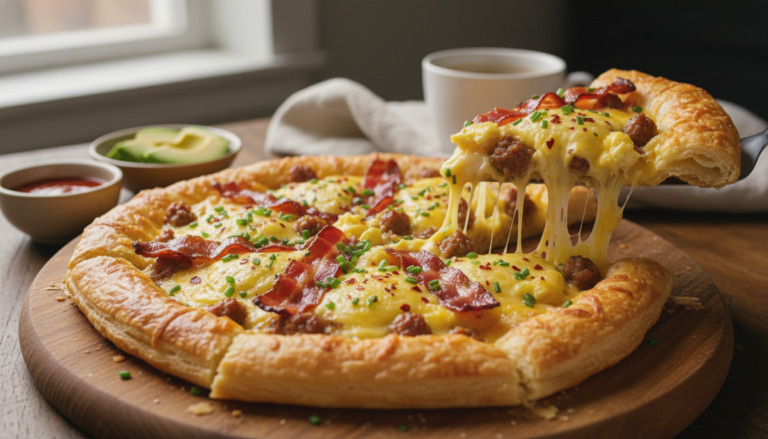
This elegant breakfast pizza uses flaky puff pastry as the base for a combination of melted mozzarella, perfectly baked eggs, crispy bacon, and fresh chives—creating a show-stopping brunch centerpiece that’s deceptively simple to make.
4
servings10
minutes20
minutes450
kcal30
minutesIngredients
1 sheet puff pastry
1 1/2 cups shredded mozzarella cheese
4 eggs
6 slices bacon
1 teaspoon black pepper
1 tablespoon chopped chives
Directions
- Preheat the oven to 400°F (200°C). Line a baking sheet with parchment paper and lay out the puff pastry sheet, gently rolling the edges to form a border.
- Sprinkle shredded mozzarella cheese evenly over the puff pastry, leaving the border uncovered to create a crust as it bakes in the oven.
- In a skillet, cook bacon slices over medium heat until crispy. Drain on paper towels and crumble into small pieces once cool enough to handle.
- Carefully crack each egg in the center of the mozzarella-filled pastry, spacing them out for even coverage across the pizza.
- Distribute the crumbled bacon over the top of the eggs and cheese, adding a sprinkle of black pepper for additional flavor.
- Bake in the preheated oven for 15-20 minutes, or until the egg whites are set and the pastry edges are golden brown and puffed.
- Once done, remove from the oven and let the breakfast pizza rest for a few minutes before cutting into four even pieces.
- Garnish with freshly chopped chives just before serving to enhance flavor and presentation, serving warm to enjoy the flaky pastry.
Nutrition Facts
- Total number of serves: 4
- Calories: 450kcal
- Cholesterol: 0mg
- Sodium: 620mg
- Potassium: 400mg
- Sugar: 8g
- Protein: 6g
- Calcium: 60mg
- Iron: 2mg
About This Author

Benjamin Brown
Recipe Developer
Benjamin is our flavor engineer. A classically trained chef turned recipe developer, he’s obsessed with balancing taste, texture, and creativity. He ensures that every recipe we publish is not only delicious but also reliable, approachable, and repeatable — even for beginners.
Favorite dish: Slow-braised short ribs with red wine reduction.
Kitchen motto: “Cooking is part science, part soul.”















