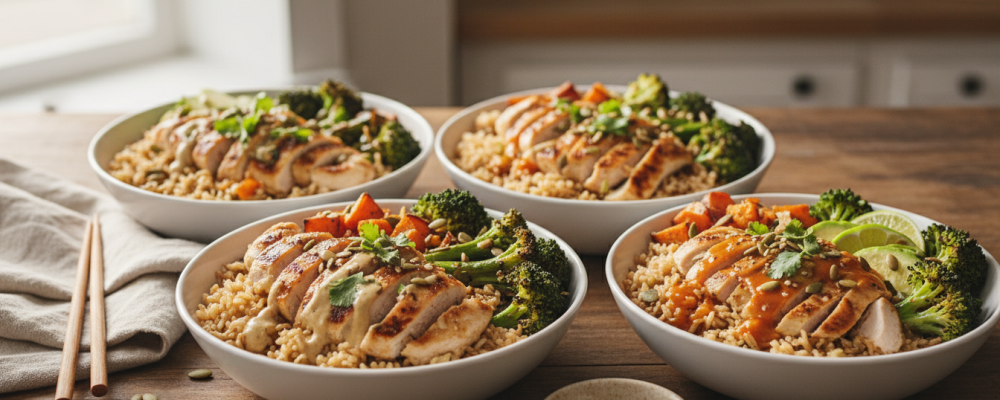

Meal prep success comes down to understanding balance—not just nutritional balance, but the balance between components that hold up well and those that stay fresh, between flavors that develop over time and textures that remain distinct. These Chicken Grain Bowls exemplify that principle perfectly. Each element serves a specific purpose in both immediate satisfaction and multi-day storage, creating a system rather than just a recipe.
I’ve spent years analyzing what makes certain meal prep recipes work while others fall flat by Wednesday. The answer often lies in strategic assembly: choosing ingredients that maintain their integrity, cooking proteins to retain moisture, and understanding how flavors interact over 72-96 hours of refrigeration. This grain bowl recipe incorporates all those lessons. The quinoa stays fluffy without becoming mushy, the chicken remains tender thanks to proper resting, and the vegetables maintain their textural contrast because they’re added raw rather than cooked into submission.
What makes this particularly effective is the modular construction. You’re not committing to one static meal times four—you’re building a flexible platform. The quinoa and chicken form your foundation, constants that anchor each bowl. But the toppings can shift based on what you have available or what sounds appealing on any given day. Monday’s feta can become Tuesday’s goat cheese. Wednesday might call for cucumber instead of tomatoes. The structure remains; the details flex.
This approach transforms meal prep from monotonous repetition into strategic planning. You’re not eating the same lunch four times—you’re efficiently preparing components that combine into varied, satisfying meals. That distinction matters, both psychologically and practically, when you’re trying to maintain healthy eating habits week after week.
─────────
The Inspiration Behind This Recipe
This recipe emerged from a fundamental meal prep challenge: creating lunches that satisfy immediately while remaining appealing days later. Too often, batch-cooked meals peak on day one and decline steadily thereafter. I wanted to engineer a solution that inverted that trajectory—or at least maintained a consistent plateau of quality and enjoyment.
The grain bowl format provides the answer through compartmentalization. By keeping certain elements separate until assembly, you preserve freshness where it matters most. The greens don’t wilt into the quinoa. The avocado doesn’t oxidize prematurely. The chicken stays moist rather than drying out in contact with absorbent grains. Each component occupies its own space, maintaining its distinct characteristics until you’re ready to combine them.
I chose these specific ingredients through both nutritional calculation and practical testing. Quinoa offers complete protein and reheats exceptionally well without becoming gummy. Chicken breast, when cooked properly and allowed to rest, retains moisture for days. The vegetables provide both nutrition and textural variety—crucial for preventing palate fatigue. The lemon juice serves dual purposes: flavoring the chicken while providing acidity that brightens the entire bowl. And that feta? It’s the salt and tang component that ties everything together, preventing the bowl from tasting flat or one-dimensional.
─────────
A Brief History of Grain Bowls and Bowl-Based Meals
The grain bowl concept has ancient roots spanning multiple cultures—from Japanese donburi to Korean bibimbap to Middle Eastern rice pilaf served in bowl form. These traditional preparations understood a fundamental truth: combining grains, proteins, and vegetables in a single vessel creates a complete, satisfying meal that’s greater than the sum of its parts.
The modern grain bowl phenomenon gained momentum in the 2010s as health-conscious consumers sought alternatives to sandwich-based lunches and traditional plate compositions. Fast-casual restaurants like Sweetgreen and Dig Inn popularized the build-your-own bowl format, demonstrating that nutritious food could be both customizable and convenient. The bowl format solved several problems simultaneously: portion control through visual boundaries, balanced nutrition through structured components, and Instagram appeal through layered, colorful presentation.
What distinguishes contemporary grain bowls from their traditional ancestors is the emphasis on raw and lightly cooked components rather than heavily sauced, long-cooked preparations. This shift reflects both modern taste preferences for fresher, lighter flavors and practical considerations for meal prep—ingredients that don’t require extensive cooking maintain better texture over multiple days of storage. The grain bowl has evolved from cultural tradition into strategic meal prep architecture.
─────────
Why This Cooking Method Works for Meal Prep
The success of this recipe hinges on understanding protein science and grain chemistry. When you cook chicken breast to an internal temperature of 165°F and then allow it to rest for 5-10 minutes before slicing, you’re permitting the proteins to relax and the juices to redistribute throughout the meat. This resting period is critical—slice too soon, and those juices run out onto your cutting board instead of staying within the chicken, resulting in dry, disappointing protein by day three of meal prep. The lemon juice applied after cooking adds both flavor and acidity that helps preserve moisture and prevent oxidation.
Quinoa’s meal prep superiority comes from its unique structure. Unlike rice, which can become gummy or dried out with refrigeration and reheating, quinoa’s grain structure remains relatively distinct. Each tiny seed has a natural protective coating that helps maintain textural integrity even after multiple days of storage. Cooking quinoa with the proper 2:1 water ratio ensures full hydration without excess moisture that would make your containers soggy. The key is achieving that perfect point where all water is absorbed—this means your quinoa won’t continue releasing liquid in the refrigerator, which would compromise the other components.
The strategic use of raw vegetables rather than roasted or sautéed ones is intentional. Cherry tomatoes, mixed greens, and avocado maintain their structural integrity and vibrant flavors when kept raw. Cooking them would initiate enzymatic breakdown that accelerates during storage. The raw approach also means you’re preserving heat-sensitive nutrients—vitamin C in the tomatoes, folate in the greens, healthy fats in the avocado. From a textural standpoint, the contrast between warm quinoa and chicken against cool, crisp vegetables creates sensory interest that prevents meal fatigue. The feta cheese, being a preserved dairy product with naturally occurring salt and acidity, is inherently stable and actually improves slightly as it mingles with the other components, distributing its tangy, salty flavor throughout each bite.
─────────
Flavor Profile: What to Expect
This grain bowl delivers a sophisticated, Mediterranean-leaning flavor profile that remains interesting across multiple meals:
- Bright and citrusy from fresh lemon juice that cuts through the richness of avocado and feta, keeping the bowl feeling light
- Savory and herbaceous from well-seasoned chicken that provides umami depth without heaviness
- Nutty and earthy from quinoa’s distinctive flavor, which becomes more pronounced as it absorbs surrounding flavors
- Fresh and vegetal from crisp mixed greens and juicy cherry tomatoes that add bursts of sweetness and acidity
- Creamy and rich from ripe avocado that provides textural contrast and healthy fats
- Tangy and salty from crumbled feta cheese that acts as a seasoning element throughout the bowl
The overall composition creates what I call a “high-low” flavor pattern—bright, acidic notes (lemon, tomatoes, feta) alternating with rich, mellow ones (chicken, quinoa, avocado). This oscillation prevents palate fatigue and makes each bite feel dynamic rather than monotonous. Over the course of 3-4 days, the feta softens slightly and its brine seasons the quinoa, the tomatoes release some of their juice to create pockets of concentrated flavor, and the lemon mellows from sharp to rounded. These are positive developments that add complexity rather than degradation.
─────────
Tips for Making the Best Chicken Grain Bowls
Precision in technique elevates this straightforward recipe from adequate to excellent:
- Rinse quinoa thoroughly before cooking: This removes the natural saponin coating that can impart a bitter, soapy taste. Use a fine-mesh strainer and rinse under cold water for 30 seconds until the water runs clear.
- Cook chicken to exactly 165°F internal temperature: Use an instant-read thermometer inserted into the thickest part. Overcooking even by 5-10 degrees significantly impacts moisture retention over multiple days.
- Rest the chicken before slicing: This 5-10 minute rest is non-negotiable for meal prep. Cover loosely with foil and let carryover cooking finish the job while juices redistribute.
- Slice chicken against the grain: Identify the direction of muscle fibers and cut perpendicular to them. This shortens the fibers, making each bite more tender, especially important for meal-prepped protein.
- Store avocado strategically: Either add fresh each day or store with lemon juice and plastic wrap pressed directly against the cut surface to minimize oxidation. For maximum freshness, consider adding avocado only to the first 2-3 bowls.
- Keep wet and dry components separate: Store greens separately if possible, or place them on top where they’re less likely to wilt from condensation. Place heavier, wetter items (tomatoes) away from absorbent items (quinoa).
- Season quinoa while warm: Add a pinch of salt and a drizzle of olive oil to freshly cooked quinoa. This ensures even seasoning and prevents clumping as it cools.
- Use room-temperature chicken for assembly: If meal prepping immediately after cooking, let the chicken cool to room temperature first. Hot chicken creates condensation in sealed containers, which leads to sogginess and reduced shelf life.
The order of assembly matters for optimal storage: quinoa on the bottom as your base, chicken arranged on one side, then compartmentalize your toppings to keep distinct flavors and textures separated until you’re ready to eat.
─────────
Portioning and Container Suggestions
This recipe yields four generous lunch-sized portions when following the ingredient quantities as written. For meal prep efficiency, I recommend 3-cup (24-ounce) glass or BPA-free plastic containers with divided sections if available. The compartmentalization keeps the quinoa from absorbing moisture from tomatoes and prevents the greens from wilting prematurely. Prep Naturals and Bentgo make excellent divided containers specifically designed for this type of meal.
If using single-compartment containers, employ strategic layering: quinoa forms the bottom layer, chicken sits on top of the grains, then arrange your vegetables in distinct zones rather than mixing everything together. Place the feta in a small separate container or use a silicone cupcake liner within your main container to keep it from making everything else salty. The avocado should definitely live separately until you’re ready to eat, either in a small container with lemon juice or added fresh each morning.
For portion control and caloric consistency, measure your quinoa (approximately ¾ to 1 cup cooked per bowl) and chicken (4-5 ounces per serving) rather than eyeballing. This ensures each meal provides similar macronutrient profiles and helps with dietary tracking if that’s part of your routine. Divide cherry tomatoes evenly—about 6-8 per bowl—and allocate ¼ of an avocado per serving. The greens can be more flexible based on personal preference, but 1-2 cups per bowl provides good volume without overwhelming the other components.
─────────
Storage, Reheating, and Shelf Life Tips
- Refrigerator storage: Properly stored in airtight containers, these grain bowls maintain optimal quality for 4 days. The chicken remains safe for consumption through day 5, but texture quality peaks earlier.
- Temperature matters: Store bowls in the main refrigerator compartment (not the door, where temperature fluctuates) at 40°F or below. This inhibits bacterial growth and preserves ingredient integrity.
- Reheating options: These bowls are excellent cold, room temperature, or warm. For warm bowls, microwave the quinoa and chicken portions for 1-2 minutes, leaving the greens and avocado cold for temperature contrast. Alternatively, reheat quinoa and chicken separately, then assemble with cold components.
- Partial reheating technique: Remove greens and avocado before microwaving, reheat the base components, then add back the fresh elements. This preserves textural variety and prevents wilted greens.
- Freezing protocol: The quinoa and chicken freeze adequately for up to 2 months if you want to batch prep in larger quantities. Freeze in portions without vegetables, cheese, or avocado. Thaw overnight in the refrigerator, then add fresh components when assembling.
- Greens preservation: If your greens wilt by day 3-4, store them separately in a container lined with paper towels to absorb excess moisture. Add to bowls just before eating.
- Avocado timing: For best quality, add avocado to only the first 2 bowls when initially prepping, then slice fresh avocado for days 3-4. Alternatively, store pre-sliced avocado submerged in water in the refrigerator—a chef’s trick that prevents oxidation for 2-3 days.
- Quality indicators: Discard if chicken develops an off smell, slimy texture, or if you see any mold growth. Properly prepared and stored, none of these should occur within 4 days.
─────────
Why This Recipe Deserves a Spot in Your Meal Prep Rotation
From a nutritional engineering perspective, these grain bowls deliver exceptional macronutrient balance: complete proteins from both quinoa and chicken, healthy fats from avocado and olive oil, complex carbohydrates for sustained energy, and fiber-rich vegetables for digestive health. This combination supports stable blood sugar levels and provides satiation that prevents mid-afternoon energy crashes—a significant advantage over typical lunch options.
The economic and time-efficiency calculations are equally compelling. Four restaurant-quality grain bowls at approximately $3-4 per serving versus $12-15 for a comparable bowl at a fast-casual restaurant represents meaningful weekly savings—$40-50 that compounds over months and years. The total active preparation time is approximately 40 minutes, which divides into just 10 minutes per meal when amortized across four lunches. That’s less time than standing in line at most lunch spots.
But the strategic value extends beyond immediate cost-benefit analysis. These bowls provide consistency in an area where most people struggle: weekday lunch nutrition. They eliminate decision fatigue, reduce reliance on expensive or nutritionally questionable takeout, and create a reliable foundation that supports broader health goals. In systems thinking terms, this single meal prep recipe solves multiple problems simultaneously—budget management, time optimization, nutritional consistency, and dietary adherence. That multiplicative value is precisely what defines a recipe worth making repeatedly.
─────────
Meal Prep Pairing Suggestions
These grain bowls function excellently as a standalone lunch, but strategic pairing with complementary meal prep items creates a more comprehensive weekly food system. Consider preparing a batch of roasted vegetables—broccoli, Brussels sprouts, or cauliflower—that can be added to bowls for additional fiber and micronutrients, or eaten as standalone sides. The vegetables add minimal prep time since they roast while you’re cooking other components, but significantly increase nutritional density and variety.
For those requiring higher caloric intake or more substantial meals, pair these bowls with meal-prepped hummus and whole grain crackers, or prepare a simple lentil soup that can be portioned and frozen. The soup provides a warming complement on colder days, while the hummus adds plant-based protein and makes the meal feel more complete without requiring cooking day-of. A batch of tahini-lemon dressing (tahini, lemon juice, garlic, water) stored separately allows you to drizzle additional flavor onto bowls throughout the week, creating subtle variation without additional prep work.
From a beverage and snack perspective, these bowls pair logically with fruit-based meal prep items—pre-portioned apple slices with almond butter, berry containers with a handful of nuts, or homemade energy balls for mid-afternoon sustenance. This creates a complete meal prep ecosystem where lunch extends into snacks, maximizing your Sunday preparation time and ensuring you have healthy options available throughout your entire workday, not just at noon.
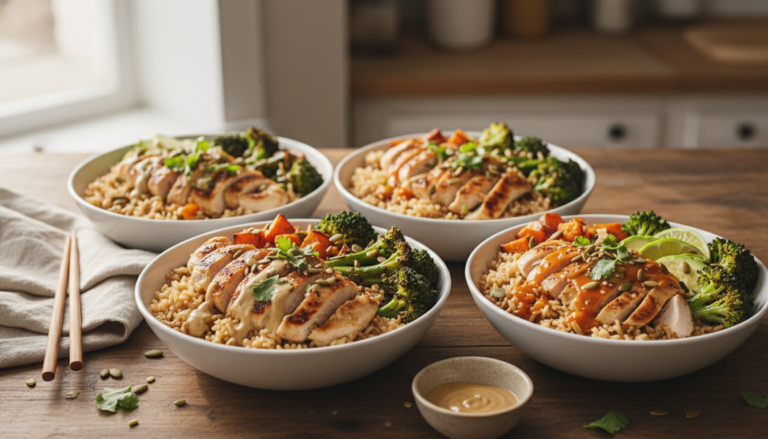
Chicken Grain Bowls
This chicken grain bowl recipe delivers perfectly seasoned chicken breast over fluffy quinoa with crisp vegetables and creamy avocado that stay fresh and delicious all week long.
4
servings20
minutes25
minutes540
kcal45
minutesIngredients
1 cup quinoa
2 tablespoons olive oil
1 pound chicken breast
1 teaspoon salt
0.5 teaspoon black pepper
1 lemon
2 cups mixed greens
1 cup cherry tomatoes
1 avocado avocado
0.25 cup feta cheese
Directions
- Rinse and cook quinoa with two cups of water in a pot over medium heat. Bring it to a boil, reduce heat to low, cover, and simmer for about 15 minutes or until water is absorbed.
- Heat olive oil in a skillet over medium-high heat. Season chicken breast with salt and black pepper. Cook in the skillet for 6-7 minutes per side, or until chicken is cooked through.
- Squeeze lemon juice over the cooked chicken for extra flavor. Allow the chicken to rest for a few minutes before slicing it into strips.
- Assemble the grain bowls by dividing the cooked quinoa among four bowls. Top each bowl with chicken slices, mixed greens, halved cherry tomatoes, sliced avocado, and crumbled feta cheese.
- Serve the bowls warm or cold. Enjoy your flavorful and nutritious chicken grain bowl!
Nutrition Facts
- Total number of serves: 4
- Calories: 540kcal
- Cholesterol: 0mg
- Sodium: 620mg
- Potassium: 400mg
- Sugar: 8g
- Protein: 6g
- Calcium: 60mg
- Iron: 2mg
About This Author

Benjamin Brown
Recipe Developer
Benjamin is our flavor engineer. A classically trained chef turned recipe developer, he’s obsessed with balancing taste, texture, and creativity. He ensures that every recipe we publish is not only delicious but also reliable, approachable, and repeatable — even for beginners.
Favorite dish: Slow-braised short ribs with red wine reduction.
Kitchen motto: “Cooking is part science, part soul.”