Russian-Tea-Cakes

Russian Tea Cakes

Healthy Fact of the Day

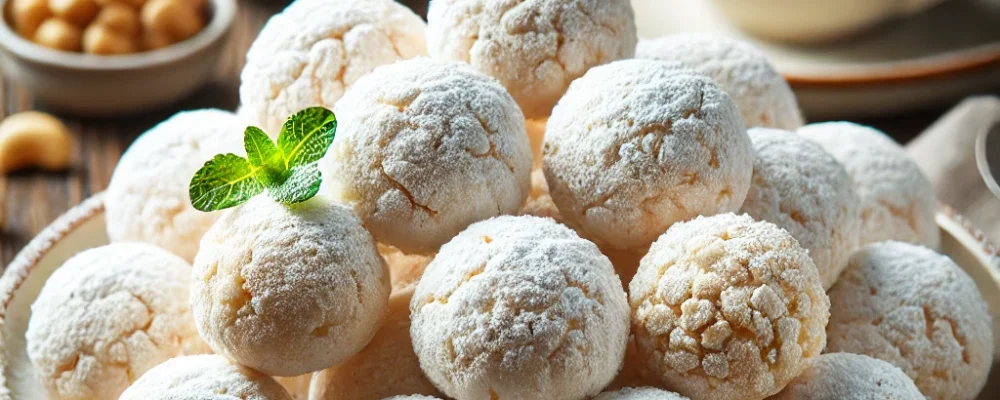
Delight in the melt-in-your-mouth sweetness of our Russian Tea Cakes. These delicate, buttery cookies are filled with finely chopped nuts and rolled in powdered sugar, creating a snowy, festive look that’s perfect for holidays or special occasions. With their tender texture and nutty flavor, each bite offers a simple yet irresistible treat that pairs wonderfully with a cup of tea or coffee. Easy to make and beautifully classic, these cookies are a timeless favorite for any dessert table.

Ingredients


  • 2 cups unsalted butter, softened
  • 2 cups powdered sugar, divided
  • 2 tsp vanilla extract
  • 2 cups finely chopped pecans
  • 4 cups all-purpose flour
  • 1/4 tsp salt
  • 1/2 tsp almond extract (optional)
  • Extra powdered sugar for coating


For rolling:

  • 1 cup powdered sugar
  • 2 tbsp ground cinnamon (optional)
  • Decorative sugar (optional)

Instructions

  1. Preheat oven to 325°F (165°C). Line baking sheets with parchment.

  2. Beat butter and 1/2 cup powdered sugar until light and fluffy.

  3. Mix in vanilla and almond extracts.

  4. In separate bowl, whisk flour and salt.

  5. Gradually add flour mixture to butter mixture.

  6. Fold in chopped pecans until evenly distributed.

  7. Roll dough into 1-inch balls.

  8. Place on prepared baking sheets.

  9. Bake 20-25 minutes until bottoms are lightly golden.

  10. Let cool for 5 minutes.

  11. Roll warm cookies in powdered sugar.

  12. Once completely cool, roll again in powdered sugar.


Bite into these Russian Tea Cakes and watch as the powdery coating gives way to a tender, nutty cookie that practically melts in your mouth! Each delicate snowball delivers the perfect balance of buttery richness and toasted pecans, all wrapped in a sweet, powdered sugar embrace. Whether you call them Mexican Wedding Cookies, Snowballs, or Russian Tea Cakes, these holiday classics promise to disappear as quickly as real snowflakes on a warm tongue. So butter up that mixing bowl, chop those pecans, and get ready to create cookies that’ll make your holiday cookie platter shine!


Recent Recipes

Spinach and Feta Frittata

  • June 13, 2026
  • 11 min read

Your Rice Cooker Does Way More Than

  • June 13, 2026
  • 3 min read

The Stories Food Tells About Who We

  • June 13, 2026
  • 9 min read

Grilled Salmon with Orange Maple Glaze

  • June 13, 2026
  • 9 min read

Chick-fil-A Just Added Mac & Cheese to

  • June 12, 2026
  • 3 min read

The Produce You’re Storing Wrong

  • June 12, 2026
  • 9 min read

Chicken Diablo

  • June 12, 2026
  • 9 min read

Subway Just Launched a Disney Moana Meal

  • June 11, 2026
  • 3 min read

Lavender Lemon Drop Martini

  • June 11, 2026
  • 11 min read

The Meal That Exists Only Once

  • June 11, 2026
  • 9 min read

Tip of the Day

“Always let your meat rest before slicing.”

Whether you're roasting a chicken, grilling steak, or baking pork tenderloin, letting cooked meat rest for 5–10 minutes before slicing allows the juices to redistribute evenly. This simple step keeps your meat juicy and tender, ensuring every bite is flavorful and moist. Bonus: It gives you a moment to plate your sides or garnish for a perfect presentation!

Our Latest Recipes

Breakfast
Benjamin Brown

Spinach and Feta Frittata

Spinach provides iron, vitamin K, and folate while eggs deliver complete protein—making this frittata a nutritional powerhouse that’s as healthy as it is delicious.

Read More »
Blog
Daily Disher

Your Rice Cooker Does Way More Than Rice — Here’s What You’re Missing

The rice cooker’s steam function is one of the most underrated healthy cooking tools in your kitchen. Steaming preserves more nutrients than boiling or roasting — particularly water-soluble vitamins like B and C that break down with heat and water exposure. If your rice cooker came with a steam tray, use it to cook vegetables or fish while your grains cook below. One appliance, one button, a complete and balanced meal with almost no effort.

Read More »
Blog
Daily Disher

The Stories Food Tells About Who We Are

Research on cultural identity and dietary health consistently finds that people with strong connections to their cultural food traditions — who cook and eat the foods of their heritage regularly — tend to have better dietary diversity, stronger social bonds around mealtimes, and greater overall meal satisfaction than those who have lost connection with their food heritage. The cultural dimension of food is not separate from its nutritional dimension — the context, meaning, and community that traditional food provides are themselves health-supportive in ways that the nutritional content alone does not capture.

Read More »

Get your daily dose of delicious!

Skip to content












