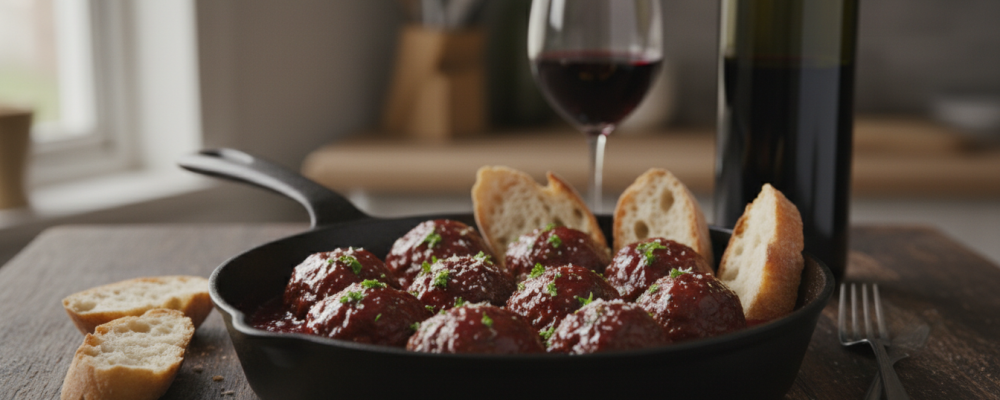

There’s something deeply satisfying about watching a splash of good red wine transform into a glossy, complex sauce that coats tender meatballs like velvet. Red Wine Meatballs aren’t just comfort food—they’re a lesson in how wine can elevate a humble dish into something truly extraordinary. The alcohol cooks off during simmering, leaving behind concentrated fruit notes, subtle tannins, and a richness that beef broth alone could never achieve.
This recipe works because it respects the fundamentals: properly seasoned meat, a milk-soaked breadcrumb panade for tenderness, and a deglazing technique that captures every bit of caramelized flavor from the pan. The wine reduction becomes the star, mingling with tomato paste and beef broth to create a sauce that’s both robust and refined. It’s the kind of dish that makes you slow down, pour yourself a glass of the same wine you cooked with, and savor the moment.
What makes this particularly brilliant for Wine Wednesday is its versatility. Serve it over creamy polenta, toss it with pappardelle, or simply present it in the skillet with crusty bread for dipping. The meatballs absorb the wine sauce as they simmer, becoming increasingly tender and flavorful with each passing minute.
This is cooking that engages all your senses—the sizzle of meatballs browning, the heady aroma of wine reducing, the visual transformation from separate components into a unified, beautiful dish. It’s proof that wine isn’t just an accompaniment to dinner; it’s an essential ingredient that brings structure, depth, and soul to the plate.
─────────
The Inspiration Behind This Recipe
This recipe draws from the Italian tradition of polpette al vino rosso—a rustic preparation that Italian home cooks have perfected over generations. The technique of braising meatballs in wine rather than simple tomato sauce represents a more refined approach, one that highlights the quality of both the meat and the wine. The addition of Parmesan and fresh parsley in the meatball mixture itself adds layers of flavor from within, while the wine reduction creates a sophisticated sauce that feels special enough for company yet remains wonderfully approachable for a weeknight dinner.
─────────
A Brief History of Wine-Braised Meatballs
Wine-braised meat preparations have ancient roots in Mediterranean cooking, where wine was often more readily available than water and served as both a cooking liquid and a preservative. Italian polpette (meatballs) evolved from the need to stretch precious meat with breadcrumbs and cheese, creating tender, flavorful bites that could feed a family. The practice of deglazing pans with wine—a technique French chefs call déglacer—became standard in professional kitchens because it captures the caramelized fond (those flavorful browned bits) and transforms it into sauce. This recipe marries both traditions, using wine as both deglazing agent and braising liquid for maximum flavor extraction.
─────────
Why This Cooking Method Works
The science behind the technique:
- Milk-soaked breadcrumbs (panade): This mixture keeps meatballs tender by preventing meat proteins from binding too tightly during cooking, resulting in a lighter, more succulent texture
- Browning first: Searing meatballs creates a flavorful crust through the Maillard reaction while helping them hold their shape during braising
- Wine reduction: Simmering wine concentrates its flavors and evaporates alcohol, leaving behind fruit notes, acidity, and tannins that complement the beef
- Deglazing: Wine dissolves the caramelized proteins stuck to the pan, incorporating that deep, savory flavor directly into the sauce
- Low, slow simmer: Gentle braising allows meatballs to cook through while absorbing sauce flavors without becoming tough or dry
─────────
Flavor Profile: What to Expect
Bold • Rich • Savory • Wine-Forward • Umami
These meatballs deliver deep, layered flavors with the wine taking center stage in the sauce. Expect savory beef enhanced by nutty Parmesan and bright parsley, all enveloped in a glossy reduction that balances the fruit-forward notes of red wine with the umami depth of beef broth and tomato paste. The sauce clings to each meatball with a velvety texture, delivering concentrated flavor in every bite. There’s a subtle sweetness from the wine’s fruit notes and added sugar that rounds out the acidity, creating a beautifully balanced, restaurant-quality sauce.
─────────
Tips for Making the Best Red Wine Meatballs
Selecting your wine:
- Use a wine you’d actually drink—the flavor concentrates during cooking
- Medium-bodied reds work best: Merlot, Sangiovese, Côtes du Rhône, or Montepulciano
- Avoid overly tannic wines (like young Cabernet) which can become bitter when reduced
Meatball perfection:
- Don’t overmix the meat—it can make meatballs dense and tough
- Wet your hands slightly when rolling to prevent sticking
- Keep meatball size consistent (about 1 inch) for even cooking
- Chill formed meatballs for 15 minutes before cooking to help them hold shape
Sauce mastery:
- Scrape up all the browned bits when deglazing—that’s pure flavor
- Let the wine reduce by about one-third before adding other liquids
- Adjust sweetness to balance your wine’s acidity (taste and add sugar gradually)
- Simmer uncovered if you want a thicker sauce; covered for more liquid
Finishing touches:
- Add a pat of butter at the end for extra glossiness and richness
- Fresh parsley stirred in just before serving brightens the entire dish
- Let meatballs rest in the sauce for 5 minutes off heat—they’ll absorb even more flavor
─────────
Wine Pairing Guide
Perfect pairings for Red Wine Meatballs:
Merlot ★ Best Match Smooth, medium-bodied with plum and cherry notes that mirror the wine reduction in the sauce. The soft tannins complement rather than compete with the beef, while the wine’s fruit-forward character enhances the sauce’s complexity.
Sangiovese (Chianti) Classic Italian pairing with bright cherry flavors, moderate acidity, and herbal notes that echo the parsley in the meatballs. The wine’s structure stands up beautifully to the richness of the Parmesan and beef.
Côtes du Rhône A blend typically featuring Grenache and Syrah, offering red fruit flavors with hints of pepper and herbs. The wine’s rustic character and medium body make it a versatile, food-friendly choice that enhances the savory elements.
Montepulciano d’Abruzzo Deep, dark fruit flavors with a velvety texture and soft tannins. This Italian red brings enough body to match the richness of the sauce while maintaining the elegant, Old World character that suits the dish perfectly.
Alternative pairing: For white wine lovers, try a full-bodied, oak-aged Chardonnay—its buttery richness and weight can surprisingly complement the sauce’s depth.
─────────
Serving Suggestions and Side Pairings
Traditional presentations:
- Over creamy polenta: Let the wine sauce pool around soft, cheesy polenta for ultimate comfort
- With pappardelle or tagliatelle: Wide ribbons of pasta catch and hold the glossy sauce beautifully
- In a crusty roll: Create an elevated meatball sub with melted provolone
Ideal side dishes:
- Garlic Rosemary Focaccia Muffins: Perfect vessels for soaking up every drop of wine sauce
- Spinach Mushroom Orzo: Earthy mushrooms and vibrant greens add complexity without competing
- Simple arugula salad: Peppery greens with lemon vinaigrette cut through the richness
- Roasted vegetables: Caramelized carrots, Brussels sprouts, or fennel add sweetness and texture contrast
For a complete Wine Wednesday spread: Serve family-style in the skillet alongside warm bread, a crisp salad, and generous pours of the same wine used in cooking. Add roasted garlic and a dish of good olive oil for bread dipping, and finish with a simple tiramisu or panna cotta.
─────────
Storage, Reheating, and Make-Ahead Tips
Storage:
- Refrigerate meatballs in their sauce in an airtight container for up to 4 days
- Freeze in sauce for up to 3 months in freezer-safe containers
- The flavors actually deepen and improve after a day in the refrigerator
Reheating:
- Stovetop (best method): Reheat gently in a covered pan over low heat, stirring occasionally
- Microwave: Heat in 1-minute intervals, stirring between, until warmed through
- Oven: Cover with foil and reheat at 325°F for 15-20 minutes
- Add a splash of broth or wine if sauce has thickened too much during storage
Make-ahead strategies:
- Form meatballs up to 1 day ahead; cover and refrigerate until ready to cook
- Make the complete dish up to 2 days ahead; the flavors meld beautifully
- Freeze cooked meatballs in sauce; thaw overnight in refrigerator before reheating
- The sauce can be made ahead and meatballs added fresh for a quicker weeknight option
─────────
Why This Recipe Deserves a Spot in Your Wine Wednesday Rotation
Red Wine Meatballs represent everything Wine Wednesday should be: approachable elegance, bold flavors that celebrate wine as an ingredient, and a dish that transforms a midweek dinner into something special. This isn’t just cooking with wine—it’s allowing wine to become the foundation of flavor, creating a sauce so rich and complex it rivals anything you’d find in a traditional Italian trattoria.
The beauty lies in its flexibility. Serve it casually over pasta for family dinner, present it elegantly over polenta for date night, or double the batch for effortless entertaining. The recipe scales beautifully, reheats like a dream, and actually improves with time as the meatballs continue absorbing the wine-enriched sauce.
Most importantly, it demonstrates how wine and food create something greater together than they could apart. The wine brings acidity, tannins, and fruit complexity that beef broth alone could never achieve, while the beef, Parmesan, and tomato paste provide the savory backbone that allows the wine’s characteristics to shine. It’s cooking as conversation between ingredients—exactly what makes pairing wine with food so endlessly fascinating.
Pour yourself a glass of the same wine you cooked with, break bread with someone you love, and savor the proof that Wednesday nights deserve this level of deliciousness..
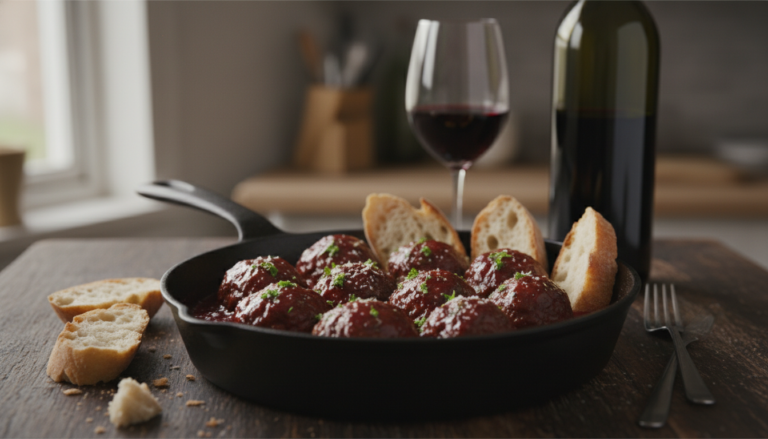
Red Wine Meatballs
Juicy meatballs braised in a velvety red wine reduction with hints of tomato and Parmesan—effortless elegance in every bite.
4
servings20
minutes40
minutes350
kcal1
hourIngredients
0.5 cup breadcrumbs
0.25 cup milk
1 lb ground beef
1 egg
2 cloves garlic, minced
0.5 cup grated Parmesan cheese
0.25 cup chopped parsley
0.5 teaspoon salt
0.25 teaspoon black pepper
2 tablespoons olive oil
1 cup red wine
1 cup beef broth
0.5 cup tomato paste
1 tablespoon sugar
Directions
- In a small bowl, mix breadcrumbs and milk, and let them soak for a few minutes until the breadcrumbs absorb the milk.
- In a large mixing bowl, combine the ground beef, soaked breadcrumbs, egg, garlic, Parmesan cheese, parsley, salt, and pepper. Mix everything together well.
- Shape the mixture into meatballs, about 1 inch in diameter, making sure they are firm enough to hold their shape during cooking.
- Heat olive oil in a large skillet over medium heat. Add the meatballs to the skillet, browning them on all sides. Remove the meatballs and set them aside.
- In the same skillet, pour in the red wine, scraping up any browned bits from the bottom. Simmer for a few minutes to reduce slightly.
- Add the beef broth, tomato paste, and sugar to the red wine and stir well to combine into a smooth sauce.
- Return the meatballs to the skillet, cover them with the sauce, and let them simmer on low heat for about 25 minutes until fully cooked through.
Nutrition Facts
- Total number of serves: 4
- Calories: 350kcal
- Cholesterol: 0mg
- Sodium: 620mg
- Potassium: 400mg
- Sugar: 8g
- Protein: 6g
- Calcium: 60mg
- Iron: 2mg
About This Author

Benjamin Brown
Recipe Developer & Wine Enthusiast
Benjamin is our flavor engineer. A classically trained chef turned recipe developer, he’s obsessed with balancing taste, texture, and creativity. He ensures that every recipe we publish is not only delicious but also reliable, approachable, and repeatable — even for beginners.
Favorite dish: Slow-braised short ribs with red wine reduction.
Kitchen motto: “Cooking is part science, part soul.”