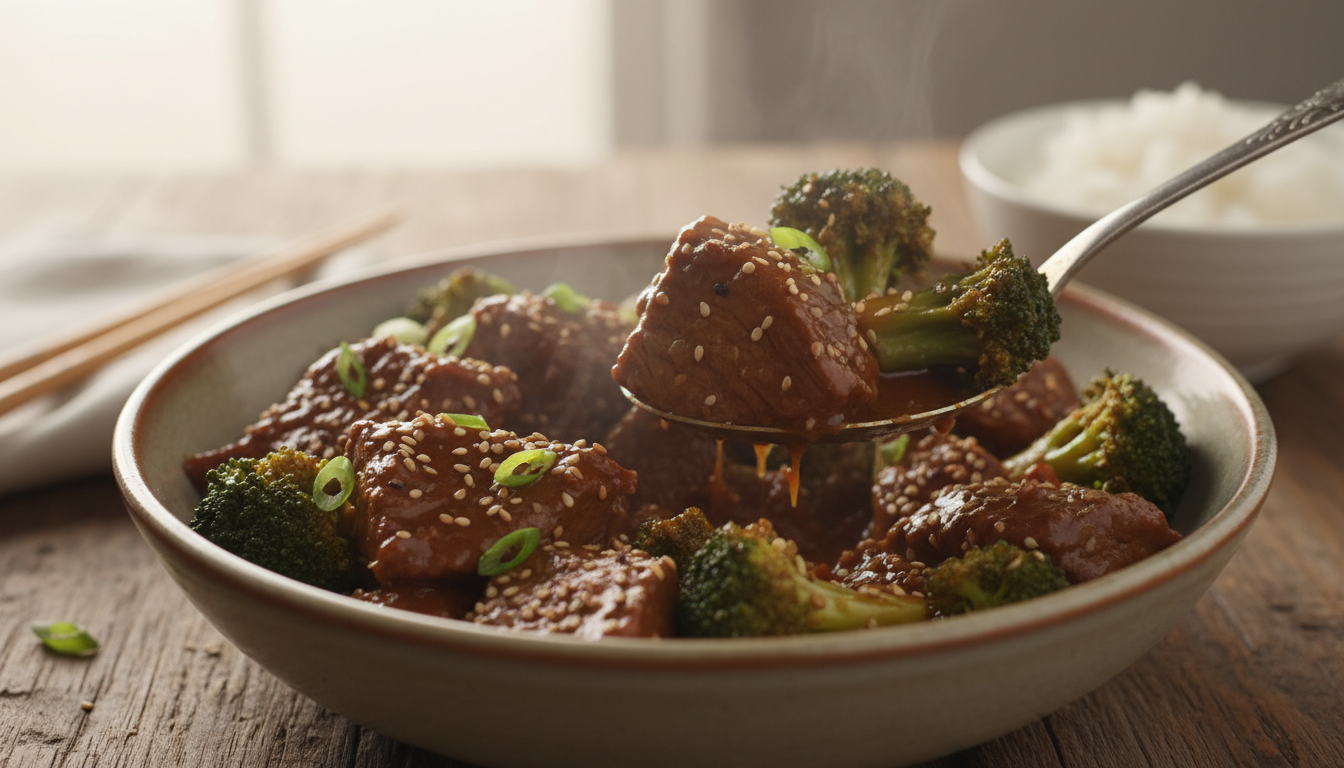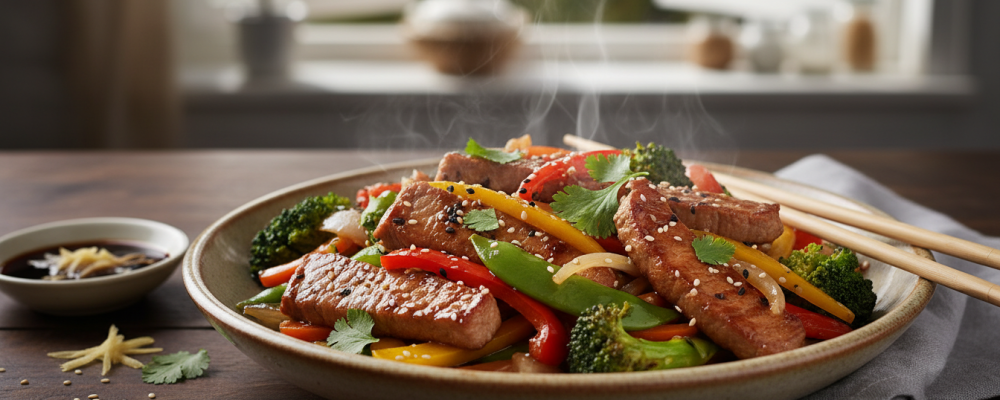

There are certain weeknight recipes that feel like they were designed specifically for busy lives, and this Pork Stir Fry is exactly that kind of dish. It’s fast, flexible, and delivers the kind of satisfying flavors that make you feel like you’ve accomplished something special, even on the most hectic evenings. The combination of tender pork, crisp vegetables, and a glossy savory sauce comes together in less time than it takes to order takeout.
I developed this recipe during a particularly busy period when I needed meals that could adapt to whatever vegetables I had on hand while still tasting restaurant-quality. Stir-frying is one of those techniques that seems intimidating but is actually incredibly forgiving once you understand the basic principles. The key is having everything prepped and ready before you turn on the heat—once you start cooking, everything moves quickly.
What makes this stir fry so reliable is its balance of textures and flavors. The pork stays tender because it’s cooked quickly over high heat, the vegetables retain their crunch, and the sauce provides that perfect blend of salty, sweet, and umami that makes stir-fries so crave-worthy. It’s the kind of recipe that becomes second nature once you’ve made it a few times, and you’ll find yourself reaching for it whenever you need something fast and satisfying.
─────────
The Inspiration Behind This Recipe
This dish emerged from my desire to recreate the flavors of my favorite Chinese restaurant stir-fries at home, but with more control over the ingredients and cooking method. Restaurant stir-fries often rely on extremely high heat and specialized equipment, but I wanted to prove that home cooks could achieve similar results with a regular skillet and straightforward techniques.
The beauty of stir-frying lies in its efficiency. It’s a cooking method that was perfected over centuries in Chinese cuisine, designed to cook food quickly while preserving texture and nutrients. By adapting these principles for home kitchens, this recipe delivers authentic flavors without requiring a professional wok or restaurant-grade burner.
Over time, I’ve tweaked the sauce ratios and vegetable combinations to create a version that’s both reliable and endlessly adaptable to what’s in your refrigerator.
─────────
A Brief History of Stir-Frying
Stir-frying originated in China during the Han Dynasty, around 200 BC, as a fuel-efficient cooking method that could quickly cook food over high heat. The technique became essential in Chinese cooking, where it was valued for preserving the texture, color, and nutritional value of ingredients while developing complex flavors through the Maillard reaction.
The method spread throughout Asia, with each region developing its own variations and flavor profiles. When Chinese immigrants brought stir-frying to America, it became one of the most popular ways to prepare quick, flavorful meals. Today, stir-frying has been adopted worldwide as a go-to technique for healthy, fast cooking.
This Pork Stir Fry honors that tradition while making it accessible for home cooks with standard kitchen equipment.
─────────
Why This Cooking Method Works
Stir-frying relies on high heat and constant movement to cook food quickly while developing flavor through caramelization. The brief cooking time means vegetables stay crisp-tender rather than becoming mushy, and proteins like pork develop a flavorful sear on the outside while remaining juicy inside.
Cooking the pork first and then removing it prevents overcooking—pork tenderloin is naturally lean, so it can become tough if left in the pan too long. The vegetables need a few minutes to soften while maintaining their crunch, and bringing the pork back at the end ensures everything finishes at the perfect temperature.
The cornstarch-based sauce thickens quickly when it hits the hot pan, creating that glossy coating that clings to every piece of pork and vegetable. This technique, called “velveting” in Chinese cooking, is what gives restaurant stir-fries their signature appearance and texture.
─────────
Flavor Profile: What to Expect
This stir fry delivers a well-balanced taste experience with multiple layers:
- Savory depth from soy sauce and oyster sauce
- Subtle sweetness that balances the salty elements
- Umami richness from the oyster sauce
- Fresh aromatics from garlic that permeates the dish
- Tender, juicy pork with a slight caramelized exterior
- Crisp vegetables that provide textural contrast
The result is a dish that feels indulgent while remaining light and satisfying.
─────────
Tips for Making the Best Pork Stir Fry
Small details can elevate your stir fry from good to great:
- Slice pork thinly: Thin slices cook faster and stay more tender—freeze the pork for 15 minutes before slicing for easier cutting.
- Prep everything first: Stir-frying happens fast, so have all ingredients measured, chopped, and ready before you start cooking.
- Don’t overcrowd the pan: Cook in batches if needed to maintain high heat and achieve proper browning.
- Keep ingredients moving: Constant stirring prevents burning and ensures even cooking.
- Use high heat: A hot pan is essential for that signature stir-fry texture and flavor.
If your vegetables vary in cooking time (like broccoli versus bell peppers), add the slower-cooking ones first, then the quicker-cooking ones a minute or two later.
─────────
Serving Suggestions and Side Pairings
This versatile stir fry pairs beautifully with various bases:
- Steamed white or brown rice for a classic combination
- Rice noodles or lo mein for a more substantial meal
- Cauliflower rice for a lower-carb option
- Quinoa for added protein and texture
For a complete meal, serve with egg rolls, dumplings, or a simple cucumber salad dressed with rice vinegar. The stir fry is also excellent on its own as a light, protein-packed dinner.
─────────
Storage, Reheating, and Make-Ahead Tips
This stir fry is practical for meal prep and stores well:
- Refrigerate leftovers in an airtight container for up to 4 days
- Freeze for up to 2 months, though vegetables may lose some crispness
- Reheat in a skillet over medium-high heat for best results, adding a splash of water if needed
- Meal prep by slicing the pork and chopping vegetables up to 2 days ahead
The sauce can be mixed and refrigerated for up to a week, making weeknight cooking even faster. Leftovers actually develop deeper flavors overnight, making them perfect for next-day lunches.
─────────
Why This Recipe Deserves a Spot in Your Rotation
This Pork Stir Fry proves that weeknight cooking doesn’t have to be boring or time-consuming. It’s faster than takeout, healthier than most restaurant versions, and endlessly adaptable based on what vegetables you have available. The technique is straightforward enough for beginners but delivers results that feel sophisticated and intentional.
Once you’ve mastered this basic stir fry, you’ll find yourself experimenting with different proteins, vegetables, and sauce variations, making it a true workhorse recipe in your collection.
─────────
Recommended Drink Pairing
The savory, umami-rich flavors of this stir fry pair wonderfully with light, crisp beverages. A dry Riesling or Gewürztraminer offers aromatic complexity that complements the Asian flavors without overwhelming them. For beer lovers, a Japanese lager or wheat beer provides refreshing contrast.
For non-alcoholic options, jasmine tea (hot or iced) echoes the Asian flavor profile beautifully, while sparkling water with lime cuts through the richness of the sauce. beautifully.
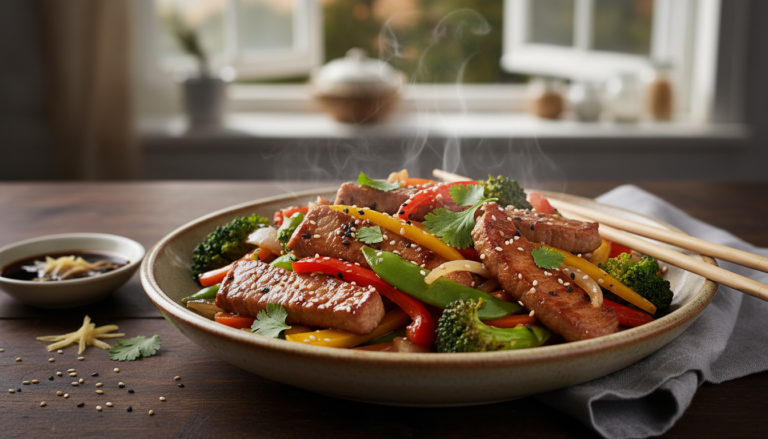
Pork Stir Fry
Pork Stir Fry features tender sliced pork and crisp vegetables tossed in a savory-sweet sauce that comes together faster than delivery.
4
servings20
minutes15
minutes400
kcal35
minutesIngredients
1 tablespoon vegetable oil
0.5 pound pork tenderloin, sliced thinly
2 cups mixed vegetables (bell peppers, broccoli, carrots)
2 cloves garlic, minced
1 tablespoon soy sauce
1 tablespoon oyster sauce
1 teaspoon sugar
2 teaspoons cornstarch
2 tablespoons water
Directions
- Heat the vegetable oil in a large skillet over medium-high heat until shimmering.
- Add the pork slices to the skillet and stir-fry for about 3-4 minutes, or until browned and cooked through.
- Remove the pork from the skillet and set aside on a plate, keeping it warm.
- In the same skillet, add the mixed vegetables and cook for 5 minutes until they are tender yet crisp.
- Add the minced garlic and cook for another 1 minute until fragrant.
- Return the pork to the skillet with the vegetables and combine everything well.
- In a small bowl, whisk together soy sauce, oyster sauce, sugar, cornstarch, and water until smooth.
- Pour the sauce over the pork and vegetables, stirring gently to coat everything evenly.
- Let the mixture simmer for 2 minutes until the sauce thickens, then remove from heat.
- Serve the pork stir fry hot, over a bed of steamed rice or noodles, if desired.
Nutrition Facts
- Total number of serves: 4
- Calories: 400kcal
- Cholesterol: 0mg
- Sodium: 620mg
- Potassium: 400mg
- Sugar: 8g
- Protein: 6g
- Calcium: 60mg
- Iron: 2mg
About This Author

Amelia Grace
Editor-in-Chief & Culinary Director
The heart and guiding voice of Daily Dish, Amelia leads our editorial vision and recipe development. With a background in food journalism and over a decade spent in professional kitchens, she has a knack for blending gourmet technique with real-world accessibility. Her goal? To make every reader feel like a confident cook, one dish at a time.
Favorite dish: Creamy lemon risotto with a sprinkle of fresh thyme.
Kitchen motto: “Good food doesn’t have to be complicated — it just has to be made with heart.”