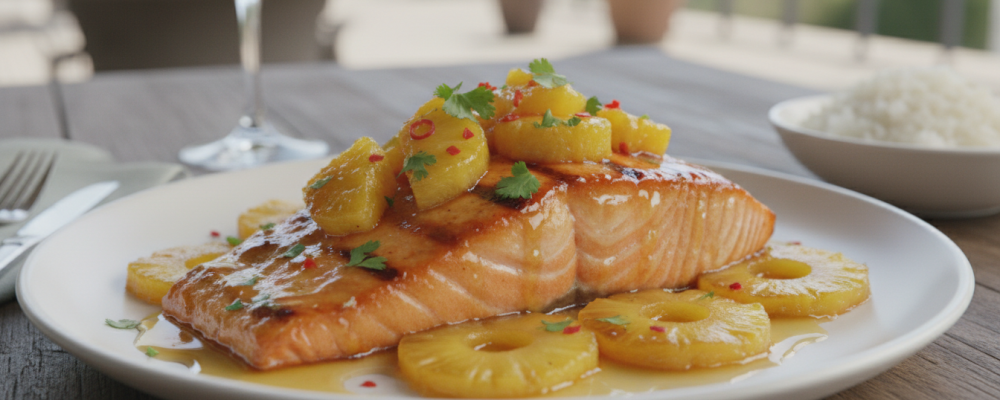

There are certain flavor combinations that feel like they were engineered specifically for each other, and pineapple with salmon is absolutely one of them. This Pineapple Glazed Salmon showcases how tropical sweetness can balance the rich, fatty qualities of salmon while adding complexity through soy sauce, ginger, and garlic. The result is a dish that tastes far more sophisticated than its simple preparation would suggest—perfect for weeknight dinners that need to feel special.
I developed this recipe while exploring how Asian and Hawaiian flavor profiles could elevate salmon beyond the typical lemon-dill treatment. The pineapple juice provides natural sweetness and enzymes that help tenderize the fish slightly, while the soy sauce adds umami depth that complements salmon’s natural richness. Ginger and garlic bring aromatic complexity, and just a touch of red pepper flakes adds warmth without overwhelming the other flavors.
What makes this technique particularly effective is the glazing method. By reducing the sauce separately before brushing it onto the salmon, you concentrate the flavors and create a glossy coating that caramelizes beautifully in the oven. The high heat of 400°F gives you a perfectly cooked interior with a slightly lacquered exterior that has both visual appeal and textural interest.
─────────
The Inspiration Behind This Recipe
This dish emerged from studying the flavor principles of Hawaiian and Pacific Rim cuisine, where pineapple frequently appears alongside fish and seafood. The islands developed cooking traditions that celebrated local ingredients—abundant pineapple, fresh-caught fish, and Asian seasonings brought by immigrant communities.
I wanted to capture that tropical-meets-Asian sensibility in a way that home cooks could execute reliably with supermarket ingredients. The challenge was balancing the sweetness so it enhanced rather than overwhelmed the salmon, and finding the right acidity level to cut through the fish’s natural oils. Multiple test batches helped me dial in the precise ratios that create harmony on the plate.
The technique draws from both teriyaki glazing methods and Western roasting approaches, creating a hybrid that delivers professional results without requiring specialized equipment or hard-to-find ingredients.
─────────
A Brief History of Glazed Fish Preparations
Glazing fish with sweet-savory sauces has deep roots in Asian cuisines, particularly Japanese teriyaki and Chinese sweet-and-sour preparations. These techniques developed as ways to preserve fish while adding flavor, using ingredients like soy sauce, sugar, and vinegar that had natural preservative qualities.
When pineapple became widely available through canning and global trade in the early 20th century, it was quickly incorporated into Asian-inspired glazes, particularly in Hawaii where both Asian culinary traditions and pineapple plantations thrived. The fruit’s natural acidity and sweetness made it ideal for balancing rich fish like salmon.
This Pineapple Glazed Salmon represents that culinary evolution—taking traditional glazing techniques and adapting them with tropical ingredients that have become staples in modern American cooking.
─────────
Why This Cooking Method Works
Baking at 400°F provides intense, dry heat that cooks salmon quickly while allowing surface moisture to evaporate, which helps the glaze caramelize and adhere properly. This temperature is hot enough to develop color and texture on the exterior while keeping the interior moist and just cooked through.
Preparing the glaze separately and thickening it with cornstarch creates a coating that clings to the fish rather than running off. The cornstarch also prevents the glaze from burning as easily as a sugar-only coating would, while adding that signature glossy sheen.
Letting the salmon rest after baking allows the proteins to relax and redistributes the juices throughout the fillet, ensuring each bite is moist rather than having all the moisture pool out when you cut into it.
─────────
Flavor Profile: What to Expect
This salmon delivers a complex, layered taste experience:
- Tropical sweetness from pineapple that’s balanced rather than cloying
- Savory depth from soy sauce that enhances the fish’s natural umami
- Aromatic complexity from fresh ginger and garlic
- Subtle heat from red pepper flakes that builds gently
- Rich, buttery texture from the salmon itself
- Caramelized edges where the glaze meets high heat
The result is a dish that tastes restaurant-quality while remaining approachable and familiar enough for family dinners.
─────────
Tips for Making the Best Pineapple Glazed Salmon
Technical details make the difference between good and exceptional results:
- Choose quality salmon: Wild-caught sockeye or king salmon offer superior flavor, but farmed Atlantic salmon works well too.
- Check for pin bones: Run your fingers over the fillet and remove any remaining bones with tweezers.
- Don’t overcook: Salmon is done at 125-130°F internal temperature—it will continue cooking as it rests.
- Use parchment paper: This prevents sticking and makes cleanup effortless.
- Reserve extra glaze: Save some uncooked glaze for drizzling at serving time for extra flavor and visual appeal.
- Pat salmon dry: Moisture on the surface prevents proper browning and glaze adhesion.
For even more caramelization, you can briefly broil the salmon for 1-2 minutes at the end of cooking, watching carefully to prevent burning.
─────────
Serving Suggestions and Side Pairings
This tropical-inspired salmon pairs beautifully with sides that complement its sweet-savory profile:
- Coconut rice or jasmine rice to soak up the glaze
- Stir-fried vegetables or roasted broccoli
- Fresh pineapple salsa for doubling down on tropical flavors
- Asian cucumber salad for cooling contrast
- Steamed bok choy or snap peas
The dish is elegant enough to serve to guests but quick enough for busy weeknights when you want something that feels special.
─────────
Storage, Reheating, and Make-Ahead Tips
This salmon is best enjoyed fresh but stores reasonably well:
- Refrigerate leftovers in an airtight container for up to 2 days
- Reheat gently in a 300°F oven covered with foil to prevent drying, or enjoy cold over salad
- Make glaze ahead by preparing and refrigerating it up to 3 days in advance
- Prep salmon by portioning and refrigerating up to 24 hours before cooking
The glaze can also be used on chicken, pork, or shrimp, making it a versatile sauce to keep in your repertoire. It stores refrigerated for up to a week.
─────────
Why This Recipe Deserves a Spot in Your Rotation
This Pineapple Glazed Salmon proves that impressive cooking doesn’t require complicated techniques or exotic ingredients. It delivers restaurant-quality results with supermarket staples and straightforward methods, making it accessible to cooks at any skill level. The flavor profile is distinctive enough to feel special but balanced enough to appeal to diverse palates, from adventurous eaters to those who typically stick with milder preparations.
Once you’ve mastered this basic technique, you’ll find yourself adapting it for different proteins and occasions, making it a true workhorse in your cooking repertoire.
─────────
Recommended Drink Pairing
The tropical, slightly sweet flavors of this salmon pair beautifully with crisp white wines that offer complementary fruit notes. A dry Riesling, Gewürztraminer, or Viognier provides aromatic complexity without competing with the glaze. For beer lovers, a wheat beer or pale ale offers refreshing contrast.
For cocktails, try our Pineapple & Coconut Margarita to echo the tropical theme, or a Bourbon Pineapple Smash for something with more depth. Non-alcoholic options like pineapple-ginger sparkling water or coconut water complement the flavors perfectly.
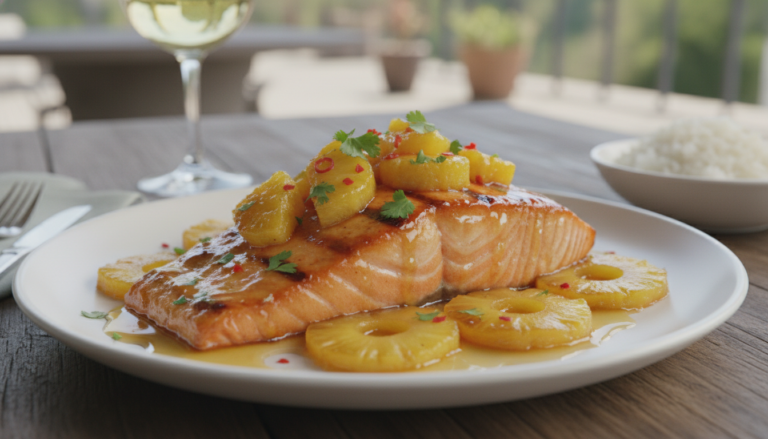
Pineapple Glazed Salmon
Pineapple Glazed Salmon features tender fillets brushed with a sweet-savory glaze of pineapple, soy sauce, ginger, and garlic that caramelizes beautifully in the oven.
4
servings15
minutes20
minutes400
kcal35
minutesIngredients
4 pieces salmon fillets
0.5 cup pineapple juice
0.25 cup soy sauce
0.25 cup honey
1 tablespoon olive oil
2 cloves garlic, minced
1 tablespoon ginger, grated
0.5 teaspoon red pepper flakes
1 teaspoon cornstarch
1 tablespoon water
Directions
- Preheat the oven to 400°F (200°C) and line a baking sheet with parchment paper for easy cleanup.
- In a small saucepan, combine pineapple juice, soy sauce, honey, garlic, ginger, and red pepper flakes over medium heat.
- Bring the mixture to a simmer, stirring occasionally, until the glaze thickens slightly, about 5 minutes.
- In a small bowl, mix cornstarch with water to form a slurry, then stir into the glaze, cooking until thickened.
- Place the salmon fillets skin-side down on the prepared baking sheet and brush generously with the glaze.
- Bake in the preheated oven for 12-15 minutes or until the salmon flakes easily with a fork.
- Remove from oven and allow the salmon to rest for a few minutes before serving with extra glaze on top.
Nutrition Facts
- Total number of serves: 4
- Calories: 400kcal
- Cholesterol: 0mg
- Sodium: 620mg
- Potassium: 400mg
- Sugar: 8g
- Protein: 6g
- Calcium: 60mg
- Iron: 2mg
About This Author

Benjamin Brown
Recipe Developer
James captures the soul of Daily Dish — literally. His photography turns everyday meals into works of art. With a background in visual design and a passion for travel, he brings warmth, storytelling, and light to every image. You’ve probably seen his work featured across our homepage, newsletters, and social feeds.
Favorite dish: Smoky grilled street tacos.
Kitchen motto: “If you can taste the photo, I’ve done my job.”