Daily Dish

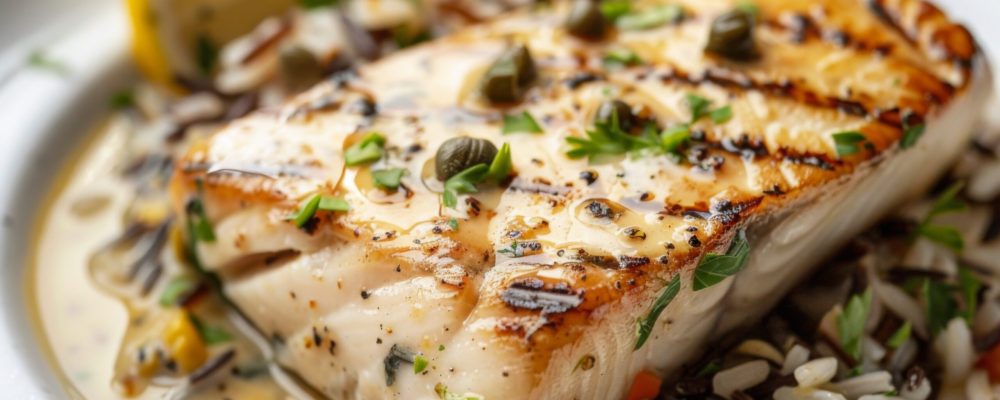
Mediterranean Grilled Swordfish with Lemon Caper Sauce

Healthy Fact of the Day

Swordfish is an excellent source of selenium, a mineral that acts as an antioxidant in the body. It's also rich in protein and omega-3 fatty acids, which are beneficial for heart health.

Ingredients


  • 4 swordfish steaks (about 6 oz each)
  • 2 tbsp olive oil
  • Salt and freshly ground black pepper
  • 2 tsp dried oregano


For the Lemon Caper Sauce:

  • 1/4 cup fresh lemon juice
  • 1/4 cup white wine
  • 2 tbsp capers, drained
  • 2 cloves garlic, minced
  • 1/4 cup unsalted butter
  • 2 tbsp fresh parsley, chopped
  • Zest of 1 lemon


Garnish:

  • Lemon wedges
  • Fresh parsley sprigs


Instructions

  1. Brush swordfish steaks with olive oil and season with salt, pepper, and oregano. Let marinate for 30 minutes.

  2. Preheat grill or grill pan to medium-high heat.

  3. Grill swordfish for 4-5 minutes per side, or until it reaches an internal temperature of 145°F (63°C).

  4. While fish is grilling, prepare the sauce. In a saucepan, combine lemon juice, white wine, capers, and garlic.

  5. Simmer for 2-3 minutes.
    Remove from heat and whisk in butter until melted and sauce is creamy.

  6. Stir in chopped parsley and lemon zest.

  7. Transfer grilled swordfish to serving plates.

  8. Spoon the lemon caper sauce over each swordfish steak.

  9. Garnish with lemon wedges and parsley sprigs.

  10. Serve immediately, ideally with a side of grilled vegetables or a crisp salad.

Savor each bite of this Mediterranean Grilled Swordfish and let the bright, zesty flavors of lemon and capers transport you to a sunny coastal village. The firm, meaty texture of the swordfish paired with the vibrant sauce creates a dish that’s both satisfying and refreshing – a true taste of the sea that brings the essence of a seaside holiday to your dinner table!
Recent Recipes

What’s New at Kroger Right Now —

  • May 25, 2026
  • 4 min read

Greek Feta Dip

  • May 25, 2026
  • 11 min read

The Overlooked Art of Pairing Food and

  • May 25, 2026
  • 8 min read

Bruschetta Chicken Pasta

  • May 25, 2026
  • 8 min read

Costco’s Summer Lineup Is Fully Stocked —

  • May 24, 2026
  • 4 min read

Caramelized Banana Cheesecake with Rum Glaze

  • May 24, 2026
  • 16 min read

Watermelon Feta Mint Skewers

  • May 24, 2026
  • 14 min read

Honey Mustard Chicken & Farro Bowls

  • May 24, 2026
  • 15 min read

Raspberry Almond Baked French Toast Cups

  • May 24, 2026
  • 14 min read

The Strange Psychology of Why We Eat

  • May 24, 2026
  • 9 min read

Tip of the Day

“Always let your meat rest before slicing.”

Whether you're roasting a chicken, grilling steak, or baking pork tenderloin, letting cooked meat rest for 5–10 minutes before slicing allows the juices to redistribute evenly. This simple step keeps your meat juicy and tender, ensuring every bite is flavorful and moist. Bonus: It gives you a moment to plate your sides or garnish for a perfect presentation!

Our Latest Recipes

Blog
Daily Disher

What’s New at Kroger Right Now — From Prebiotic Pepsi to Dirty Mountain Dew

If you’re curious about prebiotic sodas like Prebiotic Pepsi, they’re a meaningful step up from regular soda — lower in calories, made with cane sugar instead of high-fructose corn syrup, and containing prebiotic fiber that supports gut health. That said, they’re still a treat rather than a health food. The 3 grams of prebiotic fiber per can is a modest dose compared to what you’d get from whole foods like oats, beans, or bananas. Think of them as a smarter swap for when you’re reaching for a soda anyway, not as a supplement to your daily fiber intake.

Read More »
Appetizers
Amelia Grace

Greek Feta Dip

This dip provides protein and probiotics from Greek yogurt, calcium from feta cheese, and heart-healthy monounsaturated fats from olive oil. It’s a nutritious alternative to cream cheese or sour cream-based dips while delivering bold Mediterranean flavors.

Read More »
Blog
Daily Disher

The Overlooked Art of Pairing Food and Drink

Research on beverage choices alongside meals consistently finds that drinks consumed during eating significantly affect both the pace and quantity of food consumed. Carbonated drinks slow eating pace by increasing satiety signals between bites. Water consumed during a meal reduces overall calorie intake compared to caloric beverages without affecting perceived satisfaction. And the tannins in certain teas and red wines, by binding to dietary proteins, may modestly affect protein bioavailability — making the drink at the table a nutritional consideration as well as a sensory one.

Read More »

Get your daily dose of delicious!

Skip to content