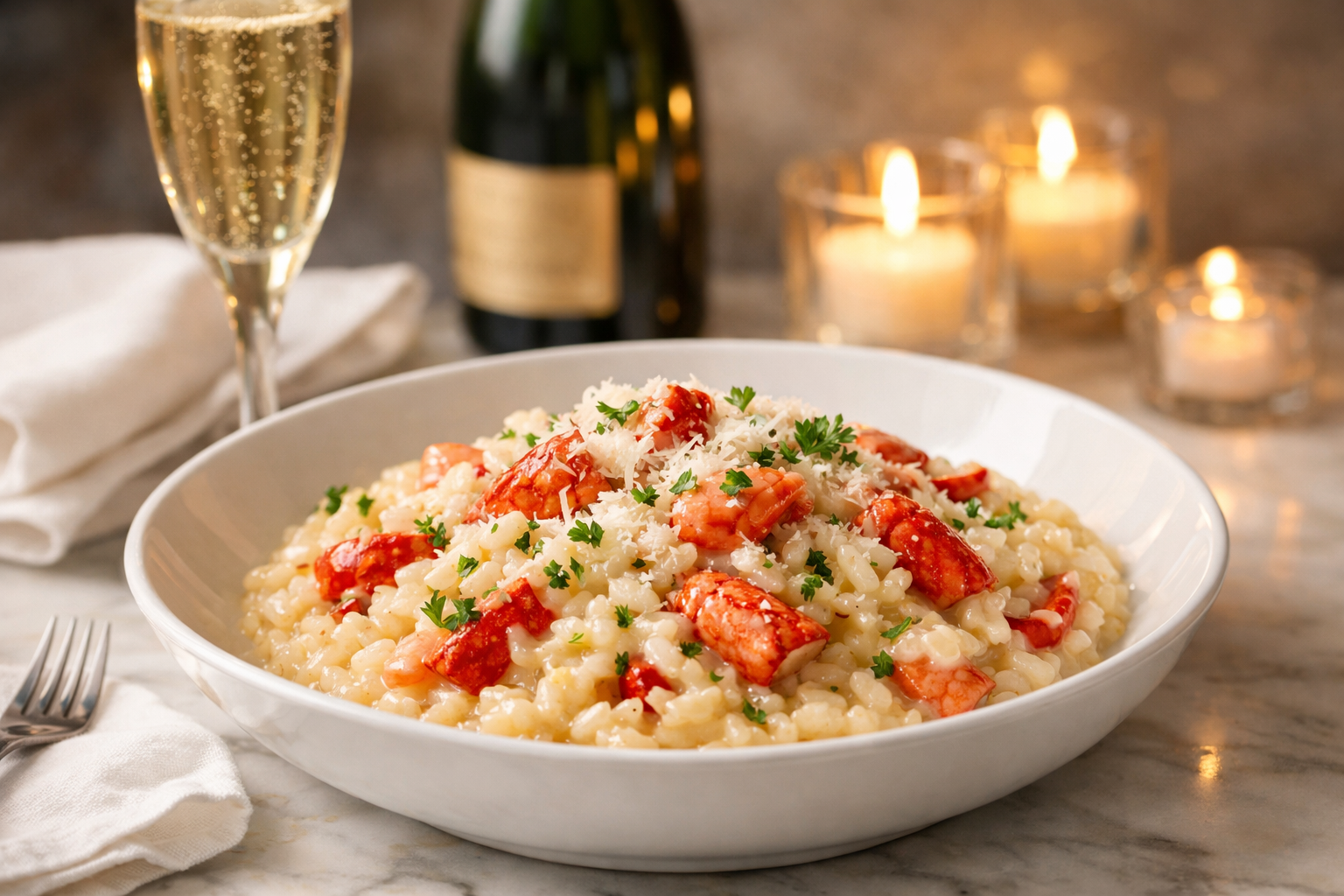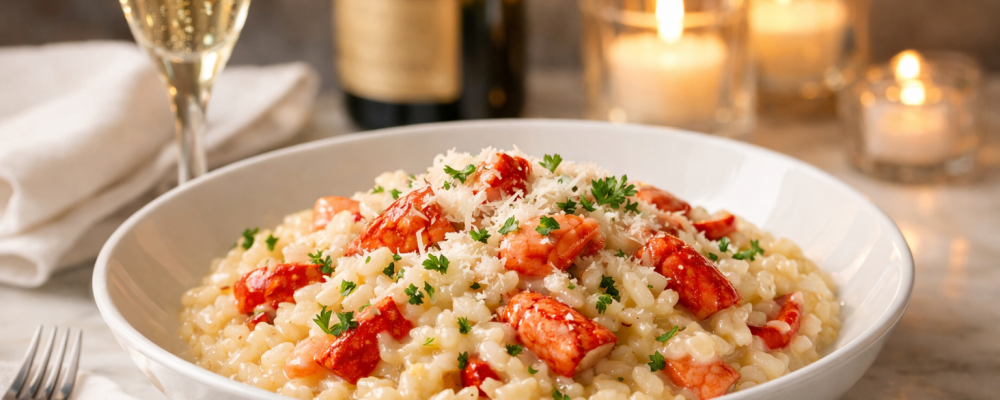

Some dishes exist purely to make you feel utterly spoiled, and Lobster Risotto with Champagne Cream Sauce is absolutely one of them. This is luxury you can taste—from the tender chunks of sweet lobster meat to the creamy Arborio rice enriched with champagne and Parmesan, every element whispers indulgence. It’s the kind of meal that makes you want to dim the lights, light some candles, and pretend you’re dining at a Michelin-starred restaurant overlooking the Italian Riviera.
What I adore about this dish is how it combines two of cooking’s most beautiful techniques: the patient, meditative process of making risotto and the celebratory flourish of cooking with champagne. There’s something wonderfully theatrical about pouring sparkling wine into a pan and watching it sizzle and bubble, knowing that effervescent magic is about to transform simple rice into something extraordinary. The champagne doesn’t just add flavor—it adds joy, lightness, and a sense of occasion that makes the whole experience feel special.
Risotto demands your attention in the best possible way. You can’t rush it, you can’t walk away from it, and that’s precisely the point. While you’re standing at the stove, stirring and adding stock gradually, you’re forced to slow down and be present. Pour yourself a glass of the champagne you’re cooking with, play some music, and let the ritual of making risotto become part of the pleasure rather than just a means to an end.
And when you finally fold in that beautiful lobster meat at the end, watching the cream swirl through the rice and the Parmesan melt into glossy perfection—well, that’s when you know you’ve created something truly special. This isn’t just dinner; it’s an experience, a memory in the making, and proof that treating yourself magnificently doesn’t require leaving home.
─────────
The Inspiration Behind This Recipe
This recipe marries Italian risotto tradition with French luxury ingredients, creating a fusion that represents modern fine dining at its most indulgent. Risotto itself originates from Northern Italy, particularly the Lombardy and Veneto regions where Arborio rice grows abundantly. The technique of slowly adding liquid to rice while stirring constantly dates back centuries. The addition of champagne reflects French haute cuisine’s love affair with cooking in wine and spirits, while lobster has long been prized in coastal French cooking. Together, these elements create a dish that honors both culinary traditions while feeling utterly contemporary and celebratory.
─────────
A Brief History of Risotto and Luxury Ingredients
Risotto’s origins trace to the 16th century in Northern Italy, where rice cultivation flourished in the Po Valley’s wetlands. The technique of tostatura (toasting rice in fat) followed by gradual liquid addition was refined over centuries to achieve risotto’s signature creamy texture without becoming mushy. Traditional preparations featured local ingredients—saffron in Milan (risotto alla Milanese), seafood in Venice, mushrooms in Piedmont. The practice of enriching risotto with luxury ingredients like truffles, champagne, and lobster emerged in the 19th and 20th centuries as Italian cuisine evolved in fine dining contexts. Cooking with champagne specifically became fashionable in nouvelle cuisine during the 1970s, representing a departure from heavy sauces toward lighter, more refined preparations that celebrated expensive ingredients.
─────────
Why This Cooking Method Works
The science behind the technique:
- Arborio rice structure: Short-grain rice high in amylopectin starch, which releases gradually during cooking to create creaminess
- Toasting rice (tostatura): Coating grains in fat before adding liquid seals the exterior, helping rice maintain structure while releasing starch
- Gradual liquid addition: Adding stock one cup at a time allows rice to absorb liquid slowly, releasing starch evenly for creamy texture
- Constant stirring: Agitation releases starch from rice surface and prevents sticking, creating the characteristic creamy consistency
- Champagne’s acidity: Bright acidity balances the richness of cream and butter while adding complex flavor notes
- Alcohol evaporation: Cooking champagne burns off alcohol while leaving behind concentrated fruit and yeast flavors
- Parmesan emulsification: Cheese melts into the hot rice, contributing fat and protein that create additional creaminess
- Cream finishing: Heavy cream added at the end enriches without making risotto soupy; its fat content creates luxurious mouthfeel
- Lobster last: Adding cooked lobster at the end gently warms it without overcooking and toughening the delicate meat
─────────
Flavor Profile: What to Expect
Creamy • Luxurious • Delicate • Complex • Elegant
This risotto delivers pure indulgence with layers of sophisticated flavor. The Arborio rice becomes impossibly creamy with a slight al dente bite at the center of each grain. Champagne adds bright, complex notes—hints of toast, fruit, and effervescence—that lighten what could otherwise be a heavy dish. Sweet, tender lobster chunks provide bursts of oceanic luxury, while Parmesan contributes nutty, umami depth. The cream sauce creates velvety richness that coats your palate, balanced by the champagne’s acidity and fresh parsley’s herbaceous brightness. It’s comfort food elevated to fine dining—rich yet refined, indulgent yet balanced, utterly memorable.
─────────
Tips for Making the Best Lobster Risotto with Champagne Cream Sauce
Rice and stock fundamentals:
- Use genuine Arborio, Carnaroli, or Vialone Nano rice—long-grain rice won’t work
- Keep stock warm in a separate pot; cold stock slows cooking and affects texture
- Use quality chicken or seafood stock—the flavor matters significantly
- Add stock gradually, waiting until each addition is nearly absorbed before adding more
- Stir frequently but not constantly—every 30 seconds or so is sufficient
Champagne selection and use:
- Use dry (brut) champagne or quality sparkling wine you’d drink—the flavor concentrates
- Prosecco or Cava work beautifully as budget-friendly alternatives
- Reserve a bottle for drinking alongside the dish
- Let champagne reduce almost completely before adding stock
- The champagne’s acidity is crucial for balancing richness
Achieving perfect risotto texture:
- The rice should be al dente—tender with a slight bite, never mushy
- Risotto should flow slowly when tilted, not sit in a firm mound (Italian: all’onda, “wave-like”)
- Total cooking time is typically 18-22 minutes after adding first liquid
- Taste frequently in the final minutes—doneness can happen quickly
- If rice is tender but too thick, add more stock; if too loose, cook longer
Lobster preparation:
- Use cooked lobster meat (fresh or high-quality frozen)
- Chop into bite-sized pieces, not too small—you want recognizable chunks
- Add lobster only at the very end to warm through without overcooking
- Reserve some lobster pieces for garnish on top
- For extra flavor, make stock from lobster shells if using whole lobsters
The final enrichment:
- Remove from heat before adding final butter, Parmesan, and cream
- Stir vigorously to incorporate (mantecatura)—this creates extra creaminess
- Let risotto rest 1-2 minutes before serving—it continues to absorb liquid
- Season carefully—Parmesan and stock are already salty
Serving immediately: Risotto waits for no one. Have your table set, wine poured, and guests seated before the final minutes of cooking.
─────────
Wine Pairing Guide
Perfect pairings for Lobster Risotto with Champagne Cream Sauce:
Champagne (Brut) ★ Best Match Cook with it, drink with it—the ultimate pairing. The wine’s vibrant acidity cuts through cream and butter while its elegant bubbles refresh the palate between bites. The toasty, yeasty notes from bottle aging complement the Parmesan beautifully, and the wine’s complexity matches the dish’s luxury. Choose Blanc de Blancs (100% Chardonnay) for particular finesse with lobster.
White Burgundy (Meursault or Puligny-Montrachet) Rich, full-bodied Chardonnay with butter, toast, and hazelnut notes that mirror the risotto’s creamy character. The wine’s weight stands up to the dish’s richness while maintaining enough elegance not to overpower delicate lobster. Subtle minerality adds complexity to the pairing.
Chardonnay (Premium California or Burgundy-Style) Full-bodied with oak aging, offering butter, vanilla, and tropical fruit notes that complement cream and Parmesan. The wine’s richness matches the dish’s luxury, while good acidity prevents the pairing from feeling heavy. Choose wines with elegance and restraint over heavily oaked styles.
Champagne (Vintage or Prestige Cuvée) For ultimate special occasions, vintage champagne or prestige cuvées offer additional complexity, deeper flavors, and more pronounced toasty, brioche notes that elevate the entire experience. The investment matches the dish’s luxury.
Prosecco Superiore (Valdobbiadene) More affordable sparkling option with fresh fruit flavors and lively bubbles. While lighter than Champagne, quality Prosecco Superiore offers enough character and acidity to pair beautifully, especially if you used Prosecco in cooking.
Alternative pairing: An elegant Viognier with its lush texture and stone fruit flavors provides a still wine option that complements the richness while adding floral aromatics.
─────────
Serving Suggestions and Side Pairings
Elegant presentations:
- Fine dining style: Serve in shallow white bowls, mound risotto in center, arrange lobster pieces on top, garnish with parsley and Parmesan shavings
- Rustic elegance: Present family-style in a large serving bowl with extra Parmesan and champagne bottle on table
- Individual portions: Use wide-rimmed pasta bowls, create a swoosh of risotto, top with lobster, drizzle with extra sauce
Ideal accompaniments:
- Garlic Rosemary Focaccia Muffins: For savoring every drop of that precious champagne cream sauce
- Simple arugula salad: Peppery greens with lemon vinaigrette provide refreshing contrast to richness
- Roasted asparagus: Elegant vegetable that adds color without competing for attention
- Lemon Butter Scallops (as appetizer): Create a luxurious all-seafood progression
For a complete Wine Wednesday celebration: This dish deserves to be the star of a special evening. Begin with raw oysters and champagne, serve the risotto as the main course with plenty of wine and warm bread, and finish with something light and refreshing—lemon sorbet, panna cotta, or fresh berries with cream. Keep the focus on luxury and celebration, with beautiful table settings, candles, and the best stemware you own.
─────────
Storage, Reheating, and Make-Ahead Tips
Storage:
- Refrigerate leftover risotto in an airtight container for up to 2 days
- Store lobster separately if possible to preserve texture
- Note: Risotto’s texture changes significantly when stored and reheated
Reheating (challenging but possible):
- Stovetop (best method): Add stock or cream, heat gently over low heat, stirring constantly
- Risotto will thicken when cold; add liquid gradually to restore creamy consistency
- Don’t overheat lobster during reheating—it becomes rubbery
- Finish with fresh butter and Parmesan to refresh flavor
- Texture won’t match freshly made risotto, but flavor remains excellent
Make-ahead strategies:
- Par-cooking method: Cook risotto 75% of the way, spread on a baking sheet to cool, refrigerate. Finish cooking when ready to serve by adding hot stock and continuing normal method
- Prep all ingredients (dice shallots, mince garlic, measure rice and liquids) several hours ahead
- Have lobster meat ready and portioned
- Keep stock warm on the stove so you’re ready to cook when needed
Reality check: Risotto is genuinely best made fresh and served immediately. The texture is never quite the same when reheated. For entertaining, embrace the theater of making it while guests watch with wine in hand—it becomes part of the experience.
─────────
Why This Recipe Deserves a Spot in Your Wine Wednesday Rotation
Lobster Risotto with Champagne Cream Sauce is everything Wine Wednesday should celebrate—unabashed luxury, wines that enhance rather than merely accompany food, and cooking that feels like an event rather than a chore. This is the dish you make when you want to mark something special, when you want to feel utterly pampered, or when you simply decide that Wednesday deserves to be treated like the most important night of the week.
What makes this particularly magical is how the cooking process itself becomes celebratory. Standing at the stove with a glass of champagne, stirring risotto while it slowly transforms from ordinary rice into something creamy and extraordinary—there’s a meditative joy in that process. You’re not rushing through dinner prep; you’re actively participating in creating something beautiful, and that participation is part of the pleasure.
The wine pairing here is essential rather than optional. The champagne you cook with becomes woven into the dish’s very DNA, and drinking the same wine alongside creates a harmonious circle where food and wine speak the same language. Each sip refreshes your palate, each bite makes the wine taste even better, and the entire experience feels greater than the sum of its parts.
This recipe also proves that home cooking can rival any restaurant when you’re willing to invest in quality ingredients and proper technique. Yes, lobster and champagne represent an investment, but the results—the luxury, the satisfaction, the sheer deliciousness—justify every penny. Sometimes treating yourself magnificently is exactly what you need, and sometimes that extraordinary treatment happens at your own stove on a Wednesday evening.
So open that champagne, prepare to stir with intention and patience, and create something that makes you feel absolutely spoiled. Set a beautiful table, light the candles, pour generous glasses, and remember that celebration doesn’t require a special occasion—sometimes the act of cooking something this beautiful is reason enough to celebrate.
Here’s to Wine Wednesday at its most luxurious. You deserve every decadent, champagne-infused bite.
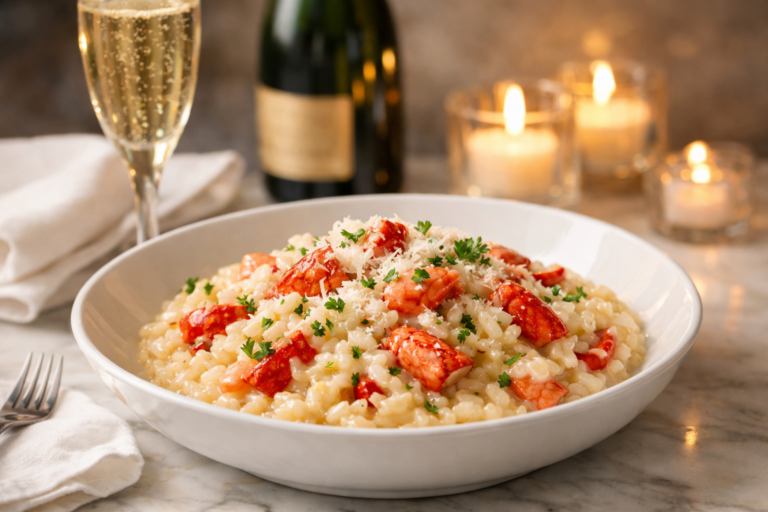
Lobster Risotto with Champagne Cream Sauce
Velvety risotto studded with tender lobster in a champagne-infused cream sauce—indulgence that demands your finest bottle.
4
servings20
minutes40
minutes720
kcal1
hourIngredients
2 cups Arborio rice
4 cups Chicken stock
1 cup Dry champagne
1 lb Lobster meat, cooked and chopped
1 cup Heavy cream
1 cup Parmesan cheese, grated
2 tbsp Butter
1 tbsp Olive oil
1 Shallot, finely diced
2 cloves Garlic, minced
1 tsp Salt
0.5 tsp Black pepper
0.5 cup Fresh parsley, chopped
Directions
- Heat the olive oil and butter in a large pan over medium heat.
- Add the shallot and garlic, sauté until translucent.
- Add the Arborio rice, stir to coat with oil and butter.
- Pour in champagne, stirring until absorbed by the rice.
- Gradually add chicken stock, one cup at a time, stirring frequently.
- Once the rice is tender and creamy, stir in the Parmesan cheese and heavy cream.
- Fold in the cooked lobster meat, season with salt and pepper.
- Cook until lobster is heated through and the mixture is creamy.
- Garnish with fresh parsley before serving.
Nutrition Facts
- Total number of serves: 4
- Calories: 720kcal
- Cholesterol: 0mg
- Sodium: 620mg
- Potassium: 400mg
- Sugar: 8g
- Protein: 6g
- Calcium: 60mg
- Iron: 2mg
About This Author

Aurora Wright
Pastry Chef & Dessert Editor
Aurora is the sweet side of Daily Dish. A trained pastry chef and dessert stylist, she’s responsible for our mouth-watering cakes, cookies, and confections. She brings precision, artistry, and a touch of whimsy to every recipe she creates — and taste-tests more chocolate than she’ll admit.
Favorite dish: Flourless dark chocolate torte.
Kitchen motto: “Life’s too short to skip dessert.”