Daily Dish

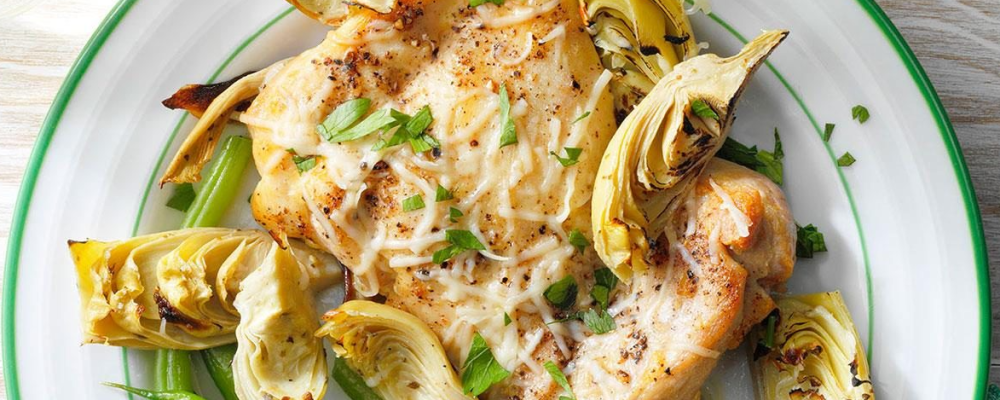
Broiled Chicken & Artichokes

Healthy Fact of the Day

Artichokes are an excellent source of fiber, vitamins, minerals, and antioxidants, making this dish a nutritious and flavorful option.

Ingredients


  • 4 boneless, skinless chicken breasts
  • 2 tablespoons olive oil
  • 1 teaspoon dried oregano
  • 1 teaspoon dried basil
  • Salt and black pepper, to taste
  • 1 (14 oz) can artichoke hearts, drained and halved
  • 2 cloves garlic, minced
  • 1/4 cup dry white wine or chicken broth
  • 2 tablespoons freshly squeezed lemon juice
  • 1/4 cup grated Parmesan cheese
  • Chopped fresh parsley for garnish


Instructions

  1. Preheat your oven’s broiler and position the rack about 6 inches from the heat source.

  2. Pound the chicken breasts lightly to an even thickness, if necessary.

  3. In a shallow dish, combine the olive oil, dried oregano, dried basil, salt, and black pepper. Add the chicken breasts and turn to coat them evenly with the seasoned oil.

  4. Arrange the chicken breasts in a single layer on a broiler-safe baking sheet or dish.

  5. Broil the chicken for 5-6 minutes.

  6. Meanwhile, in a small bowl, combine the drained and halved artichoke hearts, minced garlic, white wine (or chicken broth), and lemon juice.

  7. Remove the chicken from the oven and spoon the artichoke mixture over the top of each chicken breast.

  8. Sprinkle the grated Parmesan cheese over the artichoke mixture.

  9. Return the baking sheet to the oven and broil for an additional 3-5 minutes, or until the chicken is cooked through (165°F/74°C internal temperature) and the cheese is melted and lightly browned.

  10. Garnish with chopped fresh parsley and serve hot.

Enjoy this broiled chicken and artichoke dish, bursting with Mediterranean flavors and a perfect combination of lean protein and nutrient-rich vegetables.


Recent Recipes

Aldi Has Some of Its Best New

  • May 11, 2026
  • 4 min read

Dill Pickle Chex Mix

  • May 11, 2026
  • 11 min read

The Forgotten Art of Eating With the

  • May 11, 2026
  • 8 min read

Garlic Mushroom Pasta

  • May 11, 2026
  • 8 min read

Lemon Dump Cake

  • May 10, 2026
  • 16 min read

Mother’s Day 2026: The Best Restaurant Deals,

  • May 10, 2026
  • 4 min read

Mango Tajín Fruit Cups

  • May 10, 2026
  • 14 min read

White Bean & Roasted Veggie Wraps

  • May 10, 2026
  • 13 min read

Ham & Cheddar Egg Muffin Sandwiches

  • May 10, 2026
  • 13 min read

The Foods That Were Saved by Accident

  • May 10, 2026
  • 9 min read

Tip of the Day

“Always let your meat rest before slicing.”

Whether you're roasting a chicken, grilling steak, or baking pork tenderloin, letting cooked meat rest for 5–10 minutes before slicing allows the juices to redistribute evenly. This simple step keeps your meat juicy and tender, ensuring every bite is flavorful and moist. Bonus: It gives you a moment to plate your sides or garnish for a perfect presentation!

Our Latest Recipes

Blog
Daily Disher

Aldi Has Some of Its Best New Drops of the Season Coming This Week — Here’s What to Know

Ready-to-eat chicken salads like these are a convenient high-protein lunch option, but store-bought varieties can be higher in sodium and mayo-based fat than homemade versions. To lighten things up, serve a smaller portion of chicken salad over a bed of greens or stuff it into a lettuce wrap instead of a croissant — you’ll still get the flavor payoff with more fiber and fewer refined carbs. Kimbap is also a naturally balanced snack, with rice, vegetables, and protein wrapped together in a portion-controlled format that makes it easy to eat mindfully.

Read More »
Monday Munchies
Benjamin Brown

Dill Pickle Chex Mix

This snack provides whole grains from cereal and portion-controlled sodium compared to eating pickles straight from the jar. The vinegar in pickle juice may also support digestion and help regulate blood sugar levels when consumed in moderation.

Read More »
Blog
Daily Disher

The Forgotten Art of Eating With the Seasons

Seasonal produce consumed close to harvest contains significantly higher levels of antioxidants and phytonutrients than the same produce consumed out of season. A study on spinach found that levels of folate and carotenoids were substantially higher in freshly harvested spinach than in spinach stored for several days — and the gap widens considerably for produce that has traveled long distances over extended periods. Eating with the seasons is one of the most straightforward strategies for maximizing the nutritional value of the fruits and vegetables in your diet.

Read More »

Get your daily dose of delicious!

Skip to content












