
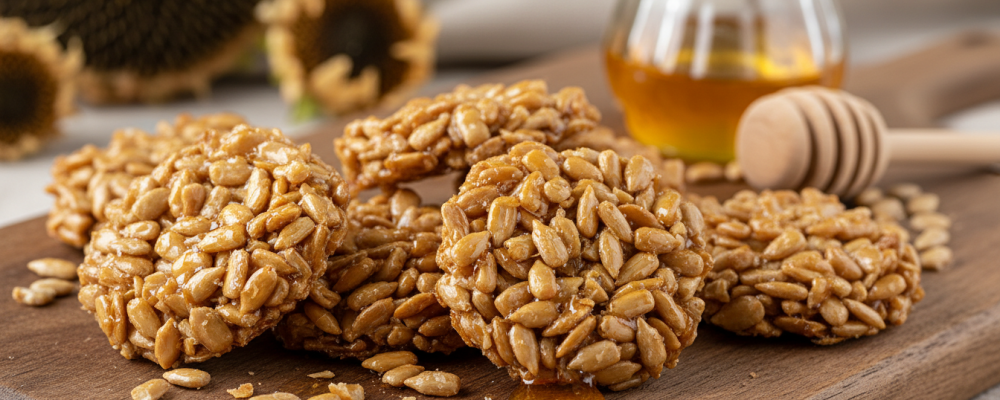

I need you to understand something about these clusters before we go any further: they are going to become a problem. A delicious, golden, honey-scented problem that you will batch-make on Sunday, tell yourself is for the whole week, and then somehow find entirely gone by Tuesday afternoon. I say this from experience—and I say it with zero regret.
Here’s what makes them so dangerous in the best possible way: they hit every snacking note at once. They’re sweet but not cloying, salty but not overpowering, crunchy in a way that’s genuinely satisfying rather than just texturally aggressive. And because they’re built on a base of sunflower seeds rather than refined ingredients, you can reach into the container for the third time in an afternoon and feel pretty good about it. That’s not me justifying your choices. That’s just science.
From a purely practical standpoint, these are one of the most efficient snack preps you can do. Four ingredients. One saucepan. One baking sheet. The oven does the heavy lifting, and once they’ve cooled and clustered up, all you have to do is portion them out and try—really try—to make them last the week.
─────────────────────────────────────────
The Inspiration Behind This Recipe
Honestly? These clusters were born out of a very specific kind of frustration: the mid-afternoon snack problem. That 3 p.m. window where willpower wavers and the path of least resistance leads straight to something packaged, processed, and deeply unsatisfying. The goal was to have something prepped and ready that felt like a treat without reading like a dessert—something with crunch, sweetness, and enough substance to actually hold you over until dinner.
Honey and sunflower seeds were the obvious starting point. Both are pantry staples, both play well together, and honey’s natural sugars caramelize beautifully in a low oven without requiring any special equipment or technique. The vanilla extract came next—just a small amount adds a warmth and depth that makes the clusters taste significantly more considered than their ingredient list suggests. A pinch of salt pulls everything into focus.
What emerged was a recipe that functions equally well as a standalone snack, a yogurt or oatmeal topping, or a quick addition to a lunchbox. It’s the kind of thing that earns a permanent spot in your weekly prep rotation not because it’s complicated or impressive, but because it’s genuinely useful—and genuinely hard to stop eating.
─────────────────────────────────────────
A Brief History of Seed-Based Snack Clusters
Roasted seed and nut clusters have a long and delicious history across many food cultures, rooted in the simple, ancient logic of combining a fat or sweetener with a seed or grain to create a preserved, portable snack. From sesame brittle in the Middle East to peanut brittle in the American South, the concept of binding seeds together with a caramelized sugar base has been a practical and pleasurable tradition for centuries.
Sunflower seeds specifically have a rich culinary history in North America, where they were cultivated by Indigenous peoples long before European settlement—used as food, oil, and even dye. Their emergence as a modern snack ingredient is well-earned: they’re shelf-stable, nutrient-dense, and have a mild, buttery flavor that takes on incredible depth when roasted.
The contemporary cluster format—loose, breakable, not quite candy and not quite granola—sits at a particularly appealing intersection. It has the satisfying snap of something baked and caramelized, the rustic charm of a homemade snack, and the meal-prep practicality of something that stores beautifully for days. It’s a very old idea dressed up for a very modern eating rhythm.
─────────────────────────────────────────
Why This Cooking Method Works for Meal Prep
Low-and-slow oven roasting is the right method for these clusters, and the temperature matters more than it might seem. At 325°F, the honey caramelizes gradually rather than burning—giving the sugars time to develop complex, toasty notes while the seeds toast evenly throughout. A higher oven temperature would caramelize the outside before the interior seeds are fully roasted, resulting in bitter edges and underdeveloped centers. Patience here is a technique, not just a virtue.
The saucepan step—warming the honey and vanilla before adding the seeds—is equally important. Honey that’s been gently loosened coats every seed evenly, creating a uniform layer that will caramelize consistently across the entire pan. If you skip this step and simply drizzle cold honey over dry seeds, you’ll get uneven coverage and clusters that fall apart rather than binding together. The warmth of the mixture is what initiates the bonding process before the oven even gets involved.
The cooling period after baking is where the magic actually happens. The clusters are still soft and pliable when they come out of the oven—don’t be alarmed. As they cool, the caramelized honey hardens and sets, fusing the seeds together into those satisfying, breakable clusters. Resist the urge to break them up while warm. Give them the full cool-down, and they’ll reward you with a proper snap and a shelf life that keeps them crisp and delicious for a full week.
─────────────────────────────────────────
Flavor Profile: What to Expect
These clusters are simple in the most elegant way—every flavor is clear, intentional, and harmonious:
- Floral sweetness – Honey brings its natural complexity to the forefront, tasting more nuanced than plain sugar ever could
- Warm vanilla depth – A small amount of vanilla extract adds a bakery-like warmth that elevates the overall flavor far beyond its quantity
- Toasty nuttiness – Roasting transforms the raw sunflower seeds into something deeply savory and rich, with a buttery, slightly earthy quality
- Bright salt finish – A pinch of salt sharpens every other note and creates that classic sweet-salty contrast that makes snacks genuinely addictive
- Caramelized crunch – The texture delivers a clean, satisfying snap from the hardened honey coating layered over each crispy seed
The flavor actually improves slightly by day two, as the caramelized honey continues to set and the toasty seed notes deepen. These clusters don’t fade over the week—they hold, both texturally and in flavor, making them one of the most reliably excellent snack preps in any collection.
─────────────────────────────────────────
Tips for Making the Best Honey Roasted Sunflower Seed Clusters
A few small details make a noticeable difference in both texture and longevity:
- Use raw, unsalted seeds – Starting with raw seeds gives you full control over salt level and ensures the seeds roast evenly without already-toasted spots burning in the oven.
- Don’t skip the parchment – Caramelized honey is essentially liquid candy at baking temperature. Parchment paper is non-negotiable; nothing else will release the clusters cleanly.
- Spread thin – A thin, even layer on the baking sheet is critical for consistent toasting and proper cluster formation. A thick pile will steam in the center and bake unevenly on the outside.
- Stir gently, not aggressively – When stirring during baking, use a light hand. You want to rotate for even color, not break up the clusters you’re trying to form.
- Cool completely before breaking – This cannot be overstated. Clusters broken while warm will crumble. Clusters broken after full cooling will snap cleanly and hold their shape.
- Store airtight – Exposure to air introduces humidity, which softens the caramelized coating. An airtight glass jar or sealed container keeps them crisp for up to a week.
Optional: Add a pinch of cinnamon to the honey mixture for a warm, spiced variation, or a small handful of shredded coconut tossed in with the seeds for extra texture and a tropical note.
─────────────────────────────────────────
Portioning and Container Suggestions
Once cooled and broken into clusters, this recipe portions beautifully into individual snack servings—roughly a small handful (about 2–3 tablespoons) per serving is a satisfying amount that doesn’t tip into mindless oversnacking territory. A standard batch yields approximately 6–8 snack-sized portions depending on how generously you measure your seeds.
For daily grab-and-go use, small 4-ounce glass jars or snack-sized resealable bags work perfectly—pre-portioned at the start of the week so each day requires zero decision-making. A single large airtight glass jar also works well if you prefer to portion as you go; the visual of a jar filled with golden clusters on a counter or in the fridge makes for an exceptionally satisfying meal prep moment.
These clusters are also an excellent add-on component for other prepped meals—a tablespoon scattered over a yogurt parfait container, tossed onto a smoothie bowl, or tucked alongside a sliced apple in a bento-style lunch container. They add crunch, sweetness, and visual interest to just about anything they touch.
─────────────────────────────────────────
Storage, Reheating, and Shelf Life Tips
- Room temperature storage: Store in an airtight container at room temperature for up to 7 days. This is the preferred method—refrigeration can introduce condensation that softens the caramelized coating.
- Refrigerator storage: If your kitchen runs warm or humid, refrigerator storage is fine for up to 10 days. Allow clusters to come to room temperature for a few minutes before eating for the best texture.
- Freezer storage: These clusters freeze well for up to 2 months in an airtight freezer bag. Thaw at room temperature for 15–20 minutes before serving.
- No reheating needed: These are a fully ready-to-eat snack—no warming required. If clusters have softened slightly in storage, spread them on a baking sheet and pop them in a 300°F oven for 5 minutes to re-crisp, then cool completely before eating.
- Humidity note: In particularly humid climates, a small food-safe silica gel packet or a piece of dry paper towel placed inside the storage container helps absorb excess moisture and extends crispness.
─────────────────────────────────────────
Why This Recipe Deserves a Spot in Your Meal Prep Rotation
In a meal prep lineup full of proteins, grains, and vegetables, snacks are often the afterthought—and they really shouldn’t be. Having a prepped snack ready to reach for is one of the most effective ways to stay on track throughout the week, because hunger between meals is where most good intentions quietly unravel. These clusters are the kind of thing you can prep in under 30 minutes and then rely on completely for seven days straight, which is a genuinely excellent return on very minimal effort.
They’re also endlessly adaptable to different dietary needs and flavor preferences without requiring a recipe overhaul—just small variations on the same reliable formula. Once you’ve made them once, they become the kind of instinctive, low-effort prep that you build into every Sunday without thinking about it. That’s the mark of a truly great meal prep recipe: it earns a permanent spot on the list.
─────────────────────────────────────────
Meal Prep Pairing Suggestions
Honey Roasted Sunflower Seed Clusters slot naturally into a snack-forward prep spread alongside recipes that cover different texture and flavor profiles. Pair them with our No-Bake Energy Balls for a complete grab-and-go snack duo—the chewy, date-based richness of the energy balls provides a satisfying contrast to the crisp, caramelized snap of the clusters. Together, they cover every snacking mood from light and crunchy to dense and filling.
For a more complete weekly prep picture, these clusters also make a lovely topping component for breakfast recipes like Overnight Oats or a prepped yogurt parfait base—scattered over the top at serving time for added crunch and a hit of natural sweetness. A jar of these on the shelf alongside a fridge stocked with prepped breakfasts and lunches is exactly the kind of organized, ready-for-anything setup that makes the whole week feel more manageable—and considerably more delicious.
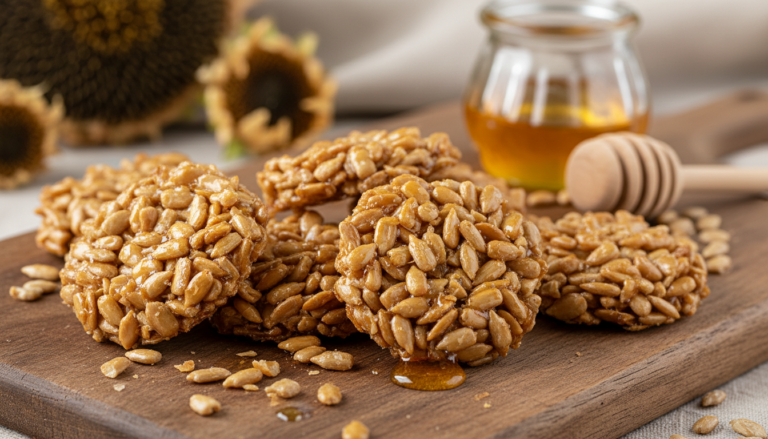
Honey Roasted Sunflower Seed Clusters
These Honey Roasted Sunflower Seed Clusters are a four-ingredient, oven-baked snack that delivers golden, caramelized crunch in every bite—perfect for prepping in bulk and snacking on all week.
8
servings10
minutes20
minutes120
kcal30
minutesIngredients
2 cups sunflower seeds, raw
1 cup honey
1 teaspoon vanilla extract
0.5 teaspoon salt
Directions
- Preheat oven to 325°F (165°C) and line a baking sheet with parchment paper.
- In a saucepan over low heat, combine honey and vanilla extract until smooth.
- Stir in raw sunflower seeds and salt, ensuring even coating.
- Spread seed mixture onto the prepared baking sheet in a thin layer.
- Bake for 15-20 minutes, stirring occasionally, until golden brown.
- Remove from oven and let cool completely, then break into clusters.
Nutrition Facts
- Total number of serves: 4
- Calories: 120kcal
- Cholesterol: 0mg
- Sodium: 620mg
- Potassium: 400mg
- Sugar: 8g
- Protein: 6g
- Calcium: 60mg
- Iron: 2mg
About This Author

Aurora Wright
Pastry Chef u0026amp; Dessert Editor
Aurora is the sweet side of Daily Dish. A trained pastry chef and dessert stylist, she’s responsible for our mouth-watering cakes, cookies, and confections. She brings precision, artistry, and a touch of whimsy to every recipe she creates — and taste-tests more chocolate than she’ll admit.
Favorite dish: Flourless dark chocolate torte.
Kitchen motto: “Life’s too short to skip dessert.”















