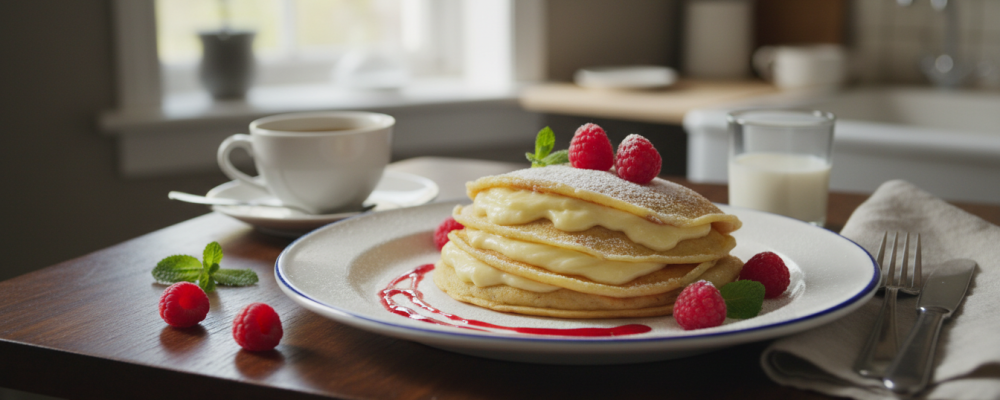

There’s something utterly enchanting about crepes—those impossibly thin, delicate pancakes that seem almost too elegant for everyday breakfast yet are surprisingly simple once you understand the technique. These Raspberry Vanilla Cream Crepes are my love letter to French pastry traditions, where beauty and flavor exist in perfect harmony. The crepes themselves are tender and slightly sweet, with lacy edges that catch the light. Fill them with vanilla whipped cream and jewel-bright raspberries, and you have something that looks like it came from a Parisian patisserie but was made in your own kitchen.
What I adore most about this recipe is how it transforms humble ingredients into something that feels genuinely special. You’re working with flour, eggs, milk, cream, berries—nothing exotic or expensive—but the presentation elevates everything. The act of making crepes is meditative and satisfying: that moment when you swirl batter across the pan and watch it set into a perfect circle, the gentle flip that reveals golden spots, the careful folding around sweet fillings. It’s breakfast as art form, and it’s absolutely worth the small amount of practice required to get comfortable with the technique.
These crepes also bring people together in the loveliest way. There’s something about watching someone make crepes that draws everyone into the kitchen, gathering around to see each one emerge from the pan. It creates conversation, anticipation, and that feeling of occasion that makes brunches memorable. This is food that celebrates both the process and the result—and honestly, that’s my favorite kind of cooking.
─────────
The Inspiration Behind This Recipe
My crepe obsession began during a summer in Paris, where I’d stop at a street cart near the Panthéon almost daily for crepes filled with Nutella, strawberries, or simply butter and sugar. I was mesmerized by the vendor’s effortless technique—the way she’d pour batter, spread it with a wooden spreader, flip it at precisely the right moment, and fold it into a perfect triangle while chatting with customers. It looked like magic, but I knew it was just practice and understanding.
When I returned home, I was determined to recreate that experience. I experimented endlessly with batter ratios, pan temperatures, and spreading techniques until I could make crepes that were thin enough to be almost translucent but sturdy enough to hold fillings without tearing. This raspberry and vanilla cream combination emerged as my favorite—it hits that perfect balance between indulgent and fresh, sweet and tart, rich and light. The raspberries provide bursts of brightness that cut through the cream’s richness, while the vanilla ties everything together with its warm, aromatic sweetness.
What started as an attempt to recreate street food memories became something I make for celebrations, lazy Sundays, and anytime I want breakfast to feel like a special occasion. These crepes represent everything I love about pastry: they require skill but not complexity, they look stunning but aren’t fussy, and they make people genuinely happy when you serve them.
─────────
A Brief History of Crepes
Crepes originated in Brittany, France, during the 13th century, though the concept of thin pancakes cooked on flat surfaces dates back much further across multiple cultures. The Breton version—made with buckwheat flour and called galettes—were savory and served as a staple food for peasant families. Sweet crepes made with wheat flour came later, becoming associated with celebrations, particularly Candlemas (La Chandeleur) on February 2nd, when French families traditionally make and eat crepes.
The technique spread throughout France and eventually worldwide, with each region developing distinct traditions. In Brittany, galettes remain popular for savory fillings like ham, cheese, and eggs. In Paris and beyond, sweet crepes filled with everything from simple lemon and sugar to elaborate fruit and cream combinations became café staples. The crepe’s versatility—serving as breakfast, lunch, dinner, or dessert depending on fillings—contributed to its enduring popularity.
By the 20th century, crepes had become emblematic of French cuisine internationally, appearing on brunch menus and in home kitchens far beyond France’s borders. The rise of crepe restaurants and street vendors introduced the dish to new audiences, while cooking shows and cookbooks made the technique accessible to home cooks. Today, crepes represent both everyday simplicity and elegant sophistication—the perfect embodiment of French culinary philosophy that beautiful food should also be approachable and delicious.
─────────
Why This Cooking Method Works
The crepe batter’s thin consistency is essential for creating those characteristically delicate pancakes. Unlike regular pancake batter, which needs to be thick enough to rise and create fluffy texture, crepe batter should be pourable and coat the pan in a thin, even layer. This thinness allows the crepes to cook quickly and develop that tender, slightly chewy texture. The ratio of liquid to flour creates a batter that spreads easily across the pan before setting, preventing thick spots or uneven cooking.
Cooking crepes in a non-stick skillet over medium heat provides the controlled environment necessary for even cooking without burning. Too high heat causes the edges to crisp and brown before the center sets, making flipping difficult and creating brittle crepes that crack when folded. Medium heat allows the crepe to cook through gently, developing those characteristic golden spots (from Maillard reactions where the batter contacts the pan most directly) while maintaining flexibility for rolling.
Whipping the cream to stiff peaks before folding in powdered sugar creates stable filling that won’t weep or deflate quickly. Stiff peaks mean the cream can support its own weight and maintain structure inside the crepes without making them soggy. Adding vanilla during whipping incorporates the flavor evenly while the mechanical action of whipping emulsifies everything into smooth, silky cream. The powdered sugar (rather than granulated) dissolves completely, preventing any grittiness and adding sweetness without compromising texture.
─────────
Flavor Profile: What to Expect
These crepes deliver elegant sweetness balanced by fresh, tart elements:
- Delicate crepe sweetness – Subtle, allowing the fillings to shine without competing
- Vanilla cream richness – Silky, cloud-like whipped cream with warm aromatic notes
- Tart raspberry brightness – Fresh berry acidity that cuts through the cream beautifully
- Buttery undertones – From the melted butter in the batter, adding depth
- Powdered sugar – Light dusting provides visual appeal and gentle sweetness
- Slight chewiness – The crepe texture offers pleasant resistance without being tough
- Fresh berry juice – Raspberries release natural juices that mingle with cream
The overall experience is one of refined indulgence—these feel luxurious and special without being overly heavy or cloying. Each bite includes all components: the tender crepe wrapper, the airy vanilla cream, and the bursting raspberries. The texture contrasts keep things interesting: soft cream against chewy crepe against juicy berries. It’s elegant breakfast that feels celebratory and thoughtful, the kind of food that makes mornings worth waking up for.
─────────
Tips for Making the Best Raspberry Vanilla Cream Crepes
Let the batter rest for at least 30 minutes (or up to overnight) in the refrigerator to allow the flour to fully hydrate and bubbles to settle for smoother crepes.
- Thin the batter if needed – Add milk tablespoon by tablespoon if batter seems too thick to spread easily
- Use the right pan – An 8-10 inch non-stick skillet works best for manageable crepe size
- Swirl quickly – Pour batter and immediately tilt the pan in a circular motion to spread evenly
- Don’t flip too early – Wait until edges lift easily and the surface looks set before flipping
- Stack with parchment – Layer cooked crepes between parchment paper to prevent sticking
- Keep them warm – Cover stacked crepes with a clean towel while you finish cooking the batch
- Chill your cream – Cold bowl and beaters help cream whip faster and hold peaks better
- Fill just before serving – Assembled crepes are best eaten within an hour to maintain texture
For a professional presentation, dust the finished crepes with powdered sugar through a fine-mesh sieve, and garnish with fresh mint leaves or edible flowers for a stunning visual finish.
─────────
Serving Suggestions and Side Pairings
These crepes are substantial enough to be the star of your brunch, but they pair beautifully with simple accompaniments that don’t compete for attention. A light fruit salad with citrus and berries adds refreshing contrast. Crispy bacon or breakfast sausage provides savory balance for those who want variety. A simple green salad with champagne vinaigrette offers a French café-style complete meal.
Presentation is everything with crepes. Arrange them on individual plates, dust generously with powdered sugar, and add a few fresh raspberries alongside for color. A small sprig of mint adds elegance and aromatic freshness. For buffet-style serving, arrange crepes on a large platter in a slight overlapping pattern, creating height and visual interest. Provide extra whipped cream and fresh berries on the side so guests can add more if desired.
These crepes shine at Mother’s Day brunch, Valentine’s Day breakfast, anniversary celebrations, or any morning when you want to make someone feel cherished. They’re romantic without being overly precious, impressive without being intimidating. The French café aesthetic makes them perfect for leisurely weekend mornings where you have time to savor both the cooking and the eating.
─────────
Storage, Reheating, and Make-Ahead Tips
- Make batter ahead: Prepare up to 24 hours in advance and refrigerate; stir gently before using
- Cook crepes early: Make crepes up to 2 days ahead, stack with parchment, wrap tightly, and refrigerate
- Freeze cooked crepes: Layer between parchment and freeze for up to 2 months; thaw in refrigerator
- Whip cream fresh: Always whip cream just before assembling for best texture and stability
- Don’t assemble too early: Fill crepes no more than 1 hour before serving to prevent sogginess
- Store components separately: Keep crepes, whipped cream, and berries separate until ready to assemble
- Bring to room temperature: Let refrigerated crepes sit 10 minutes before filling for easier handling
- Refresh if needed: Briefly warm unfilled crepes in a low oven to restore tenderness
The beauty of crepes is that you can make them ahead and assemble quickly when needed, making them perfect for entertaining without last-minute stress. Just keep the components separate until you’re ready to plate and serve.
─────────
Why This Recipe Deserves a Spot in Your Rotation
This recipe earns its place because it gives you a impressive skill that opens up endless possibilities. Once you master basic crepe technique, you can fill them with anything—savory or sweet, simple or elaborate. These particular crepes with raspberry and vanilla cream represent the perfect starting point: they’re beautiful enough for special occasions but straightforward enough to make regularly once you’re comfortable with the technique.
Beyond versatility, these crepes simply bring joy. There’s something magical about serving someone a plate of delicate crepes filled with fresh cream and berries—it feels like a gift, like you’ve taken time to create something beautiful just for them. That emotional resonance is what makes certain recipes memorable and worth repeating. Food that makes people feel cared for and celebrated never goes out of style, and these crepes accomplish exactly that with grace and delicious simplicity.
─────────
Recommended Drink Pairing
The delicate sweetness and berry flavors of these crepes pair beautifully with sparkling wine—champagne or prosecco add celebratory bubbles and bright acidity that cut through the cream while complementing the raspberries. A rosé sparkling wine echoes the berry notes particularly beautifully, creating harmonious flavor connections. For a non-alcoholic option with similar effect, sparkling rosé lemonade or berry-infused sparkling water provides refreshing effervescence.
Coffee lovers should reach for a light roast with bright, fruity notes that mirror the raspberries without overwhelming the delicate crepes. A café au lait (equal parts strong coffee and steamed milk) brings creamy richness that harmonizes with the whipped cream filling while adding gentle coffee bitterness for balance. Earl Grey tea offers bergamot’s citrus aromatics that beautifully complement both vanilla and raspberries, while its slight astringency cleanses the palate between bites. For something uniquely French, try a café crème (espresso with steamed milk) alongside, alternating sips and bites for that authentic Parisian café experience. Fresh-squeezed orange juice provides bright, sweet-tart refreshment, though it feels less thematically connected to the French inspiration. For children or those wanting something playful, strawberry milk or a berry smoothie creates a fun, fruit-forward pairing that amplifies the crepes’ summery appeal.
Raspberry Vanilla Cream Crepes
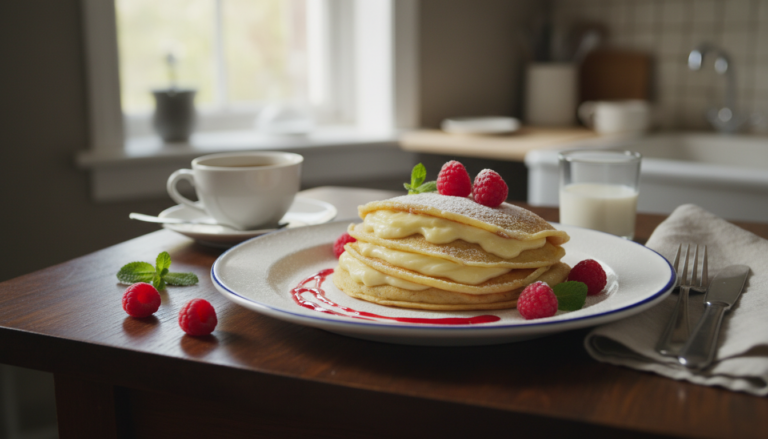
These Raspberry Vanilla Cream Crepes combine delicate, paper-thin pancakes with billowy vanilla whipped cream and jewel-toned fresh raspberries—creating an elegant breakfast that looks impressive but comes together with surprising ease.
4
servings20
minutes15
minutes290
kcal35
minutesIngredients
1 cup all-purpose flour
2 tablespoons sugar
1 pinch salt
3 tablespoons butter (melted)
2 cups milk
3 large eggs
1 cup heavy cream
1 tablespoon vanilla extract
2 cups fresh raspberries
3 tablespoons powdered sugar
Directions
- In a bowl, whisk together flour, sugar, and salt.
- Add melted butter, milk, and eggs; whisk until smooth.
- In a non-stick skillet over medium heat, pour batter and cook each crepe for 1-2 minutes per side.
- In a separate bowl, whip heavy cream and vanilla until stiff peaks form.
- Fold in powdered sugar into whipped cream.
- Fill each crepe with whipped cream and raspberries, then roll tightly.
- Serve crepes with additional raspberries and sprinkle with powdered sugar.
Nutrition Facts
- Total number of serves: 4
- Calories: 290kcal
- Cholesterol: 0mg
- Sodium: 620mg
- Potassium: 400mg
- Sugar: 8g
- Protein: 6g
- Calcium: 60mg
- Iron: 2mg
About This Author

Aurora Wright
Pastry Chef & Dessert Editor
Aurora is the sweet side of Daily Dish. A trained pastry chef and dessert stylist, she’s responsible for our mouth-watering cakes, cookies, and confections. She brings precision, artistry, and a touch of whimsy to every recipe she creates — and taste-tests more chocolate than she’ll admit.
Favorite dish: Flourless dark chocolate torte.
Kitchen motto: “Life’s too short to skip dessert.”