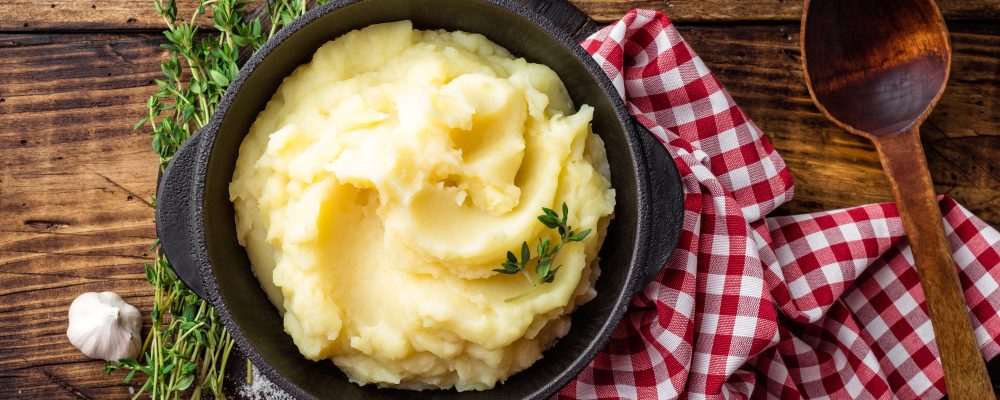

Mashed potatoes should be fluffy and light.
Smooth, creamy, with just enough body to hold their shape on a plate.
But yours come out gluey. Sticky. They have a texture closer to paste than potatoes.
You followed the recipe. You added butter and cream. You mashed until they looked smooth.
So what went wrong?
The problem isn’t what you added. It’s what you did to the potatoes themselves—and when you did it.
You’re Using the Wrong Potatoes
Not all potatoes mash the same way.
Waxy potatoes—red potatoes, new potatoes, fingerlings—have less starch and more moisture. When you mash them, they turn gummy and dense instead of light and fluffy.
Starchy potatoes—russets, Yukon golds—have the opposite ratio. More starch, less moisture. They break down into a fluffy, airy texture when mashed.
Restaurants use russets or Yukon golds for mashed potatoes. Always. They don’t improvise with whatever’s on hand.
The potato variety determines the final texture before you even start cooking. Choose wrong and no amount of technique will fix it.
Overmixing Releases Too Much Starch
Here’s what happens when you mash potatoes too aggressively:
The starch granules inside the potato cells rupture. They release sticky, gluey starch that turns the entire batch into a dense, paste-like mass.
A few passes with the masher creates smooth, fluffy potatoes. Too many passes—or using a food processor or blender—activates so much starch that the texture becomes irreversibly gluey.
Chefs mash just until smooth, then stop. They know the line between creamy and gluey is thin, and crossing it ruins the entire dish.
Home cooks often keep mashing, thinking smoother is better. It’s not. There’s a point where more mixing makes things worse, not better.
The Potatoes Are Overcooked
Mushy, waterlogged potatoes absorb too much moisture during cooking.
When you try to mash them, they’re already falling apart and saturated with water. The texture is wet and heavy instead of dry and fluffy.
Chefs cook potatoes just until tender—a knife should slide through with slight resistance, not zero resistance.
Overcooked potatoes also break down too easily during mashing, which releases more starch and contributes to that gluey texture.
Slightly underdone is closer to right than overdone. You can always mash them more; you can’t undo mushiness.
You’re Adding Cold Butter and Cream
Cold dairy hits hot potatoes and immediately cools them down.
The butter doesn’t fully incorporate. The cream doesn’t blend smoothly. You end up having to mash more to get everything combined—which releases more starch and makes the texture worse.
Chefs warm their butter and cream before adding them to potatoes.
The hot dairy melts into the potatoes instantly. Everything combines with minimal mixing. The temperature stays consistent, and the texture stays light.
This is a small step that makes a significant difference. Room temperature dairy is better than cold, but warm is ideal.
The Potatoes Aren’t Drained Properly
After cooking, potatoes sit in their cooking water while you drain them in a colander.
That residual water clings to the surface. When you mash, you’re incorporating that water into the potatoes, diluting flavor and creating a wetter, heavier texture.
Chefs drain potatoes thoroughly, then return them to the empty pot and let them sit over low heat for a minute or two.
This evaporates excess moisture. The potatoes dry out slightly, which makes them fluffier when mashed and allows them to absorb butter and cream without becoming waterlogged.
It’s one extra minute. But it’s the difference between dense, wet mashed potatoes and light, fluffy ones.
You’re Mashing While They’re Cold
Potatoes need to be hot when you mash them.
Cold potatoes are dense and resistant. You have to work harder to break them down, which means more mixing, which means more starch release, which means gluey texture.
Hot potatoes mash easily with minimal effort. They stay light and airy.
If your potatoes have cooled down too much, warm them gently before mashing. Don’t try to force your way through cold potatoes—you’ll ruin the texture.
A Ricer or Food Mill Works Better Than a Masher
Traditional potato mashers work. But they require more effort and more passes to get potatoes smooth.
More passes mean more starch release. More starch release means denser, gummier potatoes.
Chefs often use a ricer or food mill. These tools break down potatoes in one pass with minimal agitation.
The result is lighter, fluffier mashed potatoes with less risk of overworking them.
If you only have a masher, that’s fine. Just stop as soon as the potatoes are smooth. Don’t keep going to eliminate every tiny lump.
The Butter-to-Potato Ratio Matters
Too little butter and mashed potatoes taste bland and dry.
Too much butter and they become greasy and heavy.
There’s a ratio that works—roughly four tablespoons of butter per pound of potatoes, adjusted based on preference.
Chefs measure. They know exactly how much butter and cream they’re adding because they’ve dialed in the ratio that produces the texture and richness they want.
Home cooks often eyeball it, adding random amounts. Sometimes it works, sometimes it doesn’t, and they can’t figure out why results are inconsistent.
Consistent measurements produce consistent results.
Adding Liquid All at Once Drowns the Potatoes
Dumping in all your cream at once makes potatoes soupy.
You can’t take it back out. You have to keep mashing to try to incorporate it, which releases more starch and makes everything worse.
Chefs add liquid gradually. A splash at a time. Mash, check consistency, add more if needed.
This gives you control. You stop exactly when the texture is right—not too thick, not too thin.
It takes slightly longer, but it prevents the common mistake of making mashed potatoes too loose and having no way to fix them.
Seasoning Happens in Stages
Potatoes are bland on their own. They need aggressive seasoning to taste like anything.
Most people add salt at the end and hope for the best.
Chefs salt the cooking water generously—like pasta water, it should taste almost like seawater. This seasons the potatoes from the inside as they cook.
Then they taste and adjust seasoning again after adding butter and cream.
Two stages of seasoning ensures the potatoes are properly flavored throughout, not just on the surface.
The Type of Masher Makes a Difference
Wire mashers with a grid pattern create smoother potatoes but require more passes.
Mashers with larger holes create chunkier potatoes but work faster with fewer passes.
Chefs choose their tool based on the texture they want. Smooth and creamy? More passes with a fine masher, being careful not to overwork. Rustic and chunky? Fewer passes with a coarser masher.
There’s no single right tool. But knowing what each tool does helps you control the final result.
Room Temperature Matters After Cooking
Mashed potatoes are at their best immediately after mashing.
They lose heat quickly. As they cool, the texture changes. They become denser and less appealing.
Restaurants time their mashed potatoes to be ready right before service. They don’t sit around getting cold.
At home, if you need to hold mashed potatoes, keep them warm in a covered pot over the lowest possible heat, stirring occasionally. They’ll never be quite as good as fresh, but this prevents them from turning cold and gummy.
What You Can Do Next Time
Use russet or Yukon gold potatoes. Cut them into uniform pieces.
Cook just until tender—not falling apart. Drain thoroughly and let them steam dry in the pot for a minute.
Warm your butter and cream while the potatoes cook.
Mash the hot potatoes until just smooth. Stop as soon as there are no large lumps.
Add warm butter first, mixing gently. Then add warm cream gradually until you reach the consistency you want.
Taste and adjust seasoning. Serve immediately.
That process—in that order, with attention to temperature and not overmixing—produces fluffy mashed potatoes every time.
The Takeaway
Gluey mashed potatoes aren’t a mystery.
They’re the result of specific, avoidable mistakes: wrong potato variety, overmixing, cold dairy, too much moisture.
Every one of these problems has a solution. Use starchy potatoes. Mash just until smooth. Warm your dairy. Dry your potatoes after cooking.
It’s not complicated. But it requires understanding what creates the texture you want—and what destroys it.
Chefs know this. They follow the same process every time because it works.
Home cooks often wing it, then wonder why their results are unpredictable.
But now you know what matters.
And once you start paying attention to these details, gluey mashed potatoes become a thing of the past.
Not sometimes. Every single time.