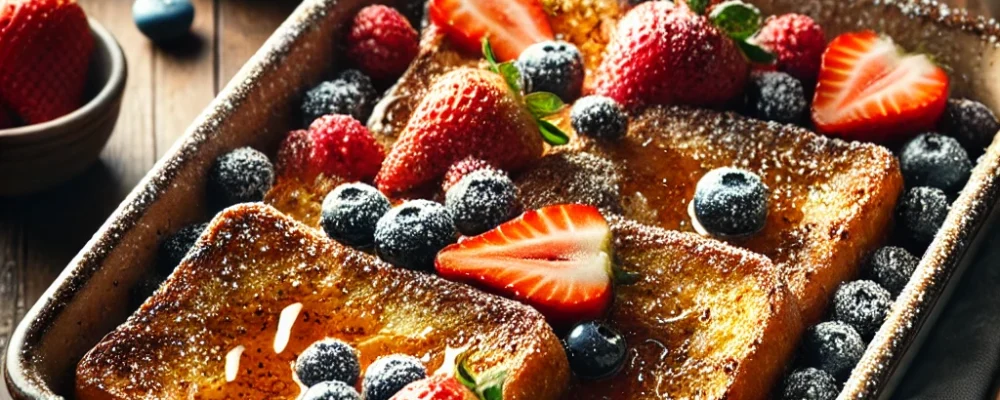
Overnight Crème Brûlée French Toast

Overnight Crème Brûlée French Toast

Healthy Fact of the Day

For a lighter version, use low-fat milk and reduce butter. Substitute a natural sweetener like maple syrup for the brown sugar. Adding fresh fruit as a topping boosts vitamins and fiber.

Ingredients

  • For the caramel base:

    • 1/2 cup unsalted butter
    • 1 cup brown sugar
    • 2 tbsp corn syrup

  • For the custard:

    • 1 loaf challah or brioche bread, sliced thick
    • 5 large eggs
    • 1 1/2 cups whole milk
    • 1/2 cup heavy cream
    • 2 tsp vanilla extract
    • 1/4 tsp salt

  • For topping:

    • 2 tbsp granulated sugar (for brûlée effect)
    • Powdered sugar (optional)
    • Fresh berries or whipped cream (optional)

       Instructions
  1. Prepare Caramel Base: In a small saucepan, melt butter, brown sugar, and corn syrup over medium heat until smooth. Pour into a greased 9×13-inch baking dish and spread evenly.

  2. Layer Bread: Arrange bread slices in the dish, overlapping slightly if needed.

  3. Make Custard: In a bowl, whisk together eggs, milk, heavy cream, vanilla, and salt. Pour evenly over the bread, ensuring every piece is soaked.

  4. Refrigerate Overnight: Cover with plastic wrap and refrigerate for at least 8 hours or overnight.

  5. Bake: Preheat oven to 350°F (175°C). Remove the dish from the refrigerator and let it sit at room temperature for 15 minutes. Bake uncovered for 40-45 minutes until the custard is set and the top is golden.

  6. Create Brûlée Topping: Sprinkle granulated sugar evenly over the top and broil for 1-2 minutes until the sugar melts and caramelizes. Watch closely to avoid burning.

  7. Serve: Let cool slightly before serving. Garnish with powdered sugar, fresh berries, or whipped cream if desired.

    Overnight Crème Brûlée French Toast is the ultimate indulgent breakfast! With a rich caramel base, creamy custard, and crunchy brûlée topping, it’s perfect for special mornings or holiday gatherings. Prepare ahead and wake up to effortless decadence. Bon appétit!
Recent Recipes

The Reason Your Homemade Pizza Crust Never

  • March 3, 2026
  • 8 min read

Garlic Parmesan Crusted Halibut

  • March 3, 2026
  • 8 min read

Starbucks’ 2026 Spring Menu Is Here —

  • March 2, 2026
  • 5 min read

Onion Ring Chips

  • March 2, 2026
  • 10 min read

Why Restaurant Sandwiches Taste Better Than Yours

  • March 2, 2026
  • 7 min read

Honey BBQ Chicken Rice

  • March 2, 2026
  • 7 min read

Tiramisu Cold Brew Coffee Cheesecake

  • March 1, 2026
  • 16 min read

Almond Butter Balls

  • March 1, 2026
  • 17 min read

Greek Chicken Wraps

  • March 1, 2026
  • 16 min read

Baked Oatmeal Cups

  • March 1, 2026
  • 17 min read

Tip of the Day

“Always let your meat rest before slicing.”

Whether you're roasting a chicken, grilling steak, or baking pork tenderloin, letting cooked meat rest for 5–10 minutes before slicing allows the juices to redistribute evenly. This simple step keeps your meat juicy and tender, ensuring every bite is flavorful and moist. Bonus: It gives you a moment to plate your sides or garnish for a perfect presentation!

Our Latest Recipes

Blog
Oliver King

The Reason Your Homemade Pizza Crust Never Tastes Right

Longer fermentation of pizza dough breaks down complex carbohydrates and gluten proteins, making the crust easier to digest and producing beneficial organic acids that can lower the glycemic response, and using proper hydration and minimal toppings allows you to enjoy pizza with better portion control and nutritional balance than heavily loaded versions.

Read More »
Entrees
Amelia Grace

Garlic Parmesan Crusted Halibut

Halibut is an excellent source of lean protein, selenium, and vitamin B12, supporting metabolism and immune function. This preparation uses minimal added fat while maximizing flavor through the Parmesan crust. Halibut also provides omega-3 fatty acids that support heart health.

Read More »
Blog
Daily Disher

Starbucks’ 2026 Spring Menu Is Here — And It’s Bringing Ube, Coconut, and Lavender With It

Understanding cookie spread mechanics allows you to make intentional choices about texture and portion size rather than accidentally creating oversized, overly thin cookies that encourage overconsumption, and properly formed cookies with controlled spread contain more satisfying textural contrast between crispy edges and chewy centers, making smaller portions more satisfying than larger, uniformly textured ones.

Read More »

Get your daily dose of delicious!

Skip to content